Breaking! Apple's AI Takes Center Stage Late at Night: Siri Finally Sheds Its 'Retarded' Image, Gemini's 'Heart Transplant' a Success
 06/09 2026
 489
489
Chinese users are still left out of Apple Intelligence.
The long-anticipated WWDC26 keynote has finally concluded, and Leikeji has watched the entire event. Here's the gist: The new AI features (Apple Intelligence, Siri AI) discussed have no relevance to users in mainland China or Chinese Apple devices at this stage. This AI update is still being released 'excluding mainland China and the EU.'
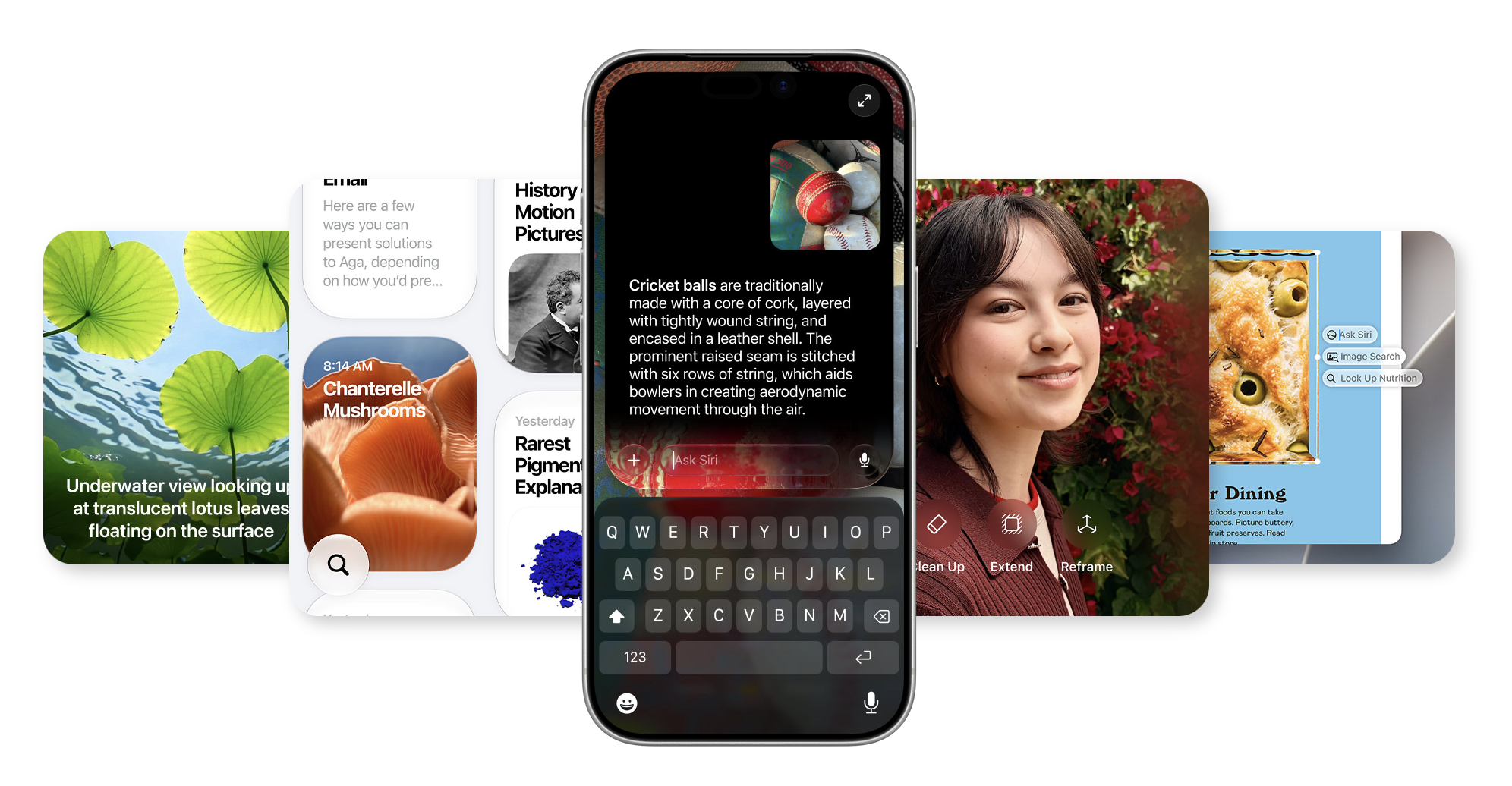
Image source: Apple
But then again, if you're using a non-Chinese version of the iPhone with a non-Chinese Apple ID, this Apple Intelligence update is a 'feast.' It not only brings Apple Intelligence up to par with the most aggressive AI Agent phones in the industry but also leverages Apple's ecosystem capabilities and privacy focus to deliver a unique 'combo' with an Apple twist. For the vast number of Chinese users, let's indulge in a bit of 'wishful thinking'—what if Apple Intelligence one day arrives as promised in the cycle of 'expectation-disappointment-expectation'?
Let's start with the new Apple Intelligence model. Just like its previous grand 'teasers,' the new generation Apple Foundation Model (AFM for short) is built upon the Gemini foundation model (it's unclear which generation for now) rather than directly using Gemini.
If this relationship is hard to grasp, Leikeji offers an analogy:
Restaurant A's dishes are terrible and thinks Restaurant G's dishes are pretty good. So, Restaurant A buys a complete recipe (Gemini foundation model) from Restaurant G and adapts and improves it into its own recipe (AFM) based on its understanding.
But this recipe is a one-time purchase. If Restaurant G later adjusts its recipe, it has no obligation to provide subsequent updates or support to Restaurant A, leaving Restaurant A to figure it out on its own.
In Apple's hands, this Gemini-derived and 'privatized' foundation model splits into two modes (branches)—it can run directly on devices like iPhones, iPads, and Macs, or on Apple's private cloud computing servers. In other words, the new Apple Intelligence still follows a hybrid model approach but no longer relies on OpenAI's API for everything, as it did when it first integrated ChatGPT.
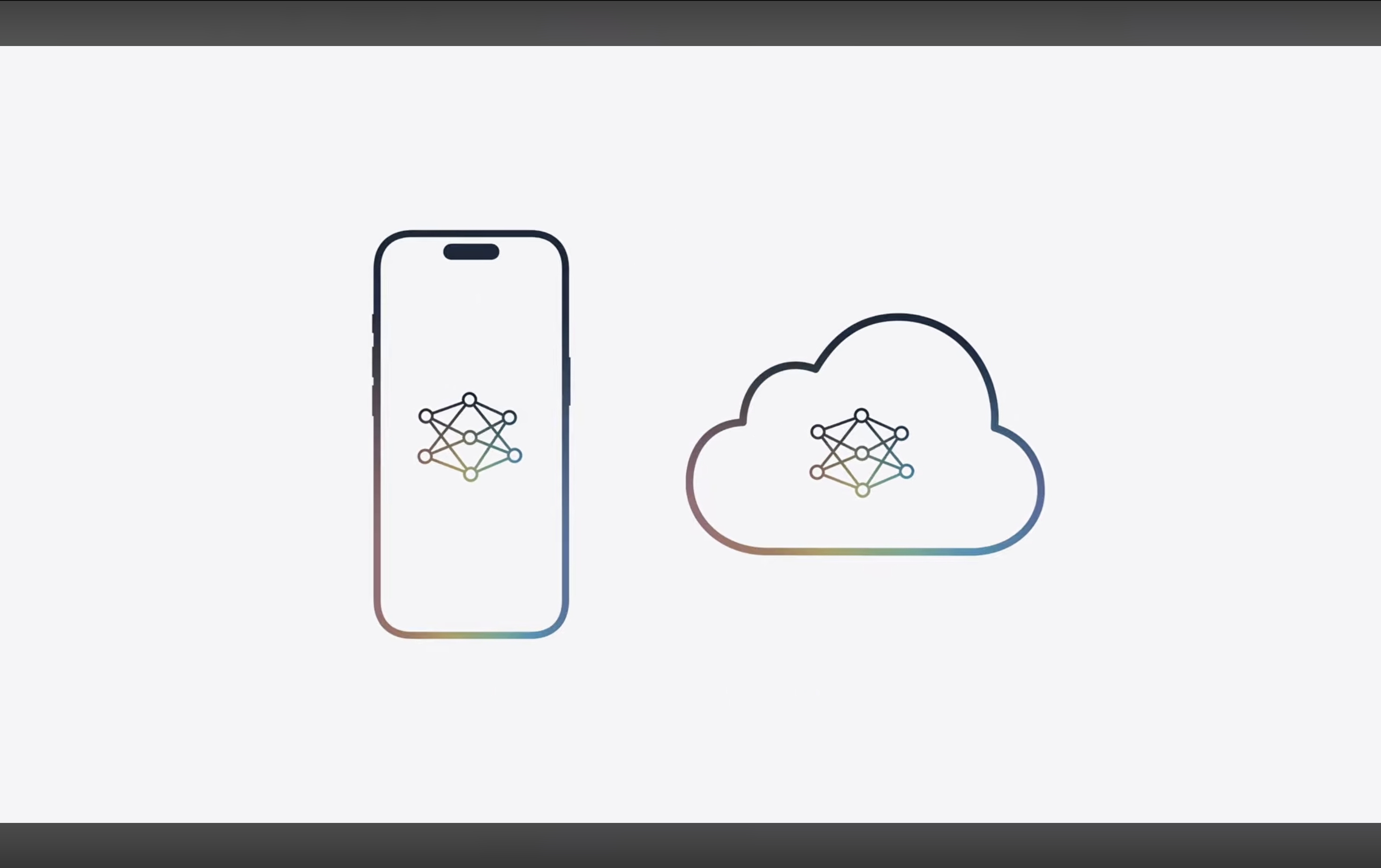
Image source: Apple
Clearly, this combination of on-device large models and private cloud computing models can maximize the containment of user data within Apple's control, thereby protecting user privacy. According to Apple, user data is inaccessible to Apple and is only used to respond to user requests.
Additionally, Apple has introduced a more powerful second-generation 'on-device model' (not the AFM mentioned earlier), bringing better multimodal capabilities.
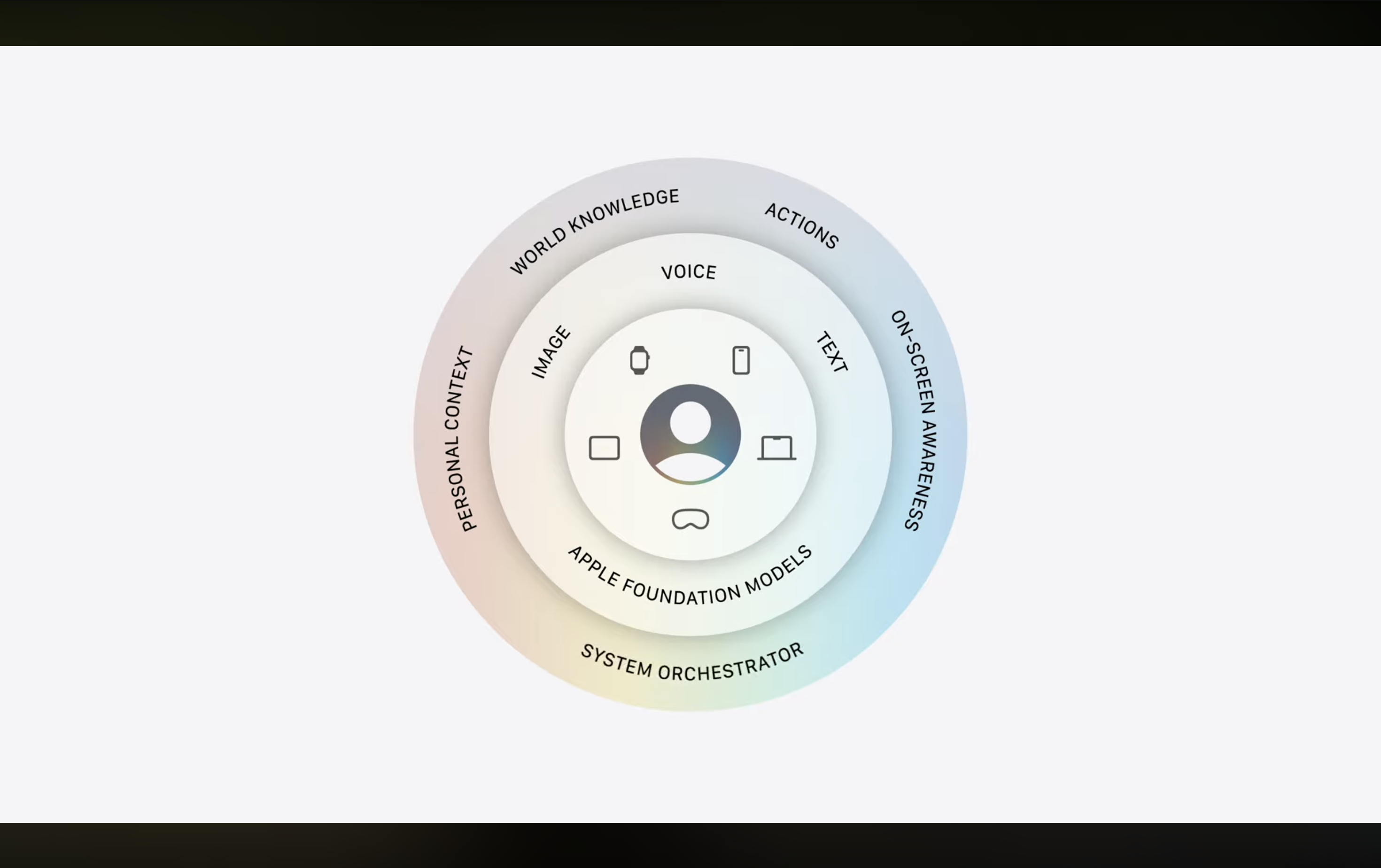
Image source: Apple
Correspondingly, iOS, iPadOS, and macOS provide richer system-level support for the new Apple Intelligence, allowing it to permeate every aspect of the 'ecosystem.'
And the first major feature brought by all this new technology for users is, naturally, the new Siri.
Naming-wise, this new Siri powered by Apple Intelligence lacks creativity, simply called 'Siri AI.' However, its improvements in interaction and comprehension are significant.
First, Apple has finally prepared a standalone app for Siri AI, similar to ChatGPT, Gemini, and Grok apps, allowing users to view complete Siri AI interaction records in a unified entrance (portal).
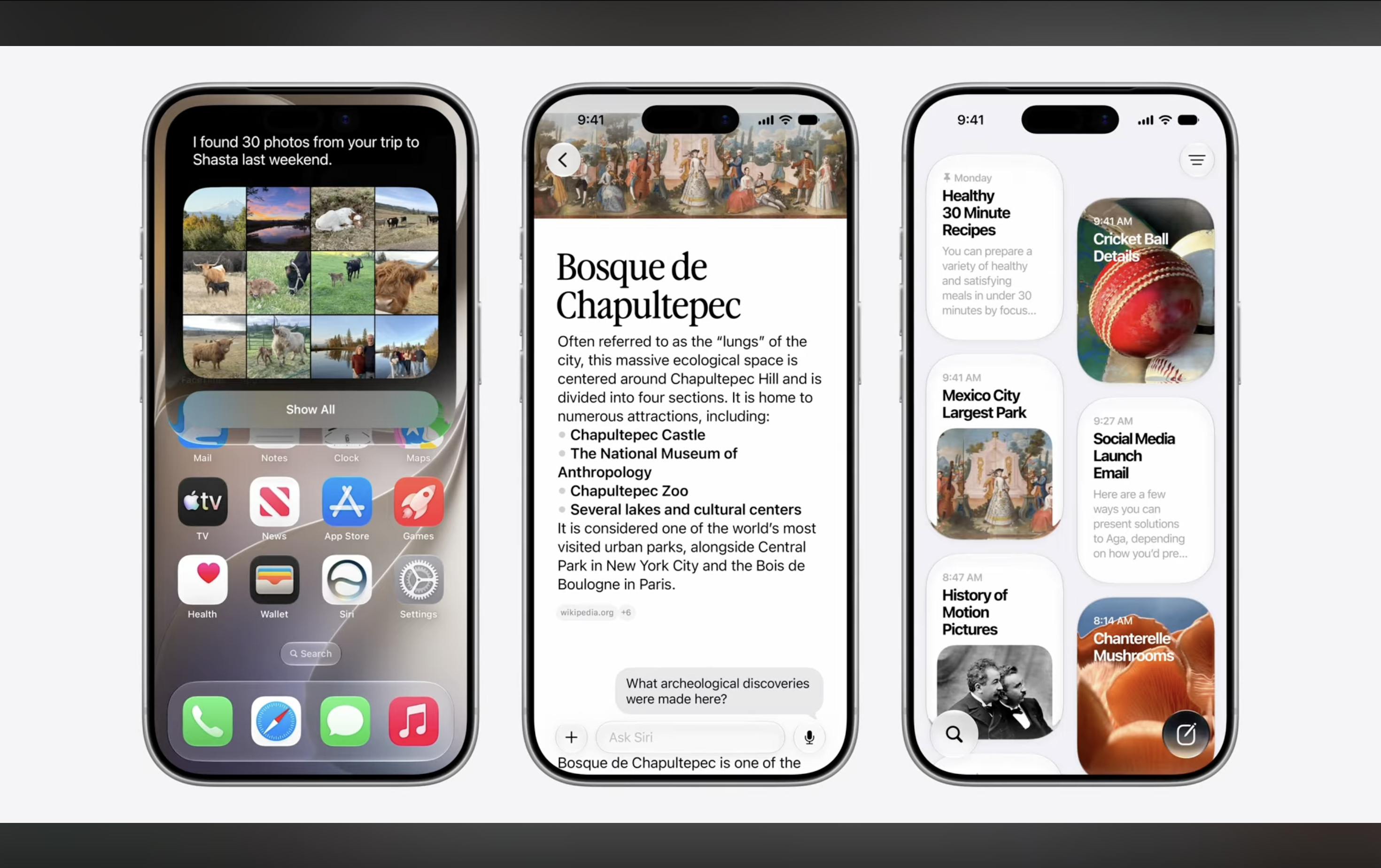
Image source: Apple
Additionally, the 'Dynamic Island Siri' interface, which had already been leaked online, was confirmed at WWDC26. iPhone users can now activate Siri by swiping down from the top, in addition to long-pressing the side button or using 'Hey Siri.'
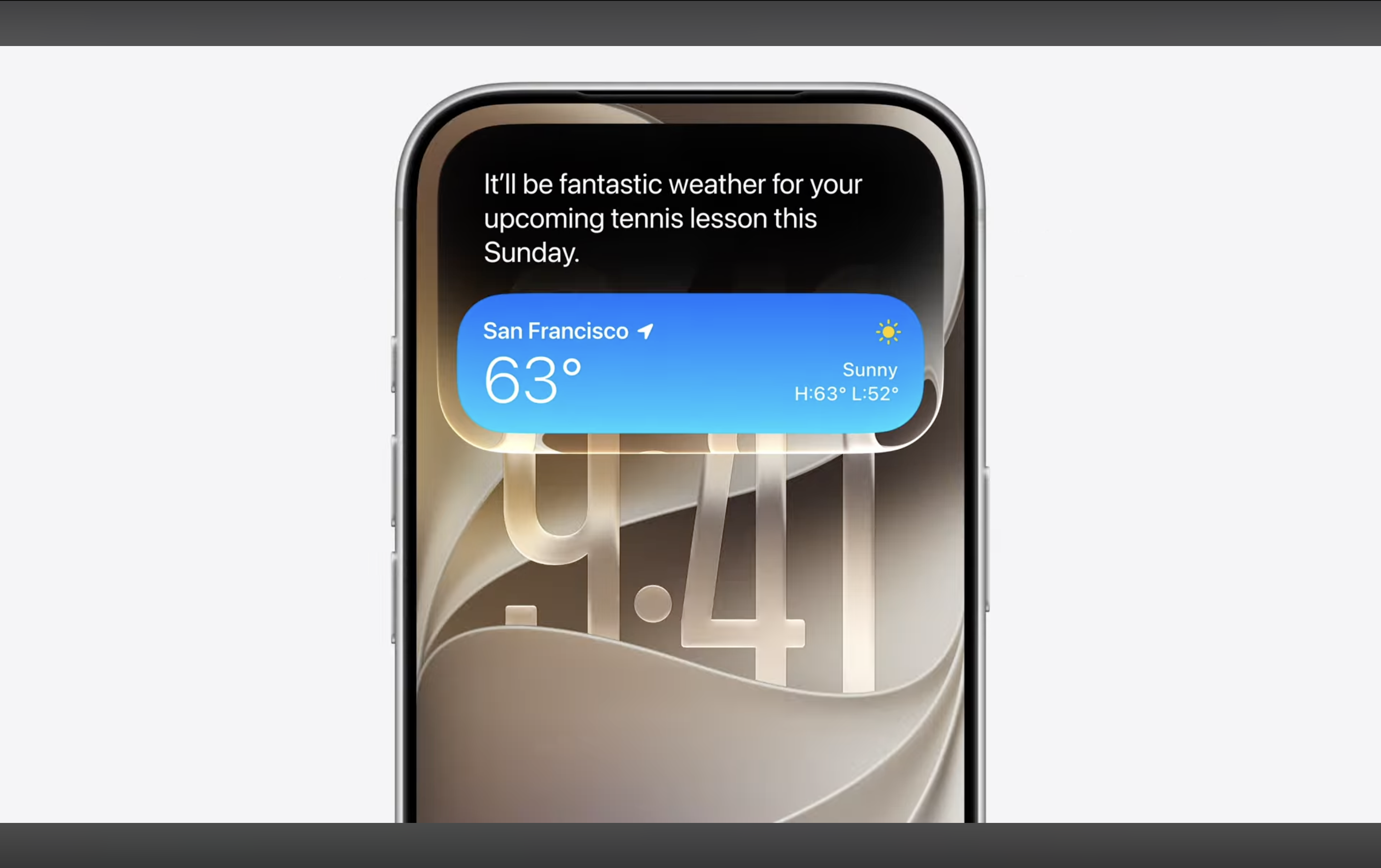
Image source: Apple
In terms of capabilities, the new Siri AI now possesses 'perception,' 'comprehension,' 'invocation,' and 'execution' abilities.
Let's start with 'perception.' Thanks to the improved multimodal capabilities of AFM, the new Siri AI can now not only 'hear' what users say but also 'see' the content captured by the camera and displayed on the screen. This 'perception' is not limited to text; even images can be input. Of course, Siri AI's voice perception capabilities are not neglected.
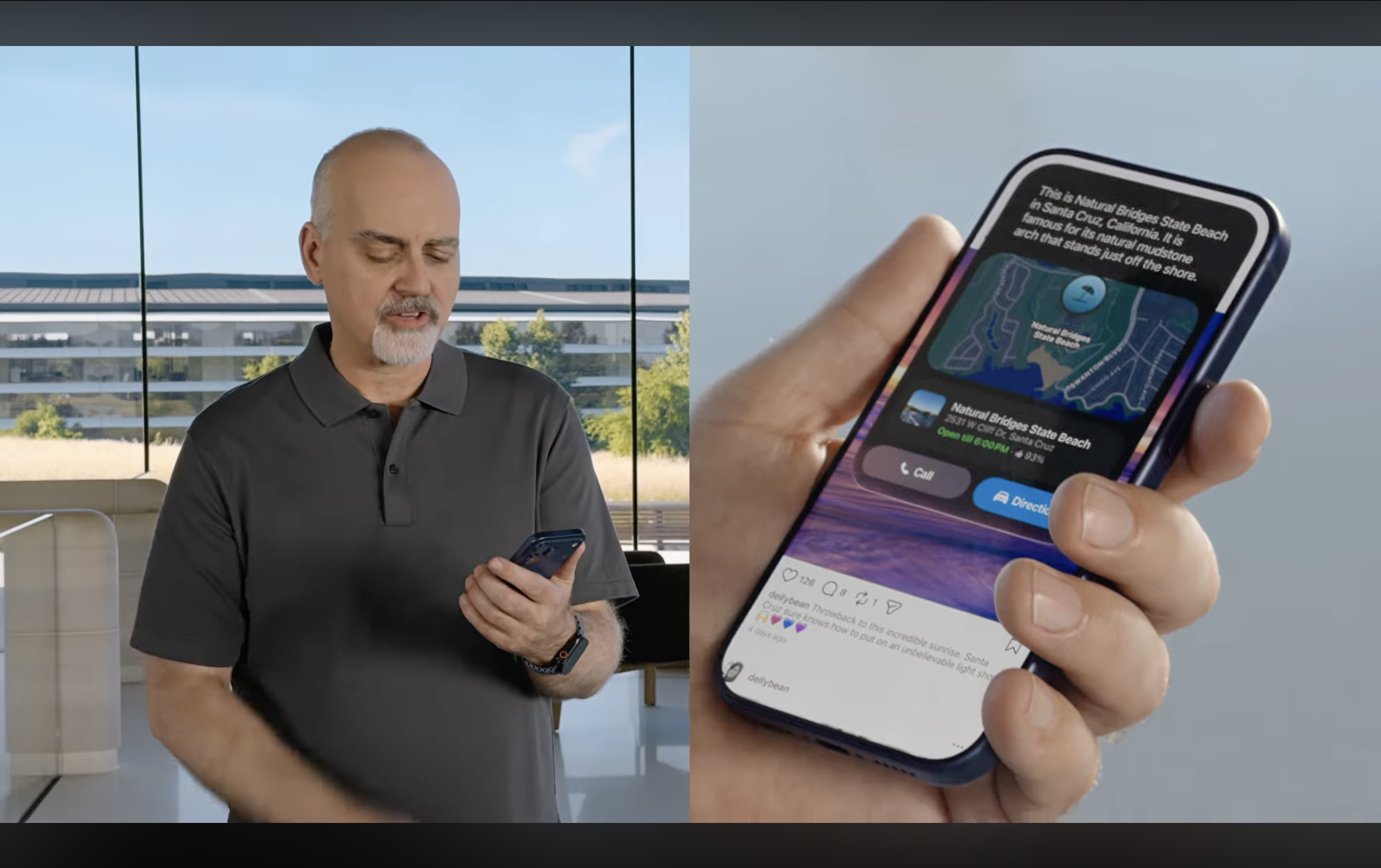
Image source: Apple
Apple did not disclose the specific methods Siri AI uses to perceive images during the WWDC keynote, and Leikeji cannot confirm whether Siri operates like Android phones based on screen captures and recordings as a GUI Agent, or if Apple leverages its first-party developer advantage to provide a new API for Siri AI.
After perceiving screen content, Siri AI can understand it and respond accordingly, such as looking up the location where a travel photo was taken, calculating how much each person should pay based on a restaurant receipt, or estimating nutritional information of food.
As for execution, Apple has indeed leveraged its 'home-field advantage': Siri AI can directly use perceived information to create complex tasks, such as generating a 'three-day, two-night' travel plan to a photo location, or directly invoking multiple system apps to perform related operations (support for third-party apps is unknown).
On macOS, Siri AI unlocks even richer capabilities, directly comparing, summarizing, and modifying multiple documents, resembling an AI Agent client.
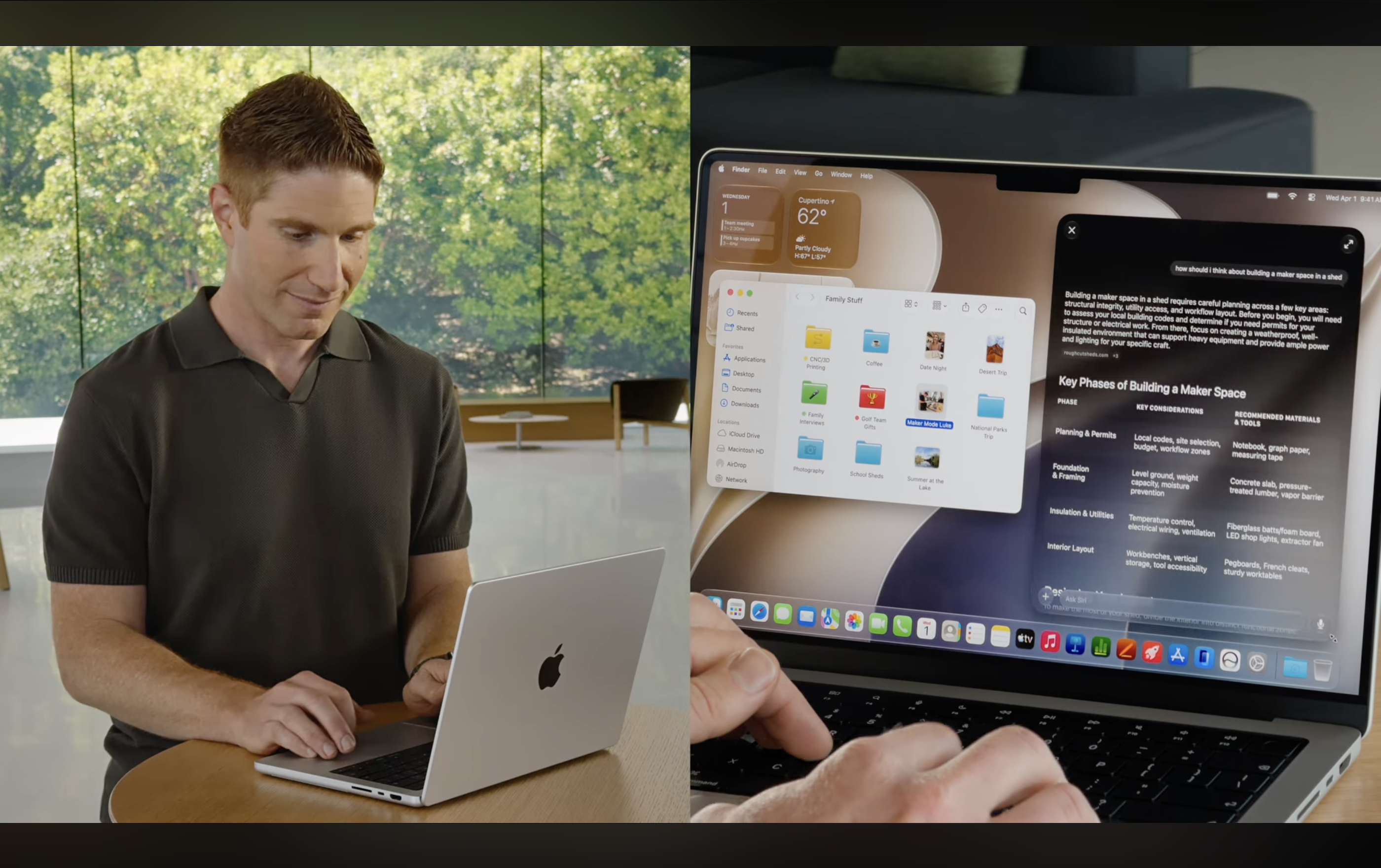
Image source: Apple
Interestingly, following the previous 'optional voices,' Apple has also prepared a new round of customizable voice features for Siri AI: users can directly customize Siri AI's voice, tone, and speed by 'dragging a progress bar,' creating a 'unique' Siri AI.
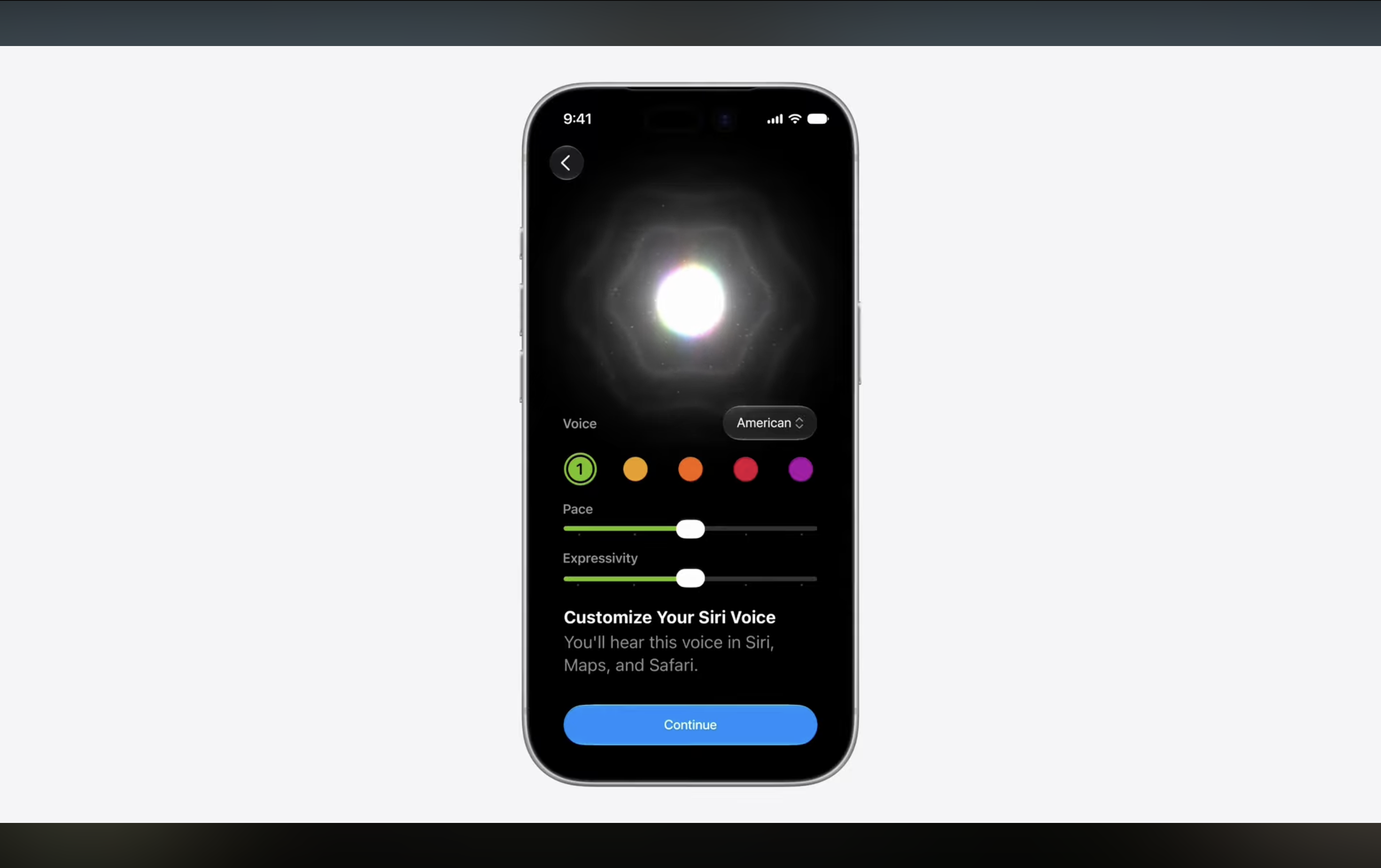
Image source: Apple
In terms of supported languages, Siri AI currently supports English and will soon offer multiple languages, including Chinese (Simplified and Traditional). However, as mentioned at the beginning, this Siri AI update is still 'excluding mainland China and the EU,' and Chinese users will still have to 'wait for notification.'
As a 'groundbreaking' masterpiece of Apple Intelligence, Apple has also integrated the four AI capabilities ('perception,' 'comprehension,' 'invocation,' 'execution') into other apps in every aspect.
For example, the new Safari, after integrating Apple Intelligence, can use its capabilities to 'intelligently group' open tabs. This is extremely practical for Leikeji editors who always keep hundreds of tabs open for research.
Based on Apple Intelligence's multimodal perception capabilities, Safari with AI capabilities can now intelligently monitor a webpage in the background and notify users when the content updates. This feature is very useful for users who need to 'snatch tickets' from websites.
But that's not all. We know Safari can install third-party plugins, and the new Apple Intelligence offers users the ability to 'create their own browser plugins': users can simply tell Safari in natural language 'what kind of plugin they need and what functions it should have,' and Safari will use AI to write a plugin that meets their needs.
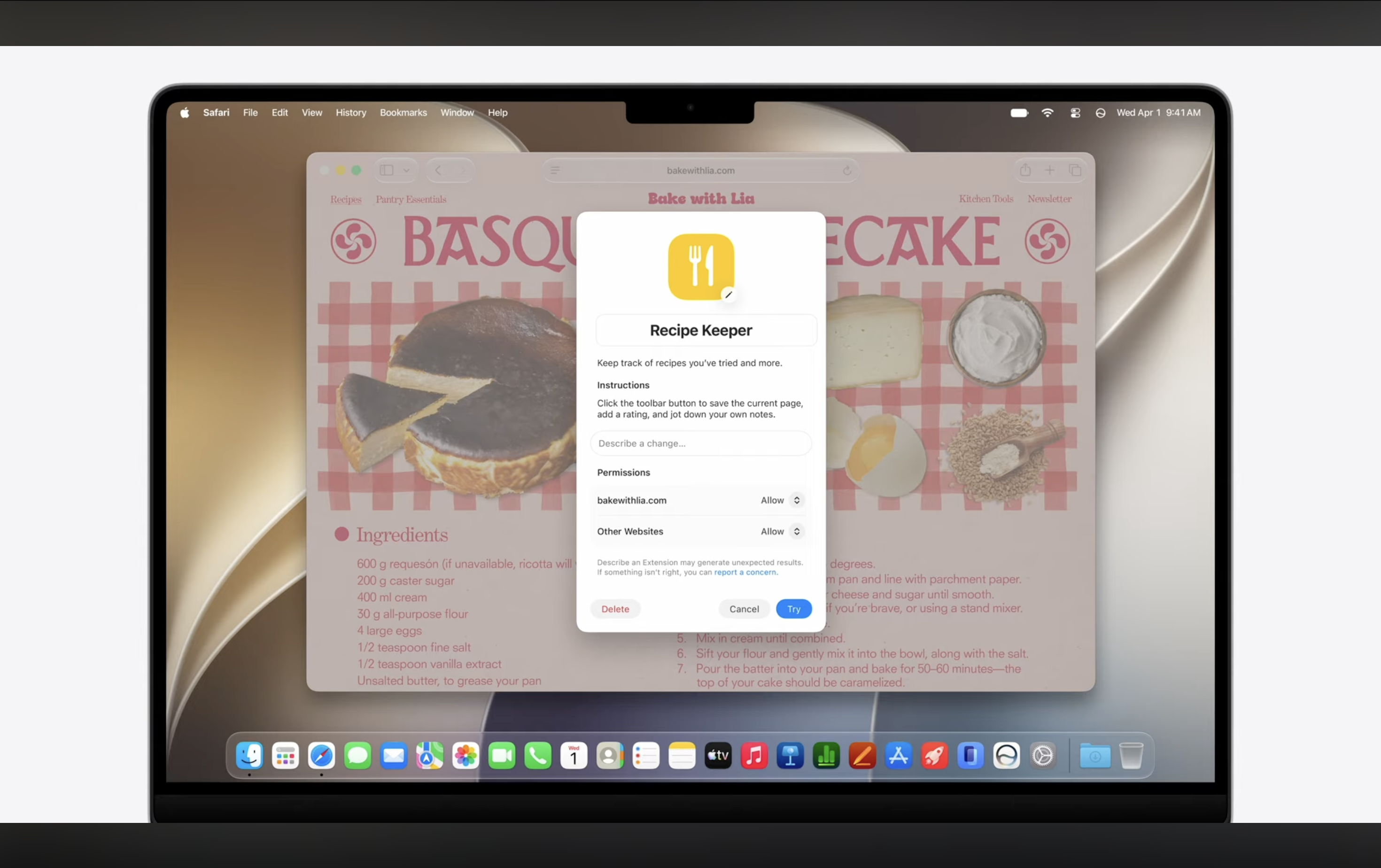
Image source: Apple
Yes, Safari has embraced 'Vibe Coding.'
Similarly supporting 'Vibe Coding' is the new 'Shortcuts' app: previously, creating a shortcut required selecting trigger and execution components from a 'vast' list and writing complete operational logic with the precision of coding. Even Xiaolei must admit that this complex and threshold (threshold)-heavy process deterred many users and 'wasted' the potential of the Shortcuts app.
But with Shortcuts integrating Apple Intelligence, we can simply describe our actual needs in natural language, such as 'automatically turn on the car's air conditioning when I have an out-of-town schedule in five minutes and no flight or train ticket information is available,' and Shortcuts will automatically search for execution capabilities across various apps (including third-party ones) within its capabilities and generate an execution file for direct use.
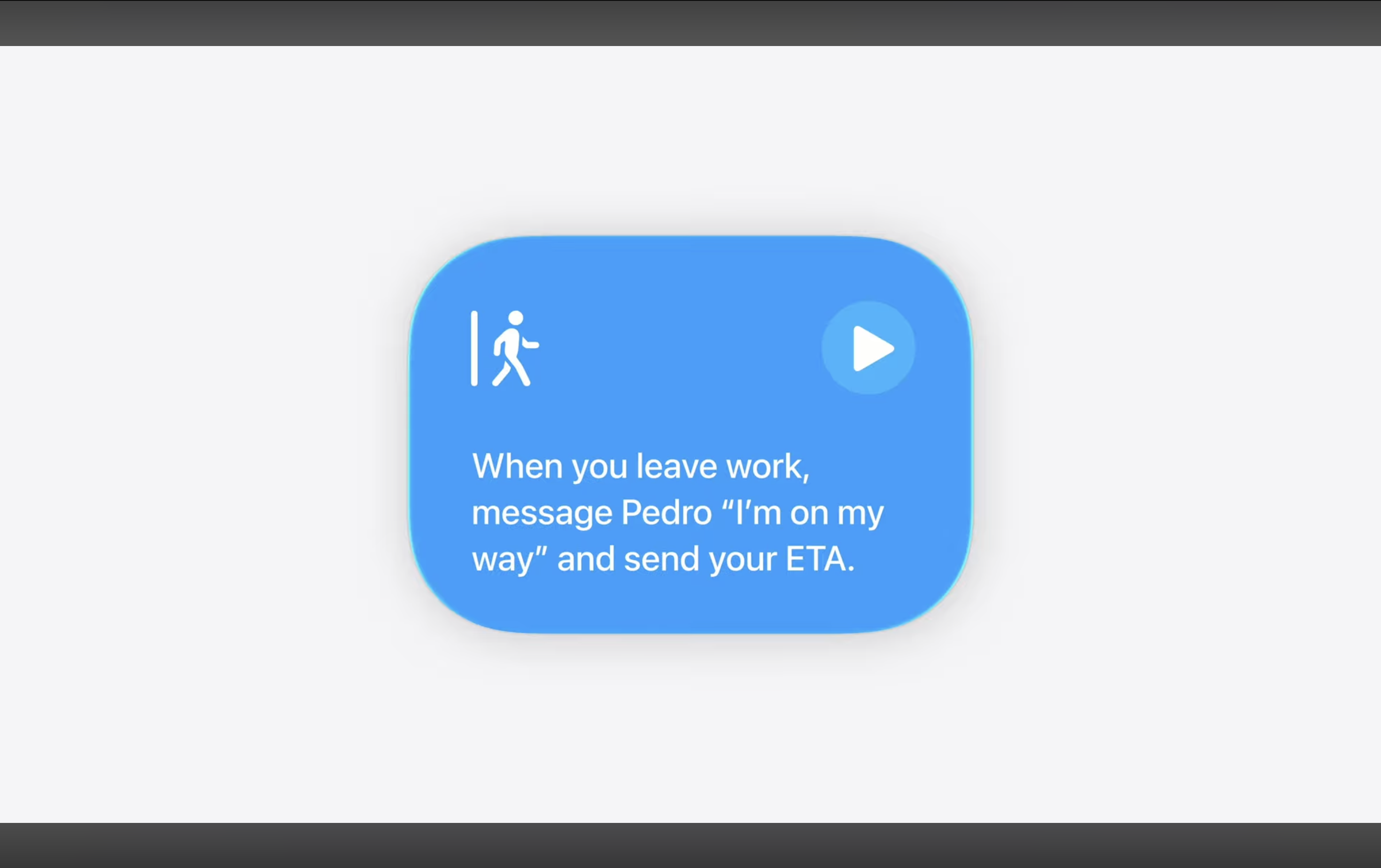
Image source: Apple
The 'Apple Home' smart home system, which is rarely used in China, has also received updates: for users who have installed HomeKit cameras and enabled related services, the Home app can analyze surveillance footage in the background and summarize it into text; it can also directly find corresponding video clips based on user questions.
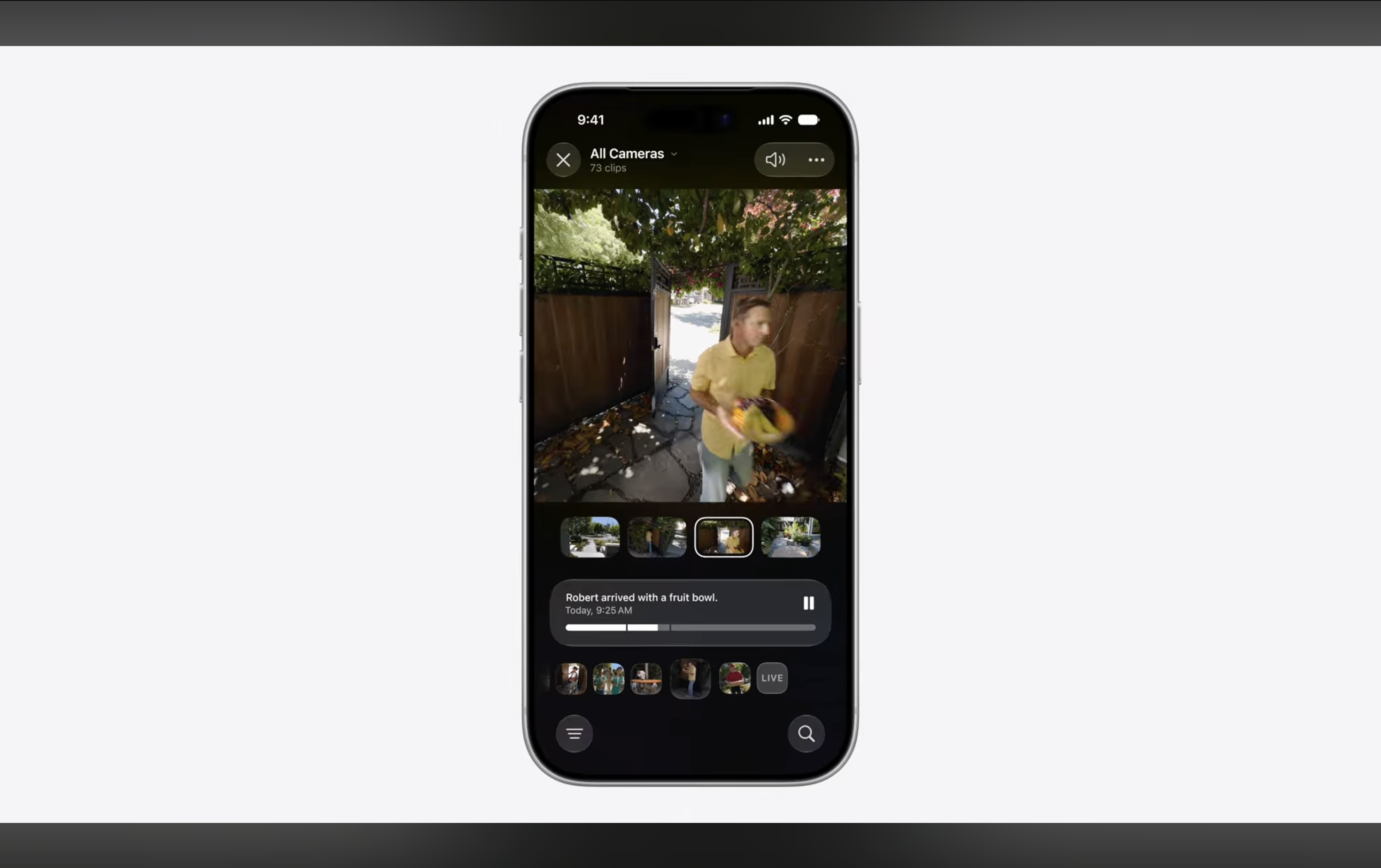
Image source: Apple
The 'Photo Funland,' once dubbed 'useless' by Xiaolei, has also undergone a comprehensive upgrade, not only adding the ability to generate images from natural language (the old version required selecting styles from fixed options) but also allowing users to adjust styles and image content as needed.
Apple Intelligence's superior image capabilities have also brought stronger AI image modification abilities to Apple Intelligence: in addition to common object removal and AI image expansion, Apple has added 'spatial composition' capabilities to the Photos app this time, allowing different photos to be expanded into spatial photos with spatial depth information and then reframed, adding a 'Z-axis' to traditional two-dimensional reframing (cropping).
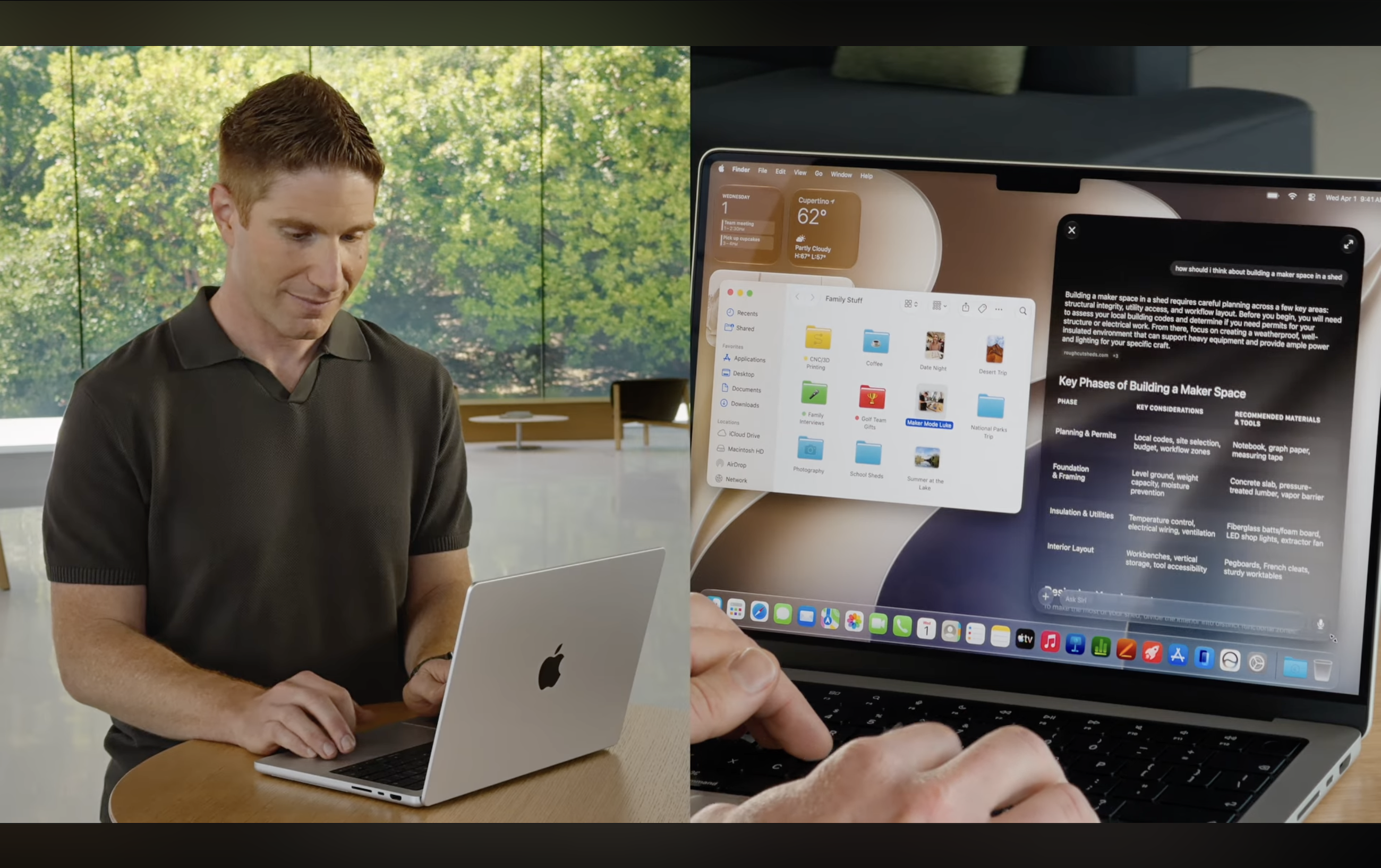
Image source: Apple
From the WWDC keynote, this feature seems similar to the existing 'spatial wallpaper' conversion on iPhones but with significantly higher precision. Additionally, Apple mentioned that this 'spatial wallpaper' will first utilize on-device models for low-latency real-time operations and then invoke private cloud computing for complete rendering.
In terms of pricing, Apple mentioned that some AI features of Apple Intelligence that utilize private cloud computing capabilities have daily usage limits, but iCloud+ will include related benefits.
Of course, for users of Chinese iPhones and iPads, these new features of Apple Intelligence remain a 'mirage'—they exist somewhere, but we can 'see but not touch' them.
But then again, in Leikeji's view, Apple's 'show of strength' at WWDC 26 does have its positive side. We used to say that Apple was 'early to rise (Siri) but late to the party (Apple Intelligence)' in intelligent interaction. This long-term teasing without tangible results in 'AI investment' not only tested users' patience but also affected the confidence of Apple's investors.
On the bright side, the Apple Intelligence showcased at WWDC26 has already 'formed a system' and is highly complete; in terms of experience, Apple prefers to integrate AI into daily life like Face ID, rather than chasing model parameters and benchmark scores.
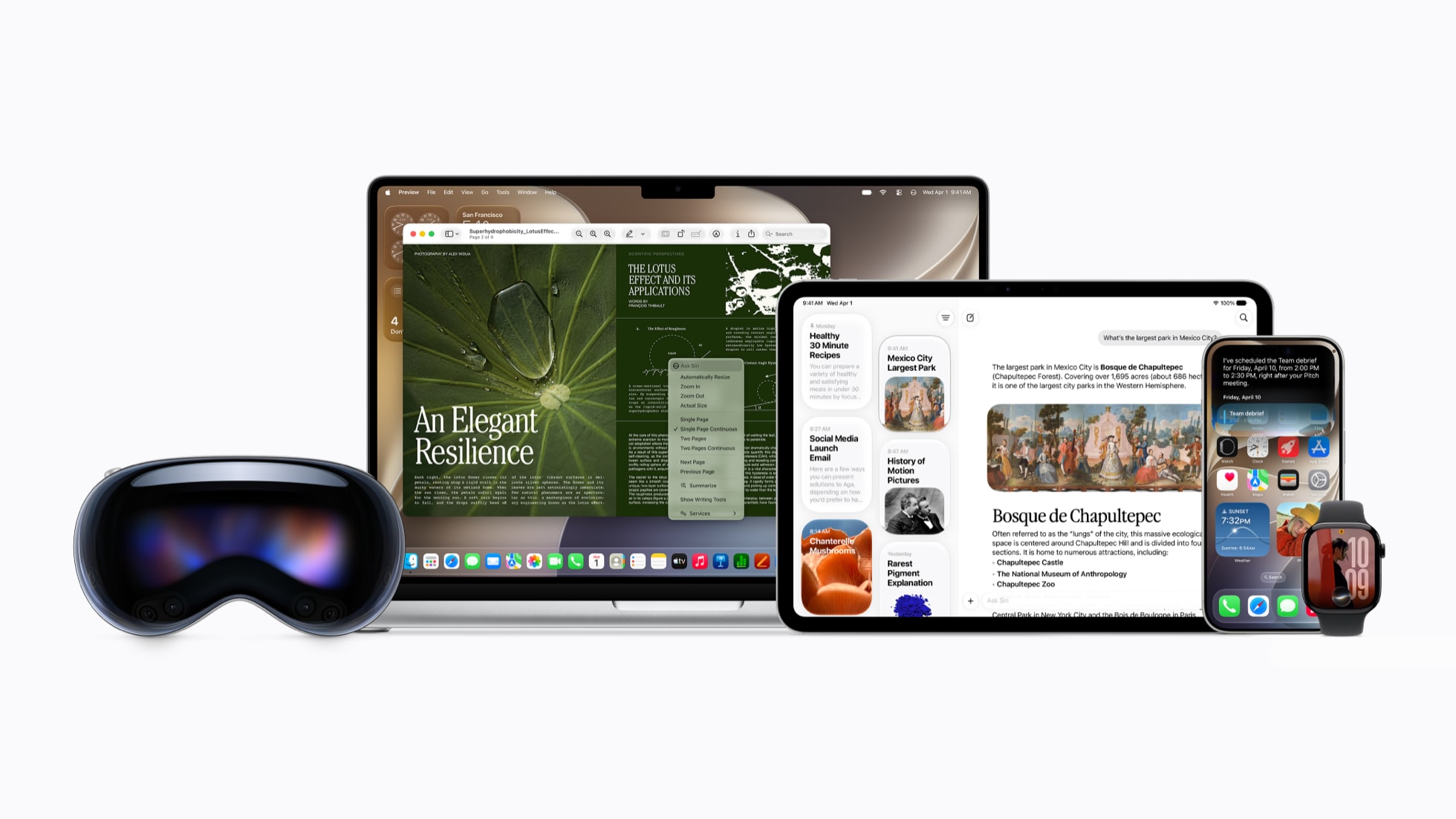
Image source: Apple
However, it cannot be denied that Apple still faces two major challenges in the AI field: Apple Intelligence has yet to enter the Chinese market; and the AI industry has already begun evolving towards more advanced autonomous Agents. The former requires Apple to complete the local compliance process for the new AFM in a short period, while the latter requires Apple to "make up" for its past AI technology debts within a limited timeframe.
Clearly, both of these issues will require more time to resolve, but right now, what Apple lacks the most is time—AI technology is advancing rapidly, with new models, Agents, and Skills emerging every day. The AI industry has long entered an era where "standing still means falling behind."
In 2026, Apple managed to "get by" for the time being by "procuring" the Gemini foundational model. But does this mean Apple will have to rely on Google for the underlying Gemini model every year thereafter? Leikeji believes that, judging from WWDC26, the "heart transplant" surgery has addressed Apple Intelligence's immediate needs, but if Apple wants to make a mark in the AI industry and demonstrate its dominance in the hardware sector, the company still has a long way to go.
WWDC26 AI Apple Siri Gemini
Source: Leikeji
Images in this article are from the 123RF licensed image library. Source: Leikeji
-
![]()
Qianwen’s Version of ‘Being Inside the Nails’
-
![]()
Unbelievable! Chery’s Rumor Refutation Disappears—Who’s Behind the Chaos?
-
![]()
Force Robotics Acquires Atomix: Empowering Robots to Develop Data Flywheels in Real-World Business Environments
-
![]()
Is India Acquiring Electric Vehicle Tech from China? Chery Responds
-
![]()
Struggling to Compete? Japanese Automakers Shift Focus to India, a Market Even Musk Avoids
-
![]()
Why Haven’t We Seen Any Automakers Go Bankrupt Yet, Even as 2026 Reaches Its Midpoint?
-
![]()
Saido Is in Need of a 'Primary Responsible Entity'
-
![]()
Shanghai Robot Brain’s Debut Share: Second Bid for HKEX Listing