Shanghai Robot Brain’s Debut Share: Second Bid for HKEX Listing
 06/09 2026
 472
472
On June 7, 2026, Shanghai SEER Robotics Technology Co., Ltd. (hereinafter referred to as "SEER Robotics") officially underwent a listing hearing, marking a pivotal moment in its journey toward public trading.
SEER Robotics initially submitted its application for listing on the main board of the Hong Kong Stock Exchange on May 27, 2025. However, the prospectus expired before completion. Undeterred, the company submitted its second application for a Hong Kong IPO on November 28 of the same year. A third application followed on May 28, 2026, securing overseas listing filing approval from the China Securities Regulatory Commission. Finally, on June 7, 2026, SEER Robotics successfully passed the listing hearing of the Hong Kong Stock Exchange.
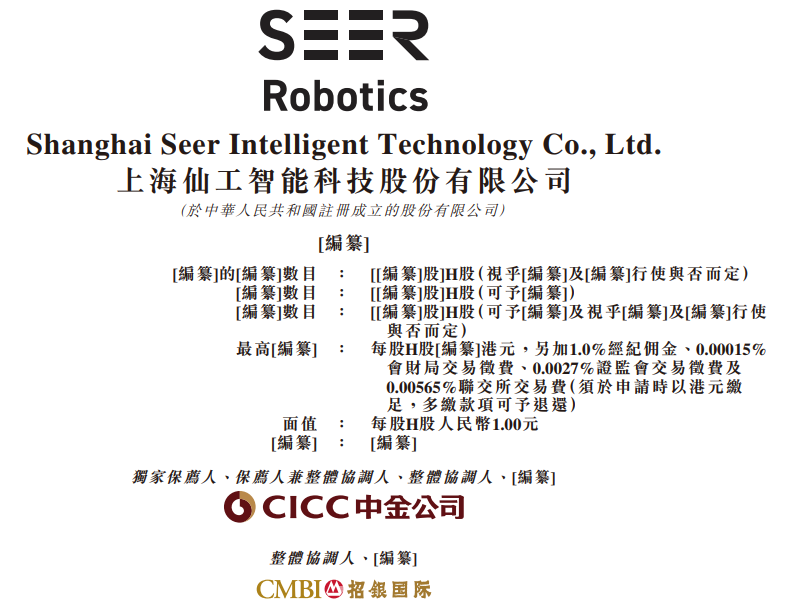
SEER Robotics is an intelligent robot enterprise that revolves around its self-developed robot control system, often referred to as the "robot brain." Leveraging its technological edge and market position, the company specializes in the research, development, and sales of robots, controllers, software, and accessories. It offers comprehensive, one-stop intelligent robot solutions tailored to real-world application scenarios, covering development, deployment, and usage.
According to CIC Consulting's 2025 statistics, SEER Robotics ranks seventh globally and third domestically among industrial intelligent robot companies by revenue, with market shares of 1.1% and 2.5%, respectively.
In terms of the installed base of industrial intelligent robots equipped with its proprietary controllers, SEER Robotics ranked second globally and in the Chinese market in 2025, with market shares of 7.7% and 14.6%, respectively. Regarding robot controller sales, SEER Robotics ranked first globally and in China in 2025, with market shares of 24.8% and 45.2%, respectively, underscoring the strong competitiveness of its core products.
During the reporting period (2023–2025), SEER Robotics demonstrated steady operational growth, with revenues of RMB 249 million, RMB 339 million, and RMB 442 million, respectively.
However, the company has yet to achieve profitability, reporting annual losses of RMB 47.704 million, RMB 42.308 million, and RMB 47.066 million over the three years. 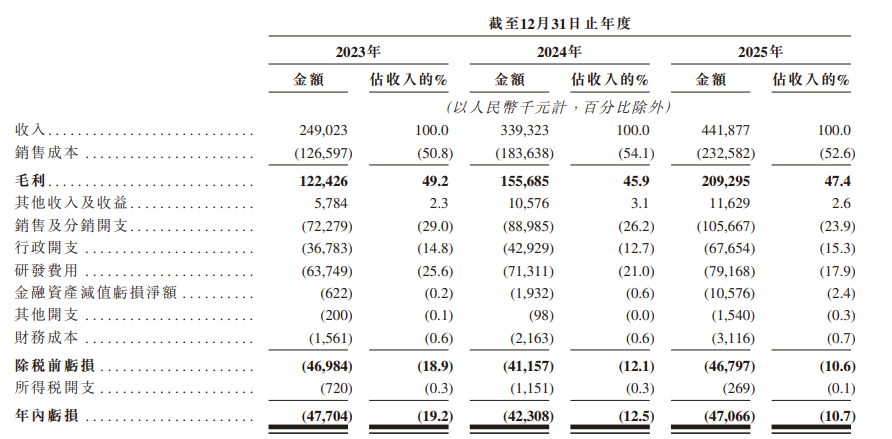
From a product revenue structure perspective, the robot business is SEER Robotics' primary revenue driver. Revenue from this segment grew from approximately RMB 149 million in 2023 to RMB 236 million in 2024 and further to RMB 300 million in 2025. Its revenue share increased from 59.8% to 69.5% in 2024 before slightly declining to 67.9% in 2025, still accounting for over 60% of total revenue.
Robot controllers represent the second-largest revenue segment, with revenue trends initially declining and then rising. Revenue was RMB 66 million in 2023, dropped to RMB 57 million in 2024, and rebounded to RMB 85 million in 2025. Its revenue share also slipped from 26.5% to 16.9% before recovering to 19.3%.
Software business revenue maintained steady growth, increasing from RMB 17 million in 2023 to RMB 23 million in 2025. However, its revenue share consistently declined from 6.6% to 5.3%.
Accessory business revenue grew annually, rising from RMB 18 million in 2023 to RMB 33 million in 2025, with its revenue share remaining stable at around 7%.
Overall, SEER Robotics' revenue is overwhelmingly supported by its robot business, with all product categories achieving year-over-year revenue growth and demonstrating strong overall revenue expansion. 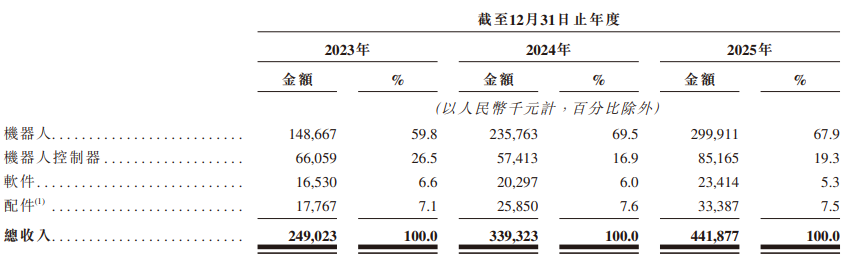
Geographically, the Chinese mainland market is the core revenue base for SEER Robotics. Mainland revenue grew from RMB 201 million in 2023 to RMB 365 million in 2025, with its revenue share increasing from 80.9% to 85.5% in 2024 before slightly declining to 82.7% in 2025, consistently contributing over 80% of total revenue.
Overall overseas revenue grew synchronously, increasing from RMB 48 million in 2023 to RMB 76 million in 2025. Its revenue share declined from 19.1% to 14.5% in 2024 before rebounding to 17.3% in 2025, indicating steady expansion of the overall overseas market scale.
At the profitability level, SEER Robotics' total gross profit increased for three consecutive years, rising from RMB 122 million in 2023 to RMB 156 million in 2024 and further to RMB 209 million in 2025.
The overall gross profit margin remained at a relatively high level above 45%, with figures of 49.2% in 2023, 45.9% in 2024, and 47.4% in 2025, indicating a generally robust profitability foundation.
Analyzing gross profit margins by product, the robot business is the core driver of SEER Robotics' gross profit growth. Gross profit in this segment increased from RMB 51 million in 2023 to RMB 115 million in 2025, with the gross profit margin rising annually from 34.1% to 38.4%, reflecting continuously enhanced profitability.
Robot controllers and software businesses are high-margin categories. Robot controller gross profit initially declined and then rose, with RMB 56 million in 2023, dropping to RMB 46 million in 2024, and rebounding to RMB 68 million in 2025. The gross profit margin slightly declined from 85.2% to 79.8% in 2025, still maintaining a near-80% high-profit level.
Software business gross profit grew steadily, increasing from RMB 14 million in 2023 to RMB 21 million in 2025, with the gross profit margin consistently rising from 85.9% to 89.3%, representing SEER Robotics' highest-margin business segment.
The gross profit margin of the accessory business is the lowest among all categories, with relatively pronounced profitability fluctuations. Gross profit in this segment rose from RMB 1 million in 2023 to RMB 6 million in 2024 before declining to RMB 5 million in 2025. The gross profit margin also increased from 7.5% to 24.5% before falling back to 15.7%, indicating weaker profit stability.
In terms of customer structure, total revenue from SEER Robotics' top five customers was RMB 51.7 million, RMB 63.3 million, and RMB 68.2 million in 2023, 2024, and 2025, respectively, accounting for 20.8%, 18.6%, and 15.4% of total revenue in each period, showing a year-over-year decline in customer concentration.
From a supplier perspective, SEER Robotics' total purchases from its top five suppliers were RMB 50.7 million, RMB 71 million, and RMB 75.8 million in 2023, 2024, and 2025, respectively, accounting for 40.1%, 38.7%, and 32.6% of total sales costs in each period, with a gradual reduction in procurement share from top suppliers.
In terms of equity structure, as of the last practicable date, Zhao Yue, Chairman, Executive Director, and CEO of SEER Robotics, collectively exercised approximately 52.89% of the company's voting rights. This includes direct shareholding of 17,050,617 shares, accounting for about 17.05% of voting rights, and indirect shareholding of 35,835,081 shares through multiple entities, accounting for about 35.84% of voting rights. Zhao Yue and related shareholding entities jointly form SEER Robotics' controlling shareholder group, displaying significant equity concentration. 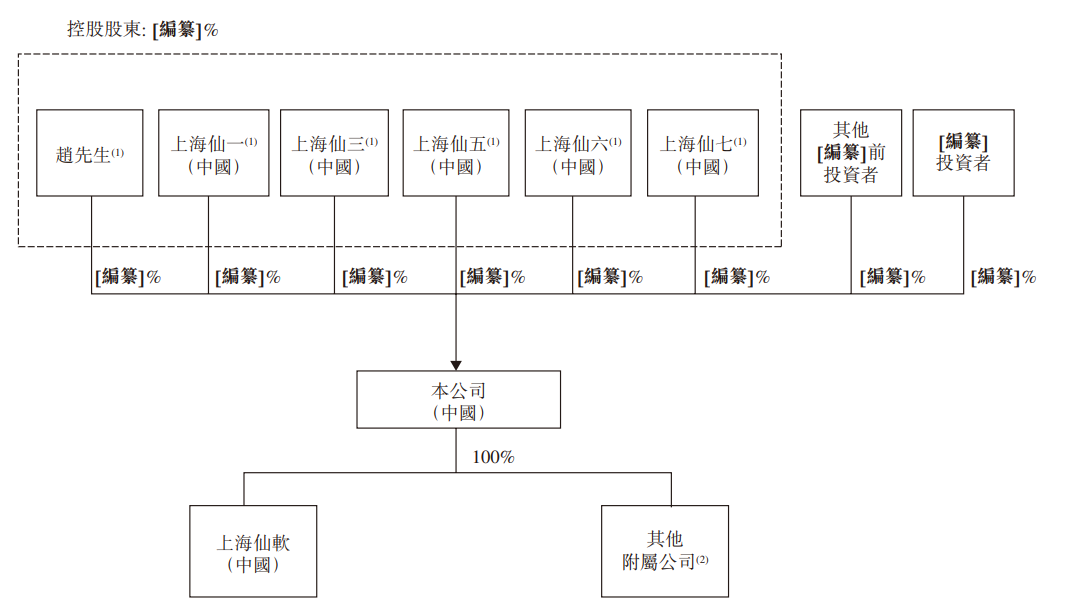
Regarding its financing history, SEER Robotics completed four rounds of equity financing before its listing. On November 26, 2020, it completed Series A financing with a transaction value of RMB 63.9873 million and a post-investment valuation of RMB 300 million. On April 7, 2021, it secured Series A+ financing with a payment value of RMB 32 million and a post-investment valuation of RMB 600 million. On January 18, 2022, it completed Series B financing, raising RMB 117 million with a post-investment valuation of RMB 2.4 billion. On April 30, 2025, it completed Series C financing with a payment value of RMB 70 million and a post-investment valuation of RMB 3.27 billion. Multiple rounds of financing have supported SEER Robotics' continuous business development. 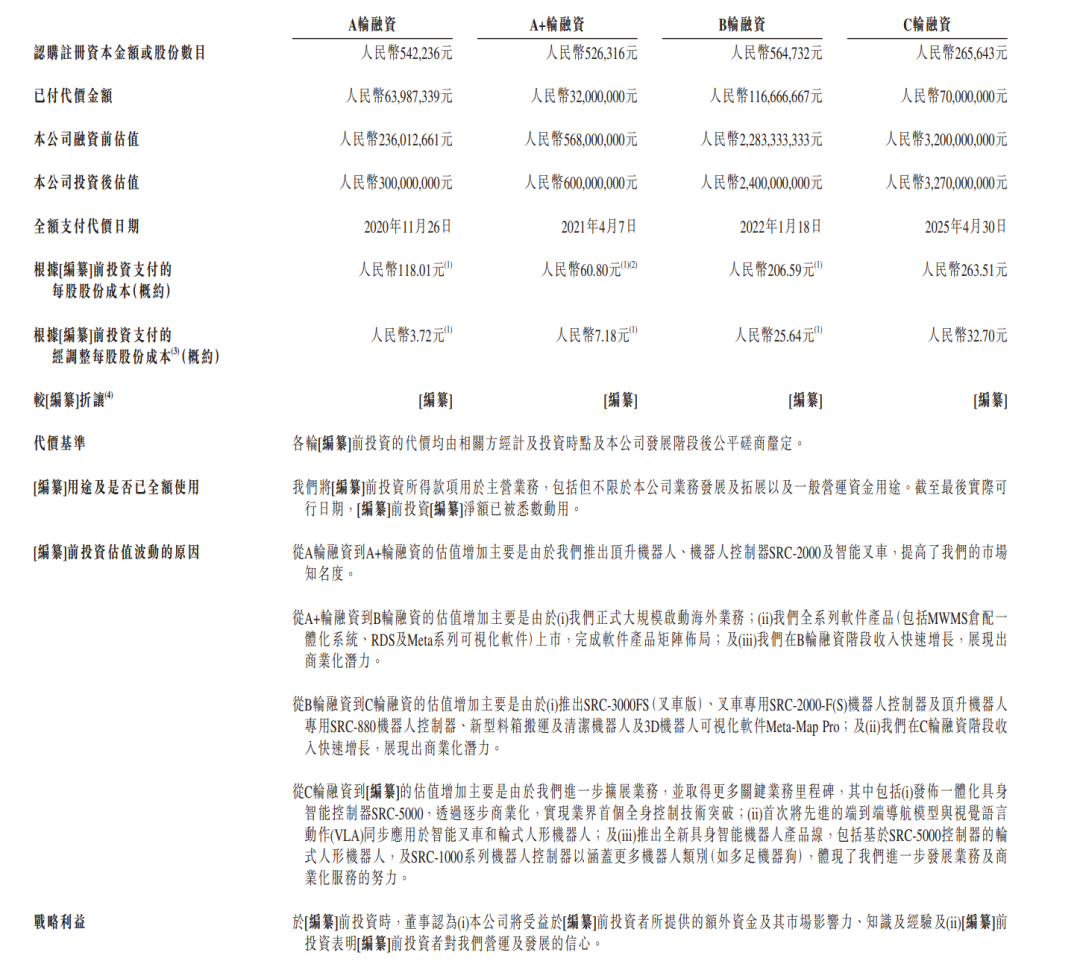
Meanwhile, SEER Robotics faces several significant operational risks that cannot be overlooked.
The first risk is supplier concentration. SEER Robotics relies on a small number of suppliers for components and production services. Although the proportion of purchases from the top five suppliers to sales costs declined annually during the reporting period, it still reached 40.1%, 38.7%, and 32.6% in 2023, 2024, and 2025, respectively. The purchase share from the single largest supplier was 14.5%, 15.8%, and 10.1% in those years.
If key suppliers experience supply disruptions, price hikes, reduced supply, or termination of cooperation, it will directly impact SEER Robotics' normal operations. Even if the company continues to expand its supplier channels, it cannot fully mitigate such risks. Difficulty in swiftly finding high-quality alternative suppliers could also lead to delivery delays, increased procurement costs, and other issues, negatively affecting SEER Robotics' operating performance.
The second risk stems from outsourced production. All robots and robot controllers produced by SEER Robotics are manufactured and tested by third-party manufacturers. Work stoppages, operational disruptions, or changes in cooperation partners could result in operational losses and additional costs.
If existing partners' production capacity cannot match order growth, SEER Robotics would need to find alternative manufacturers. Furthermore, although SEER Robotics implements quality control throughout the production process, it cannot fully ensure that third-party manufacturers adhere strictly to standards. Product defects or non-compliance issues could trigger product liability claims, administrative penalties, brand reputation damage, product recalls, and other problems, further hampering SEER Robotics' operational development.
Finally, SEER Robotics faces prominent risks of persistent losses and cash flow pressure. Since its inception, the company has consistently operated at a loss, with net losses of RMB 47.7 million, RMB 42.3 million, and RMB 47.1 million in 2023, 2024, and 2025, respectively. These losses primarily result from SEER Robotics' continuous expansion of operations and increased R&D investment to capture market share.
As business expansion continues, R&D, sales, marketing, and other expenses are expected to rise further. Coupled with listing-related expenditures, SEER Robotics may continue to incur losses in the short term.
In terms of cash flow, SEER Robotics generated RMB 10.3 million in net cash from operating activities in 2023 but experienced net cash outflows of RMB 25 million and RMB 27.8 million in 2024 and 2025, respectively, with highly volatile cash flow performance.
Failure to achieve positive operating cash flow in the future could lead to working capital shortages, constraining SEER Robotics' daily operations and strategic implementation.
SEER Robotics' subsequent development is highly dependent on external financing. If it cannot secure funds on reasonable terms, its overall operations, financial condition, and performance will face significant pressure. SEER Robotics also cannot guarantee that it will achieve and maintain profitability in the future.
Source/Dawan Technology
-END -
-
![]()
Qianwen’s Version of ‘Being Inside the Nails’
-
![]()
Unbelievable! Chery’s Rumor Refutation Disappears—Who’s Behind the Chaos?
-
![]()
Force Robotics Acquires Atomix: Empowering Robots to Develop Data Flywheels in Real-World Business Environments
-
![]()
Is India Acquiring Electric Vehicle Tech from China? Chery Responds
-
![]()
Struggling to Compete? Japanese Automakers Shift Focus to India, a Market Even Musk Avoids
-
![]()
Why Haven’t We Seen Any Automakers Go Bankrupt Yet, Even as 2026 Reaches Its Midpoint?
-
![]()
Saido Is in Need of a 'Primary Responsible Entity'
-
![]()
Shanghai Robot Brain’s Debut Share: Second Bid for HKEX Listing