Tencent and JD.com Forge Alliance: AI Agent Achieves Transaction Breakthrough
 06/09 2026
 388
388
The deep-rooted collaboration between JD.com and Tencent centered around AI Agent initially appears as a strategic move to merge the complementary strengths of two internet giants. However, from a capital market vantage point, it signifies that China's AI applications have entered a pivotal "transaction closure verification phase."
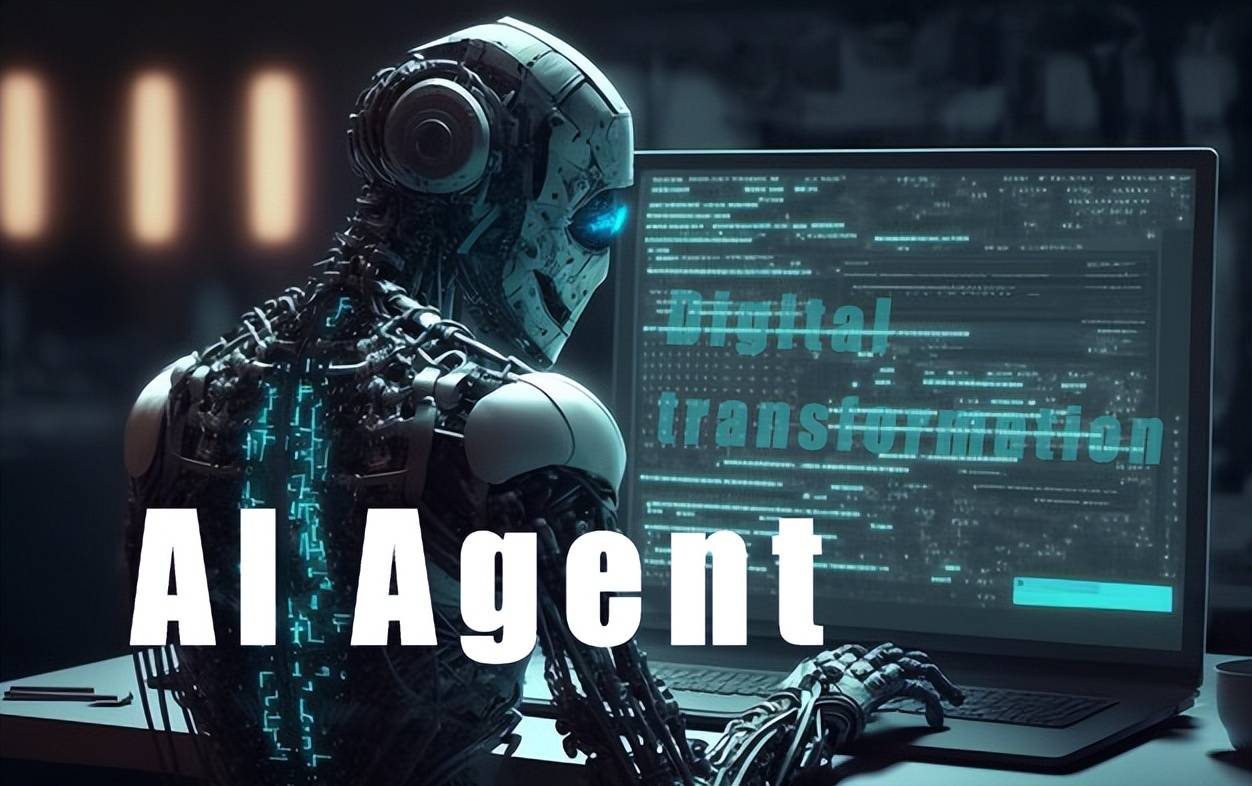
Over the past year, AI Agent has garnered significant attention, yet beneath the surface excitement lies a critical challenge: most Agents are still limited to "chatting, searching, writing, and summarizing." While they can provide suggestions, organize information, and craft compelling content, they remain a step short of the real commercial world.
That crucial step is known as fulfillment.
When users inquire, "What should I buy?" it merely scratches the surface of their needs. The true value lies in whether the subsequent processes—product selection, price comparison, order placement, payment, delivery, and after-sales service—can be seamlessly completed. If AI remains at the suggestion layer, it merely functions as a smarter customer service representative. Only when AI can orchestrate products, payments, and fulfillment can it potentially evolve into the next-generation transaction gateway.
The collaboration between Tencent and JD.com perfectly aligns with this transformative moment.
Tencent boasts gateways, relationship chains, WeChat Pay, a Mini Program ecosystem, and the highest-frequency user scenarios in the Chinese internet landscape. JD.com, on the other hand, excels in product inventory, supply chain management, logistics, after-sales service, and years of accumulated retail fulfillment capabilities. One is user-centric, the other product-centric; one controls traffic gateways, the other delivers results. Together, AI Agent gains, for the first time, the opportunity to transition from "being able to speak" to "being able to act."
My assessment is that the second half of the AI Agent competition will shift focus from who can chat better to who can translate user needs into real orders.
In the first half of the large model competition, the industry was abuzz with discussions on parameters, rankings, multimodality, reasoning capabilities, and product launch frequency. The capital market was also eager to assign valuation premiums to "model capabilities" as they represented the scarcest assets at the dawn of the AI wave.
However, model capabilities are now becoming a basic requirement. Users' perception of "being slightly smarter" is diminishing, and investors' patience for "stronger models" is waning. Traders are less concerned with the addition of another AI gateway and more with whether this gateway can drive conversion rates, contribute to GMV, reduce customer acquisition costs, and enhance cash flow quality.
The valuation anchor for AI applications is shifting from "proving capabilities" to "delivering commercial results."
Therefore, the truly intriguing aspect of the Tencent-JD.com partnership lies not in their announcement of collaboration but in their provision of an Agent sample that more closely resembles a financial model: Tencent provides the gateway, JD.com provides fulfillment, and the Agent translates user intent into transactional actions.
This is more challenging and resonates more with the capital market than simply creating an AI assistant.
An Agent capable of answering questions has a valuation logic akin to that of tool software; an Agent capable of generating orders begins to resemble a trading platform. The former is evaluated based on DAU, usage volume, and subscription revenue, while the latter is assessed on conversion rates, average order value, repurchase rates, fulfillment efficiency, and GMV contribution.
The difference is significant.
For Tencent, JD.com fills the gap in its physical transaction chain. Tencent has traffic, payments, social relationships, and a Mini Program ecosystem, but many consumer demands originating from WeChat still end up being fulfilled on other platforms. The value of the gateway has not been fully realized.
If AI Agent can identify user needs within the WeChat ecosystem and then leverage JD.com's product, pricing, inventory, and delivery capabilities, the transaction chain will be shortened. A shorter path increases the likelihood of marginal improvements in conversion rates. For Tencent, this may represent not just an additional AI product but an additional method of monetizing traffic.
Gateway assets will be revalued accordingly.
For JD.com, Tencent brings more than just ordinary traffic. JD.com's core strength has always been its supply chain and fulfillment capabilities, but the e-commerce industry's greatest pressure in recent years has come from the traffic side. Pinduoduo has captured market share with its low-price strategy, Douyin has restructured shelves with content-driven traffic, and Alibaba has defended its position with its merchant ecosystem and consumer mindset. JD.com's supply chain is robust, but factors such as frequency of use, user mindset, and customer acquisition costs have constrained market valuation elasticity.
If the Tencent ecosystem becomes a new gateway for JD.com's AI Agent, the significance extends beyond just an additional channel.
Lower-cost order sources, shorter decision paths, and stronger scenario penetration will all influence JD.com's order visibility and profit elasticity. While JD.com has traditionally emphasized retail efficiency and supply chain moats, if it can integrate its fulfillment capabilities into Tencent's high-frequency gateway, the market will reassess its front-end value.
The supply chain will no longer be just a back-end capability but a transactional infrastructure that can be leveraged in the Agent era.
I have always believed that AI applications risk becoming "tech circle self-indulgence." Models are powerful, demos are impressive, and launches are explosive, but if users' lives, merchants' orders, enterprise costs, and financial statements remain unchanged, the capital market's risk appetite for such stories will increasingly diminish.
The Tencent-JD.com collaboration precisely offers a more pragmatic direction: instead of rushing to prove that AI can replace the world, first prove that AI can help users buy a good product, help platforms complete an additional transaction, and help merchants avoid losing a conversion.
This is the most fundamental pain point of commercialization.
Consumers do not care about the model behind the Agent or whether it is multimodal. They only care about whether it understands their needs, avoids irrelevant recommendations, offers reliable pricing, ensures timely delivery, and takes responsibility when issues arise.
This is where JD.com's value lies.
Fulfillment capability is the credit foundation for AI Agent to enter transactional scenarios. Without fulfillment, the more an Agent recommends, the greater the risk. With fulfillment, recommendations lead to delivery results, transactions achieve closure, and users are willing to entrust decision-making to the system.
Of course, the market will not indefinitely reward mere cooperation announcements.
In the short term, the Tencent-JD.com AI Agent collaboration will serve as a thematic catalyst for AI application directions, especially during a window of repairing risk appetite for Hong Kong tech stocks. Combinations of "high DAU gateways + real commercial scenarios" are likely to attract capital attention. Tencent itself boasts stable profits and cash flow, while JD.com has a retail foundation and supply chain assets. The collaboration narrative is clear enough to facilitate short-term sentiment repair.
However, the medium-term focus will be on data.
If the collaboration merely results in the launch of a few intelligent shopping guides, customer service tools, or product recommendation features, the market will quickly lose interest. What truly drives valuation shifts is whether JD.com's order conversion within the WeChat ecosystem improves, whether the path from user inquiry to order placement shortens, whether JD.com's customer acquisition costs decline, and whether Tencent's advertising, payment, and Mini Program transactions show marginal improvements.
In other words, collaboration is just the catalyst; conversion rates are the realization.
The long-term logic is even broader: AI Agent may redefine e-commerce gateways.
In the past, when users wanted to buy something, they either opened an e-commerce app, were influenced by content on a platform, or entered a product page through search and recommendations. The basic action of "people searching for products" has defined e-commerce for over a decade.
In the Agent era, the logic may shift to "demand seeking supply." Users will no longer input a string of keywords but directly express a life problem: with a limited budget, they want to buy a smartphone suitable for the elderly; for a weekend camping trip, they need equipment that won't disappoint; with the start of the school year, they need to purchase stationery and a backpack all at once.
If the Agent can understand the demand, screen products, access inventory, complete price comparisons, and integrate payment and delivery, the e-commerce gateway will shift from app shelves to an intelligent decision-making layer.
Whoever controls this decision-making layer will have the opportunity to redistribute traffic.
Tencent is not relaunching e-commerce, nor is JD.com simply leveraging WeChat to sell products. More accurately, the two companies are attempting to redefine the division of labor between "gateway and fulfillment" in the Agent era.
This line of thinking holds imagination but also carries significant risks.
First, user trust will not automatically transfer. It is easy to let AI recommend an article, but difficult to let AI buy something for you. Standardized products may see quicker adoption, while non-standardized products, low-priced impulse buys, and content-driven decision categories will still face user price comparisons and skepticism.
Second, the allocation of commercial interests will determine the depth of collaboration. Gateways, products, advertising, payments, delivery, and after-sales each involve revenue and data attribution. If the profit-sharing mechanism is not smooth, the collaboration may remain superficial.
Third, JD.com's fulfillment advantages may also suppress profit elasticity. Faster delivery, stronger after-sales, and higher certainty are moats but also cost items. If Agent-driven orders concentrate in low-margin categories, revenue may grow, but profits may not be released simultaneously.
Fourth, competition will not cease. Alibaba has Taobao, Tmall, Kuake, and Tongyi; Meituan has local services and instant fulfillment; Douyin has content-driven traffic and e-commerce closure. Tencent + JD.com is not the only answer but merely the most easily understandable line for the market currently.
Therefore, my assessment of this collaboration is straightforward: direction matters, but victory cannot be priced too early.
In the short term, it serves as a thematic catalyst for AI Agent application implementation. In the medium term, it must prove marginal improvements in conversion rates and customer acquisition efficiency. Only in the long term does it have the opportunity to tell an asset revaluation story about the "next-generation transaction gateway."
If subsequent data proves that the Agent can drive stable order growth, Tencent can discuss gateway revaluation, JD.com can discuss fulfillment revaluation, and the AI application sector can discuss business model revaluation.
If the data validation is insufficient, the collaboration will revert to an ordinary product linkage, the thematic heat will be quickly digested, and the transaction logic will be disproven.
What investors should truly focus on is not what was said at the launch event but three numbers: Agent invocation frequency, transaction conversion rate, and JD.com's order growth within the Tencent ecosystem.
If AI Agent cannot complete transactions, it remains a smarter customer service representative.
If AI Agent can mobilize products, payments, and fulfillment, it may become the next-generation commercial gateway.
This is precisely the bet Tencent and JD.com are placing.
-
![]()
Cook’s ‘Curtain Call’: Has Apple AI Finally ‘Set Sail’? | Apple WWDC 2026 Highlights
-
![]()
Cook's 'Curtain Call': Apple AI 'Sets Sail'? | Apple 2026 WWDC Highlights
-
![]()
Storage Price Increases Weigh on Industry! Global Smartphone Production Set to Decline by 16.2% by 2026
-
![]()
Large Models Reignite Big Tech's 'Healthcare Dreams'
-
![]()
Siri AI Takes Center Stage, VisionOS Steps Back: Can Cook Secure Victory in the AI Showdown?
-
![]()
Tencent and JD.com Forge Alliance: AI Agent Achieves Transaction Breakthrough
-
![]()
Auto Market Sees Increasing Polarization amid 'Moderate Recovery,' SAIC Volkswagen Leads Transformation with Five New Energy Models
-
![]()
Automotive-Grade Chip Prices Skyrocket by 180% in Three Months, Prompting NEVs to Stealthily Hike Prices Again