Struggling to Compete? Japanese Automakers Shift Focus to India, a Market Even Musk Avoids
 06/09 2026
 356
356
Lead
Introduction
Japanese manufacturers have already established their dominance in India's automotive market and lead the sales of hybrid vehicles.
For decades, the expansion of Japanese automakers in Asia has been closely intertwined with China, which served as their preferred hub for achieving scale, facilitating exports, and enabling low-cost manufacturing. However, a subtle yet significant transformation is underway, with India emerging as an increasingly crucial element in the long-term investment strategies of Japanese automakers.
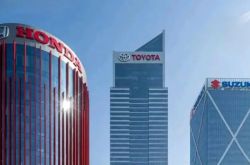
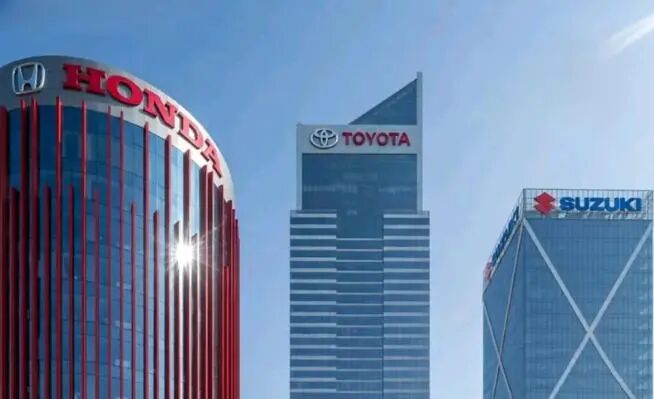
As early as last year, reports surfaced indicating that Toyota, Honda, and Suzuki had jointly invested $11 billion in the Indian market. This move underscores how these Japanese brands, once dominant in China, are now compelled to explore new opportunities amid fierce competition and diminishing profits.
Executives acknowledge that China is rapidly transitioning towards self-developed, technologically advanced electric vehicles, rendering traditional automotive strategies obsolete. Since May of this year, Japanese automakers have begun channeling billions of dollars into new factories and capacity expansions in India, lured by its vast labor force, attractive policies, and the absence of Chinese competitors.
The urgent pivot to India is driven by a comprehensive collapse in the Chinese market.
Honda reported a staggering net loss of ¥423.9 billion for the fiscal year 2025, marking its first full-year loss since going public in 1957. Nissan fared even worse, with losses reaching ¥533.1 billion. Even Toyota, which managed to stabilize its position through hybrid technology and aggressive pricing, saw only a marginal 0.2% increase in Chinese sales in 2025, totaling 1.78 million units.
Furthermore, the market share of Japanese brands in China plummeted from a peak of 23.1% in 2020 to a mere 9.8% in 2025, breaching the critical psychological threshold of 10%. Honda's sales in China dropped by over 60% from their 2020 peak, leaving only 645,300 units. Nissan witnessed its market share shrink from 7% to 3.8% over seven consecutive years of decline.
With their once-mighty growth engine—the Japanese domestic market—also waning, Japanese automakers urgently seek new markets. Globally, only India offers sufficient scale to absorb this displaced production capacity. However, the crux of the matter is that their move to India is not merely about selling more gasoline-powered vehicles.
01 Can't Win?
It can be argued that the Japanese automotive industry is ensnared in a systemic crisis.
Honda's CEO conceded, "We've been pushed to the brink of survival." Honda severely misjudged the global adoption rate of electric vehicles and the capabilities of its competitors, blindly expanding its EV product lineup and ultimately being forced into a strategic pivot, incurring a staggering ¥2.5 trillion in asset impairment losses.
By some estimates, the combined net profit of Japan's seven major automakers for the fiscal year 2026 will nearly halve from its peak, dropping by 48%. The North American market has been particularly hard-hit by tariff policies, with Toyota alone losing ¥1.38 trillion in operating profit. In China, facing BYD's overwhelming monthly sales of 300,000 units, Japanese automakers' pure EV models generally sell fewer than 10,000 units per month.
Last month, Suzuki, Toyota, and Honda nearly simultaneously unveiled new factory and investment plans in India. Viewed individually, these announcements appear as isolated news items—"investment announcements," "factory constructions," and "EV exports."
However, when viewed collectively, it becomes evident that 2026 marks a turning point where Japan's supplier system as a whole shifts its focus to India.
For instance, Suzuki, through Maruti Suzuki, is investing approximately ¥1.2 trillion to establish a production system capable of manufacturing 4 million units annually by the fiscal year 2030-31, a 70% increase from its current capacity of around 2.35 million units. Its EV production target for the fiscal year 2026 is 67,000 units, most of which will be exported to over 100 countries.
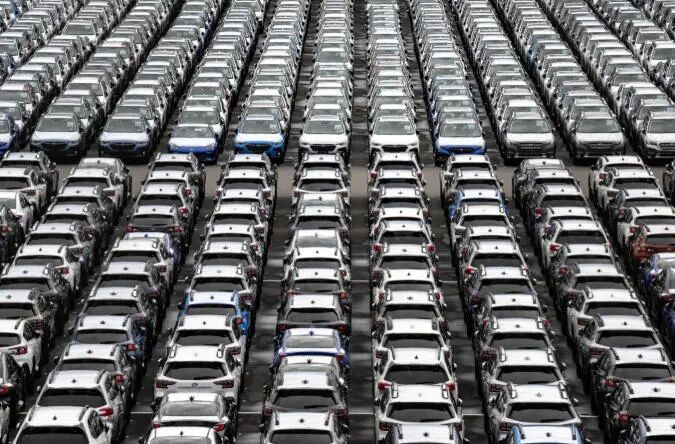
Toyota, through Toyota Kirloskar Motor, is investing around ¥300 billion to primarily produce new SUVs and plug-in hybrid components, while considering it as an export hub for the Middle East and Africa. Toyota's sales in India reached approximately 389,000 units in 2025, up 19% year-on-year, largely driven by demand for hybrid models.
Notably, Suzuki performed exceptionally well in 2025, surpassing Nissan in global sales to become Japan's third-largest automaker. As the Japanese fiscal year ended, Suzuki's ranking rose further, with global sales of 3.55 million units surpassing Honda's, making it Japan's second-largest automaker. Suzuki's revenue for the previous fiscal year was ¥6.29 trillion, while Honda reported its first annual loss since going public in 1957.
Although reports did not attribute Suzuki's success to a specific model, its K-car has long been the primary driver of domestic sales growth in Japan. Beyond Japan, Suzuki has also achieved tremendous success in India, with Maruti Suzuki accounting for 60% of Suzuki's total sales. During the same period, Suzuki's market share in India reached 40%.
Over the past 12 months, Suzuki has largely avoided the major obstacles faced by its Japanese rivals. Without a U.S. business, Suzuki has sidestepped the complex and ever-changing tariff impacts. In China, this has allowed Suzuki to avoid the EV-related troubles encountered by Honda, Nissan, Mazda, Mitsubishi, and Toyota.
Previously, for Japanese manufacturers, India was merely a "base for conquering the Indian market." This time, Suzuki and Honda explicitly stated that they would "re-export India-made products to developed countries, including Japan." Now, seeing Suzuki's success, other automakers are attempting to replicate this path.
Meanwhile, as Chinese competitors continue to gain market share, Japanese automakers' market share in Southeast Asia—a region that has long supported their profitability—is steadily declining. In Thailand, a key market, Japanese automakers' market share dropped from 77.8% in 2023 to 69.3% in 2025. During the same period, Chinese brands' market share grew from 10.9% to 18.2%.
A similar trend is evident in Indonesia, where Japanese automakers' market share fell below 90% by 2024 as Chinese brands continued to erode their share. However, Chinese automakers' market share in India remains limited. Thus, Japanese manufacturers are trying to leverage this situation to make India a core pillar of their global strategy.
02 What Does India Offer?
What is the current state of India's automotive industry? Currently, EV adoption in India stands at around 2.5%, but the push for electrification is urgent. Heavily reliant on imported oil, India views developing its EV industry as crucial for alleviating energy security pressures.
For a long time, India has aspired to become China's alternative in the new energy vehicle sector, coveting core technologies such as batteries, electric motors, and electronic controls. However, it still has a long way to go in terms of urbanization, car ownership, infrastructure development, and inclusive finance.
Tesla's decision to abandon plans for a factory in India dealt a blow to domestic sentiment, primarily because Tesla's key suppliers are mostly concentrated in China. India had hoped Tesla's arrival would drive the relocation of China's entire supply chain, accelerating its own electrification process. With Tesla's exit, this vision has evaporated.
Under these circumstances, Japanese automakers entering India with only gasoline-powered vehicle technology are unlikely to receive a warm welcome. Industry insiders generally believe that this large-scale transformation by Japanese automakers is actually catering to India's urgent demand for electrification.
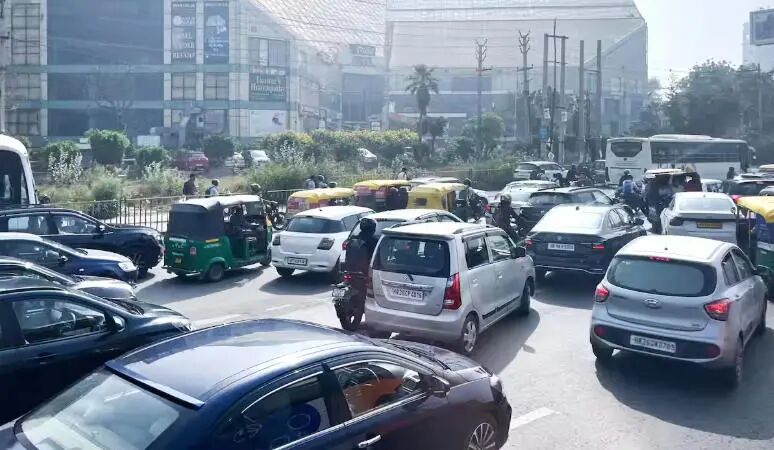
Moreover, India has surpassed Japan to become the world's third-largest automotive market, following the U.S. and China. Industry insiders point out that India is no longer just a consumer market. With rising protectionism in the U.S. and Europe and intensifying competition in China, India is increasingly becoming a core production base in the global supply chain, prompting automakers to view it as an alternative manufacturing hub.
Japanese automakers cannot compete with local Chinese brands in China's EV market, but if they deploy products based on China's supply chain in India, it could create a truly disruptive force. In fact, Japanese automakers are now fully embracing China's EV component supply chain.
Toyota's pure electric SUV, the bZ3X, launched in China, was developed by GAC Toyota and relies on nearly 90% of its components from Chinese suppliers. Subsequent models like the bZ5 and bZ7 also heavily depend on Chinese components. Nissan's pure electric sedan, the N7, uses CATL batteries and Momenta's intelligent driving system, with almost all of its core electric powertrain components sourced from China.
More notably, the Toyota bZ7 is equipped with Huawei's electric motor and HarmonyOS operating system. From batteries, electric motors, and electronic controls to chips, operating systems, and autonomous driving algorithms, Chinese companies now offer complete, mass-production-proven solutions. Moreover, this technological dependence will not disappear simply because factories are relocated to India.
Looking back at the plans of several Japanese automakers, Honda aims to make India a production and export hub for EVs, while Suzuki is investing $8 billion to double its annual production capacity in India from 2 million to 4 million units. Toyota also plans to fully adopt Chinese components in its Southeast Asian bases (including Thailand) starting in 2028.
They can leverage the Indian market to serve Africa, Latin America, the Middle East, Southeast Asia, and even parts of Europe. India's cost structure, supplier base, and engineering talent make it an ideal production location for small sedans, SUVs, affordable EVs, hybrids, and commercial vehicles.
However, Indian automakers such as Tata Motors and Mahindra & Mahindra will also feel the impact. If Japanese automakers adopt more aggressive strategies in the Indian market, competition in SUVs, hybrids, EVs, and exports will intensify, potentially challenging Indian companies in key market segments.
Therefore, those familiar with India's business environment should also recognize that Japanese automakers' massive bets on the Indian market are, to some extent, a gamble, but they have no other choice. As one industry analyst put it, "Avoiding the Indian market is akin to slow suicide; entering it may result in being severely exploited, but at least some crumbs will remain."
The risks of the Indian market, such as high tariffs, slow approvals, land disputes, and potential fines of up to 10% of global revenue under antitrust laws, have long been open secrets. Apple's $38 billion fine and Elon Musk's disappointing trip to New Delhi for negotiations both confirm that India's "foreign investors get burned first" rule remains in effect.
Editor in Charge: Cao Jiadong Editor: He Zengrong
THE END
-
![]()
Qianwen’s Version of ‘Being Inside the Nails’
-
![]()
Unbelievable! Chery’s Rumor Refutation Disappears—Who’s Behind the Chaos?
-
![]()
Force Robotics Acquires Atomix: Empowering Robots to Develop Data Flywheels in Real-World Business Environments
-
![]()
Is India Acquiring Electric Vehicle Tech from China? Chery Responds
-
![]()
Struggling to Compete? Japanese Automakers Shift Focus to India, a Market Even Musk Avoids
-
![]()
Why Haven’t We Seen Any Automakers Go Bankrupt Yet, Even as 2026 Reaches Its Midpoint?
-
![]()
Saido Is in Need of a 'Primary Responsible Entity'
-
![]()
Shanghai Robot Brain’s Debut Share: Second Bid for HKEX Listing