Auto Market Sees Increasing Polarization amid 'Moderate Recovery,' SAIC Volkswagen Leads Transformation with Five New Energy Models
 06/09 2026
 467
467
China's auto market in 2026 is undergoing profound structural restructuring. May's market performance showed a 'month-on-month recovery but year-on-year pressure.' Current data from the China Passenger Car Association indicates that domestic narrow passenger vehicle retail sales reached approximately 1.545 million units in May, down 20% year-on-year but up 12% month-on-month.
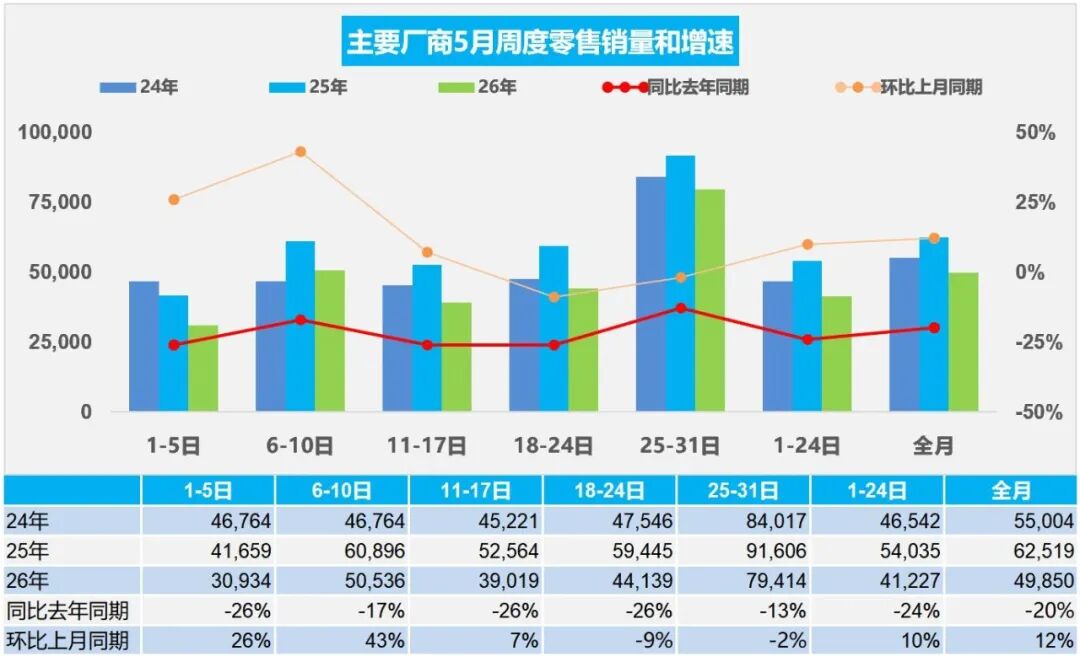
More critically, the NEV penetration rate is expected to climb to 63%, setting a new historical record. The widening gap between gasoline and electric vehicles reflects a dual shift in both supply and demand, reshaping the market's fundamental landscape.
Joint Ventures Strike Back: From 'Single Hit Models' to a 'Best-Selling Portfolio'
The auto market in May remained in a mild recovery phase. High fuel prices continued to impact demand for gasoline vehicles, with NEVs emerging as the core growth engine.
Against this backdrop, mainstream joint venture automakers are intensifying their NEV offensive. Once dominated by gasoline vehicles, the joint venture camp (joint venture segment) is now achieving a more balanced product mix with the dense ( dense ) launch of NEVs, entering a period of concentrated transformation results. Models like the Buick Velite 7 from SAIC-GM and the Toyota bZ3X from GAC Toyota have seen sustained sales growth. Among joint ventures, SAIC Volkswagen stands out prominently.
SAIC Volkswagen's retail sales grew 21% month-on-month in May, with NEV sales nearing 10,000 units, achieving both year-on-year and month-on-month growth. The company's fuel-electric vehicle structure has shown positive turning signals. As one industry analyst noted, 'For a joint venture of this scale, selling nearly 10,000 NEVs in a month is a critical threshold, signaling that transformation has truly entered an accelerated phase.'
'Qi Che Ba Tan' learned that SAIC Volkswagen will launch a total of seven NEV models this year, rapidly transitioning from 'single hit models' to 'portfolio warfare.' In just two months, the company introduced five new NEV models, covering plug-in hybrid, extended-range, and pure electric powertrains, demonstrating substantive acceleration in the 'parallel advancement of fuel and electric vehicles' characteristic of Joint Venture 2.0.
From the April launch of the ID. ERA 9X, which ignited the high-end extended-range market, to the May triple launch of the Passat ePro, Tiguan L ePro, and Audi E7X, followed by the exposure of the ID. ERA 5S, these five models in two months span multiple segments, including mid-to-high-end hybrids, luxury pure electrics, and intelligent sedans, indicating simultaneous 'new product' cycles across multiple tracks.
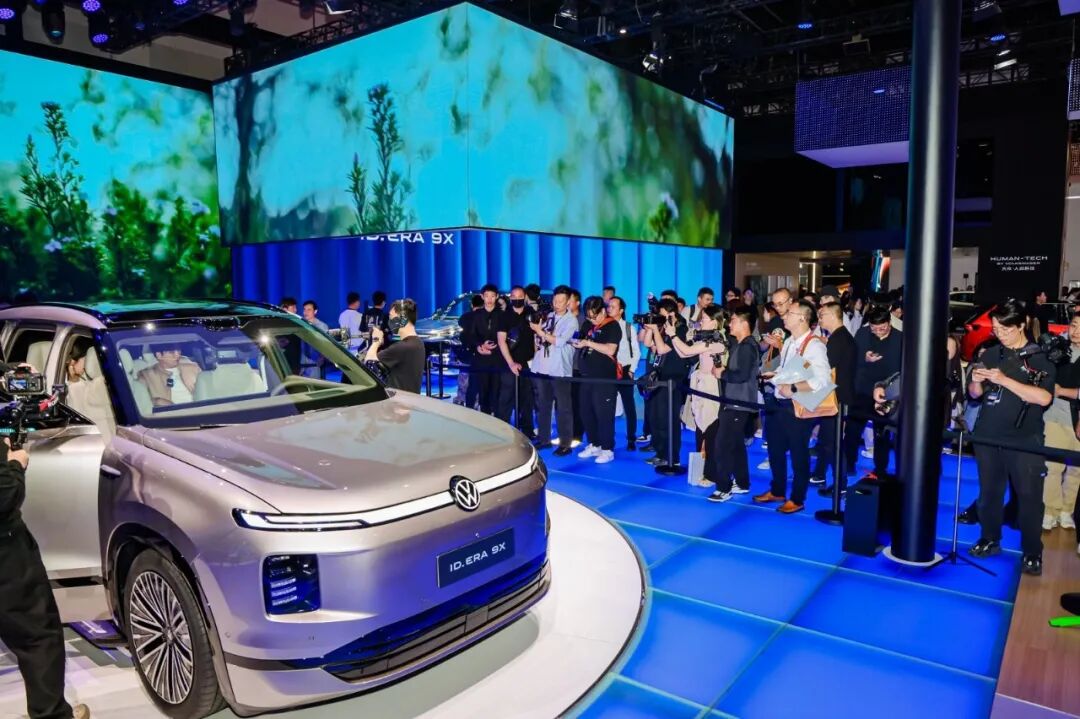
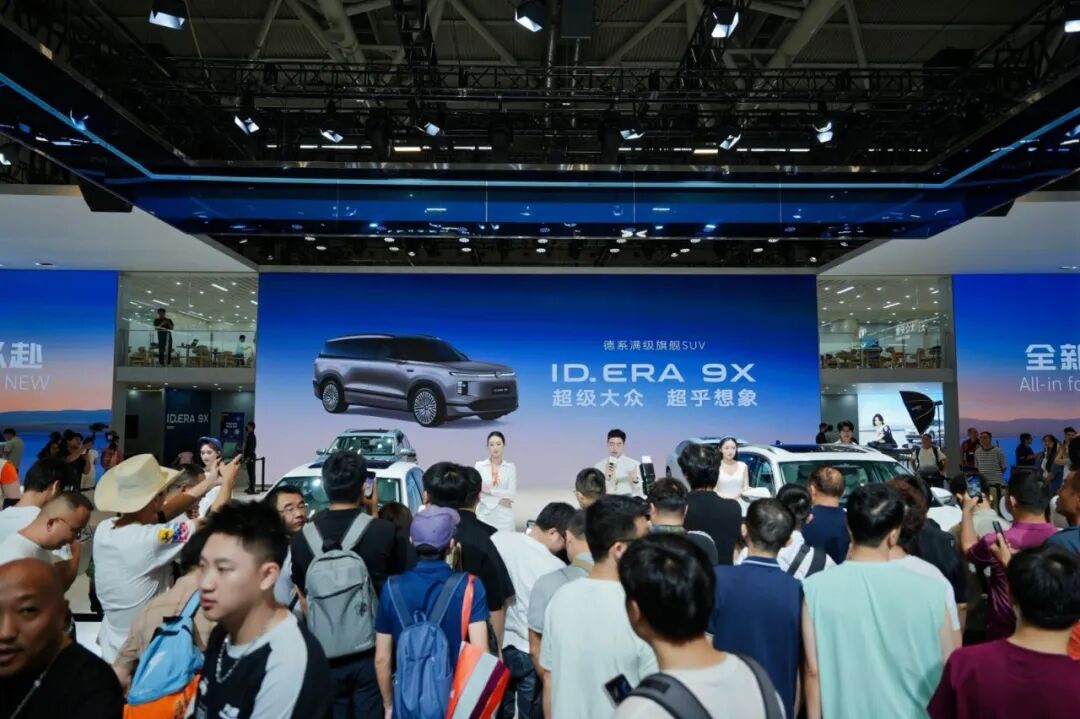
Among them, the ID. ERA 9X, as SAIC Volkswagen's inaugural model in the Joint Venture 2.0 era, secured over 10,000 orders within an hour of its launch and delivered more than 7,000 units in its first month. More importantly, the ID. ERA 9X's popularity has significantly boosted store foot traffic. Many consumers, initially drawn in by the 9X, have begun exploring the entire ID. ERA series, building potential enthusiasm for future models. This flagship model also underscores the market appeal of German flagship vehicles in the NEV era.
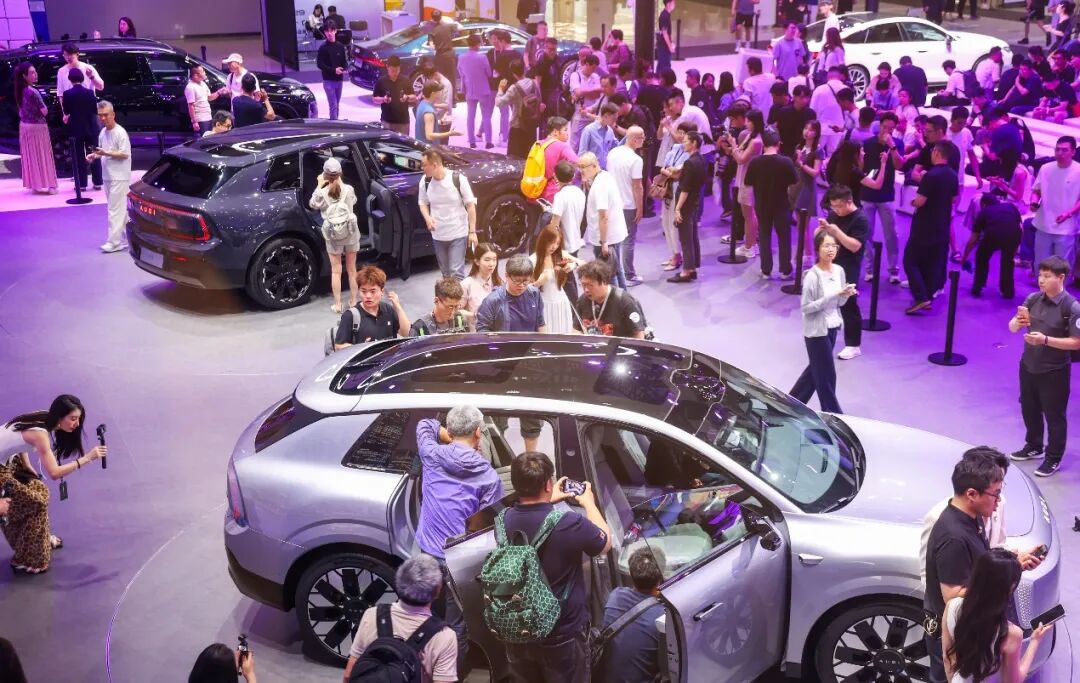
The Audi E7X has also performed exceptionally well. Since pre-sales began on May 8, orders have continued to rise, with a test-drive-to-purchase conversion rate exceeding 70%. Some investors have even reapplied to open new stores. After its official launch at the Guangdong-Hong Kong-Macao Greater Bay Area Auto Show in late May, it is poised to drive strong subsequent sales momentum. As Audi's first model to feature Level 3 autonomous driving, the E7X redefines the value benchmark for luxury electric SUVs with its 'full-featured entry-level' approach, further strengthening SAIC Audi's voice in the luxury intelligent electric market.
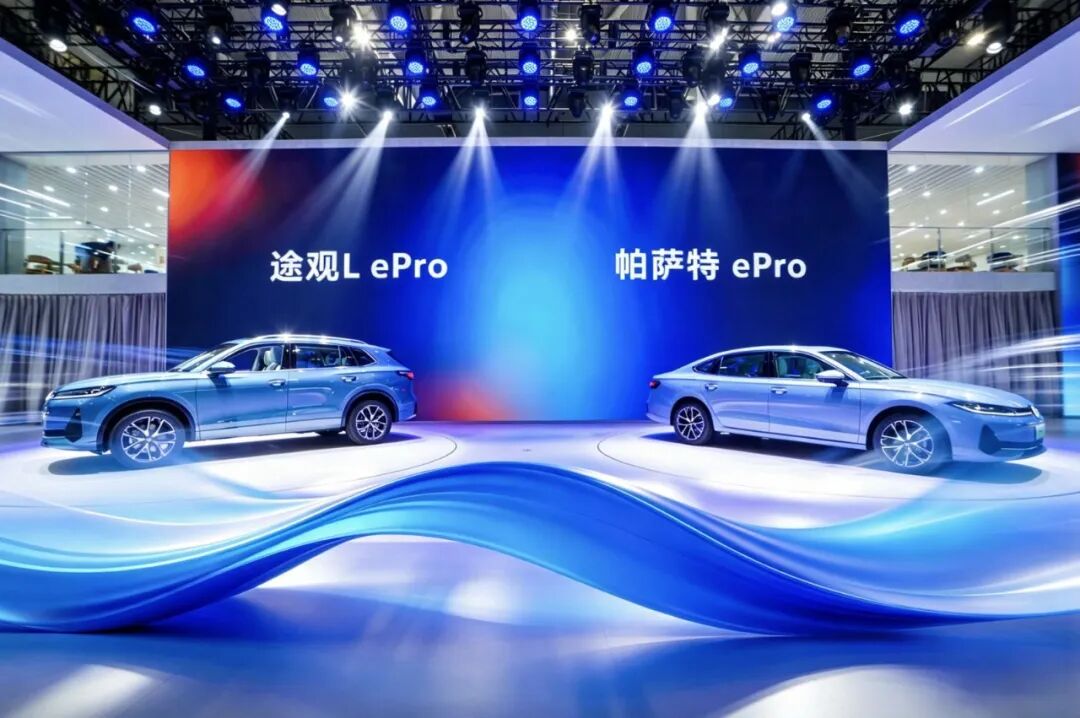
The electrified and intelligent updates to the classic Passat ePro and Tiguan L ePro precisely meet mainstream consumers' demand for a combination of 'German quality, ultra-low energy consumption, and intelligent experience,' revitalizing best-selling models in the NEV era and further solidifying SAIC Volkswagen's foundation in the hybrid market.
From product rhythm, localized R&D, to sales strategy transformation, the current 'counteroffensive' by joint venture automakers, exemplified by SAIC Volkswagen, represents a qualitative and quantitative leap. The order and delivery enthusiasm for the flagship models 9X and E7X not only validate market recognition of high-end NEV products from joint ventures but also lay a solid brand and channel foundation for more new product launches.
Systemic Evolution: From 'Selling Cars' to 'Omnichannel User Operations'
This rhythm is no accident. In recent years, SAIC Volkswagen has implemented a dedicated GTM organizational model of 'one product, one team' and introduced an integrated product marketing process, significantly shortening the time from debut to market launch. Enhanced supply chain resilience and systemic efficiency have laid the groundwork for dense ( dense ) new product introductions.
Currently, SAIC Volkswagen is fully implementing a 'one-customer, one-group' digital service model and continuously building a new sales service system centered on user experience through lifetime vehicle warranties, transparent 'fixed-price' purchases, and a nationwide 'uniform service commitment.'
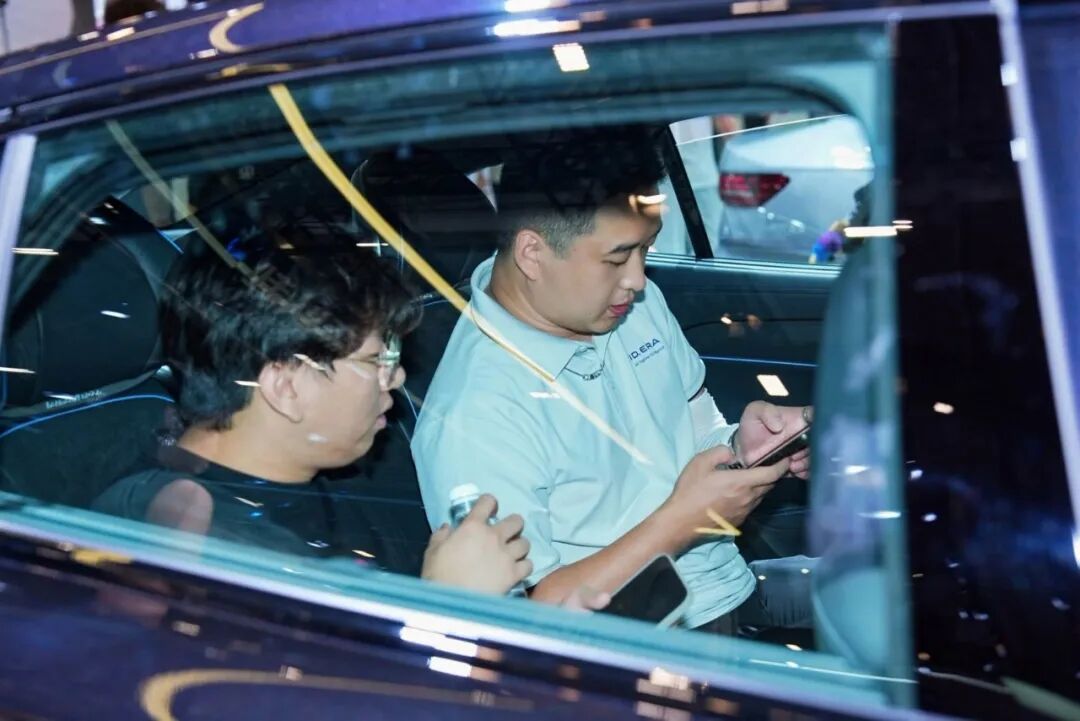
In terms of channels, SAIC Volkswagen is actively constructing a nationwide NEV experience network. The first self-operated pop-up store for the ID. ERA 9X has opened, allowing consumers to interact with intelligent robots for a more engaging and tech-savvy vehicle viewing experience. Currently, over 100 pop-up stores in shopping malls cover key cities nationwide, providing a frontline platform for the NEV product line to directly engage with younger consumers. For the luxury electric Audi E7X, offline experience centers have also opened in core popular business districts across 40 cities nationwide, establishing direct touchpoints with new-generation consumers for the NEV product line.
Deepening Joint Venture 2.0: From 'Made in China' to 'Defined by China'
From the ID. ERA 9X to the Audi E7X, and the ePro family to the ID. ERA 5S, SAIC Volkswagen is completing a dual leap in intelligence and electrification, centered on 'German heritage + Chinese wisdom.' Its 'Xingyun Zhixing' intelligent assisted driving ecosystem, developed in collaboration with Momenta, Zhiyu Technology, and Core Power, is led by Volkswagen in product definition and validation standards, ensuring a unified, reliable, and user-friendly 'Volkswagen experience.'
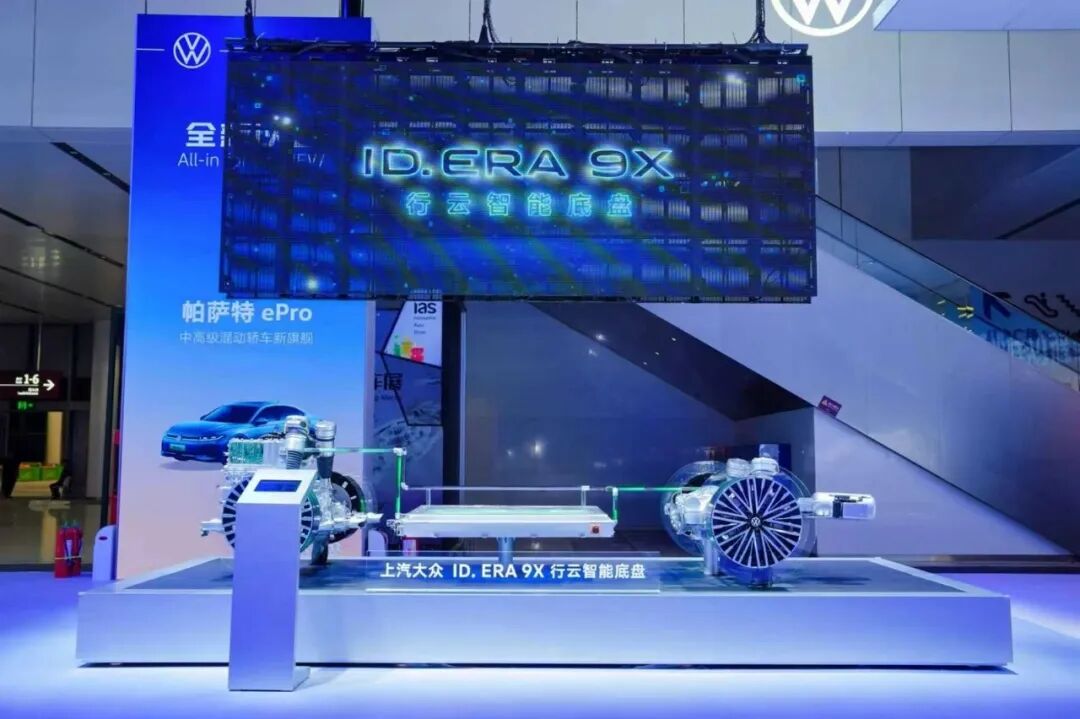
Tao Hailong, Secretary of the Party Committee and General Manager of SAIC Volkswagen, stated, 'Although the products are developed in China for China using Chinese technology, they fully comply with Volkswagen's global standards and can be offered to users worldwide.' This signifies SAIC Volkswagen's transition from 'importing German vehicles' to 'defining German vehicles.' When overseas netizens express their anticipation for the ID. ERA 9X to launch in their countries, the transformation story of Chinese joint venture automakers has opened a new chapter.
China's auto market is currently at a critical juncture of energy transition between gasoline and electric vehicles. If the NEV penetration rate surpassing 60% marks an irreversible evolution in the competitive landscape, the renewed efforts by mainstream joint venture automakers indicate that the depth and breadth of track competition are far from settled.
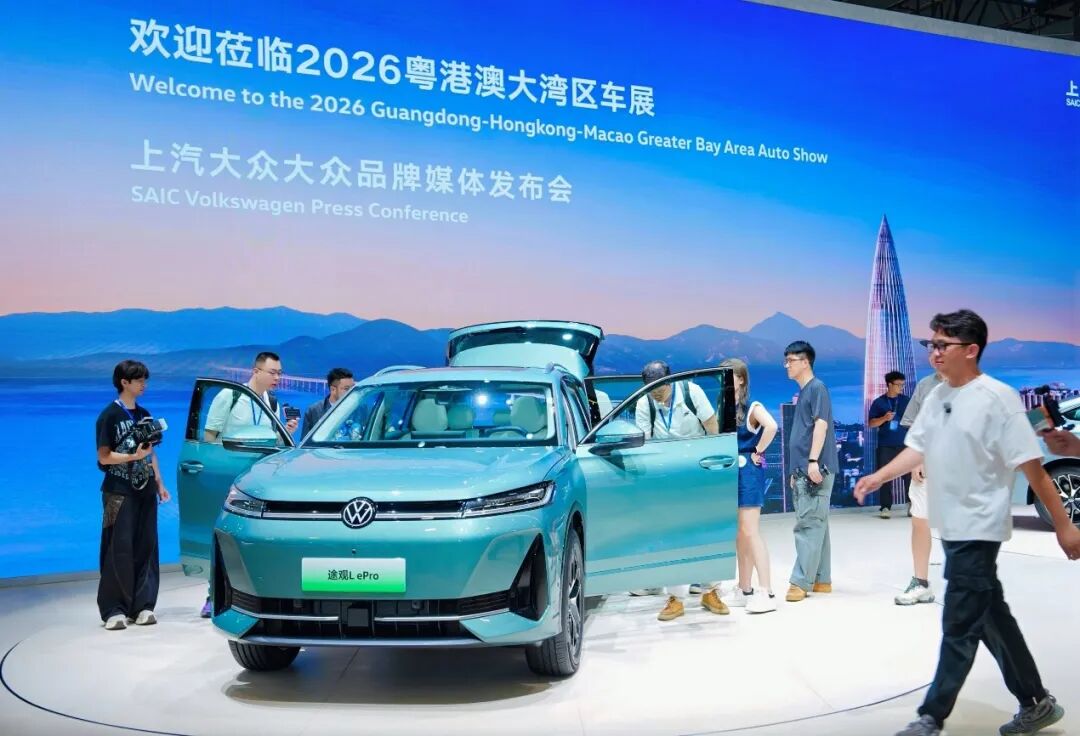
For SAIC Volkswagen, the temporary sales pressure does not signify a strategic retreat but rather a structural adjustment from gasoline-only to a dual fuel-electric drive. With the ID. ERA 9X opening a breakthrough in high-end extended-range vehicles, the ePro family stabilizing the mid-to-high-end hybrid segment, the Audi E7X kicking off the luxury electric era, and the ID. ERA 5S filling the sedan niche, the path of parallel fuel-electric advancement and overall balance is widening.
In the second half of 2026, as more Joint Venture 2.0 products enter scaling ( scaling ) delivery cycles, the deep-water competition in China's auto market will only just begin. In this enduring battle, shifting from price wars to technology and value wars, the thickness of systemic capabilities and the determination to transform will ultimately decide who can navigate through cycles.
-
![]()
Cook’s ‘Curtain Call’: Has Apple AI Finally ‘Set Sail’? | Apple WWDC 2026 Highlights
-
![]()
Cook's 'Curtain Call': Apple AI 'Sets Sail'? | Apple 2026 WWDC Highlights
-
![]()
Storage Price Increases Weigh on Industry! Global Smartphone Production Set to Decline by 16.2% by 2026
-
![]()
Large Models Reignite Big Tech's 'Healthcare Dreams'
-
![]()
Siri AI Takes Center Stage, VisionOS Steps Back: Can Cook Secure Victory in the AI Showdown?
-
![]()
Tencent and JD.com Forge Alliance: AI Agent Achieves Transaction Breakthrough
-
![]()
Auto Market Sees Increasing Polarization amid 'Moderate Recovery,' SAIC Volkswagen Leads Transformation with Five New Energy Models
-
![]()
Automotive-Grade Chip Prices Skyrocket by 180% in Three Months, Prompting NEVs to Stealthily Hike Prices Again