Jensen Huang Is Back—and the AI Bond Market Is Already Breaking Into a Cold Sweat
 11/25 2026
 492
Jensen Huang has returned to Nvidia. While the stock market is still debating whether the "AI narrative can run another lap," the bond market has already turned its back.
The most glaring case is CoreWeave. This neocloud provider—widely described as Nvidia's "own child"—saw its shares tumble nearly 12% in a single day, while the yield on its 2031 bonds with a 9.75% coupon punched straight through 17%. At the same time, its five-year CDS spread jumped 8.5%, surpassing 1,200 basis points.
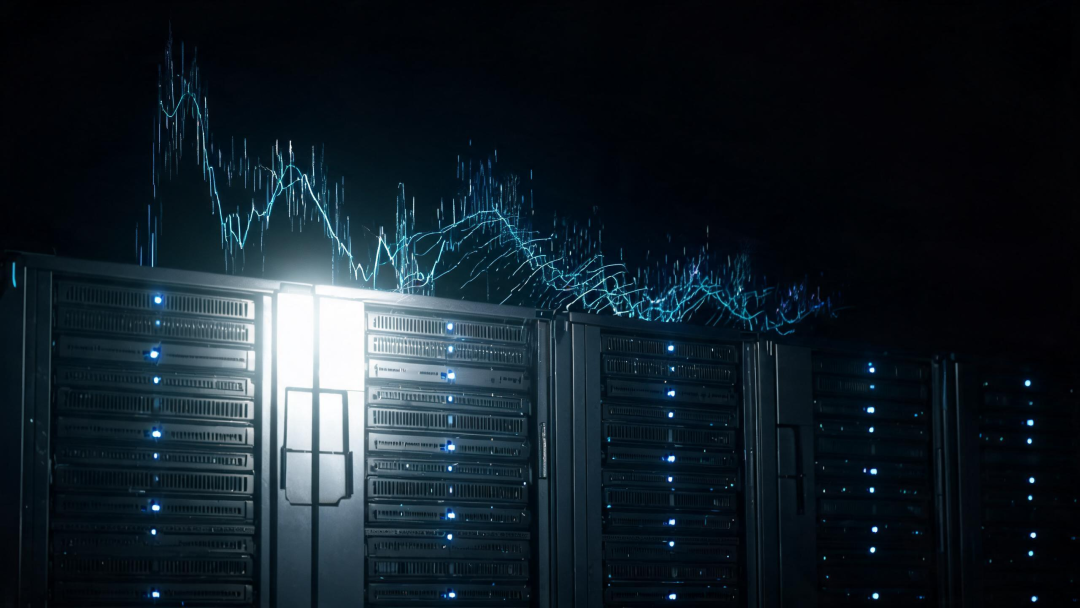
Think of a CDS as "default insurance on debt." When the premium suddenly spikes, it signals that credit investors are starting to seriously worry: can this company actually pay back what it owes?
And the tension is far from confined to CoreWeave. Oracle's five-year CDS spread jumped 7% to 355.68 basis points; CDS spreads for Meta and Amazon widened by more than 2%; and Nvidia's own CDS spread widened by 3.4%. Across hyperscale cloud providers, CDS spreads have soared to record levels.
This is no longer gossip about a single company. This is the bond market repricing the entire AI supply chain.
Why did the bond market blink first?
The stock market buys growth; the bond market buys repayment.
Over the past two years, the AI story has been too smooth: scarce computing power, expanding data centers, ever-larger models, chipmakers selling shovels, neocloud providers levering up to buy those shovels, and AI companies raising money to rent them. Once the flywheel spun, everyone was happy.
But the bond market looks at something more fundamental: how much have you borrowed, with what will you repay it, and if computing power rental prices fall and second-hand GPUs lose value, who provides the backstop?
Neocloud providers like CoreWeave are highly leveraged and heavily dependent on Nvidia's financial backing. Nvidia does more than sell chips; through investments, guarantees, and procurement support, it is deeply enmeshed in its customers' capital flows. Jensen Huang personally led multiple core transactions between Nvidia and neocloud providers such as CoreWeave, using partial guarantees and other mechanisms to support their chip purchases.
One number stands out in Nvidia's latest quarterly report: as of October 25, the total financing guarantees the company has extended to back various AI projects had reached $118 billion.
So it is not without reason that the market calls Nvidia the "AI central bank." It sells chips on one hand and extends credit to customers on the other, becoming to some extent the credit hub of AI infrastructure. And the more important the credit hub, the more jittery the bond market becomes at the first sign of trouble.
The "circular financing" flywheel spins fast—but it fears seizing up
In an upcycle, this model is an accelerator: chipmakers extend credit, neocloud providers lever up to buy equipment, cloud providers rent out computing power, and AI companies use that computing power to keep raising money and expanding. Capital and computing power push each other along, and the flywheel spins faster and faster.
But the flip side of the flywheel is that the credit chain grows longer and longer.
Suppliers finance customers, and customers buy supplier products. In the short term, sales and infrastructure both rise; in the long term, this can entangle real demand, capital chains, and related-party risks. Once rental prices fall, GPU residual values decline, or financing conditions tighten, the most leveraged link in the chain will be the first to cry out in pain.
That is also why, the moment Jensen Huang returned, the credit market did not cheer—it first asked: will Nvidia's guarantees and capital injections increase or contract?
Will Jensen Huang step on the gas or tap the brakes?
The market is deeply divided.
Steve Eisman, one of the real-life figures behind The Big Short, believes that Jensen Huang—now wielding heavy influence—will not retreat from "circular financing" but will double down. His logic: the AI ecosystem Jensen Huang built depended largely on his continued capital injections to sustain it; without him, some companies might be in big trouble; with him back, the aggressive model may continue.
But Stifel analyst Ruben Roy sees it differently. He noted that regulatory scrutiny of related-party financing and guarantee disclosures is intensifying, so Jensen Huang's return may not allow Nvidia to quickly restore the large-scale customer credit support of the past.

Nvidia's CFO has also previously stated that the company will "review future investments with extremely strict standards" and maintain discipline in capital expenditure and investment financing. But now that Jensen Huang is back, the market is no longer sure whether that prudence still holds.
Put simply, the industry needs capital to keep pushing computing power forward, while the bond market demands clearer cash flow and more transparent guarantees. Jensen Huang's return is an industry signal; the credit alarm is a financial signal. Right now, these two signals are not fully in sync.
Make no mistake: AI does have a future—but the bill must be settled clearly
A credit alarm does not mean the AI industry is about to collapse. That judgment must stay objective.
John Lloyd of Janus Henderson noted that some underlying data on computing power remain healthy: second-hand GPU residual values are holding firm, spot computing power rental prices remain high, and CoreWeave is doing everything it can to ensure business delivery. At least for now, it does not urgently need to return to the high-yield junk bond market to raise funds.
This shows that demand for computing power is real, and the outlook for the AI industry has not disappeared just because CDS spreads have widened. Large-model training, inference demand, enterprise-level AI applications, and data center upgrades are still pushing infrastructure forward.
The real question is not whether AI has a future, but how the future of AI will be paid for.
In the past, AI infrastructure expansion relied on equity financing, supplier guarantees, and highly leveraged debt. Going forward, the market will focus more and more on three things: whether computing power contracts can actually be paid, how high customer concentration is, and whether guarantees and related-party financing are disclosed clearly enough.
The bond market is not afraid of risk. It is afraid of risk it cannot see clearly.
The other shoe has not yet dropped
There is another variable: regulation.
Jensen Huang is expected to attend a joint hearing of three U.S. House committees next week; Nvidia is conducting an internal independent investigation; and the California Attorney General has also launched a state-level probe. President Trump said publicly on Monday that the Attorney General has confirmed the federal government has no evidence that Jensen Huang was involved in illegal conduct—but the market has clearly not fully let down its guard.
David Rosenberg of Rosenberg Research put it bluntly: "The other shoe could drop at any time."
For credit investors, what they hate most has never been bad news—it is uncertainty. Government intervention, regulatory investigations, and reviews of related-party transactions all affect the market's judgment on the sustainability of Nvidia's credit backing. Ben Emons of FedWatch Advisors even believes these moves show the "Jensen Huang effect" is weakening, and that the market sees government intervention as a kind of "moral suasion," which brings credit risk and interest rate risk.
Final thoughts
Jensen Huang's return shows that Nvidia will remain one of the most core players in the AI industry. Computing power demand, data center expansion, and model iteration—the long-term main line—have not changed.
But the bond market alarm reminds us: technological development depends not only on the technology curve but also on the financial curve. As AI moves from an "arms race" to an "efficiency race," and from "financing expansion" to "cash flow verification," every highly leveraged link will be re-examined.
CoreWeave's bond yield breaking 17% and its CDS spread breaking 1,200 basis points may not be predicting a crisis, but they clearly say one thing: financing costs in the AI industry are rising, risk pricing is being revalued, and the old model of credit expansion relying on the "AI central bank" must face stricter scrutiny.
Jensen Huang is back, and the real question is back too: who, in the end, will foot this massive AI infrastructure bill?
-
![]()
Data Analysis, Information Research, and Content Creation Emerge as the Most Commonly Assigned Tasks for Office Agent Users — Part I of the "China Office Agent Market User Research Report 2026"
-
![]()
Dell: The New Cloud "Brake" Didn't Hit Orders — But Did It Hit Valuations?
-
![]()
Former Apple and Meta Employee, Columbia PhD Founder Secures $18 Million Seed Round
-
![]()
WorkBuddy, Qwen Office, and Doubao Work Lead Office Agent Usage, Report Finds — Part II of the China Office Agent Market User Research Report 2026
-
Jensen Huang Is Back, but AI Hardware Will Struggle to Rally Again
-
Chinese Industrial Tycoons Are Collectively Betting on DeepSeek
-
Lei Jun: Xiaomi Sold 12.6 Million Fewer Phones in Q3, Yet Revenue Held Steady
-
2027 Smartphone Manufacturers' Shipment Targets Revealed: vivo Down 29% Year-over-Year, Xiaomi Shrinks 25%