One Number, Dual SIM Support! Apple Highlights New iPhone 18 Feature—Is It a Push for eSIM?
 09/14 2026
 364
364
The concept sounds appealing, but its practical application leaves much to be desired.
The Apple event held on September 10 (Beijing Time) has wrapped up, with the spotlight firmly on the three new models: iPhone 18 Pro, iPhone 18 Pro Max, and the pioneering foldable iPhone Duo. These devices continue to fuel discussions among tech enthusiasts.
Simultaneously, Apple officially unveiled the 'iPhone Handoff' feature. This new addition was actually prematurely revealed during the release of the iOS 27 developer preview.
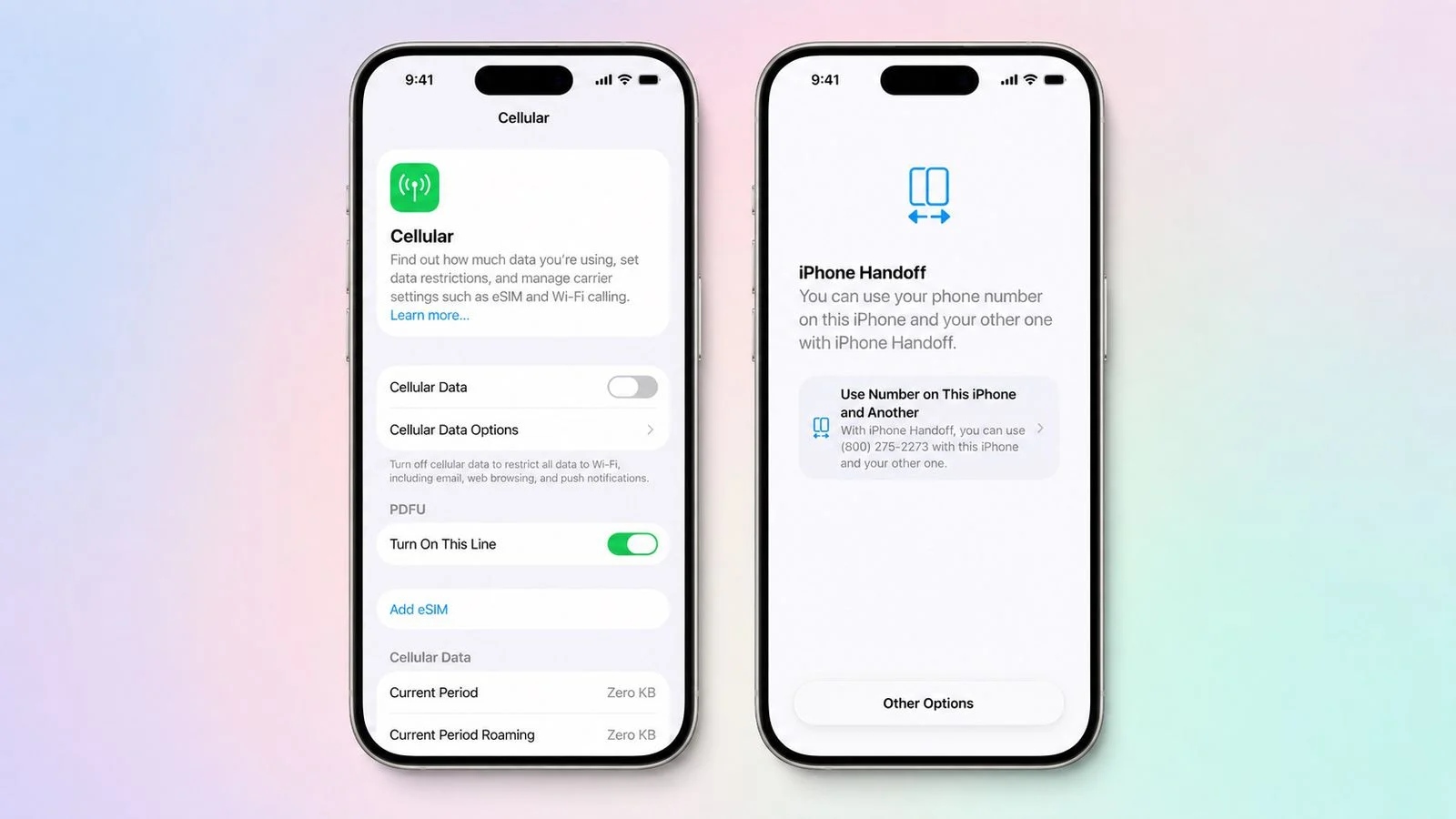
(Image source: MacRumors)
The core functionality of iPhone Handoff is to enable a single cellular number to be shared across two iPhones. Notably, this feature is not exclusive to the new models; some older iPhone versions will also be compatible.
One Number, Across Two iPhones
Users of Apple Watches with cellular capabilities might be familiar with the 'One Number, Dual Devices' option when activating a cellular number through a carrier. This setup allows the watch and iPhone to share the same number, with voice and data allowances combined. With this feature, users can leave their phones behind during outdoor activities like running or walking, ensuring they stay connected without missing calls or texts, while apps on the watch remain online in real-time.
iPhone Handoff essentially replicates this 'One Number, Dual Devices' functionality, but instead of pairing an iPhone with an Apple Watch, it involves two iPhones. However, there are nuanced differences in how it's implemented.
Firstly, the two iPhones are designated as primary and secondary devices. Carrier settings such as call forwarding, caller ID display, and account management remain tied to the primary device, with the secondary device lacking these privileges. The primary number requires eSIM activation, as physical SIM cards are not supported.
Secondly, both iPhones must be logged into the same Apple ID and run on iOS 27 or later.
Crucially, both phones cannot use the same cellular number simultaneously. When one device is in use, the other must be turned off or set to Airplane Mode.
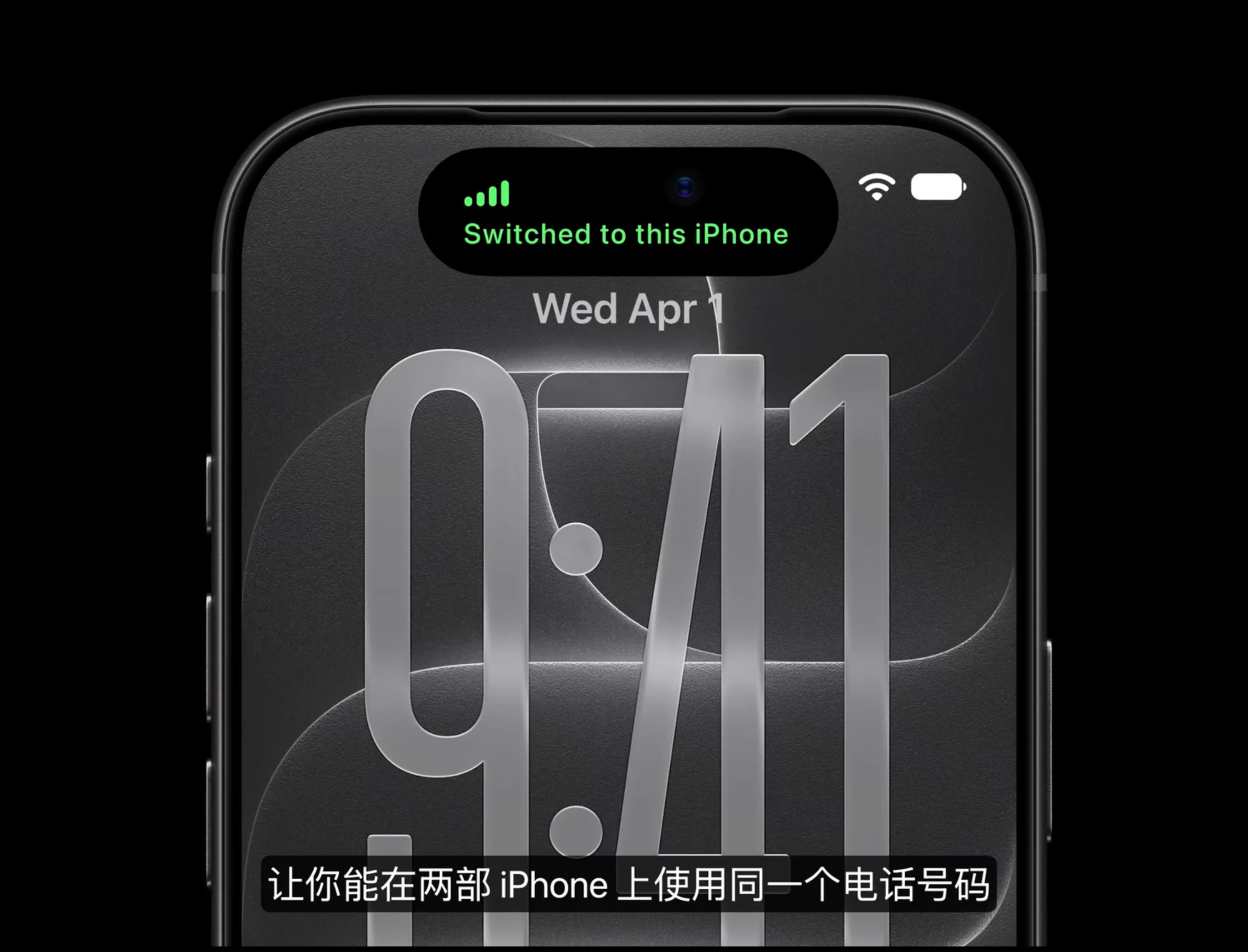
(Image source: Apple)
Reflecting on how iPhone Handoff operates, it reminds me of China Mobile's 'Jego' service. When traveling abroad, users can open the Jego app without a SIM card in their phone and still receive text messages and answer calls for free via the app. For Jego to function, the physical SIM card must be in a no-signal state—either uninserted, in Airplane Mode, or powered off.
In essence, iPhone Handoff does not allow simultaneous use of one number on two devices, contrary to initial impressions. Only one device can utilize the number at any given time.
It's worth noting that this feature is not free, and carriers maintain significant control. For instance, U.S. carrier T-Mobile charges $5 per month for this service, while Deutsche Telekom includes it under its MultiSIM service, with an additional €6.95 per month for each extra MultiSIM.
iPhone Handoff: Not as Practical as Hoped
The inability to use both phones simultaneously, coupled with additional costs and the eSIM-only requirement, makes iPhone Handoff seem quite impractical. According to Apple's vision, users with two iPhones wouldn't need to activate an additional SIM card, as their voice, data, and text messages would be synchronized in real-time, ensuring no information is missed and eliminating the need to manage multiple cards.
However, in reality, due to these numerous restrictions, the actual experience of iPhone Handoff may fall short of expectations. The simplest solution—using a secondary SIM card—often proves more effective. As someone who owns multiple phones, I have multiple SIM cards activated, primarily consisting of one primary card and several secondary ones.
The secondary SIM card solution offers several advantages. Firstly, costs are manageable. For example, with China Unicom, each additional secondary SIM card increases the monthly fee by 10 RMB, and many high-monthly-fee plans even include several secondary SIM cards for free. Moreover, data and voice allowances are shared between the primary and secondary cards, with minimal extra cost. Nowadays, most users don't even exhaust their data allowances, so using secondary SIM cards to distribute data across multiple devices increases resource utilization.
Secondly, secondary SIM cards offer strong independence and flexibility. They have separate numbers, allowing them to register accounts independently from the primary card. Additionally, secondary SIM cards can be given to family members, and since they have different numbers, there are no issues with simultaneous use.
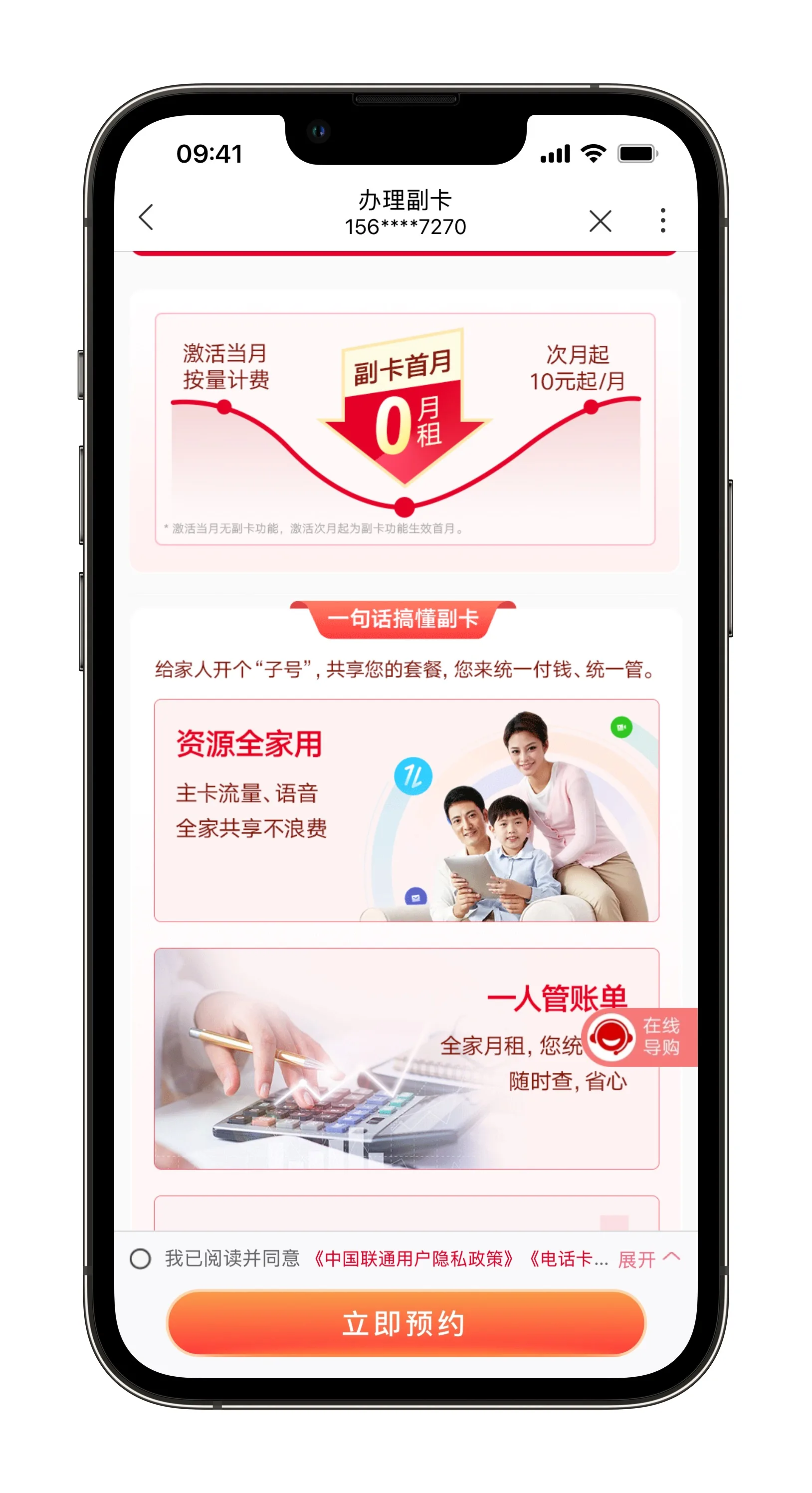
(Image source: China Unicom App)
As for managing text messages and calls between two iPhones, which iPhone Handoff aims to facilitate, existing solutions already suffice. Currently, as long as Apple devices are logged into the same ID and options like iCloud sync and call forwarding are enabled, even if the two iPhones have SIM cards with different numbers, text messages received on one phone will also appear on the other. Similarly, if both phones are connected to the same local network, incoming calls on one phone will also ring on the other.
Additionally, the name 'iPhone Handoff' is somewhat misleading. As early as 2014, Apple introduced a feature called 'Handoff' in iOS 8 and OS X 10.10, allowing seamless transitions between Macs, iPhones, iPads, and Apple Watches. For example, an unfinished note on a phone could be continued on a computer. However, the current iPhone Handoff merely enables dual-device cellular network sharing—a significant difference—yet they share the same name, which is likely to confuse users.
(Image source: Apple)
Carriers Maintain Control
Of course, many of the limitations of iPhone Handoff are likely due to carrier pressure rather than Apple's intentions. As mentioned earlier, the prohibition against using one cellular number on two phones simultaneously is primarily a carrier requirement.
However, such restrictions are mostly for security reasons. Specifically, if one number could be used on multiple devices, once the number is cloned by criminals, issues like account and property theft or identity impersonation could arise. Moreover, most countries have strict regulations on SIM cards supporting text and voice functions, usually requiring real-name authentication, with regulatory bodies tending to prohibit one number on multiple devices.
The 'One Number, Dual Devices' feature implemented on cellular-enabled Apple Watches has many special considerations. After all, watches are not full-featured communication devices like phones, with very limited usage scenarios. Meanwhile, in recent years, the 'One Number, Dual Devices' feature on wearables has also been restricted, with some users reporting that their cellular-enabled Apple Watches cannot make calls normally when the associated iPhone has a signal.
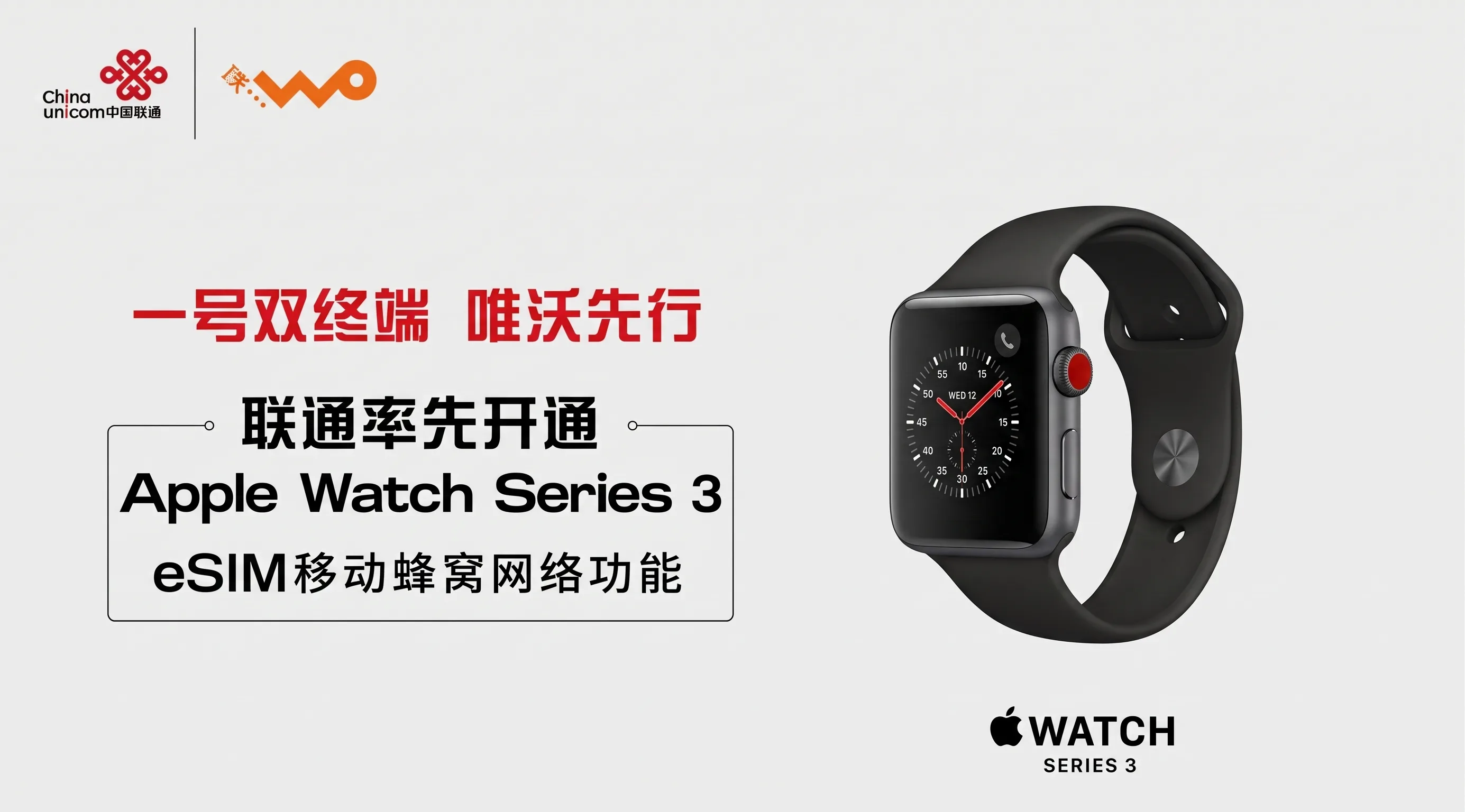
(Image source: China Unicom)
In our view, Apple's promotion of iPhone Handoff is partly to enhance the advantages of eSIM. Apple has been relentlessly promoting eSIM adoption for years, and this foldable iPhone Duo also adopts a full-eSIM solution, eliminating physical SIM slots entirely. If an eSIM number can be reused across multiple devices, there would theoretically be some convenience.
Lei Technology (ID: leitech) believes that while iPhone Handoff is currently limited to phones, its more suitable scenario should be on data-only eSIM devices. For example, a cellular-enabled iPad can only access the internet and cannot make calls. If it shares the same cellular number with an iPhone, carrier restrictions would be fewer, and users would find it easier to manage. The current version of iPhone Handoff, however, clearly lacks practicality.
Furthermore, we have conservative expectations regarding whether iPhone Handoff will be available in mainland China. Currently, relevant authorities maintain strict management over eSIMs in phones. For example, a phone can only have two eSIM numbers, and services like activation, device swapping, and deactivation must be handled at physical stores.
Expanding the 'One Number, Dual Devices' feature from watches to phones likely lacks carrier motivation, considering both regulatory and security pressures, as well as the limited potential for additional revenue.
Ideal vs. Reality
Overall, the problem iPhone Handoff aims to solve is valid—sharing one number between two iPhones does offer convenience in scenarios like device switching, using a spare phone, or traveling. However, compared to solutions domestic users are accustomed to, its advantages are not significant.
It transfers the 'One Number, Dual Devices' logic from watches to two phones while bringing along the original limitations. The two devices are designated as primary and secondary, with the secondary device unable to access carrier-level settings. Only one device can use the number at a time, an additional monthly fee is required, and it only works with eSIMs. For users who already have a secondary SIM card, this solution offers little extra value.
The true value of iPhone Handoff lies in incorporating functions that previously required manual call-forwarding settings into system settings, allowing two phones to be paired once for use. However, this convenience currently does not outweigh the hassles caused by fees and usage restrictions.
More notably, there's the issue of control. Apple wants to promote eSIM, but carriers are not enthusiastic, leaving users caught in the middle. In China, a more realistic scenario than sharing one number between two phones is enabling number sharing for data-only eSIM devices first, before considering phones. As for when the Chinese version of the iPhone will support this, our expectations remain conservative. Without resolving regulatory requirements and carriers' limited motivation for additional revenue, it will likely remain just a promotional slogan in Apple's event presentations.
-
![]()
One Number, Dual SIM Support! Apple Highlights New iPhone 18 Feature—Is It a Push for eSIM?
-
![]()
Mother and Son with a 7-Year Age Gap, Labor Remuneration Soars Over 2 Trillion: Xingyu Shares Faces Information Disclosure 'Mishaps' Amid Layoff Controversy
-
If You're a Disruptor, Let's Ride the Wave of CALB's Business Success Together
-
![]()
Foldable Smartphone Showdown: A Prelude to the 'Tech Spring Festival Gala'
-
![]()
China’s Wealthiest Individual Could Change! DeepSeek Aims for STAR Market IPO—Could Liang Wenfeng’s Net Worth Hit Trillions?
-
![]()
Porsche Sells Bugatti for €7.8 Billion to Cover Pension Obligations
-
Does Changsha Still Inspire Optimism?
-
![]()
Riding Tesla’s Wheel-less Cybercab: An Hour of Comfort, Marred by Perplexing Drop-offs