How the 'Imitation' Approach in iPhone Duo's Design Dilutes Apple's Premium Image
 09/15 2026
 434
434
Produced by | Shi Tianhao Observations
Author | Shi Tianhao
Whether you're willing to admit it or not, anyone who splurges on an iPhone relishes the moment of being 'recognized' by their peers.
Its hefty price tag silently speaks volumes about the owner's financial prowess, while its global acclaim as an 'electronic masterpiece' subtly showcases their refined taste.
Under Cook's leadership, the iPhone has evolved into an electronic luxury item. From the iconic notch design of the iPhone X to the innovative Dynamic Island on the iPhone 14 Pro series, each iteration has boasted a distinct and recognizable presence in everyday life. These features have endowed the iPhone with a unique luxury aura, elevating it beyond its status as a mere electronic device.
Today, we won't delve into the iPhone's interaction design or its seamless closed-loop ecosystem experience. Instead, let's assess the iPhone, a long-standing leader in the smartphone arena, purely from a design perspective. Its shift away from pioneering design trends is gradually eroding the luxury appeal it has cultivated over the past decade.
In essence, the iPhone Duo's adoption of competitor-inspired designs is causing Apple to lose its coveted luxury sheen.
PART 01: The Importance of Instant Recognition
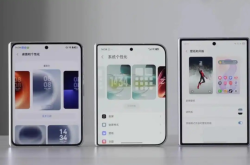
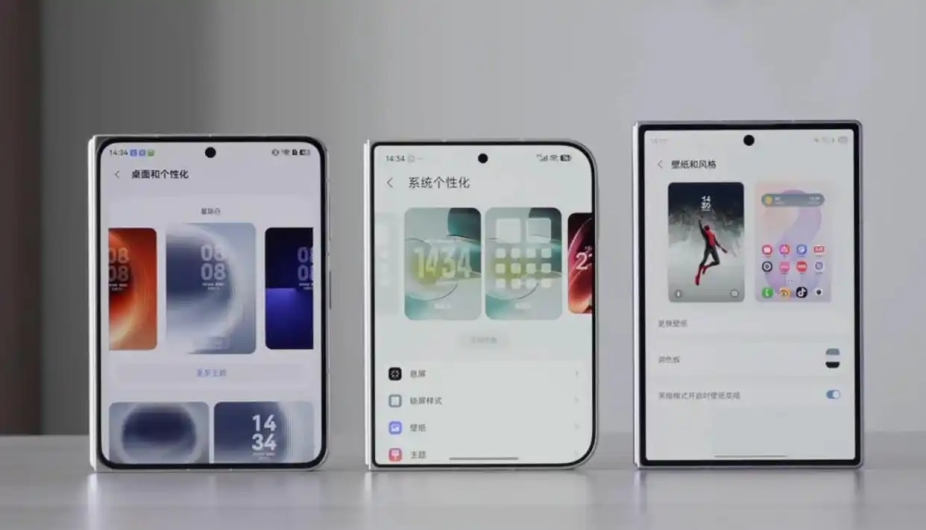
In the opening image of this article, can you spot the iPhone Duo among the three foldable phones? Unless you're a die-hard Apple enthusiast, you might find yourself puzzled at first glance, feeling that any of the three could be it—or none at all. The correct answer is none of them, as the iPhone Duo features a small-screen camera hole positioned in the top right corner. 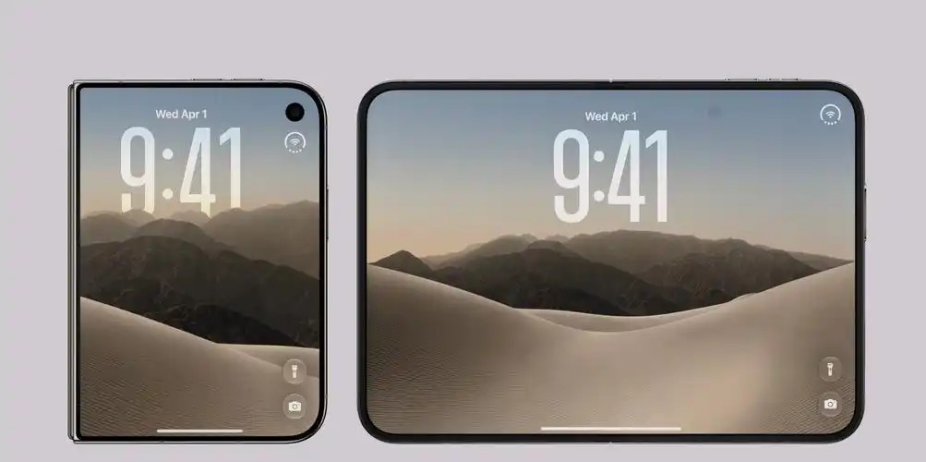
The Real iPhone Duo
Why wasn't the iPhone Duo instantly recognizable? The reason lies in the fact that Samsung, Huawei, and Xiaomi had already embraced similar designs prior to its release. Among these four foldable phones, except for Samsung, the other three bear a striking resemblance. Without carefully examining the logo on the back, most people would struggle to differentiate them.
The highly similar Huawei Pura X Max was launched in April this year, while the Xiaomi 18 Fold made its debut just days before the iPhone Duo's official unveiling, both receiving extensive promotional campaigns. This directly resulted in the iPhone Duo's design lacking the element of surprise upon its official launch.
Reflecting on each generation of the iPhone, from the minimalist design of the iPhone 4 series to the subsequent larger screens, high screen-to-body ratios, notch designs, and Dynamic Island, the iPhone has consistently been at the forefront of contemporary design trends, setting the pace for numerous Android competitors to follow.
For a considerable period, emulating the iPhone was not seen as a sign of weakness but rather as a fashionable and aesthetically pleasing choice.
Unique boot-up animations, distinctive touch-to-lock dual-screen interactions, and innovative under-display cameras in an open-screen state can still help some individuals instantly recognize the iPhone Duo. The social prestige associated with Apple products remains unchallenged.
However, its unremarkable exterior significantly detracts from the iPhone Duo's appeal. Moreover, this strategy of following the leader has also diminished the sense of superiority that iPhone Duo owners once felt compared to the past.
The inability to be instantly recognized will subtly undermine the iPhone's aura. If it no longer leads in terms of technology and specifications, and if its recognizability fades, combined with the shock of its exorbitant price tag exceeding 10,000 yuan, the iPhone's era of dominance may gradually slip away.
PART 02: Luxury Transcends Mere Expensiveness
Why is Apple's first iPhone Duo facing such intense scrutiny? Does resembling competitors in design disqualify it from being considered an electronic luxury item? Even Wang Ziru, an ardent Apple brand enthusiast, contends that 'spending 16,000 yuan on a domestic foldable phone doesn't serve as social currency,' implying that the iPhone Duo still serves as a tool for enhancing personal status at social gatherings, offices, and events.
It's crucial to emphasize a fundamental truth: luxury is not solely defined by its price tag. Take LV, Rolls-Royce, or Rolex, for instance. All luxury items, in addition to being expensive, are characterized by their visually distinct designs, cutting-edge functionality, and the overall ambiance they create. These are the core elements that establish them as widely recognized luxury goods.
This brings us to 8848. Despite its high price, its lack of other distinguishing features has prevented it from becoming a mainstream luxury brand. Simply put, luxury items are not just about the product itself; they represent emotions, culture, scarcity, and social status.
In essence, expense is merely a common attribute of luxury items. What truly elevates them to the status of widely recognized luxury are their unique qualities.
Reflecting on the iPhone's luxury DNA, it originates from the leadership and breakthroughs established during the Jobs era. Once these core elements are compromised, its brand premium will significantly diminish. More bluntly, as Apple's first foldable phone, a higher price wouldn't be an issue, but a lack of leadership and breakthroughs will shatter public perception and invite criticism.
Imagine if the next LV bag no longer exuded 'luxury'; if the next Rolls-Royce lacked dominance; or if the next Rolex lacked elegance. These luxury brands would then find themselves at a crossroads of 'obsolescence.'
Being expensive isn't the problem; losing what makes you unique is.
PART 03: The Inevitable Rise of 'Artistic' Smartphones
In an era of thriving commercial culture, companies across various sectors strive for 'luxury' positioning. Yet, only a few fields, such as bags, cars, and watches, have given rise to globally recognized luxury brands. This is because luxury categories emerge only in areas that humans 'adore,' leading us to view flawless brands in these fields with a 'sacred' perspective, granting them this distinction.
Smartphones have now become such a beloved category. Among countless brands, the iPhone is the one we consider 'artistic,' objectively earning its status as a light luxury or electronic luxury item.
We Spend More and More Time with Our Phones
According to the National Reading Survey released by the China Academy of Press and Publication, in 2025, the average daily mobile phone contact time for Chinese adults was 109.54 minutes, slightly increased from 2024. This data primarily includes reading and listening behaviors, excluding pure entertainment video browsing.
A hundred minutes may not seem substantial—less than two hours a day. However, if you consider the scattered phone usage throughout the day, the perceived time spent with our phones far exceeds the statistical data. Our constant companionship with our phones naturally heightens our appreciation for them. 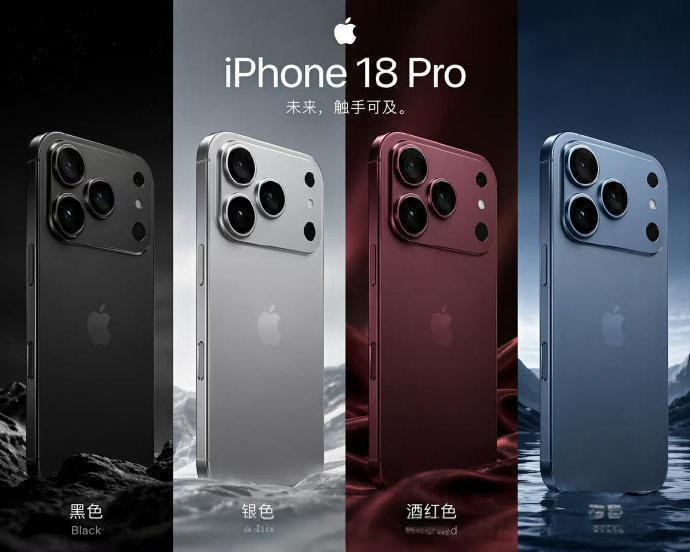
Understanding this trait, the iPhone under Cook's era has discovered the secret weapon of 'color marketing.' From 'champagne gold' and 'rose gold' to 'Hermès orange' and 'Burgundy red,' these special colors cater to users' deep affection for their phones, capturing their hearts.
Don’t Limit Your Perception to the 'Screen'
Many believe that Apple fans' love for the iPhone stems from its smooth UI design and artistic icons and details. While these contribute to the perception of electronic artistry, the aesthetic appeal of the iPhone's body cannot be overlooked. From the minimalist straight design of the iPhone 4 series to the rounded design of the iPhone 6 series, these body designs that align with human visual and tactile preferences are key to forming each generation of Apple fans' attachment.
Every time we pick up our phones, our 'evaluation' of them begins. From the overall visual experience to unlocking and using the device, to placing it in our pocket or on the table after the screen turns off—the entire process is an interaction with the phone, and every detail shapes our assessment of it.
Most Smartphone Brands Lack Distinctive Design Philosophies
Including Huawei, most smartphone brands lack a distinctive design philosophy. Looking back at the history of smartphones, only the iPhone has maintained a clearly inherited design style across generations. Samsung, Huawei, and Xiaomi may have designed some very attractive smartphone models in certain generations, but their series either lack continuity in design style or fail to impress users with their design choices.
This phenomenon stems from the simplicity of smartphone construction—a straight, rectangular device leaves little room for 'artistic' expression. More importantly, smartphone manufacturers have prioritized hardware competition, treating design as a secondary consideration.
Let's make a bold assumption: if the new iPhone adopted the casing and design style of a budget phone, would you still like it as much? If the next iPhone Duo continues to follow competitors' designs, would you still buy it solely because of its UI and interactions?
The answer is clear. As the iPhone begins to abandon its status as an 'electronic artwork' and loses its electronic luxury aura, a new opportunity for domestic smartphone brands to rise has emerged.
END
-
![]()
How the 'Imitation' Approach in iPhone Duo's Design Dilutes Apple's Premium Image
-
![]()
Mysterious Billionaire Taiyi Shenglian Invests 3 Billion to 'Revitalize' Neta Auto!
-
Hongguo 'Dominates' iQIYI, Youku, Tencent Video, and Mango TV: How Short Dramas Are Revolutionizing the Video Industry?
-
![]()
The Roar of the V8 Drowns Out the Hum of Electric Motors: Why European Automakers Are Making a 'Combustion Engine Comeback'
-
![]()
Xiaomi's High-End Strategy Succeeds! Lei Jun Secures Top Spot in Domestic Android Foldable Phone Sales, Stores Overwhelmed
-
![]()
Qianwen's Losses Widen Year-on-Year in Q2, Catching Up with Doubao Remains a Long Road
-
![]()
Taiyi, Which Invested 3 Billion to Revive Nezha, Faces Consumption Restrictions on Its Beneficiary
-
![]()
Domestic Computing Power Reaches a Turning Point: Hardware is No Longer a Bottleneck, Software Ecosystem is the Real Challenge