One Rocket Launches 10 Satellites! Private Rocket Makes Its Grand Entrance into the Satellite Internet "Delivery Fleet"
 09/16 2026
 486
486
NEW PERSPECTIVES
This is the 121st original article from the NEW PERSPECTIVES AI Community.
With approximately 1023 words, the estimated reading time is 4 minutes.
Just last month, I discussed the successful land recovery of the Zhuque-3 rocket, pondering why it seemed more reminiscent of SpaceX than the Long March 10B's recovery approach. At the article's conclusion, I made a bold assertion: Recovery is merely a cost-saving measure, ultimately aimed at facilitating the deployment of satellite internet networks.
A mere 27 days later, LandSpace has brought the latter part of that statement to fruition—this time, with the "senior sibling," the Zhuque-2, taking center stage.
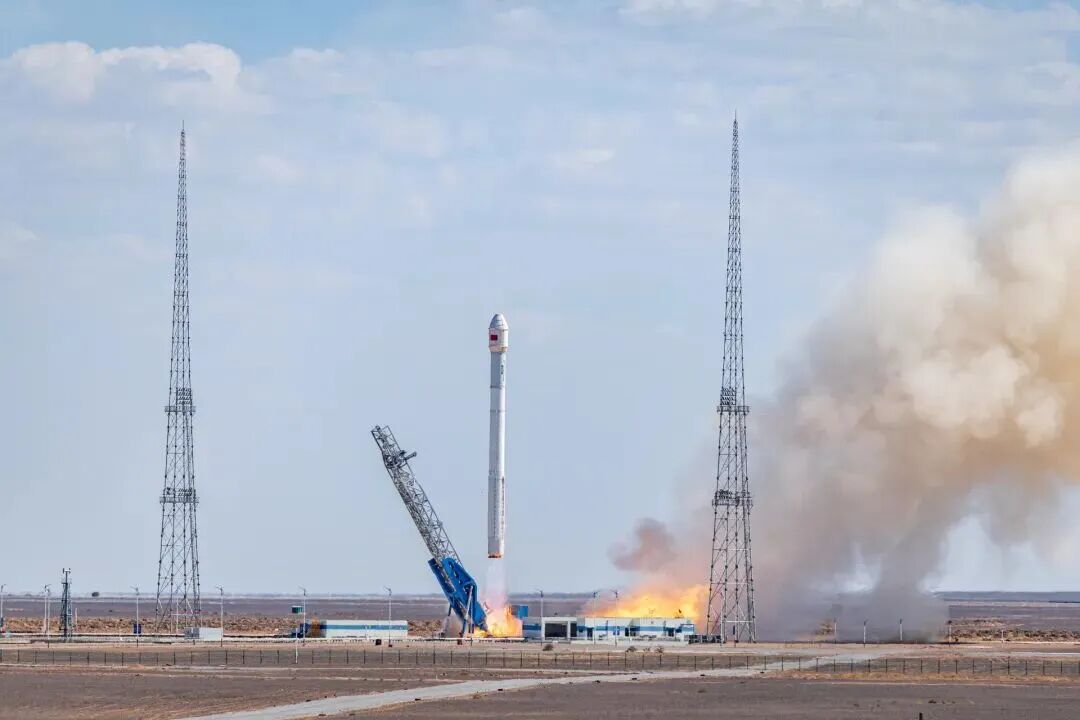
Yesterday, the enhanced remote sensing-7 rocket of the Zhuque-2 series soared into the skies from the Dongfeng Commercial Space Innovation Test Zone, successfully deploying ten satellites from the Shanghai-based Qianfan Polar Orbit Group 19 into a predetermined 900-kilometer-high orbit.
This milestone marks the ninth flight of the Zhuque-2 series and signifies the first instance where a Chinese private commercial space company has undertaken a large-scale satellite internet constellation deployment mission.
It's crucial to recognize the significance of this "first": while private rockets have previously sent satellites into space, those instances were more akin to "catching a ride with cargo." This time, they directly joined the Qianfan constellation's deployment fleet, with every satellite launched being an integral part of the official network.
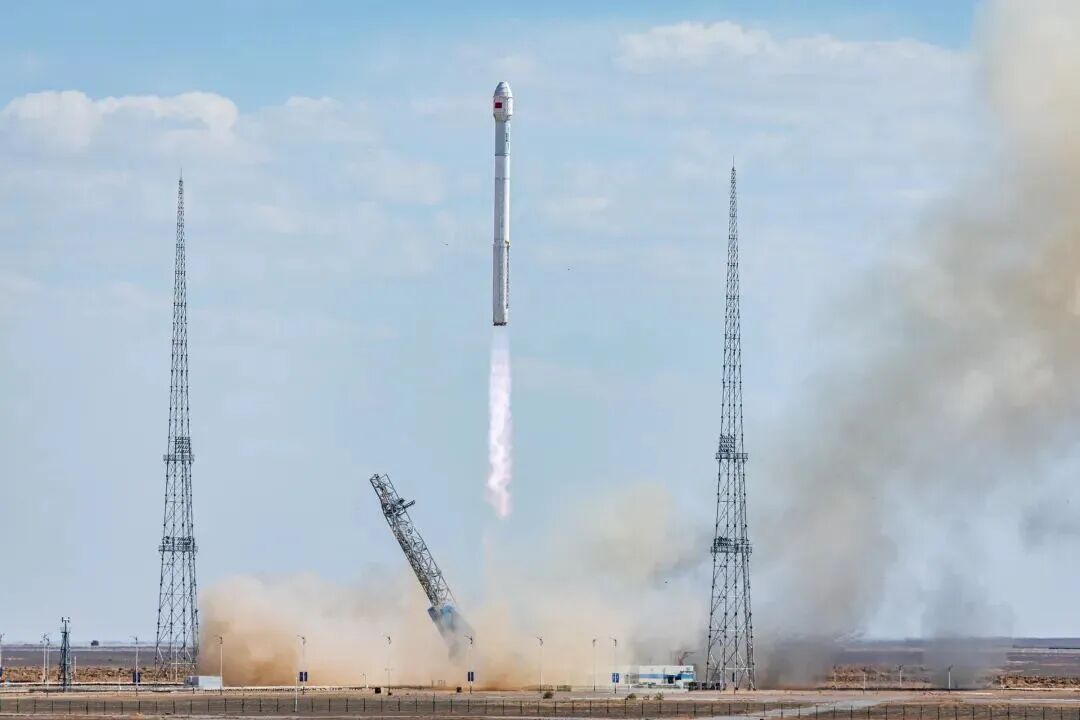
Image Source: LandSpace
Deployment: More Than Just Cramming Satellites
Deploying ten satellites within a single fairing necessitates overcoming challenges in multi-satellite adaptation, release sequencing, orbital control, and ensuring the upper stage is passivated and deorbited to prevent space debris accumulation.
Any miscalculation in these processes could lead to significant orbital deviations. Ma Haijing, General Manager of LandSpace's Marketing Department, succinctly put it: the aim is to make deployment launches "standardized, normalized, and visualized"—essentially transforming launches into a batch-process business.
This achievement didn't happen overnight; it was the culmination of a clear "triple jump" progression.
- On May 14th, the remote sensing-5 verified high-orbit deployment at 900 kilometers, carrying a 2.8-ton payload;
- On June 9th, just 26 days later, the remote sensing-6 demonstrated high-frequency launch capabilities;
- On September 15th, the remote sensing-7 officially secured bulk orders. Technical verification, capability replication, and paradigm innovation—these three steps were executed with precision.
Two Brothers Take Turns Launching Within a Month
The enhanced Zhuque-2 is a two-stage liquid oxygen-methane rocket with a maximum payload capacity of 6 tons to low Earth orbit, following a disposable, cost-effective route. CCTV has aptly dubbed it the "budget-friendly" option among private rockets.
In contrast, the Zhuque-3 is designed for reusability, boasting a designed payload capacity of 18 tons in recovery mode, targeting larger and more frequent missions.

Source: LandSpace
These two rockets share a common lineage: both utilize the Tianque-12A engine for their first stage and the Tianque-15A for their second stage, even employing the same pneumatic push rods for stage separation.
Data accumulated from one model is directly applicable to the other. The launch interval between the remote sensing-7 and the Zhuque-3's remote sensing-2 land recovery was a mere 27 days—the ability to operate two rocket models in parallel is a true testament to LandSpace's prowess.
Why does this matter? While satellites can be mass-produced, rockets, launch pads, and launch windows are finite resources that cannot be created out of thin air.
With constellations like Qianfan and GW planning tens of thousands of satellites, and the national team's launch capacity being limited, the stable launch capabilities of private rockets are equivalent to constructing additional "space highways" for satellite internet.
From Examinees to Suppliers
Looking back over the past few years, the role of private rockets has undergone a subtle yet significant transformation.
Initially, they were examinees, striving to prove their ability to reach orbit, with each success met with loud celebrations. Now, they have evolved into suppliers, fulfilling contracts with customers who are more concerned about the number of launches they can deliver next year and at what price.
The examination hall and the marketplace are two distinct arenas. This launch marks LandSpace's entry ticket into the marketplace.

The content of this article is sourced from publicly available information and represents only the personal views of the author.
-
![]()
Doubao Mobile Phone Officially Launches: GUI as a Fallback, AI Office as a Support
-
![]()
iFLYTEK Launches AStudio in a 'Desktop Gateway' War It Cannot Afford to Lose
-
![]()
BYD Executive’s Clear Stance: The Era of Fuel Vehicles Is Over
-
![]()
Final Ruling: Double-Digit Decline in Auto Production and Sales Over First Eight Months
-
Mega-Funding of 33 Billion RMB! Zhipu AI's Monumental Financing Round: Zhang Peng Ascends as the Unrivaled AI Titan!
-
WorkBuddy, Qianwen Office, TRAE Work, Baidu Dazi: A Head-to-Head Comparison of Four Major AI Office Platforms
-
![]()
The AI Industry is Experiencing a Complete Overhaul! Leading Figures Issue Joint Warnings – What’s Amiss with AI?
-
![]()
One Rocket Launches 10 Satellites! Private Rocket Makes Its Grand Entrance into the Satellite Internet "Delivery Fleet"