A 1994-Born Beauty Anchor Outshines Sun Yuchen in Popularity! From a Whopping 190 Million Yuan Journey to Just 3 Million Yuan Now
 09/20 2026
 348
348
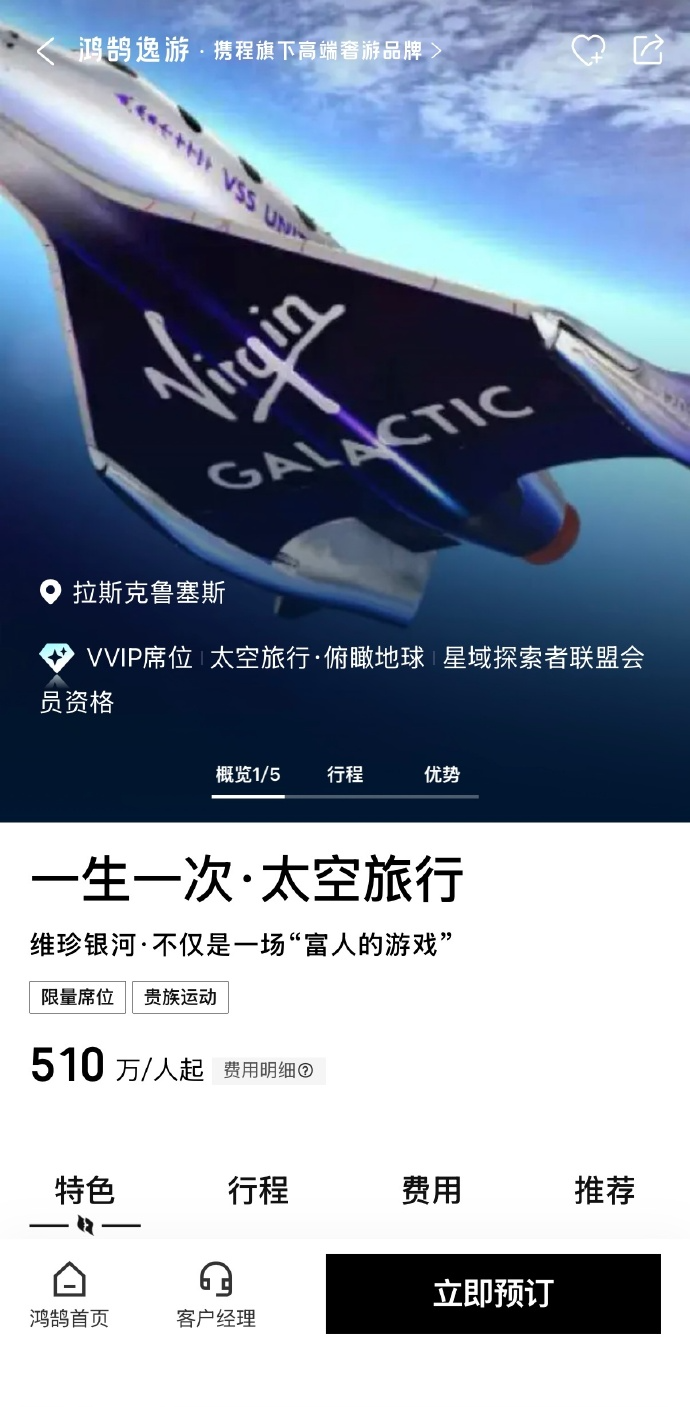
A few days ago, Ctrip made headlines on Weibo by starting to sell spacecraft tickets. Each ticket was priced at a staggering 5.1 million yuan, and over 680 were reportedly sold.
However, Ctrip later clarified that they had only sold 2 tickets, with the 680 figure representing the total global orders. To date, around 700 people worldwide have paid deposits.
A quick calculation reveals that 700 tickets would amount to a staggering 3.57 billion yuan.
While this may seem exorbitant, it's all relative in the grand scheme of things.
Sun Yuchen once splurged $28 million, equivalent to 190 million yuan, for a similar space adventure. Now, at 5.1 million yuan, the cost is less than 3% of what Sun paid, effectively slashing the price of space travel.
Wow, has space tourism started offering 'billion-dollar discounts' too?
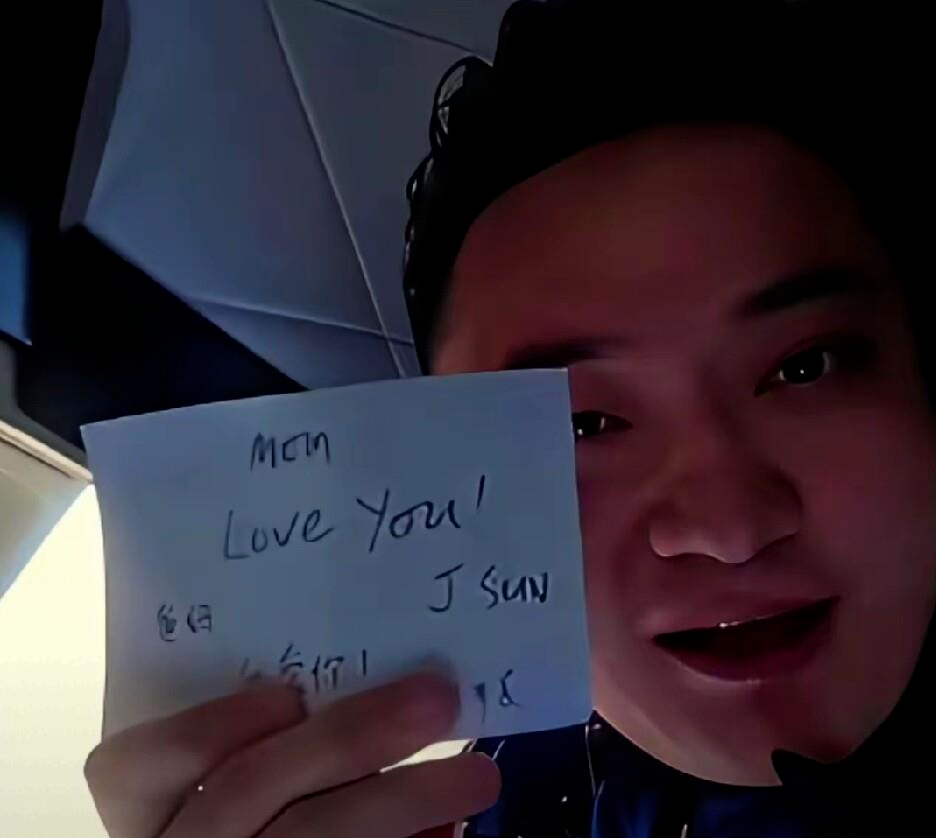
What's even more disheartening for Sun Yuchen is that he had to wait four years after payment before finally going to space last year. This time, Ctrip's page clearly states: 2027.
With a lower cost and a shorter wait time, Sun Yuchen might find it hard to keep quiet.
The experience also differs significantly. Sun Yuchen rode the New Shepard, which launches vertically with a strong impact and noticeable vibration upon parachute landing. This time, Virgin's launch promises to be smoother, and the landing gentler, more akin to a leisurely experience.
In summary: Sun Yuchen spent more for a more intense experience, akin to riding a space roller coaster, with a longer wait. This time, it's cheaper, more comfortable, and with a shorter wait.
Who is Sun Yuchen? He's the man 'whose glance alone could cost you three yuan.' He once spent over 100 million yuan to go to space, but now it's just 5 million yuan. Frustrating, isn't it?
But there's always someone who can do it better and cheaper. Enter the domestic option, priced at a mere 3 million yuan.
In January this year, Beijing Time Traveler Manned Space Technology held a press conference in Chengdu for its 'Time Traveler One,' announcing plans for its first manned flight in 2028, claiming to be China's first commercial manned spacecraft.
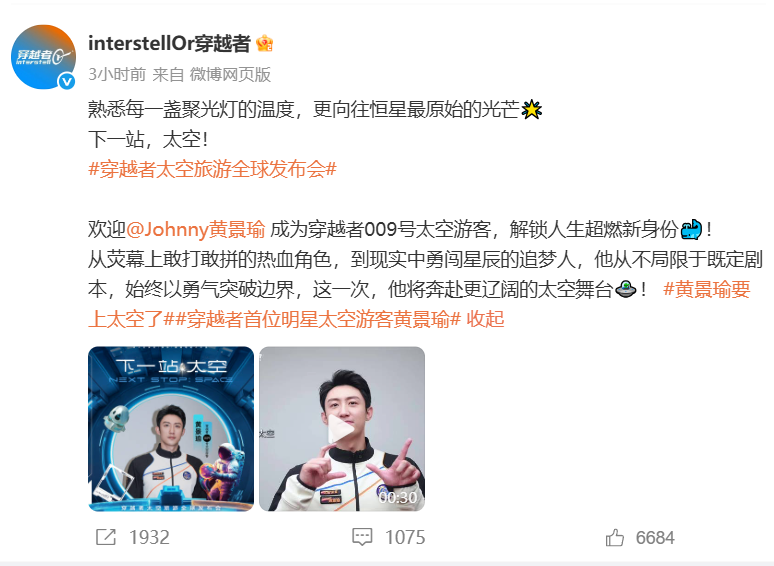
Public information reveals that Time Traveler's space tourism tickets are priced at 3 million yuan each, with over 20 tourists already signed up. The first batch of space travelers includes celebrity Huang Jingyu, Chinese Academy of Engineering academician Li Licheng, Zhiyuan Robotics CMO Qiu Heng, American poet Lin Xiaoyan, Guangzhou Zhengjia Group Vice Chairman and CEO Xie Meng, Galactic Energy CEO Liu Baiqi, and aerospace vertical influencer @NASA Enthusiast.
Blue Origin and Virgin Galactic are well-known names in the space tourism industry. But who is this Time Traveler?
Tianyancha data shows that Beijing Time Traveler was founded in 2023, claiming to be China's first commercial 'manned space technology' company, integrating reusable manned spacecraft development and space tourism operations. It has completed six rounds of financing, with investors including Guojing Venture Capital, Zhongtian Huifu, and Nan Yue Fund, raising a total of over 100 million yuan.
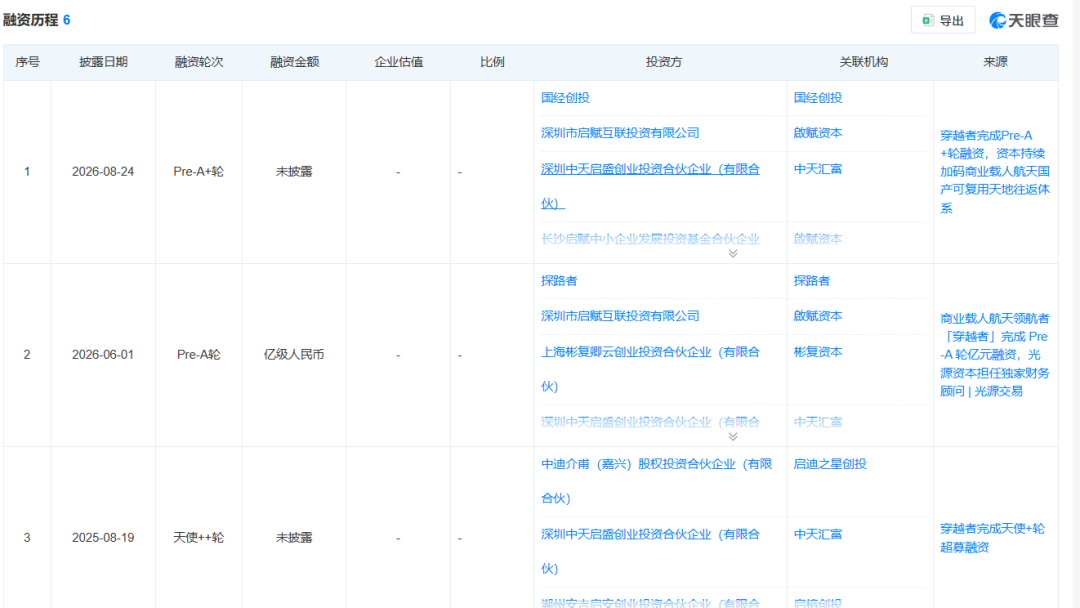
While the financing seems promising, Time Traveler lags far behind industry leaders like Landspace in terms of both financing rounds and amounts.
What's even more surprising to netizens is that its founder is vastly different from tech titans like Elon Musk and Jeff Bezos: she's not only a beauty anchor born in 1994 but also made a hardcore crossover from liberal arts, transitioning from journalism and psychology to aerospace.
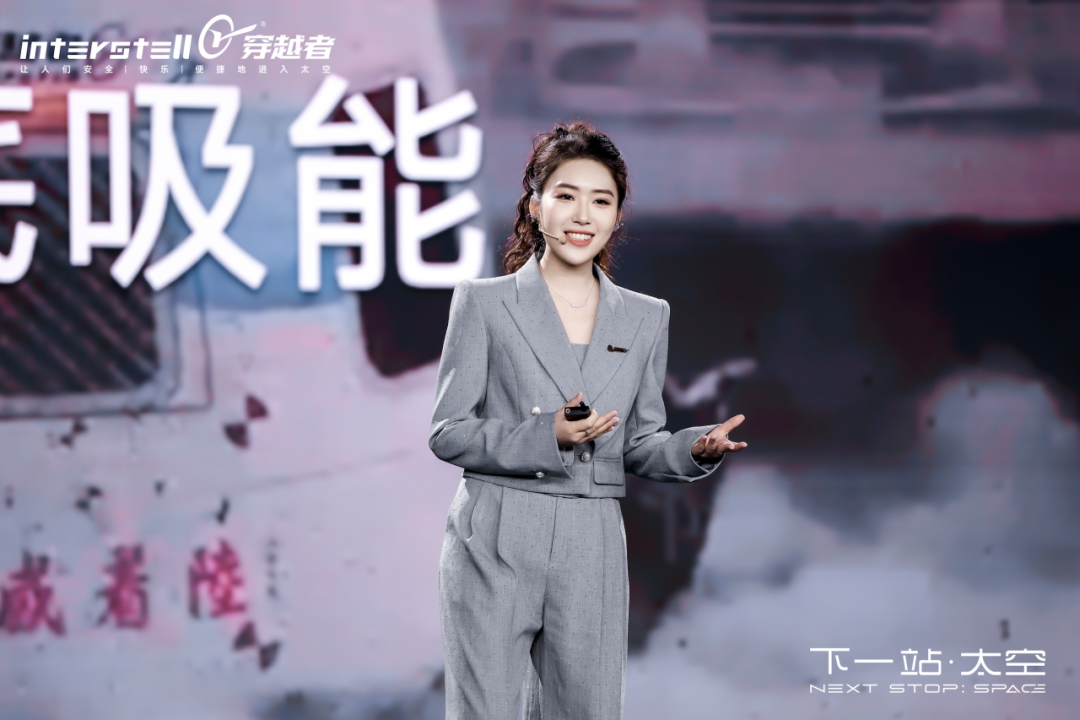
This has raised doubts: Can a host really crossover into the aerospace industry?
Public records show that Lei Shiqing, the founder of Beijing Time Traveler, studied journalism at Jinan University for her undergraduate degree and worked as a CCTV reporter and host. For her master's, she pursued applied psychology at Renmin University of China, where she switched from liberal arts to science, beginning professional research in human factors engineering for manned spaceflight.
Human factors engineering is an emerging interdisciplinary field that studies how to design human-machine-environment systems to align with human physical structure and physiological and psychological characteristics, ensuring safe, healthy, and efficient work.
This research is crucial foundational support for manned spaceflight projects. In China's manned spaceflight missions, the development of manned spacecraft and extravehicular spacesuits fully considers astronauts' physiological and psychological traits, embodying a human-machine collaboration design philosophy.
For Lei Shiqing, who had no science background but was interested in aerospace, human factors engineering was the perfect entry point into manned spaceflight.
During her research, Lei Shiqing studied human factors engineering under the guidance of Academician Chen Shanguang, director of the National Key Laboratory of Human Factors Engineering and deputy chief designer of China's manned spaceflight program. According to public reports, Lei Shiqing frequently appeared in teams led by Chen Shanguang for research.
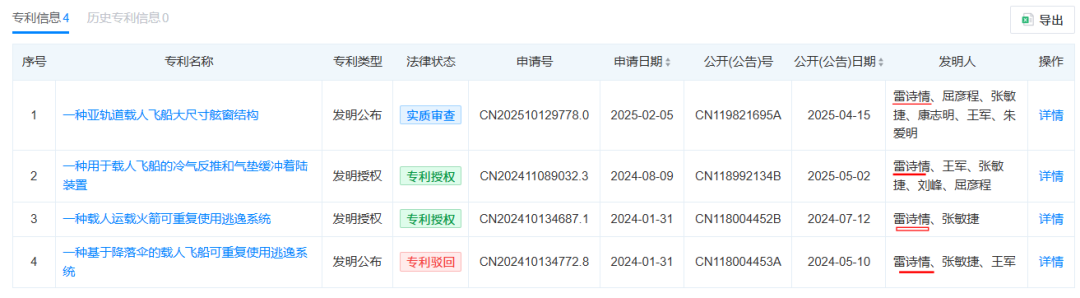
Additionally, Tianyancha data shows that Lei Shiqing's name appears among the applicants for four patents in Time Traveler's patent information.
From Blue Origin to Virgin Galactic, SpaceX, and now domestic players like Time Traveler, suborbital space tourism is becoming increasingly common, and ticket prices are dropping.
This indicates that the market for commercial manned spacecraft is expanding.
Currently, most domestic companies are still in the engineering development, unmanned verification, or manned flight preparation stages. Just as Sun Yuchen's ticket price was extremely high back then but has now plummeted, once domestic spacecraft achieve regular reuse, flight costs can be significantly reduced, ultimately reflected in lower 'ticket' prices.
In the past, space travel was a symbol of ultimate wealth and status. But now, it's no longer just a 'rich man's game.' As commercial manned space travel matures, future prices may continue to decrease, potentially reaching levels affordable for many ordinary people.
In the past, going to space depended on fate; later, it depended on money. In the future, it might depend on saving up.
The most exciting story in commercial aerospace isn't about the stars and the sea; it's about cost reduction and efficiency improvement. Bringing down ticket prices is the key to making space travel accessible to the masses.
·END·
For more exciting content, welcome to follow the Nan Cai She video account.
-
![]()
RoboX’s Breakthrough Year: From Hype to Reality
-
![]()
Nitto Denko Pours $160 Million into New Factory to Bolster Global Polarizer Strategy
-
![]()
Collaborating with XIOPM: Unveiling Huawei's Ambitious Optics Strategy
-
![]()
Monthly Report | Online Market Analysis of Dash Cams in July: Hikvision Maintains Leadership, DDPai Stands Out Against the Trend, and Panoramic Security Features Reshape the Market
-
![]()
Six Dishes and One Soup: The Launch of AITO Grand Hotel, How Seres Takes Over AITO Starting from a Meal
-
![]()
"China Speed" from an Overseas Perspective: The Coordination Revolution of Manufacturers and Suppliers
-
![]()
Founders Fund Allocates SpaceX Shares to Investors: Commercial Space Industry Hits Trillion-Dollar Valuation, Unlocks Liquidity Avenue
-
![]()
Revealed: Tesla’s Robot Team Conducts Factory Inspections, with Top Group, Sanhua Intelligent Controls, and Others Securing Major Orders!