China’s Space Sector Hits Stride in September: 7 Launches and 50+ Satellites Deployed in 20 Days
 09/21 2026
 369
369
NEW PERSPECTIVES

This is the 126th original article from the Thinking AI Club.
Approximately 1436 words, with an estimated reading time of 5 minutes.
Between September 10 and 20, Chinese rockets achieved seven successful launches in just 11 days, deploying more than 50 satellites into orbit. This rapid pace, even without considering additional launches later in the month, would have been unthinkable in previous years.
What makes this even more intriguing is that among these seven launches, there were not only familiar Long March rockets but also private rockets, with one launch even taking place at sea. Let’s first break down the details and then explore why this particular month was chosen for such intense activity.
First, let’s examine the list: What were these seven launches?
On the evening of September 10, a Long March 4B rocket lifted off from Jiuquan, carrying six satellites—three Yaogan-53 and three Yaogan-56—for tasks including land resource surveys, agricultural yield estimation, and disaster prevention and mitigation. This marked the 666th flight of the Long March rocket series.
Over the next two days, the focus shifted to private rockets. On the afternoon of September 15, LandSpace’s upgraded Zhuque-2 rocket launched ten satellites from the Dongfeng Commercial Space Launch Site for the Qianfan constellation. At 6 a.m. on September 16, Origin Space’s Gravity-1 rocket launched nine satellites—eight for Qianfan and one for technology demonstration—from a sea-based platform east of Shanghai.
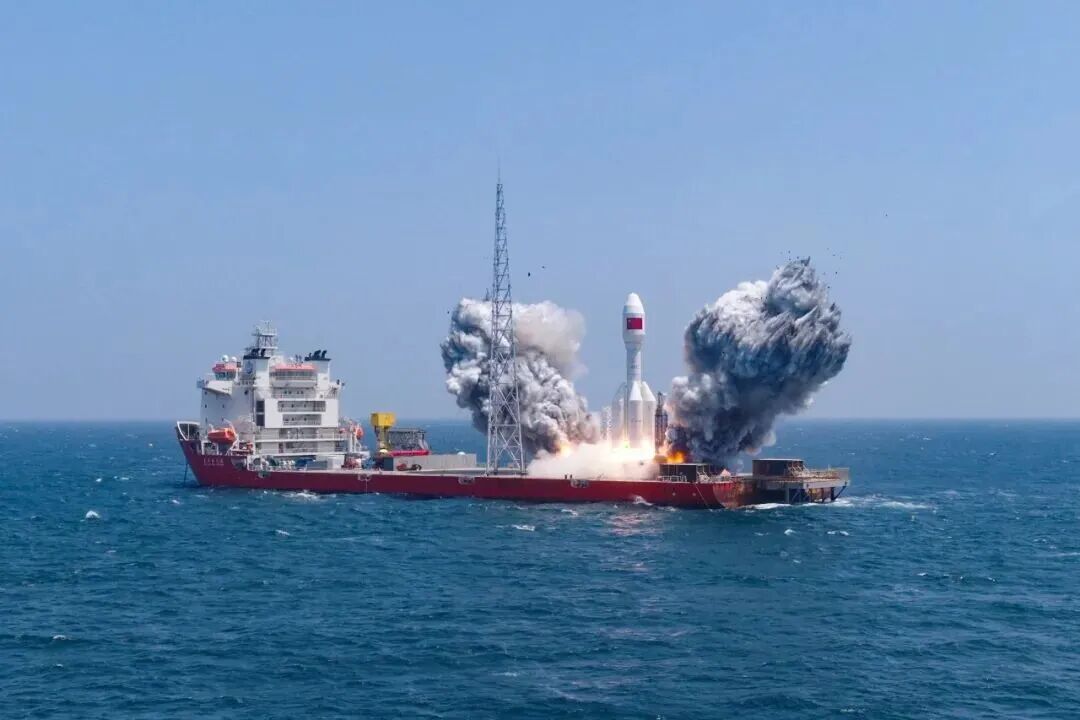
On the morning of September 17, the Long March 12 rocket took off from the Hainan Commercial Space Launch Site, deploying a group of low-orbit satellites for satellite internet—another national-level constellation running alongside Qianfan. On the same day, the Kuaizhou-11 rocket launched two additional satellites from Jiuquan.
On the evening of September 19, a Long March 2D rocket launched four remote sensing satellites from Zhuzhou Space Star Interstellar into orbit from Taiyuan, marking the 668th flight of the Long March series.
At noon on September 20, the Lijian-1 rocket launched nine satellites from Dongfeng, carrying the most diverse payload yet: Qinling dual satellites, Pujiang-4, Pengcheng inaugural satellite, as well as Diting, Chaozhisuan, and Yunxiao Pathfinder, each serving different purposes.
In total, seven launches deployed over 50 satellites, covering remote sensing, communications, carbon monitoring, and onboard intelligent computing.
Why the rush this month: The urgency of securing “space real estate”
While outsiders may see the excitement, industry insiders are keenly aware of the timeline. Such a dense schedule is no accident; the core issue is that low-orbit frequency and orbital resources are subject to strict deadlines.
The International Telecommunication Union (ITU) operates on a “first come, first served” basis. Once a frequency and orbit are declared, a sufficient number of satellites must be launched within the deadline, or the slots will be revoked.
There are only so many prime positions and usable frequencies in low Earth orbit. Elon Musk’s Starlink has already deployed over 11,000 satellites, leaving little room for delay.
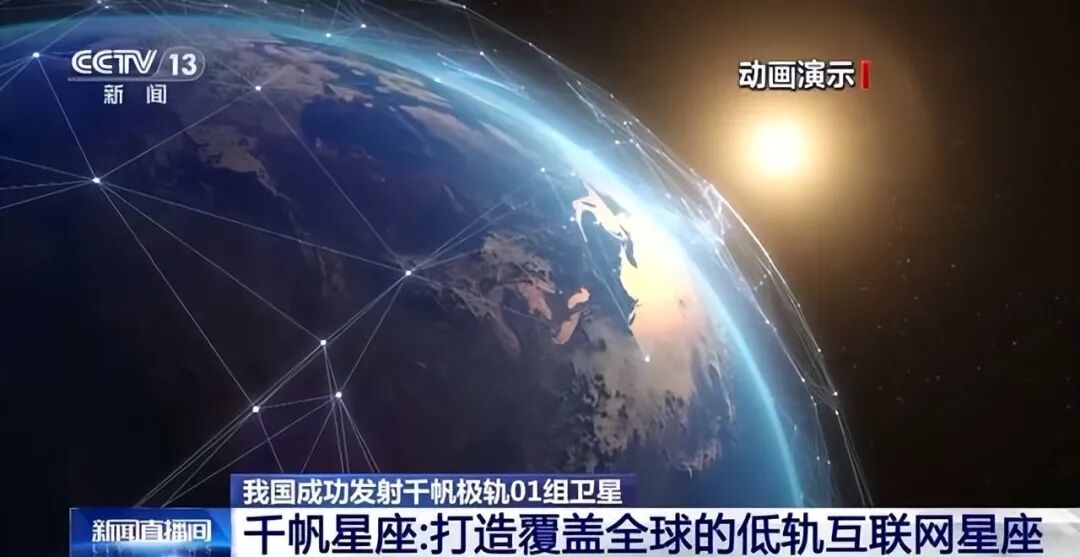
Specifically for this month, the Qianfan constellation is racing to meet its year-end target of 324 satellites. After two mid-September launches, 256 satellites were in orbit, meaning 68 more must be launched in the next three months to achieve preliminary global commercial service capability by year-end as planned.
The national satellite internet constellation is also expanding rapidly. With two mega-constellations demanding satellites simultaneously, launch slots are naturally in high demand.
Another key change is that transport capacity is no longer a bottleneck. As representatives from Origin Space bluntly put it: In the past, satellites were built and then waited for rockets and launch slots. Now, with the national team and several private rockets providing a mixed supply, along with temporary sea-based launch options, the pace of satellite deployment has naturally accelerated.
The real highlight: Private rockets evolve from “exam-takers” to “shuttle buses”
What stands out most this month isn’t just the number of launches but two significant “firsts.”
The Zhuque-2 marked the first time a Chinese private commercial rocket undertook a large-scale constellation deployment mission, accurately delivering ten satellites to a 900-kilometer altitude.
The Gravity-1 was even more groundbreaking—it was the world’s first mobile sea launch of a low-orbit broadband constellation, with a net payload exceeding 3 tons, breaking China’s records for both weight and altitude in sea launches. The satellites, built in Shanghai, were loaded onto a nearby ship and launched offshore, completing the first “Made in Shanghai, Launched at Sea” supply chain.
The significance of these milestones lies in the evolving role of private rockets in constellation construction—shifting from “exam-takers” proving “I can fly” to becoming reliable “shuttle buses” that constellation operators can book on a regular schedule.
As one expert succinctly summarized, this represents a shift from “mission-based success assurance” to “operational rhythm assurance”: The focus is no longer on whether a single launch succeeds but on whether launches can be conducted steadily every month.
Satellites themselves are also evolving. The Pujiang-4, launched on September 20, is China’s first satellite capable of high-precision joint detection of carbon dioxide and methane point sources, with a 400-meter resolution—the highest among domestic in-orbit carbon monitoring satellites. It can clearly detect factories secretly emitting methane from space.
The Pengcheng inaugural satellite is even more ambitious—it’s the first to integrate a 5G core network, onboard AI computing power, and 100 Gbps laser communications into a single 150-kilogram microsatellite. After capturing remote sensing images, it processes the results onboard and transmits them down, eliminating the need to send raw images back to Earth.
My assessment: This September marks a turning point. On the rocket side, a mixed transport capacity system involving both the national team and private companies has truly taken shape. On the satellite side, the competition is no longer just about “how many more were launched” but about composite functions like carbon monitoring and onboard intelligent computing.
The year-end target of 324 satellites is just the conclusion of Qianfan’s first phase. The race in space for positions, frequencies, and intelligence is only just accelerating.

All content in this article is sourced from publicly available information and represents only the author’s personal views.
-
![]()
Shocking News: Xiaomi Clinches 'Top Spot in Weekly Orders,' Outpacing BYD? Pengcheng Order Figures Unveiled
-
![]()
China’s Space Sector Hits Stride in September: 7 Launches and 50+ Satellites Deployed in 20 Days
-
![]()
Why Does the Intelligent Driving Sector Strive for Larger Cloud Models While Shrinking On-Board Models?
-
![]()
Is It Really Over? Huawei Pledges Ongoing Support for AITO! New MPVs, Sedans, and More on the Horizon
-
Is There Genuine ‘Overcapacity’ in China’s New Energy Vehicle Sector? A Closer Look at Three Misunderstood Aspects
-
![]()
ZTE’s New Doubao Phone: Playing It Safe in the AI Race
-
ZTE’s New Doubao Phone: A More Cautious Approach
-
![]()
Samsung, Spurred by Apple, Steps Up Its Game, with LY Technology Reaping the Greatest Benefits