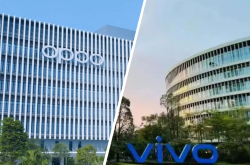
Taking Small Steps, OPPO and vivo Become Two Protagonists in China's Tech Narrative
 09/22 2026
 530
530
Introduction: For OPPO and vivo, the vast expanse of possibilities has always been within reach, extending from their daily small steps.
Shu Chen/Author Lishang Business Review/Producer
1
Two Conferences, One Day Apart
On September 16, in Shenzhen, the 2026 vivo Developer Conference (VDC) kicked off. This marked the ninth consecutive year vivo hosted the developer conference, continuing with the theme of "Together·Forward." Just one day later, on September 17, in Zhuhai, the 2026 OPPO Developer Conference (ODC) commenced as promised, with the theme "Upholding Smoothness, Moving Towards Proactive Intelligence." Within a day's span, two leading Chinese smartphone manufacturers took the stage in two cities facing each other across the Lingdingyang Bay, presenting their latest strengths in operating systems, artificial intelligence, and developer ecosystems.
In the tech industry, developer conferences have long served as a litmus test for a company's technological prowess and ecological appeal. Apple has WWDC, Google has I/O, Microsoft has Build, and Huawei has HDC. The ability to host an annual conference that attracts global developers signifies a company's evolution from a product company to a platform company. Today, OPPO and vivo's developer conferences have become two significant industry IPs in the Chinese tech landscape.
The content of the two conferences also lives up to their significance.
vivo upgraded its BlueHeart AI strategy to "Personalized Intelligence," adopting a technical route of "Large Model + Harness + Intelligent Agent Security Architecture" to build an end-to-end cloud-collaborative intelligent agent large model matrix centered around "Understanding You, Remembering You, Getting Things Done." The deeply integrated system kernel, BlueHeart Harness, can invoke over 6,000 atomic skills and support tens of thousands of tasks. OriginOS 7 integrates AI capabilities into high-frequency functions like screenshots, photo albums, file management, input methods, and calendars. BlueRiver OS 4 achieves full-link Rust implementation for the kernel, framework, and applications, with its self-developed kernel, BlueKernel, donated as an incubation project to the OpenAtom OpenSource Foundation and adapted by multiple chip manufacturers.
A day later, OPPO delivered its own answer: ColorOS 17 was released, marking the first simultaneous upgrade across OPPO, OnePlus, and realme brands. Three major AI technology foundations—New Computing, New Perception, and New Ecosystem—were unveiled. The end-side large model features a Linear Attention architecture, natively supporting 128K context, reducing memory usage by 48% and energy consumption by 55% compared to the previous generation. The Persona X Symbiotic Memory Engine enables AI to learn to record, forget, and reflect over long-term companionship.
These achievements share a common trait: they are not mere lists of parameters but systematic capabilities centered around real-world usage scenarios. OPPO AI's One-Click Flash Note's food order code function has been used over 1 billion times, Xiao Bu Suggestions cover over 700 subdivision (fine-grained) service scenarios, and BlueHeart Xiao V can handle complex instructions like travel planning and data organization. The value of technology ultimately manifests in specific, everyday life scenarios.
Supporting the two conferences is the user base accumulated by the two companies over three decades: ColorOS has over 770 million global active users, serving more than 90 countries and regions worldwide; vivo has nearly 600 million global users. The products and operating systems of the two companies connect over 1.3 billion users globally, a result of three decades of compounding growth, but far from the endpoint.
2
From Channel Labels to Technology-Driven Identity
Rewind a decade or so, and the industry's portrayal of these two companies was much simpler: strong in channels, skilled in marketing. During the years when "internet thinking" and "windfall theories" swept through China's business world, OPPO and vivo were often seen as representatives of traditional smartphone manufacturers—their extensive network of county- and township-level stores and billboards were considered their deepest moats, while in the technological narrative, they were long not the protagonists. A decade-plus later, this portrayal has been completely rewritten.
First, let's look at the fundamentals.
In the second quarter of 2026, OPPO and vivo each held a 16% market share in China's smartphone market, placing them in the first tier alongside Huawei and Apple; together, they account for roughly one-third of the Chinese market. Internationally, with the Chinese mobile phone market exceeding RMB 1 trillion in 2025, vivo achieved multi-fold growth in key overseas markets over the past year, while OPPO's products are widespread across Southeast Asia, the Middle East, Africa, Europe, and Latin America.
Next, consider their technological foundations.
As of June 30, 2026, OPPO's global patent applications exceeded 125,000, with over 69,000 granted, of which 92% were invention patents, ranking seventh globally in Chinese invention patent grants in 2025. In 5G standard-essential patents, which determine discourse power in the communications industry, OPPO ranked eighth globally with 3,847 patents, while vivo ranked tenth with 3,160. In their shared hometown of Dongguan, the top three companies by R&D investment are Huawei Terminal, OPPO, and vivo.
Furthermore, examine their technological depth in vertical domains.
vivo was the first Chinese smartphone manufacturer to develop its own imaging-specific chip, iterating from V1, V1+, V2 to V3 over four years. V3 achieved the Android camp's first 4K cinematic portrait video and 4K post-shooting editing. The BlueHeart Large Model Matrix covers parameter scales from billions to hundreds of billions, making vivo the first terminal manufacturer to open-source its self-developed large model. OPPO has continuously researched foldable screens for over eight years, accumulating over 3,500 related patents. In February 2024, Chen Mingyong proposed in an internal letter that "2024 is the first year of AI smartphones," a judgment ahead of the industry.
A symbolically significant detail: On September 10, 2026, European patent operator Tulip Licensing announced the launch of the world's largest imaging patent licensing program, with four initial licensees—Huawei, OPPO, Canon, and Sony. OPPO, alongside Huawei, stands shoulder to shoulder with two Japanese imaging giants. The dominance of the global imaging industry is shifting toward China.
The transition from channel labels to technology-driven identity took two decades. How did it happen? The answer lies not in any earth-shattering decision but in the shared origins of the two companies and the word inscribed in their organizational DNA from the very beginning.
3
Two Companies Emerging from BBK
To understand OPPO and vivo, one must return to Chang'an Town, Dongguan, and their predecessor company, BBK.
Around 1995, BBK, under the leadership of Duan Yongping, was already a nationally renowned brand for learning machines and telephones. In 1999, Duan Yongping initiated a unique restructuring of BBK in Chinese business history: following the principles of "people follow the business, independent equity, and no affiliation," the company was split into three independent enterprises—BBK Educational Electronics, specializing in reading machines and learning machines; BBK Audio-Visual Electronics, specializing in VCDs, DVDs, and later MP3s and MP4s, led by Chen Mingyong; and BBK Communication Technology, specializing in cordless phones and mobile phones, led by Shen Wei.
The most unique aspect of this restructuring was its interest (interest) arrangement. Duan Yongping retained approximately 10% stake in each of the three companies, leaving the majority of equity to the management teams and employees. In an era when "the boss must have absolute control" was still the mainstream credo, this was a nearly counterintuitive act of humility. Its underlying logic was Duan Yongping's widely circulated business philosophy—integrity.
The true starting point of the two companies, measured by tech industry standards, was unremarkable. In 2002, after China's WTO accession, international giants like Sony and Philips launched a patent war against China's DVD industry, with exorbitant royalties instantly eliminating the industry's survival space. Chen Mingyong, in charge of audio-visual business, promptly shut down the DVD operation and founded the OPPO brand in 2004, initially focusing on MP3 products. The 2005 X9 was hailed as a "milestone in domestic MP3s." In 2008, OPPO entered the mobile phone market. Shen Wei followed a similar path, starting with cordless phones before entering the mobile phone arena, officially launching the vivo brand in 2009 and gaining traction in 2012 with the X1, the world's first smartphone integrating Hi-Fi-grade professional chips.
Telephones, DVD players, MP3s—these were the humble beginnings of two companies now at the center of China's tech industry. They lacked chip DNA, software pedigree, or a century of communications technology accumulation. Initially, they even built their brands from scratch. Precisely for this reason, their journey is particularly worth studying.
4
Integrity: The Shared Underlying Operating System
On the official websites of OPPO and vivo, the same word is prominently emphasized: integrity.
This term originates from Duan Yongping. Early in BBK's history, he told employees, "A business doesn't do everything; it must adhere to integrity... Doing things honestly is our business principle." Later, he summarized it as "not doing incorrect things"—where incorrect means actions that make the business unhealthy or unsustainable. After venturing into investing, his concept of integrity evolved to "not investing in companies I don't understand."
Shen Wei articulated integrity more systematically, defining it as "maintaining a ordinary mind (normal mindset)"—setting aside surface distractions like difficulties, pressures, and temptations, especially when costs must be paid. He emphasized adhering to first-principles thinking and striving to do the right things correctly. A more concise expression he used was: "Cause determines effect; focus on sowing causes, and effects will naturally follow."
On BBK's 20th anniversary, Shen Wei stated, "Our corporate culture and values centered on integrity are the most crucial reason our business has survived for 20 years and the only core competitiveness that allows us to compete with world-class enterprises today."
For a company to prioritize "what not to do" over "what to do" and value "sowing causes" over "seeking effects" is rare in Chinese business. Over three decades, countless companies have faltered by deviating from integrity: chasing trends, leveraging debt, Blindly diverse (blindly diversifying), and engaging in capital maneuvers. OPPO and vivo, however, have used the same word to calibrate all major decisions.
Intriguingly, on the day of ODC 2026, which coincided with OPPO's 31st anniversary, Chen Mingyong refined the concept of integrity in an internal public talk: maintaining a normal mindset, grasping essentials, and thinking long-term. These three phrases correspond to the three dimensions of integrity culture.
Among them, a normal mindset is the mental approach—excluding distractions, returning to first principles, and clarifying what is right, especially under pressure and temptation. Grasping essentials is the method—identifying the most fundamental and core values of products and technologies. Thinking long-term is the temporal perspective—measuring right and wrong in decades or even centuries. Chen Mingyong said he particularly values "grasping essentials," stating, "Businesses must excel at identifying the most fundamental and core values of products and technologies to create products that truly move users."
If iOS is Apple's moat and communications technology is Huawei's, then "integrity" is the shared underlying operating system of OPPO and vivo. It is not written on spec sheets but has operated at every critical juncture over the past three decades. The only way to test an operating system's quality is to observe its performance in real-world operations.
5
Returning to Users: For Whom Is Technology Made?
The first practical application of integrity is user orientation. Nearly every company claims to prioritize users, but OPPO and vivo have institutionalized it into their decision-making.
Chen Mingyong has repeatedly emphasized an internal ranking at OPPO in recent years: "Place user needs and corresponding technological innovations first, and competitors last." In his view, while competition is inevitable in business, "the essence of competition lies not in imitating or defeating rivals but in accomplishing what they cannot." This statement bears reflection: Companies fixated on competitors can at best match them; those focused on users can achieve what others cannot.
At vivo, the investment in self-developed chips best illustrates this logic. In 2021, when vivo focused on imaging, it found that the fixed image processing algorithms in SoCs could no longer meet user needs, as users grew tired of "the spinning circle" during Take a photo (photo-taking), along with increased power consumption and heat. Thus, vivo decided to develop China's first self-developed imaging-specific chip for smartphones. Note the decision's starting point: not the technological narrative of "self-developed chips" but the user pain point of "the spinning circle during photo-taking." From V1 to V3, each generation of chips addressed the same type of issue: real-time night scene preview, 4K cinematic portrait, and post-shooting editing, pushing each specific experience to heights previously unattainable in the industry.
The same approach applies to AI. At the 2026 vivo Developer Conference, vivo Vice President Zhou Wei judged, "The core of the current AI industry's competition is shifting from merely comparing technical parameters to whether it can truly land in scenarios and solve ordinary people's practical pain points." Chen Mingyong put it more bluntly: the industry overemphasizes AI as an "efficiency tool," while its core value lies in unleashing human productivity and creativity—"If you only see efficiency, you haven't grasped AI's essence."
Thus, both companies chose the same slow path: avoiding parameter arms races and integrating large models into systems and scenarios. ColorOS 17 enables AI to transition from "passively awaiting instructions" to "proactively providing services"; OriginOS 7 integrates AI capabilities into high-frequency functions like screenshots, photo albums, and calendars. Tang Kai, President of OPPO's Software Engineering Business Division, summed up this practice at ODC: "Good products should grow alongside users."
Shen Wei put it more decisively: Users are the sole reason for vivo's existence, and "user orientation" has been the company's only consistent direction for over two decades.
6
Altruistic Symbiosis: Getting the Order of Interests Right
The second practical application of integrity is the design of interest structures. This is the most distinctive and least truly understood aspect of OPPO and vivo.
In 2004, when vivo first entered the mobile phone market and began building its channel network, Shen Wei established a channel policy: Prioritize enabling retailers to profit, followed by provincial distributors, and finally vivo headquarters.
Placing the manufacturer's own interests last in the commercial world seems almost "counterintuitive." Yet this policy forged China's most stable channel community. Provincial distribution companies are often joint ventures between former BBK employees and manufacturers, with cross-shareholdings. Regional managers dispatched by vivo to various locations are first and foremost "evangelists of values." Over two decades, this system has weathered every shift in China's channel distribution landscape, evolving from an interest community to a community of fate. Today's vast network of stores nationwide is not a channel built with money but an ecosystem that has grown organically.
Internally, a similarly counter-mainstream arrangement exists. Duan Yongping continuously diluted his shares during the BBK era, ultimately retaining approximately 10% in each of the three companies. OPPO and vivo continued this tradition, with media reporting that employee shareholdings at OPPO have long exceeded 60%, while vivo's management is the company's largest shareholder. A common industry story is that competitors offer two to three times the salary to poach OPPO and vivo executives, with little success. The reason is clear: These individuals are not employees but shareholders and business partners.
Accompanying this is the shared "no IPO" stance of the two companies. Without external capital pressure, there is no need to compress R&D or overextend channels for quarterly financial reports. With cash-on-delivery terms, no default (delinquency) in supplier payments, and no reliance on high leverage, the companies' profits are distributed among employees, partners, and R&D. The cost of this approach is forgoing capital market narratives and valuations; the benefit is that decision-making timeframes can fully align with the sole standard of "health and longevity."
Shen Wei offered a simple yet powerful interpretation of altruism: 'Integrity means not taking advantage of others and having the courage to bear losses when collaborating. Having the courage to bear losses is the first step toward altruism and mutual benefit.' In vivo's hierarchy of values, consumers, employees, partners, and shareholders—the four stakeholders—are 'equally important, with no distinction made between them.'
Most failures in the business world are, at their core, failures of interest structure: prioritizing short-term profits over users, shareholders over employees, and manufacturers over partners. OPPO and vivo have demonstrated over three decades that another path is possible: aligning the order of stakeholders correctly ensures that those who prioritize altruism will ultimately benefit themselves.
7
Long-termism: The Compounding Power of Daily Progress
The third dimension of integrity is time. Nearly every company claims to adhere to long-termism, but there is only one criterion to test its authenticity: the willingness to keep investing where there are no immediate returns.
OPPO's R&D in foldable screens has spanned over eight years, accumulating more than 3,500 related patents. Before foldable screens evolved from a niche concept to annual shipments exceeding ten million units, this journey traversed a long tunnel. vivo established its AI Global Research Institute in 2017, recognizing that 'AI is the most foundational technology,' and began laying the groundwork six years before large models became a global buzzword. OPPO built its AI Binhai Bay Data Center in Dongguan, deploying a three-tier large model architecture—Titan, Turbo, and Tiny—while vivo's BlueRiver operating system chose to rewrite its system framework in Rust, a first in the industry and the most challenging path, to ensure memory security from the ground up.
The approach to imaging technology further illustrates this point. Instead of taking shortcuts by buying and rebranding international brands, both companies established long-term joint R&D systems with Hasselblad and Zeiss, integrating optical aesthetics and computational photography into their technology stacks layer by layer. Today, OPPO holds approximately 6,000 valid global imaging patents and stands alongside Huawei, Canon, and Sony as one of the initial licensors in the world's largest imaging patent licensing program.
The pace of global expansion has similarly been a slow variable. OPPO opened its first overseas sales counter in Bangkok, Thailand, in 2009 and, 17 years later, has a presence across five continents. vivo entered India in 2014 and has since achieved exponential growth in key overseas markets. There have been no sensational mergers or lightning strikes—only steady, station-by-station cultivation.
Most of these investments yielded little visible return at the time, which is precisely their value. Jim Collins described the flywheel effect in *Good to Great*: at first, the massive wheel remains motionless, but with sustained effort, it begins to turn at a certain point, accelerating until it becomes unstoppable. The thirty years of OPPO and vivo fully embody this effect: integrity culture ensures they do the right things, user orientation keeps them on the correct path, altruistic structures prevent organizational and ecological fragmentation, and the rest is left to time.
The most remarkable aspect of compounding is that it places almost no demands on the starting point. Coming from humble beginnings in telephones and DVD players does not prevent standing at the industry's center three decades later—as long as one is willing to invest thirty years of patience.
8
Error Correction as Integrity
Integrity is often misunderstood as stubbornness. The opposite is true.
In May 2023, OPPO announced the shutdown of its chip subsidiary, ZEKU. This company, which embodied OPPO's ambitions for self-developed chips, had assembled thousands of engineers: the Mariana X was the world's first 6nm self-developed imaging NPU, with over 10 million units shipped; the Mariana Y had evolved into a complete SoC subsystem. After three years of investment, its abrupt closure sent shockwaves through the industry, with much public regret.
Duan Yongping's response on Snowball was succinct: 'The sooner you correct a mistake, the better.'
This statement encapsulates another facet of integrity culture. The full expression of integrity is 'doing the right things and doing things right,' which necessarily includes 'correcting mistakes when discovered.' When external changes render original judgments obsolete, clinging to sunk costs or persisting for the sake of appearances is the true antithesis of integrity. After ZEKU's closure, OPPO's imaging technology accumulated did not vanish: the architectural and algorithmic capabilities honed through chip development were transferred to joint R&D with Hasselblad and self-developed large model systems, continuing to generate value.
How far a company ultimately goes depends not only on how many things it does right but also on how quickly it corrects course after mistakes. Long-termism does not mean persisting in the wrong direction but remaining unwavering in the right one. Distinguishing between the two requires returning to fundamentals with a calm mindset—which remains integrity.
9
Conclusion: Achievements Are Milestones; the Horizon Holds Infinite Possibilities
Reviewing OPPO and vivo's thirty-year journey reveals that their uniqueness does not lie in any single capability.
In terms of telecommunications technology, they lag behind Huawei; in internet DNA and ecological storytelling, they trail Xiaomi; in operating system first-mover advantage, they cannot compare with Apple. Their origins, among China's tech companies, were humble—telephones, DVD players, MP3 players.
Yet they succeeded by doing the hardest yet simplest thing: under a stable set of values, consistently doing the right things and leaving the rest to time.
Integrity kept them from losing direction amid countless passing trends; user orientation ensured technological accumulation always addressed real needs; altruistic symbiosis aligned employees, channels, and partners as rowers in the same boat; long-termism allowed all these factors to compound quietly over three decades.
The story of compounding runs deeper.
'Doing the right things,' viewed from another angle, means 'avoiding mistakes.' Throughout thirty years of Chinese business history, many once-glorious companies failed not to competition but to one or two catastrophic errors of their own making—excessive leverage, blind expansion, chasing trends, or capital speculation. For them, time was the enemy: the longer they operated, the higher the probability of error, and one fatal mistake could erase decades of accumulation.
For OPPO and vivo, time is a friend. Integrity does not guarantee winning every time; it ensures not losing on fundamental issues. Every return to first principles, every refusal of temptation, every timely correction after error clears negative factors from compounding. Over extended cycles, the gap between a company that consistently does the right things and one that frequently errs widens not linearly but exponentially. This is why two companies with ordinary beginnings have come this far—and why today's achievements are not their endpoint but merely a milestone on a long compounding curve.
Beyond this milestone, the path only broadens. The AI revolution has just begun, and both companies are treating it as a new round of seed-planting. ColorOS 17's proactive intelligence and vivo's personalized intelligence are merely preludes to this transformation. New device forms are emerging: vivo is channeling its accumulated imaging and AI capabilities into the 'eyes' and 'brains' of robots; OPPO's system capabilities are extending to tablets, watches, earphones, automotive interfaces, and health devices, building a multi-terminal proactive service ecosystem. Exponential growth in key overseas markets continues, and the Developer Conference IP itself grows annually with ecological expansion.
Today, as two developer conferences light up Shenzhen and Zhuhai on consecutive days, as over 1.3 billion users run these companies' products and systems, and as their patents stand alongside global giants, people see the results of compounding. Yet the origin of these results is nothing more than a company in Chang'an Town, Dongguan, in 1995, willing to distribute most of its equity to employees, and a principle so simple it lacks marketing appeal—'do things honestly.'
These seven words lack storytelling flair, dramatic conflict, or any quality that would make them a bestselling business book title. But after thirty years of fads, concept turnover, and bubble cycles in Chinese business, they stand as one of the few fully validated principles.
Being extraordinary means doing the same category of right things for thirty years. The paths of OPPO and vivo provide the most complete annotation to 'success through the right way': they prove that without innate advantages, relying on integrity, patience, and altruism can still reach the industry's forefront. As long as this continues, time will remain on their side. Today's achievements are merely coordinates on this curve; the direction of its extension is what truly merits attention.
For these two companies that began with telephones and DVD players, the infinite possibilities of the future have always lain along the extension of daily progress.
-
Is MiniMax on the Verge of Crafting a New Narrative?
-
Self-Driving Buses Enter a 'Golden Era'
-
Can’t Compete? 25 Automakers Unite to Lobby for a U.S. Ban on Chinese Car Imports
-
![]()
One Step a Day: OPPO and vivo Emerge as Two Leading Players in China's Tech Narrative
-
Taking Small Steps, OPPO and vivo Become Two Protagonists in China's Tech Narrative
-
![]()
Four Leading Brands Dominate the 2026 Automotive NPS Rankings
-
Selling an iPhone Duo Results in a 1,847 Yuan Tax in China, Whereas an iPhone 18 Pro Incurrs 1,157 Yuan in Tax
-
![]()
Toyota China Faces Its Most Challenging Transformation and Strategic Shift