Convergence Intelligence Industry Development Conference (2026) Held Successfully, Propelling AI Era’s Integration of Three Key Industries
 09/10 2026
 566
566
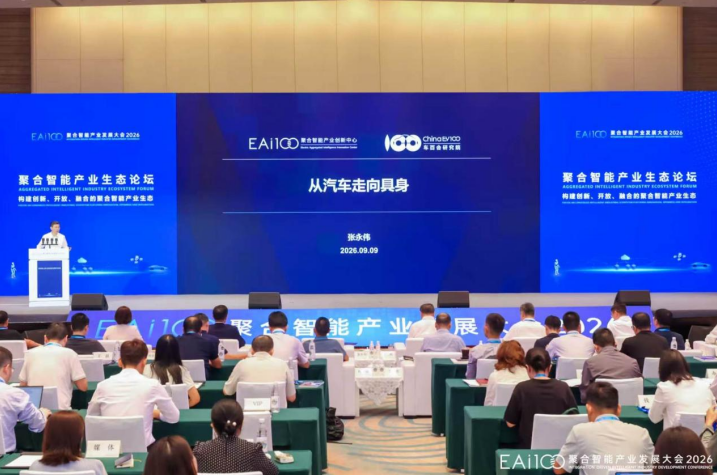
On September 9, the Convergence Intelligence Industry Development Conference (2026) took place in Guanggu. Hosted by the Convergence Intelligence Industry Innovation Center and Hubei Science and Technology Investment, the conference centered on the theme of “Building an Innovative, Open, and Integrated Convergence Intelligence Industry Ecosystem.” It featured four forums and one exhibition, offering a comprehensive display of cutting-edge technologies, innovative achievements, and industrial implementation practices within the convergence intelligence domain.
The conference brought together leaders from relevant government departments, Jin Bing, the former first-level inspector and deputy director (at the department level) of the Policy and Regulation Department of the State Post Bureau, and representatives from prestigious universities and institutions such as Tsinghua University, Beijing Institute of Technology, Beijing Academy of Artificial Intelligence (BAAI), Wuhan AI Institute, CICC Research Institute, and the Hubei Humanoid Robot Innovation Center. Additionally, over a hundred experts and entrepreneurial representatives from vehicle manufacturers, embodied intelligence companies, low-altitude flight enterprises, and ecosystem chain companies attended, including Dongfeng Motor Group, Changjiang Industry Group, Great Wall Motors, XPENG, Mojia Robotics, PwC Basic Software (Puhua Basic Software), Valeo, Desay SV, Black Sesame Technologies, Neolix, Zhaowei Dexterous Hand, Innovusion, Kingfa Science & Technology, iFLYTEK, Volcano Engine, China Unicom Smart Network, Banma Intelligence, ZTE, Baidu Cloud, Solidigm, Jidou Technology, Minimax, Baolong Technology, DAXIAO Robotics, Deep Robotics, VITA Power, Octopus Power, Mech-Mind Robotics, Hwa-Wei Technology, Oriental Computing Core, Qianjue Technology, Tujian Technology, Optics Valley Information, Kuaiwang Data, and Ruitai Micro.
Accelerating the Integration of Automotive and Embodied Intelligence: The Imperative for a Shared Industrial Technology Foundation
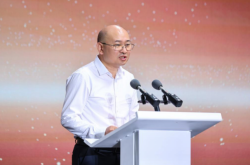
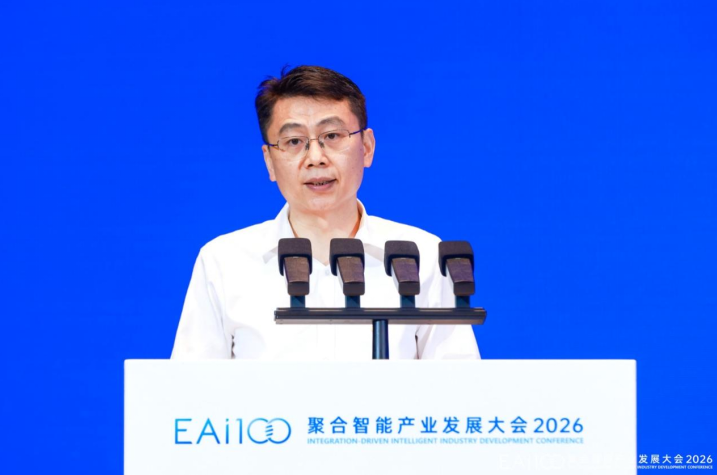
On the morning of September 9, at the Convergence Intelligence Industry Ecosystem Forum, Zhang Yongwei, Chairman of the AutoChina Research Institute, posited that the integrated development of automotive and embodied intelligence is an inevitable trend. For automotive companies, neglecting the embodied intelligence track would mean missing out on significant opportunities for industrial capability expansion. Conversely, for the embodied intelligence industry, failing to deeply integrate with the automotive technology chain would slow down industrialization and prolong the development cycle. To achieve integrated development, specific progress can be made in six key areas: First, expedite the joint construction of an AI-based technology foundation to facilitate the extension and implementation of automotive large models and other technologies into embodied intelligence. Second, address foundational hard technologies in storage, computing power, connectivity, and perception (“storage-computing-connectivity-perception”) to solidify the hardware foundation of the convergence intelligence industry. Third, establish a mechanical chain from materials to components to actuators, enabling the transfer and reuse of mature automotive-grade supply chain capabilities in the embodied intelligence field. Fourth, leverage the rich and diverse scenarios in the automotive industry to drive the large-scale implementation of embodied intelligence through scenario-led approaches. Fifth, follow the international development experience of the automotive industry to achieve “born global” status in the embodied field, with simultaneous global market layout. Sixth, rely on the mature capabilities of the automotive industry to accelerate the establishment of standards, testing, and certification systems in the convergence intelligence field.
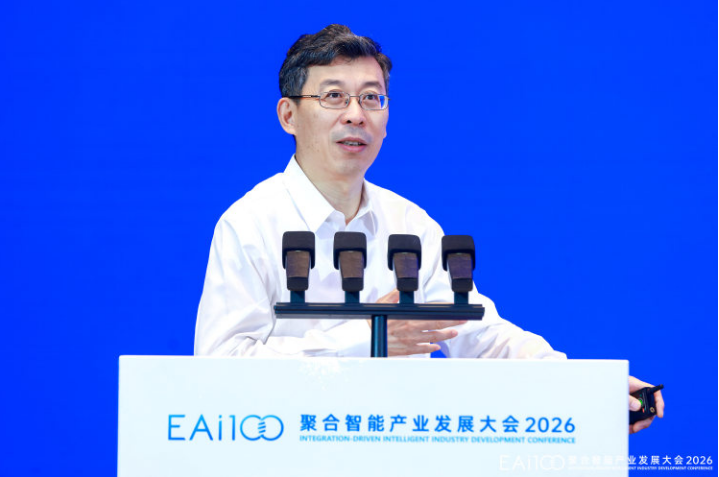
Jin Bing, the former first-level inspector and deputy director (at the department level) of the Policy and Regulation Department of the State Post Bureau, stated at the conference that the industry is currently at a critical juncture transitioning from a “small-scale pilot phase” to a “large-scale penetration phase.” The years 2025-2026 will mark the first year of mass production. “Those who can stabilize their products, validate their scenarios, and reduce costs in these two years will dominate the wave of bulk procurements in 2027-2028,” he emphasized. China’s strengths lie in mass production and scenarios, while its weaknesses are in high-end components, simulation ecosystems, and extreme environment validation. The winning strategy is to “exchange scenarios for technology, achieve cost reduction through mass production, and compensate for individual weaknesses with a comprehensive system”—leveraging the world’s largest application market and most complete supply chain to drive breakthroughs in high-end components and basic software.
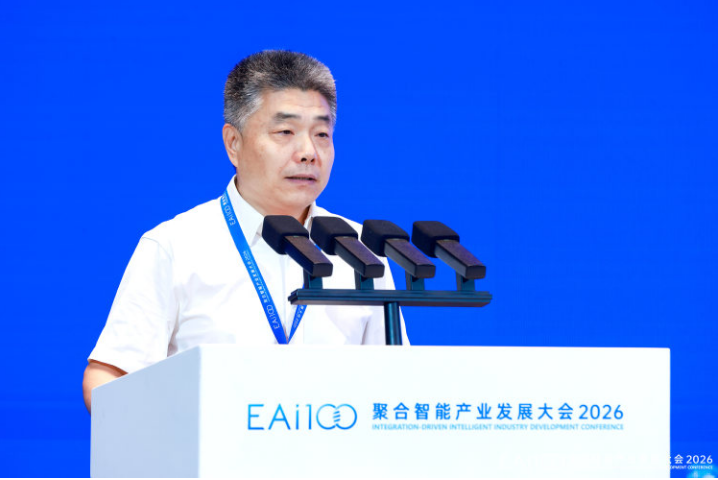
The Convergence Intelligence Industry Ecosystem Forum was moderated by Shi Jianhua, Vice Chairman of the AutoChina Research Institute and Dean of the AutoChina Think Tank Research Institute.
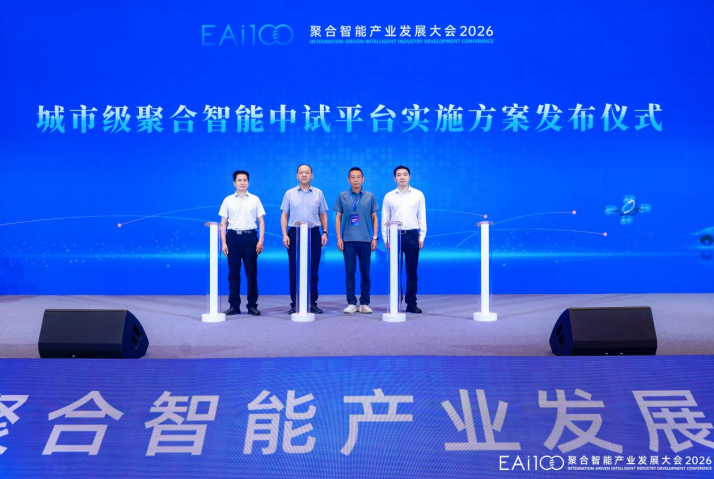
During the conference, the East Lake High-Tech Development Zone officially unveiled the “Implementation Plan for Building a City-Level Convergence Intelligence Pilot Platform in the East Lake High-Tech Development Zone,” aiming to accelerate the modernization of urban governance and industrial integration and upgrading. By 2028, it will establish a nationally leading hub for the convergence intelligence industry and a pioneer in comprehensive applications.
According to relevant officials, Guanggu will fully open up urban public application scenarios to provide enterprises with growth space for technological iteration, market expansion, and model innovation. It will coordinate the construction of shared infrastructure, such as roadside sensing, low-altitude ground stations, and electronic fences, allowing multiple terminals to share a single set of facilities and reduce enterprise costs. It will provide comprehensive and precise enterprise services throughout the lifecycle, attracting high-quality market players in the industrial chain to accelerate aggregation. It will promote collaborative research and development in industry-university-research-application technologies and accelerate the scenario-based transformation of innovative achievements. Over the next three years, Guanggu will open up eight integrated scenarios.
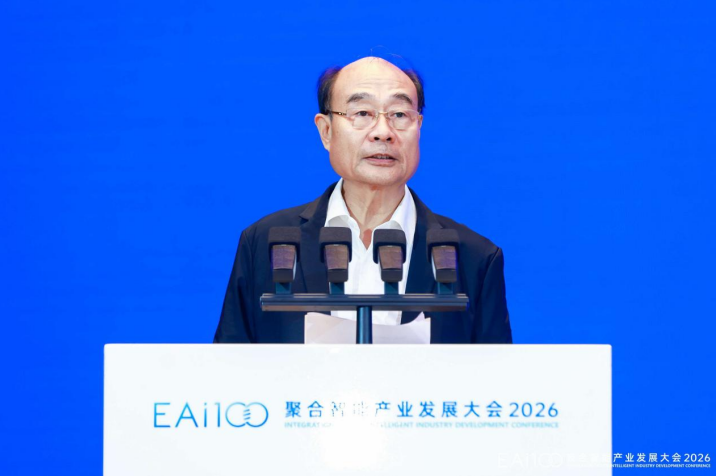
You Zheng, Deputy General Manager and Member of the Party Committee of Dongfeng Motor Group, stated that intelligent vehicles are currently the most commercially scalable and mature wheeled embodied intelligent entities, serving as the parent industry, best testbed, and large-scale stress-testing platform for the convergence intelligence industry. Standing at the new starting point of the “15th Five-Year Plan,” the industry is undergoing three fundamental changes: changes in intelligent forms, industrial boundaries, and competitive paradigms. The game has upgraded from “breakthroughs in single-point technologies” to “winning through the entire ecosystem.” The convergence intelligence chain is long, spans widely, and requires high investment. No single entity can “dominate alone.” It is essential to adhere to the principles of shared foundational technology development, joint standard-setting, and mutual supply chain guardianship, which are key factors determining the success of the industry. Dongfeng will actively participate and strive to be a pioneer in the convergence intelligence industry.

Du Shengguo, Member of the Party Committee and Deputy General Manager of Changjiang Industry Group, stated that convergence intelligence is not just a technological convergence of algorithms and large models but also a deep integration of technology supply chains, capital, and scenarios. For the industry to truly achieve commercialization, it cannot merely pursue breakthroughs in single-point technologies but must establish a solid foundation for the shared supply chain, including the “three electrics” systems, sensing devices, chips, key materials, and storage-computing-connectivity-perception. At the same time, it is evident that relying solely on individual enterprises is insufficient to address the shortcomings across the entire chain. Therefore, there is an urgent need to build an open and symbiotic industrial ecosystem.
At the conference, multiple guests called from different perspectives for accelerating the construction of a shared foundational technology base. Liu Hongqian, General Manager of Puhua Basic Software, proposed from a software perspective that operating systems developed for intelligent vehicles have the potential to be reused in robots and low-altitude aircraft. The development of a new-generation operating system for the convergence intelligence industry does not need to start from scratch but can build upon the foundation laid by the automotive industry, the “pioneer.” She suggested promoting joint construction of foundational technologies to free enterprises from redundant research and development, achieve cost reduction and efficiency gains, and allow resources to flow toward differentiated innovation. Deng Kun, Vice President of Application Engineering at Black Sesame Technologies, believes that embodied intelligence and intelligent vehicle technologies share the same roots. Intelligent driving software, hardware, algorithms, models, sensors, and supply chains can largely be seamlessly transferred to the embodied intelligence industry, enhancing its supply chain implementation capabilities and industrial adaptability. Fan Qingyuan, Co-founder of Octopus Power, stated that only by constructing models, dexterous hands, and other components into highly versatile infrastructure can the productivity of the entire industry be significantly unleashed from “reinventing the wheel.” Xing Yue, Chief Strategy Officer of Banma Intelligence, proposed that regardless of whether it is robots, automobiles, or low-altitude vehicles, offline-usable edge intelligence must be the mainstream. She looks forward to edge models becoming the foundational infrastructure supporting the future development of convergence intelligence.
Zhao Zhelun, Co-founder and President of Products at VITA Power, proposed that the automotive industry is the parent ecosystem for embodied intelligence, and the algorithms, OTA, and mass production experience accumulated in the autonomous driving field can be transferred to the robotics field. Chen Yidong, Deputy General Manager of Zhaowei Electromechanical and General Manager of Zhaowei Dexterous Hand, introduced that Zhaowei Electromechanical is empowering the development of the embodied intelligence industry through technological convergence from the automotive field. Bao Junwei, Co-founder and CEO of Innovusion, expressed willingness to play the role of “eyes” and “bridge,” sharing products, point clouds, software, and mass production experience refined in the automotive sector with all partners. He aims to collaborate with chip, algorithm, and system integration partners in the industrial chain to fill the last gap in the physical AI landscape.
At the data level, multiple guests mentioned the industry’s pain point of a lack of real physical interaction data. Zhu Xiaohui, CEO of Hwa-Wei Technology, proposed that due to non-uniform hardware, endpoints, and materials for tactile data, they are currently promoting unified modeling, interfaces, data formats, and a diversified and unified tactile token system, soon to introduce a tactile representation system. Zhang Ruotang, CMO of DAXIAO Robotics, believes that the embodied intelligence industry severely lacks data. Language large models can only provide a basic understanding of the world, and the real challenge for robots lies in interacting with the physical world. She advocates for human-centered environmental data collection. Yang Zhe, Co-founder and Chief Designer of Neolix, stated that Neolix has accumulated a large amount of real data in logistics scenarios, which holds significant value for the development of embodied intelligence and is willing to engage in exchanges and cooperation with various parties in the industrial chain.
Three Parallel Forums Focus on Cross-Domain Technology and Industrial Integration
On the afternoon of September 9, three thematic forums were held simultaneously, focusing on the integrated development of AI and automotive, the collaborative development of embodied intelligence and the automotive industry, and the collaborative development of “storage-computing-connectivity-perception” and the convergence industry. These forums explored cross-domain technology integration paths from multiple dimensions and addressed real-world challenges in industrial implementation.
The forum on the collaborative development of the “storage-computing-connectivity-perception” convergence industry was moderated by Liu Xiaoshi, Vice Chairman of the AutoChina Research Institute. At the meeting, Wang Wenwei, Executive Dean of the Beijing Institute of Technology Shenzhen Automotive Research Institute, proposed that in-vehicle optical communication not only benefits the automotive industry but also provides valuable insights for robotics. True deep integration of “storage-computing-connectivity-perception” between vehicles and robots can only be achieved by enabling data flow at the speed of light. Zhou Liangjie, Vice President of Baolong Technology and General Manager of the Automotive Sensor Unit and Zhigan Robotics, stated that the company’s accumulated multi-modal perception technology, which integrates ontology, mechanics, and tactile sensing, initially served the automotive industry and is now being applied to the field of embodied intelligence.
Guests from Dongfeng Motor, ZTE, Solidigm, China Unicom Smart Network, Oriental Computing Core, Ruitai Micro, and Tujian Technology also shared their cutting-edge insights and practical considerations on the fusion and innovation of “storage-computing-connectivity-perception” from various dimensions and perspectives.

The forum on the collaborative development of embodied intelligence and the automotive industry was moderated by Shi Jianhua, Vice Chairman of the AutoChina Research Institute and Dean of the AutoChina Think Tank Research Institute. Participants unanimously agreed that the automotive industry has become the ideal testbed and primary platform for the commercialization and large-scale application of embodied intelligence technologies. It serves as the core leading industry driving the improvement of the embodied intelligence industrial chain and promoting technological iteration and upgrading.

Addressing the limitations of current mainstream VLA and world model technology routes, which rely solely on visual perception, Zhao Mingguo, a researcher at Tsinghua University and Director of the Robot Control Laboratory, proposed a brain-inspired approach for humanoid robots. This approach enables robust and multi-task parallel operations through multi-modal perception. Drawing inspiration from the Top-Down attention mechanism of the human brain’s dorsal attention network (DAN), this method dynamically screens and allocates multi-sensor information, such as vision, force, and hearing, based on tasks. It transmits only task-relevant perceptual information upward to achieve multi-modal training and deployment, enhancing the anti-interference and multi-task parallel capabilities of humanoid robots.
Enterprise guests from Dongfeng Motor, XPENG, Mech-Mind Robotics, Kuaiwang Data, and Kingfa Science & Technology also shared their practical experiences, dissected industrial challenges, and proposed innovative ideas from different dimensions.
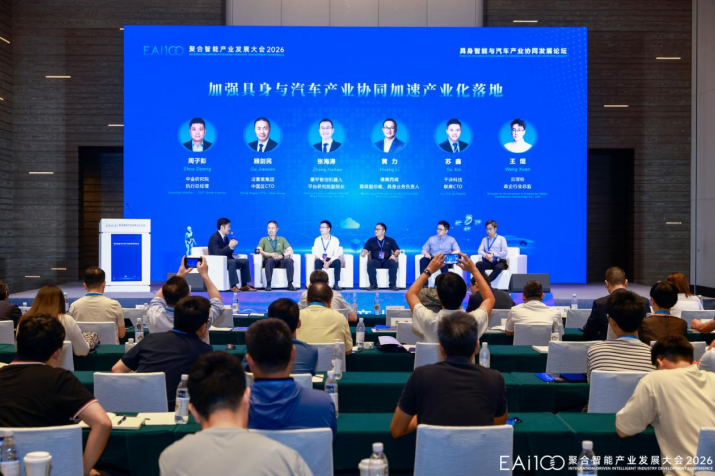
The roundtable discussion, moderated by Zhou Zipeng, Executive General Manager of CICC Research Institute, featured in-depth exchanges on the theme of “Strengthening Collaboration Between Embodied and Automotive Industries to Accelerate Industrialization.” Participants included Gu Jianmin, CTO of Valeo Group China; Zhang Haitao, Deputy Dean of the Mojia Intelligent Creation Robot Platform Research Institute; Huang Li, Senior Vice President of Desay SV and Head of the Embodied Business; Su Xin, Co-CTO of Qianjue Technology; and Wang Xuan, Government and Enterprise Industry Director of Deep Robotics.
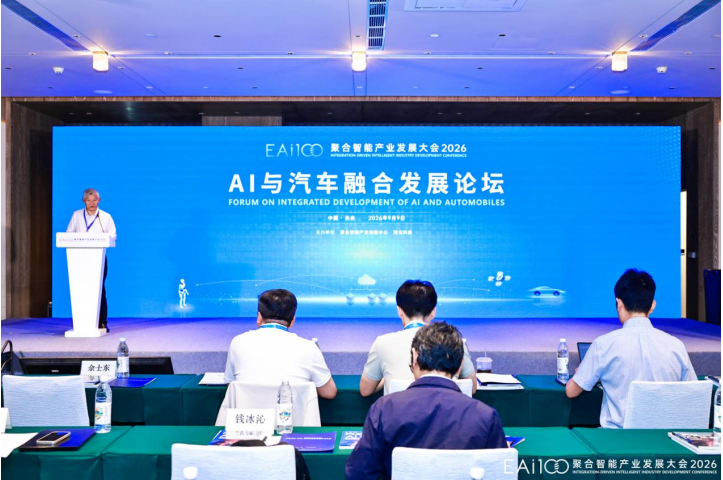
The forum on the integrated development of AI and automotive was moderated by Wang Hewu, Director of the Zero-Carbon Transportation Research Center at the Tsinghua University Institute for Carbon Neutrality and Chief Expert of the AutoChina Think Tank. Zhang Fan, Director of Automotive Intelligence Research at the Beijing Academy of Artificial Intelligence (BAAI), proposed that AI’s reconstruction of the automotive industry represents a highly complex systemic transformation. While an open-source ecosystem will not directly complete this transformation, it lowers technological barriers, optimizes collaboration models, reduces redundant industry investments, and enables faster and broader occurrences of AI-driven product, research and development, and supply chain transformations, becoming a crucial driving force for the integration of AI and automotive.
She Dong, Deputy General Manager of Intelligent Products at Great Wall Motors, stated that in-vehicle intelligent agents are still in their infancy, with significant work remaining in interaction refinement, personalized proactive services, and model training. Analogous to the introduction of Android a decade ago, AI intelligent agents will become the next driving force for transformation in the automotive industry, comprehensively reconstructing vehicle functions, user experiences, and service systems.
Guests from Wuhan AI Institute, Dongfeng R&D Headquarters, iFLYTEK, Baidu Cloud, Jidou Technology, Optics Valley Information, Volcano Engine, and Minimax also discussed the practical challenges facing the deep integration of AI and automotive, reaching multiple consensuses.
Multiple Types of Exhibits Debut Together, Showcasing the New Strength of Convergence
During the conference, the “Convergent Intelligent Industry Product Exhibition” was held, showcasing cutting-edge innovative achievements in the convergent intelligent industry. The exhibition area featured displays of complete robot systems, as well as physical presentations of core components such as dexterous hands, LiDAR, chips, intelligent cockpits, data acquisition seats, computing platform development kits, and real-time operating system solutions. Visitors could intuitively experience the convergent intelligent landscape of “vehicle-robot-aircraft” technologies sharing a common origin and interconnected ecosystems on-site.
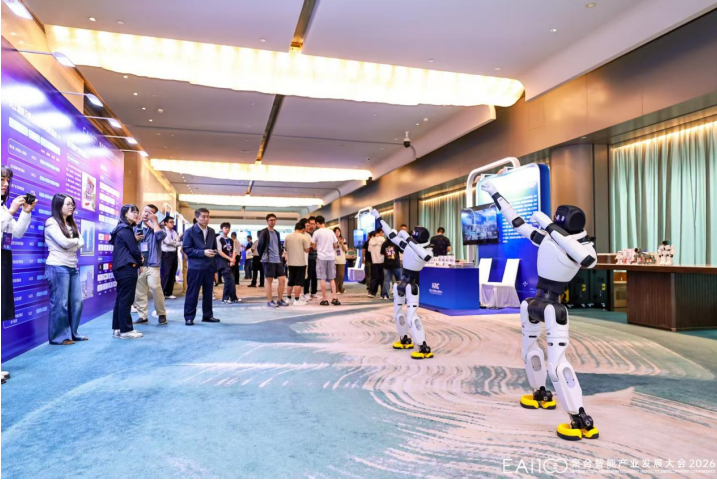
Using the exhibition as a platform, the conference also established a comprehensive link between the display of achievements, technical exchanges, and business negotiations. It organized targeted visits and one-on-one discussions for participants, facilitating efficient on-site matching of needs among government, industry, academia, research, users, and investors. This created a bridge for precise connection of upstream and downstream parts of the industry chain, enabling deep cooperation and effectively transforming “conference traffic” into “cooperation growth.”
As the host venue of the conference, Optics Valley (Guanggu) continues to advance the development of the convergent intelligent industry. In recent years, focusing on the upstream and downstream industry chains, Optics Valley has established the nation’s largest and most diverse innovation center for humanoid robots, attracting over 800 artificial intelligence enterprises. The scale of the AI industry is rapidly approaching the 100-billion-yuan level. Next, it will seize the opportunities presented by the AI industry transformation, concentrate on developing the convergent intelligent industry, and create new development advantages.
This conference marks the first domestic intelligent industry event since “fostering a new form of the intelligent economy” was included in the government work report, featuring cross-industry, cross-domain, and cross-border collaboration that breaks down industry boundaries and technological barriers. From high-end dialogues to product displays and achievement matchmaking, this conference enabled efficient “handshakes” between upstream and downstream players in the industry chain, injecting new vitality into the development of Optics Valley’s intelligent industry. Standing at the dawn of the mass production era of embodied intelligence, the convergent intelligent industry is accelerating towards a new stage of high-quality development characterized by “innovation, openness, and integration,” moving towards collaborative fusion and mutually beneficial win-win outcomes.
-
Why Are Mobile Phone Prices Rising En Masse? Is AI the Primary Driver?
-
Celebrating Android Manufacturers for Sparking Innovation in Foldable Display Technology
-
![]()
Embracing the 'Lanshan' Legacy: WEY's New Boxy SUV Teases Its 'Entry-Level Pricing'?
-
Xingyu Shares: Governance Weaknesses Come to the Forefront
-
Is Qualcomm in a State of Panic? Apple Adopts Its Self-Developed C2 Modem, Fully Parting Ways with Qualcomm's 5G Chips?
-
![]()
Zotye Automobile Restarts Production
-
![]()
A New Landmark: China’s Pure Electric Vehicle Penetration to Eclipse 50%!
-
![]()
The Loss Conundrum and the High-End Wager: Xiang Xingchu Declares, 'JAC Embarks on Its Third Trailblazing Journey'