Xiaomi's High-End Strategy Succeeds! Lei Jun Secures Top Spot in Domestic Android Foldable Phone Sales, Stores Overwhelmed
 09/15 2026
 425
425

This weekend, Xiaomi's offline stores were packed to the brim.
Wang Xiaoyan, Senior Vice President of Xiaomi Group and President of China Region, revealed that following the simultaneous launch and delivery of the Xiaomi 18 Fold and Pengcheng SUV, foot traffic at many offline stores surged by 400% during peak hours.
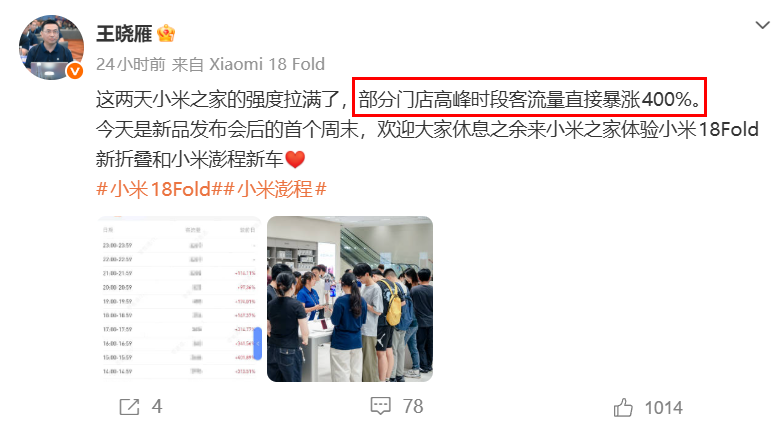
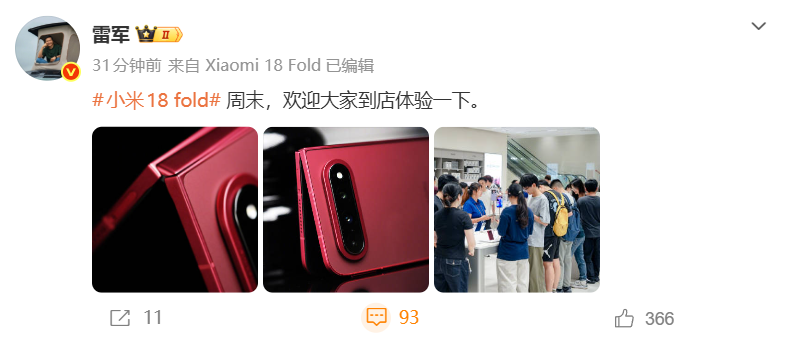 Image Source: Weibo
On one hand, the first sale of the 10,000-yuan foldable phone achieved around 36,000 units, claiming the top spot in the Android camp. On the other hand, Pengcheng SUV deliveries officially began nationwide. With both smartphone and automotive business lines accelerating, Xiaomi's long-touted high-end strategy is no longer just a slogan in presentation slides but is reflected in actual store traffic and sales.
I. 36,000 Units Sold in First Launch, Controversy Over the "Number One" Claim
Tech blogger @RD Observation shared third-party statistics showing that roughly 36,000 units of the Xiaomi 18 Fold were sold on its first day.
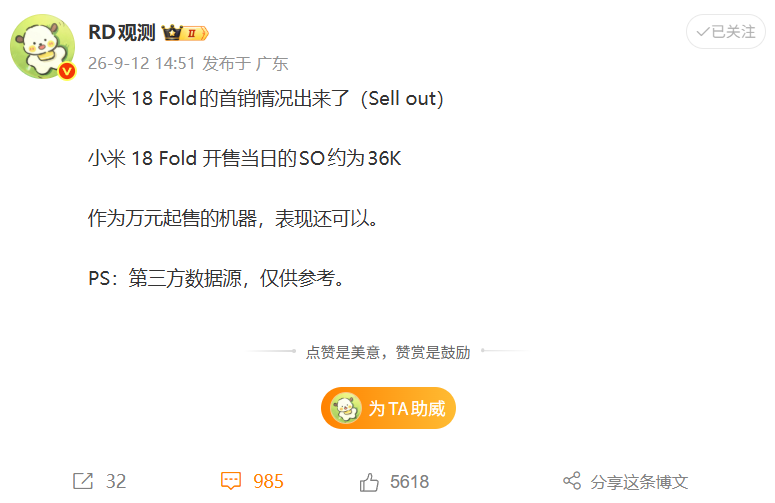 Image Source: Weibo
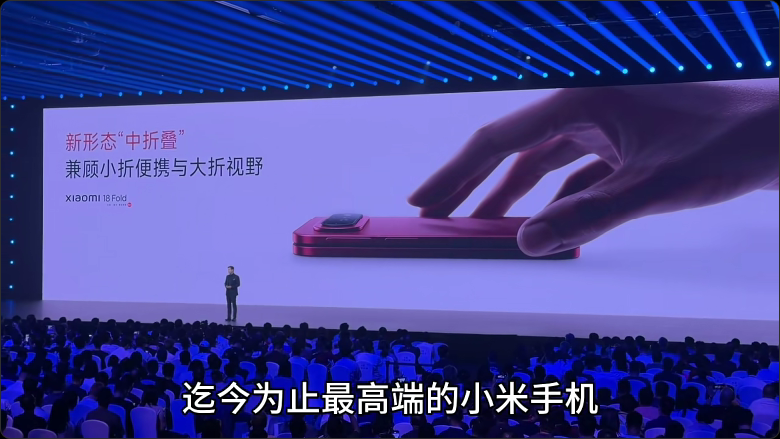
At the launch event, Lei Jun praised the new model, which took 20 months of R&D, stating, "This is Xiaomi's most premium phone to date. The pricing is indeed not cheap, but it's absolutely worth it." In his view, the medium foldable combines the advantages of both large and small foldables, representing a significant new direction for the foldable screen market.
As soon as the data was released, the internet erupted in debate, with netizens making witty remarks about the so-called "number one" claim.
One net friend (netizen) pointedly criticized the excessive qualifiers: "Another 'number one' with so many qualifiers—first, domestic, excluding Apple and Samsung; second, Android, excluding Huawei; third, medium foldable, which OPPO and Vivo don't even have yet. A definite first, no dispute."
Others played with wordplay: "Hilarious, 'medium foldable first'—even if they sold one unit, it's still first by definition." Some curious onlookers even asked, "If Xiaomi is first in domestic Android foldables, who's second?"

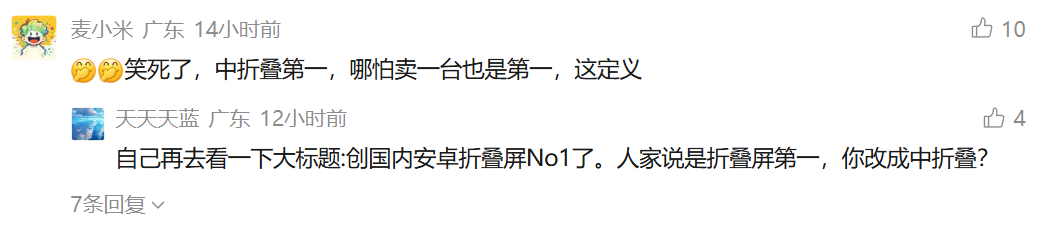 Image Source: WeChat Channels
Comparing concrete data, the previously highly anticipated Honor Magic V6 in the Android camp sold a total of 34,600 units over its first three days. In other words, the Xiaomi 18 Fold outsold its rival's three-day total in just one day.
 Image Source: WeChat Channels
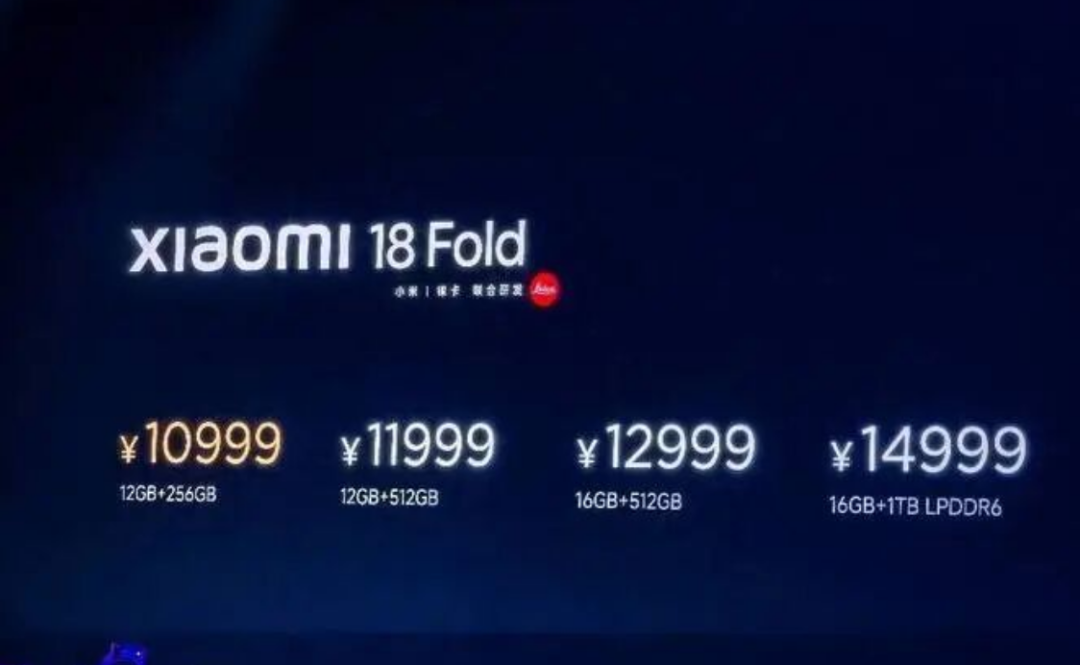
Don't underestimate this figure—the phone starts at 10,999 yuan, with all models exceeding the 10,000-yuan threshold, and the top-tier ceramic version reaching 15,999 yuan. It's also Xiaomi's first foldable phone with all models priced above 10,000 yuan. As everyone in the foldable screen industry knows, there's often more hype than actual sales, with few truly opening their wallets. Achieving 36,000 units on the first day at the 10,000-yuan price point is no small feat.
Official data is equally impressive: compared to the previous large foldable model, first-day sales surged by 310% year-over-year. The 14,999-yuan high-end version and the limited 1,500-unit ceramic special edition sold out online within one minute, leading to immediate stock shortages.
User reactions after hands-on experience were polarized. Some visitors to stores commented, "The crease control looks pretty good in person; I can accept it."
However, skeptics were equally blunt: "The build quality is so poor, and the software optimization is practically non-existent. Only Xiaomi fans would spend that kind of money and willingly be taken for a ride."
Neutral consumers also weighed in: "Xiaomi's cost-effectiveness is indeed impressive."
Despite the controversy, the numbers speak for themselves. The Xiaomi 18 Fold's first-sale performance solidified its position as the top domestic Android foldable phone, delivering a strong answer in Xiaomi's high-end smartphone market push.
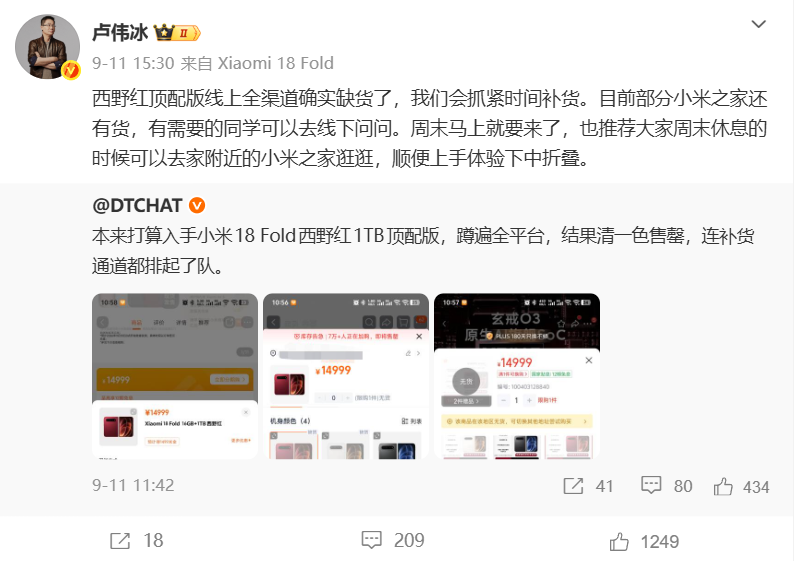 Image Source: Weibo
Behind the Blockbuster: Xuanjie O3 Is No Longer a "PPT Chip"
This foldable phone holds additional significance as the first mass-produced Xiaomi smartphone powered by its self-developed Xuanjie O3 chip.
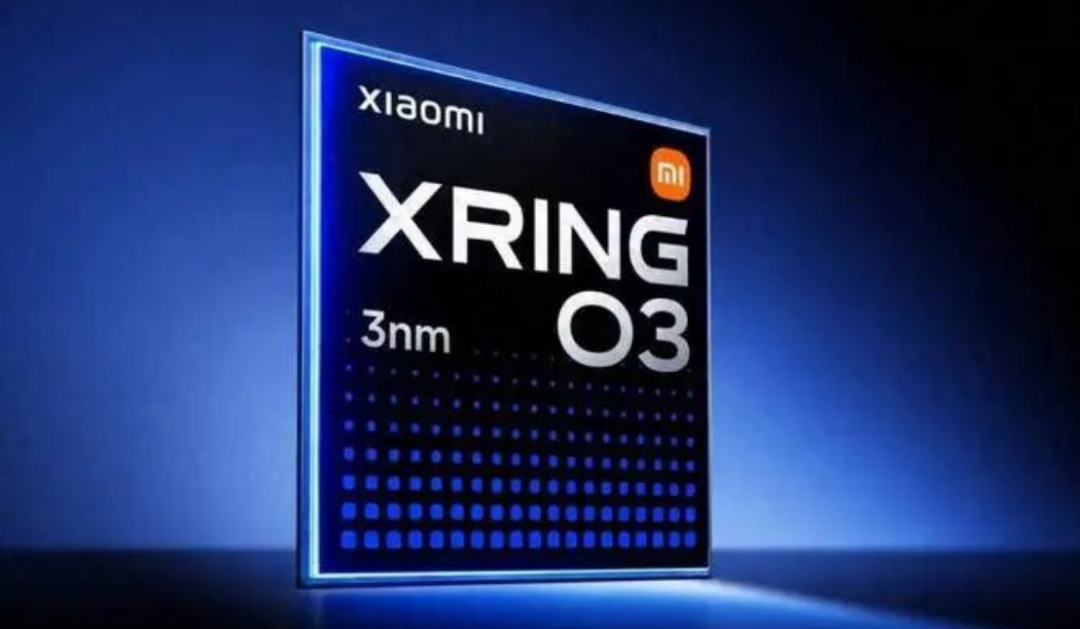
Built on a 3nm process with ten all-big cores, it scored 5.22 million points on AnTuTu, placing it in the top tier of Android performance.
Recalling the early days of the Surge chip, many online joked that it was a "mascot chip"—available but not something consumers were willing to pay for. This time is different, with many users willing to spend over 10,000 yuan for the Xiaomi 18 Fold powered by the Xuanjie O3.
This demonstrates that ordinary consumers no longer view Xiaomi's self-developed chips as a weakness and are willing to pay a premium for self-developed technology. Positive market feedback is crucial for the Xuanjie chip's future iterations and expansion to more models. Many industry observers also note that if Xiaomi can tackle the challenge of 5G baseband technology, the Xuanjie chip will truly reach its full potential.
II. Smartphones and Cars Fire on All Cylinders: 400% Foot Traffic Surge Is the Hidden Key
On the same day as the foldable phone's blockbuster sales, Xiaomi began nationwide deliveries of the Pengcheng SUV.
The vehicle generated a popular (feverish) response, with over 10,000 orders locked in within four minutes of its launch. Few companies in the tech industry have successfully translated brand recognition from consumer smartphones to the capital-intensive automotive sector.
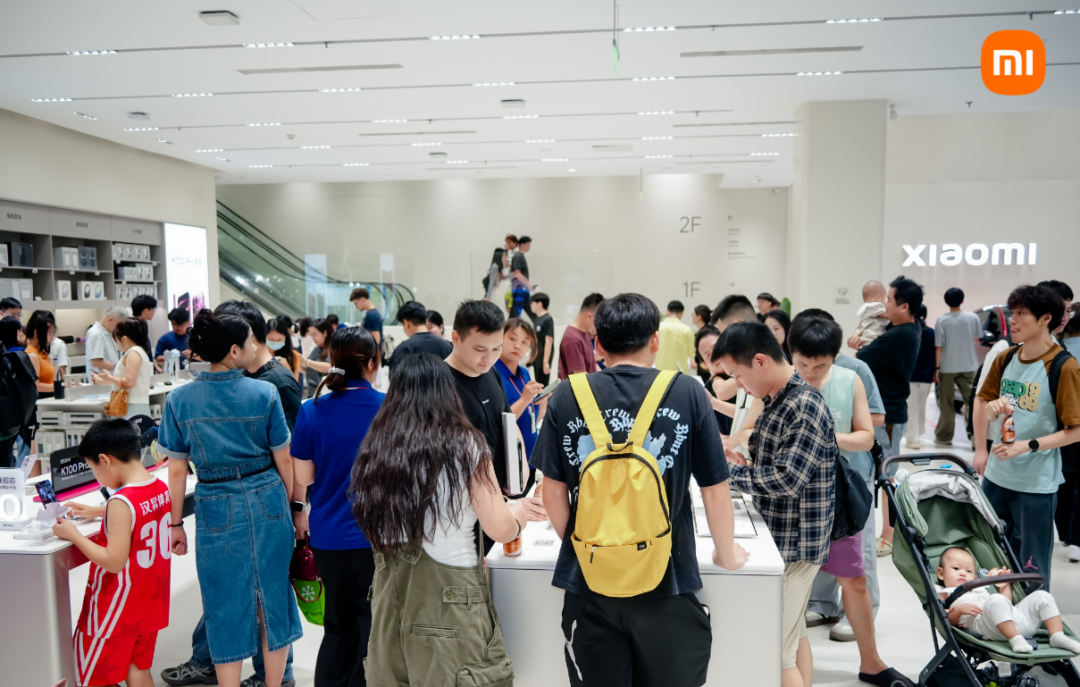
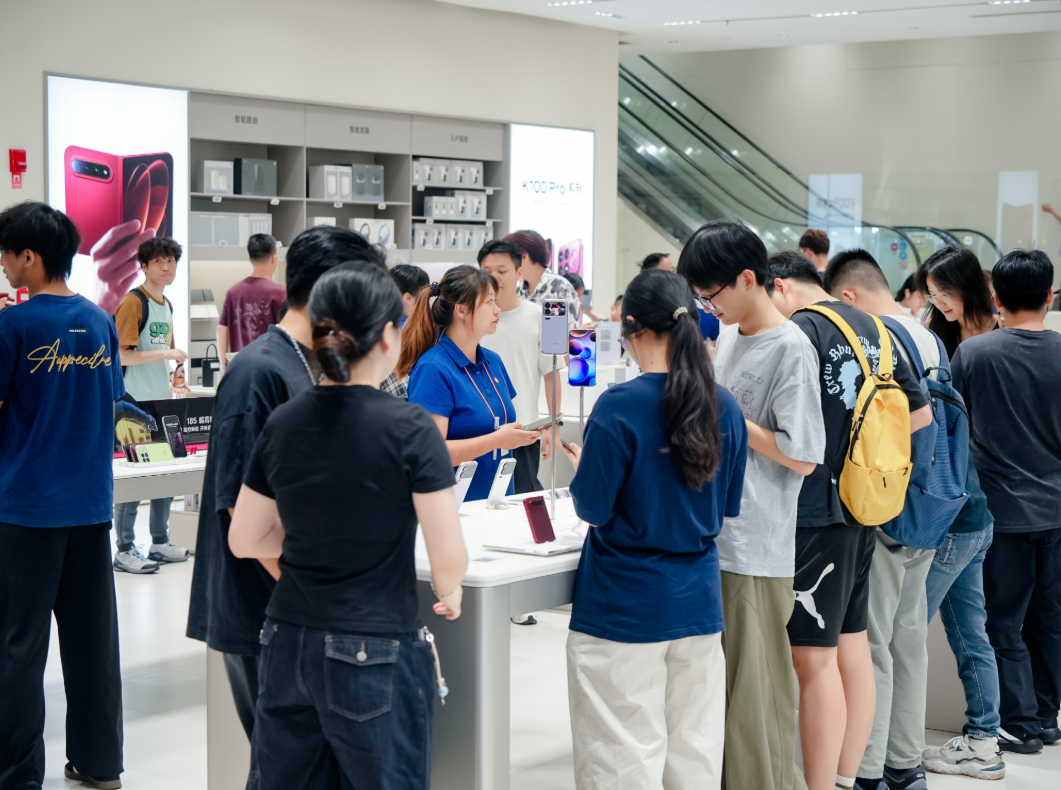
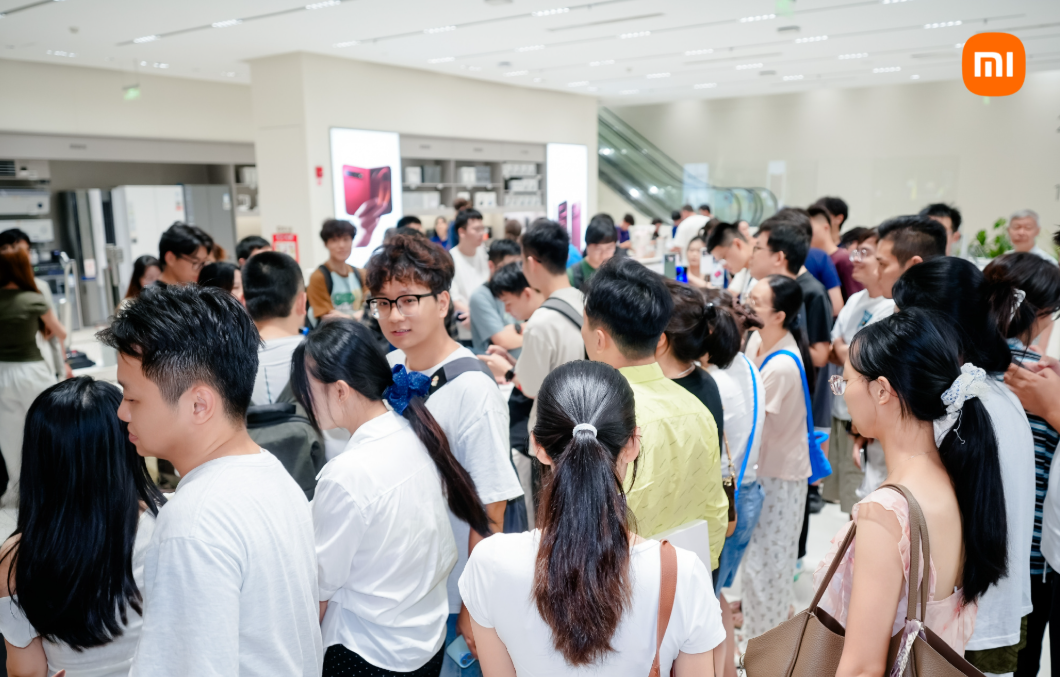
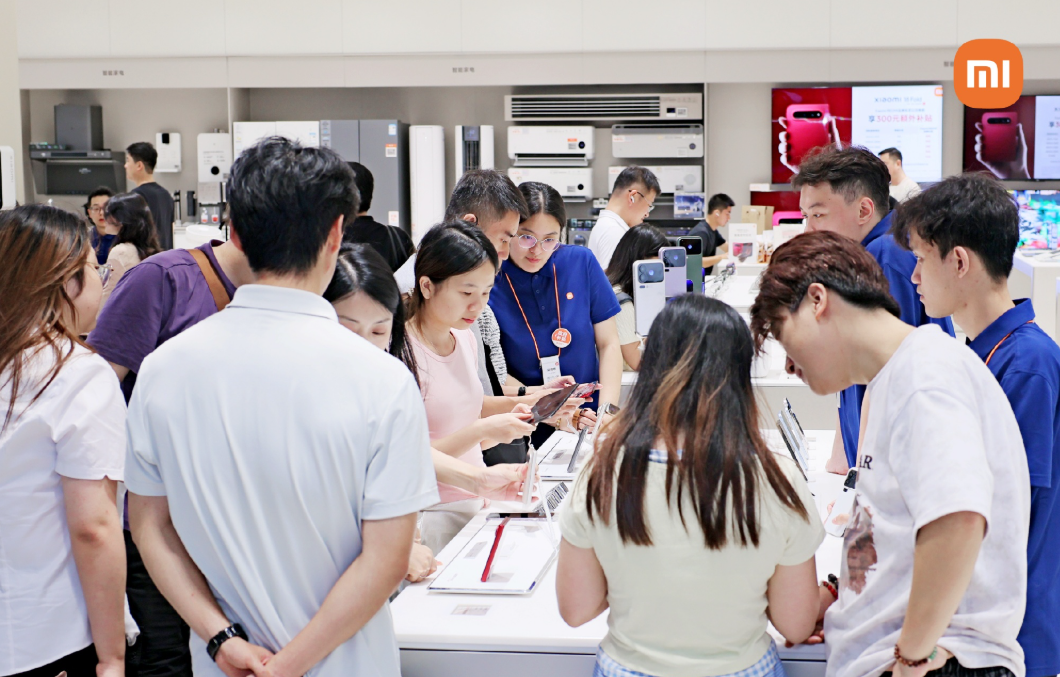 Image Source: Weibo
Running on both smartphone and automotive fronts brings Xiaomi far more than just two additional product lines:
- Average selling prices rise significantly, with 10,000-yuan phones and 200,000-yuan cars shedding Xiaomi's early reputation for cost-effectiveness;
- The human-vehicle-home ecosystem becomes increasingly complete, with seamless integration between smartphones, cars, and smart home devices, Lock the user firmly (firmly locking in users);
- A long-term growth narrative emerges, with smartphones securing the high-end foundation and smart cars serving as the second growth engine.
However, the most noteworthy aspect this time is the 400% surge in offline foot traffic.
In recent years, a common pain point in the consumer electronics industry hasn't been slow sales but the lack of customers willing to visit stores. With rising online customer acquisition costs and deserted offline stores, brands have relied on price cuts and promotions to drive sales.
Foldable phones and smart cars, however, are products that consumers prefer to experience in person before purchasing. No amount of online reviews or spec comparisons can replace firsthand experience—weighing the device, inspecting the screen crease, or sitting in the car.
Attracting large crowds to offline stores for hands-on experience is already half the battle won. Xiaomi's packed stores this weekend reflect how strong product offerings can translate online hype into in-store traffic.
III. Praise and Skepticism Coexist: The High-End Battle Is Far from Over
Behind the excitement, external concerns persist.
A widely circulated worry online goes: "An impressive start, but what if sales collapse in the second week? Will it be due to 7-day no-questions-asked returns or a genuine decline?" This sentiment touches on a long-standing perception of Xiaomi phones: some past flagship models saw initial launch enthusiasm quickly fade, with sales dropping sharply during regular periods, lagging behind competitors like Huawei in sustained volume.
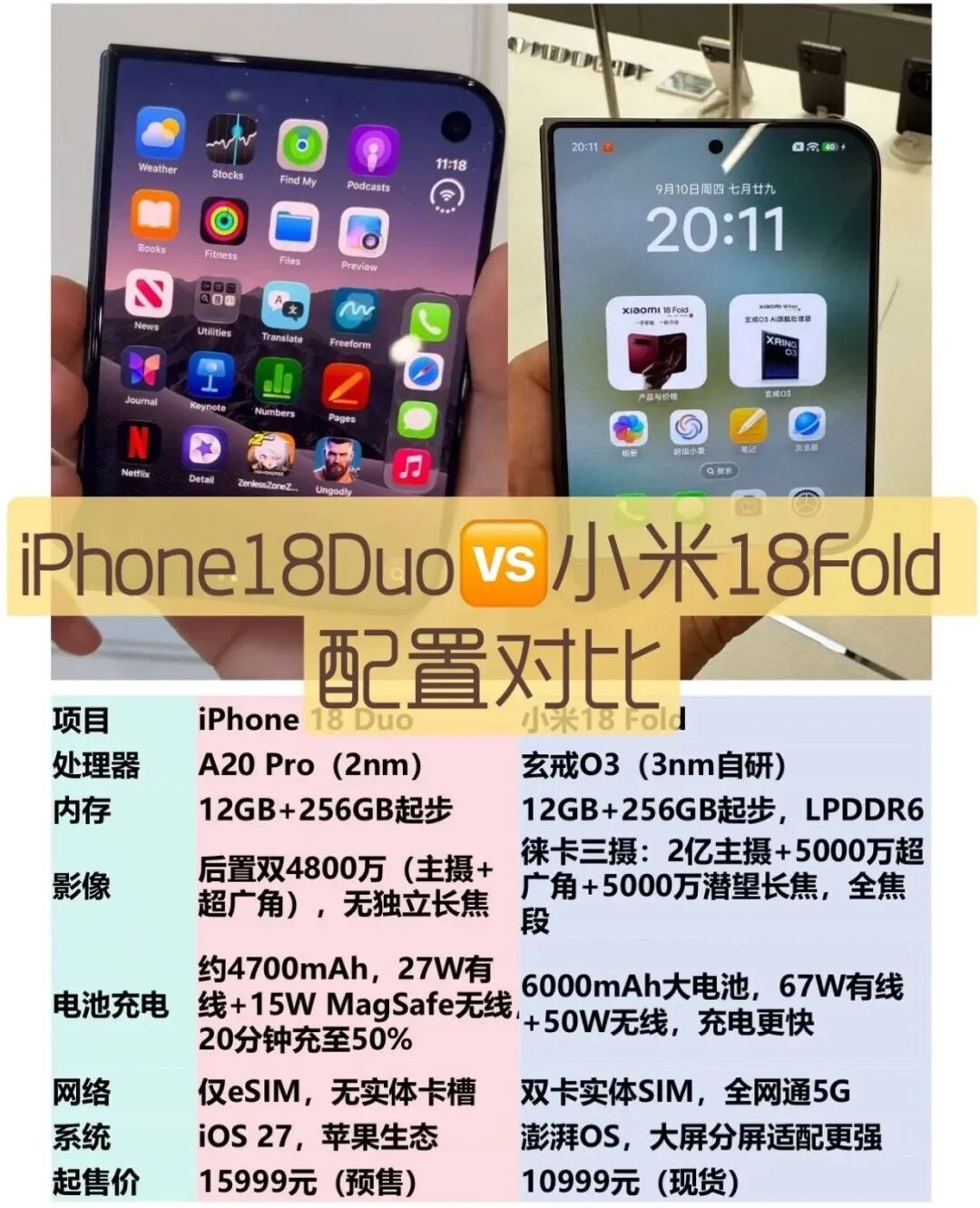
iPhone 18 Duo vs. Xiaomi 18 Fold Spec Comparison
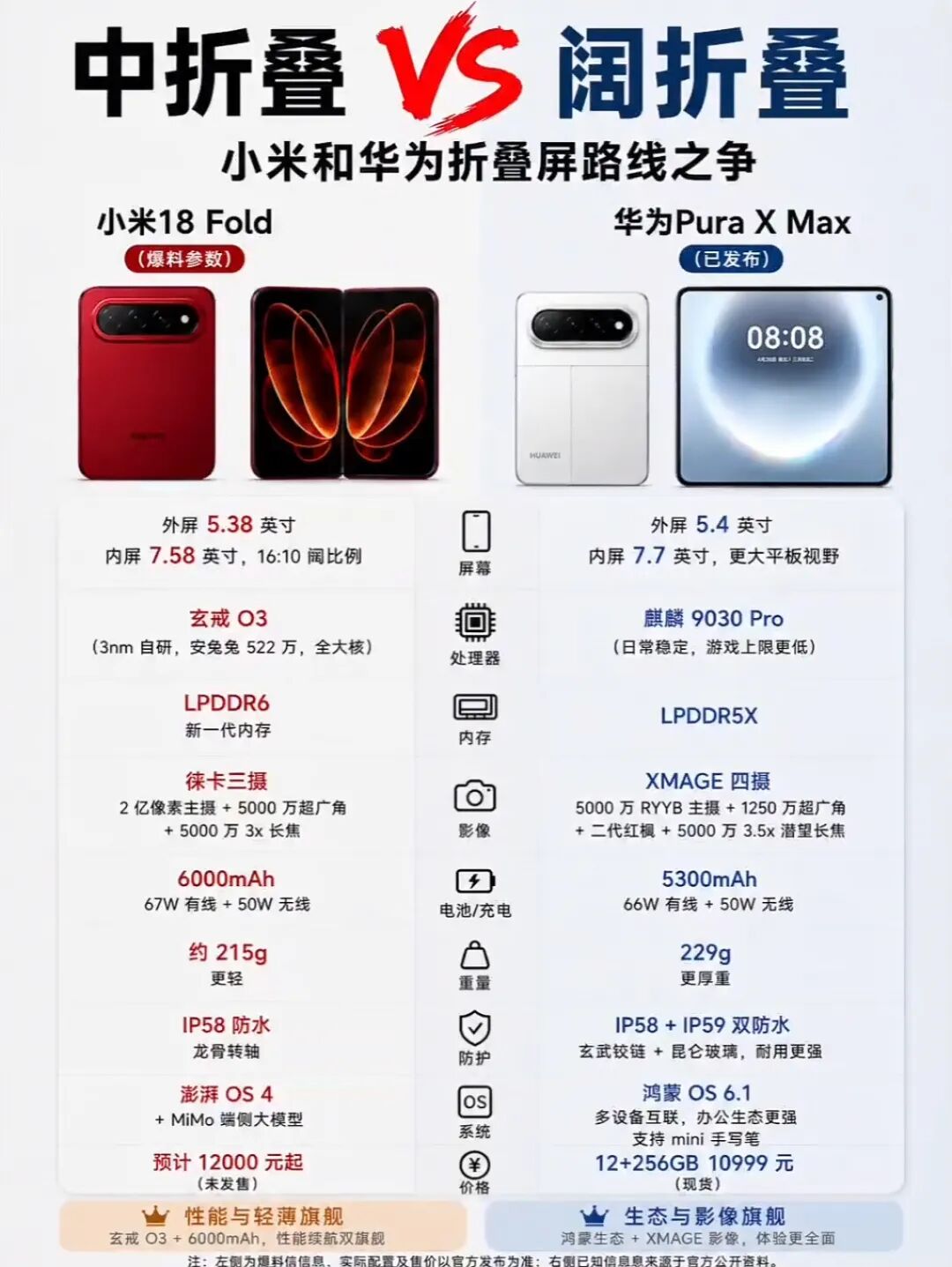
Xiaomi 18 Fold vs. Huawei Large Fold Comparison Image Source: WeChat Channels
Many industry insiders also note that Xiaomi is now allocating significant resources to its automotive business, leading to a relative decline in market presence for its smartphones. Additionally, rising costs for memory and storage components have prompted a strategy shift toward prioritizing profit margins over aggressive pricing.
The upcoming market environment is also unfavorable, with domestic competitors launching their flagship models as early as September this year. The market advantages Xiaomi's 17 series enjoyed last year will be difficult to replicate for this generation. As the high-end battle intensifies, whether the Xiaomi 18 Fold can withstand regular-period sales tests remains to be seen, pending further real-world market data.
Nevertheless, Xiaomi's achievement in this battle is undeniable. The 10,000-yuan high-end foldable market was previously dominated by Huawei and Samsung. By leveraging the medium foldable category, Xiaomi set a new Android camp record on its first day, carving out a space in the high-end market.
Medium foldables, which combine the large-screen experience of large foldables with the portability of small foldables, are likely to become a key growth area in the foldable screen sector. With the Xiaomi 18 Fold, Xiaomi has secured a solid position in the domestic high-end foldable market alongside Huawei and Samsung.
In Closing
Two figures stood out this past weekend: 36,000 foldable phones sold in the first launch and a 400% surge in store foot traffic.
Behind these numbers lies tangible progress in Xiaomi's high-end strategy: 10,000-yuan smartphones gaining a foothold, self-developed chips earning market recognition, automotive business deliveries beginning smoothly, and a dual-wheel drive of human-vehicle-home ecosystems taking shape.
Whether foldable screens can shed their niche label and how Xiaomi will fare in the smart car industry's ongoing elimination round remain to be seen—Xiaomi's high-end journey is far from over.
But at least this weekend, the constant flow of customers at Xiaomi stores nationwide proved one thing: no matter how good the marketing, it ultimately comes down to product strength. Only when products are truly compelling will consumers leave their homes, visit stores, and turn slogans into actual purchases.
Discussion Topic: Do you think the Xiaomi 18 Fold can sustain long-term sales? What's the final piece missing for Xiaomi's high-end smartphone strategy? Share your thoughts in the comments!
Disclaimer: This article is solely a financial commentary on major companies and does not constitute any investment advice. The corporate data and regulatory events mentioned herein are derived from publicly available information and are for reference only. The specifics shall be subject to official announcements. The image is sourced from the internet. If there are any copyright issues, please contact us for removal.
-
![]()
The Roar of the V8 Drowns Out the Hum of Electric Motors: Why European Automakers Are Making a 'Combustion Engine Comeback'
-
![]()
Xiaomi's High-End Strategy Succeeds! Lei Jun Secures Top Spot in Domestic Android Foldable Phone Sales, Stores Overwhelmed
-
![]()
Qianwen's Losses Widen Year-on-Year in Q2, Catching Up with Doubao Remains a Long Road
-
![]()
Taiyi, Which Invested 3 Billion to Revive Nezha, Faces Consumption Restrictions on Its Beneficiary
-
![]()
Domestic Computing Power Reaches a Turning Point: Hardware is No Longer a Bottleneck, Software Ecosystem is the Real Challenge
-
AI Enters the Second Half: Anthropic, DeepSeek, and Zhipu Stockpile Resources for Battle
-
![]()
Graduating Means Unemployment? AI Disrupts Job Market, Driving College Students to Switch Majors, Career Paths, and Industries
-
![]()
AI-Generated Fake Ads: Stealing Faces, Exploiting Influencers, and Undermining Credibility