Size is Limited, Price Even More So. Does the Li Auto i9 Deliver Yet Again?
 09/17 2026
 416
416
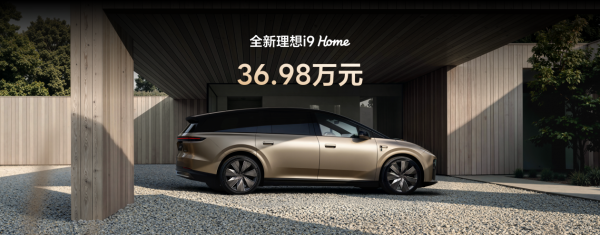
Priced at 369,800 yuan, the Li Auto i9 is available solely in the Home version across all regions.
This is the final price Li Auto has set for its all-electric flagship i9, after building external expectations up to the 400,000-yuan mark. The price is consistent nationwide, with no high-end or low-end variations, immediately sparking enthusiasm among current owners. This move is very much in line with Li Auto's signature style.
But what's even more impressive is the i9 itself, this flagship all-electric SUV, which finally fully embodies the concept of a 'mobile home' in an all-electric SUV.
Li Auto i9: A Mobile Mansion?
When compared to the 9-series flagships from competitors on the market, it becomes clear that the Li Auto i9's existing body dimensions are quite modest.
With a length of 5225mm, a width of 1970mm, and a wheelbase of 3168mm, when placed among today's 9-series SUVs that often exceed 5.3 meters or more, the i9 seems like it should be seated alongside those 8-series six-seaters. However, considering Li Auto's product lineup, the i9's approach seems quite reasonable. We'll leave that as a teaser and revisit it later.
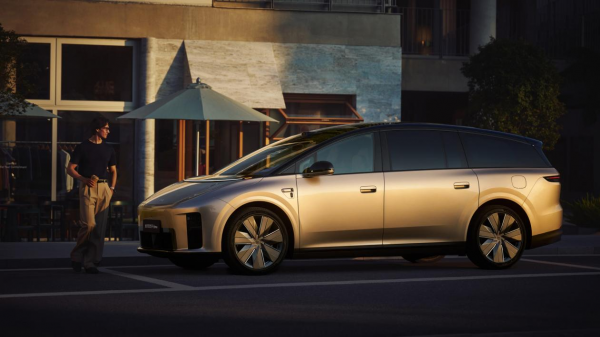
One of the most striking features of the i9 this time is its exceptionally high interior space utilization. The pure electric platform inherently saves more mechanical space, and combined with Li Auto's expertise in cabin layout research, this vehicle doesn't appear overly large like a 'land yacht' on the outside, yet it truly feels like a spacious mansion on the inside.
It adopts a 2+2+2 six-seater layout with four full-size zero-gravity seats inside. The second-row seats support rotation, and the third-row seats can also slide back and forth.

Here, it becomes evident the difference in approach between Li Auto and many other brands when it comes to six-seater SUVs. Many large six-seater SUVs focus heavily on the second row, with plush seats, leg rests, massage, ventilation, and heating all included. As for the third row, it just needs to be passable.
The Li Auto i9 obviously thinks more deeply. How to use the second row after rotation, how to enter and exit the third row, how the seats interact, and when the car is filled with a family of six, who watches the screen, who sleeps, who retrieves items, and where to place them—these are all the trivial details Li Auto is willing to spend time contemplating.
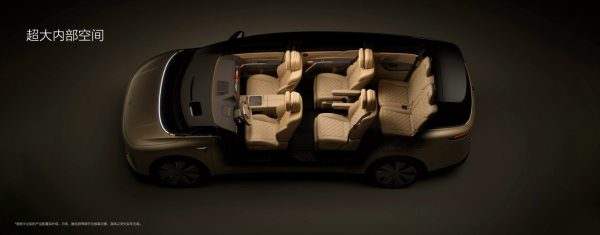
This is what I want to emphasize now—the reason why many competitors fall short when copying Li Auto's 'family car' concept. Because family car usage is inherently composed of a multitude of trivial matters: children wanting to watch cartoons, elders wanting to recline their seats a bit more, wives wanting to touch up their makeup, someone wanting to sleep, someone wanting to chat. Going out for a trip means stuffing the car with snacks, tissues, water bottles, charging cables, suitcases, and children's items. Li Auto's success lies in these details.
Li Auto knows exactly how to make a car feel like 'home'!
I've always believed that Li Auto stands out among domestic automakers in terms of aesthetics and taste when it comes to family flagships. This sense of 'sophistication' isn't solely about how much genuine leather is used or how many wood grain trim panels are incorporated; it's more like an ambiance.
What I'm about to say is something you can also pay attention to when you visit automotive showrooms in malls later.
When you sit inside a Li Auto vehicle, you'll notice that the lighting, seats, screens, materials, colors, and even storage rarely have any part that stands out excessively. The entire cabin looks clean and comfortable. Many people, upon sitting in a Li Auto for the first time, may not remember a specific configuration clearly, but they will feel that the car is quite relaxing to sit in.
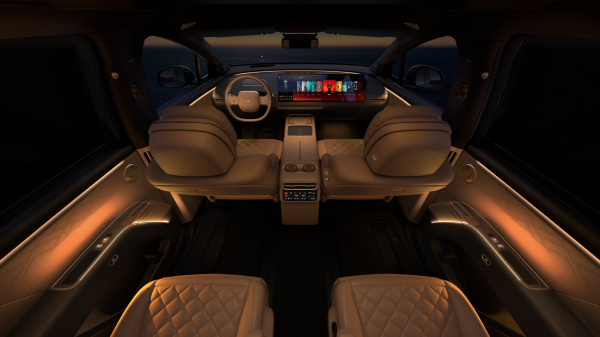
That's why I admire Li Auto. The same large screen, the same refrigerator, the same sofa, when placed in different brands, can result in completely different feelings. Li Auto has been researching family users for years, and in the end, it's not just about knowing what configurations people need; it's about knowing where these configurations should be placed, how to use them conveniently, and how to minimize hassle for a family inside the car.
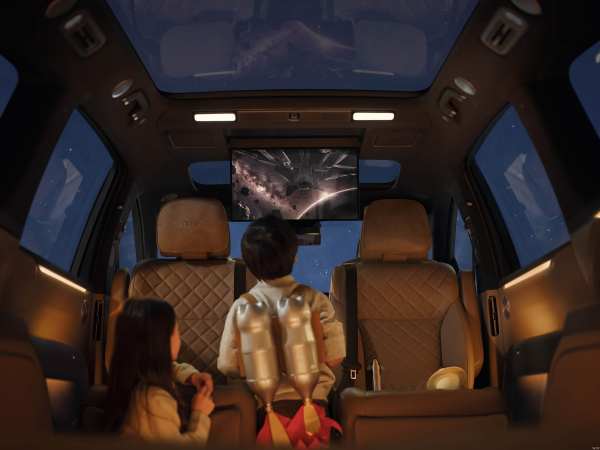
The i9 continues this style, including the creation of interior texture, which is also a highly recognizable part of Li Auto. It doesn't deliberately make luxury feel forced; you rarely see a bunch of exaggerated metal trim or overly complex lines, but it takes care of the places you can touch, sit on, and use frequently.
Take the door panel area, for example; I think the i9 has done a pretty good job this time. It doesn't spread ambient lighting everywhere; it's just a strip along the top edge and then follows the contour around the armrest. When it lights up at night, it has a sense of hierarchy but doesn't feel like a nightclub. Yes, I'm hinting at Mercedes-Benz here.
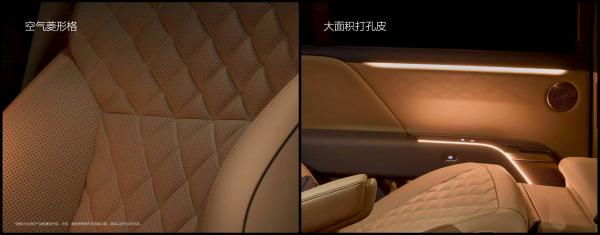
Then there's the perforated leather on the door panel, the metal speaker grille, including this mechanical door handle, which all look very coordinated when placed together. Plus, the materials and coverings on frequently touched positions like the armrests are also well done. Is there anything particularly exaggerated in the design? Not really, but it just looks and feels comfortable.
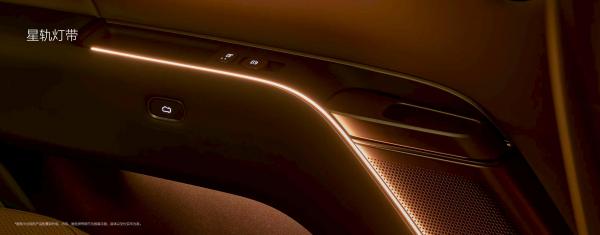
The keyword for luxury is restraint.
Of course, for a large 5.2-meter SUV, just doing well in the rear seats isn't enough.
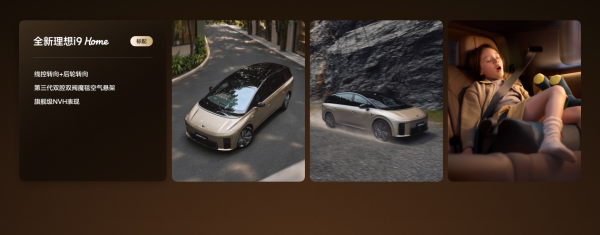
Especially in the all-electric era, many people's biggest concern with large SUVs has shifted from 'how comfortable it is to sit in' to 'how tiring it is to drive.' The i9's width is controlled at 1970mm, while incorporating steer-by-wire and rear-wheel steering, achieving a minimum turning diameter of 10.6m. This figure may not lead the class but is certainly adequate.
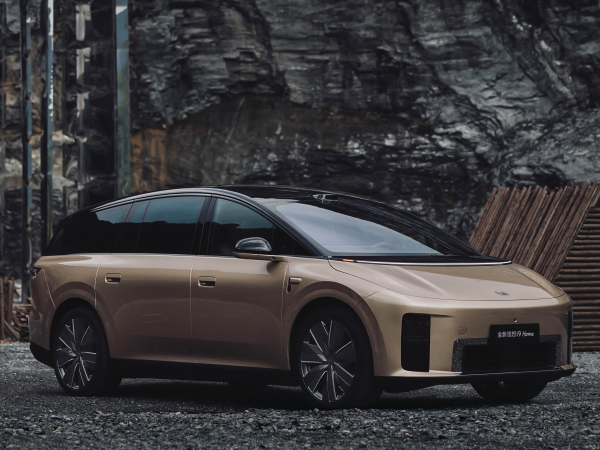
Many people, before buying a large six-seater SUV, will hesitate between 'making family members comfortable' and 'tiring themselves out while driving.' A car that's too large can be difficult to maneuver in mall parking garages and tight old neighborhoods; a U-turn might require several attempts, and in the long run, it's the person driving every day who suffers.
Li Auto is clearly aware of this, so the i9's approach is clear: make the interior as spacious as possible while minimizing the sense of bulkiness when driving. While 400kW dual-motor all-wheel drive and a 4.9-second sprint to 100km/h are impressive, on a family flagship SUV, I actually think they're less important. Steer-by-wire, rear-wheel steering, and chassis tuning are what truly affect whether you're willing to drive it every day.
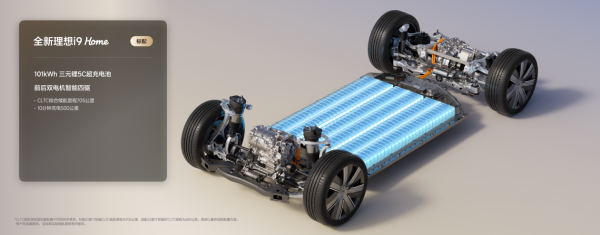
Coupled with a 101kWh battery, 705km CLTC range, and 5C ultra-fast charging, official data indicates that charging for 10 minutes increases the range by 500km. The range and charging issues that have historically deterred family users from large all-electric SUVs have at least been addressed quite comprehensively at the parameter level.
Then, we come to the most discussed aspect of the entire i9: its pricing.
369,800 yuan—how does Li Auto dare?
Before the launch event, external expectations for the i9's price were never low. After all, it's called the i9, with dimensions, positioning, and configurations all pointing towards a flagship model. Prices above 400,000 yuan or even higher were somewhat expected.
Yet, on the night of the launch, boom—369,800 yuan, with only one Home version available. There's no need to research what's missing in the low-end variant, whether the mid-range is worth it, or what extras the high-end version offers. This approach aligns perfectly with Li Auto's current strategy: streamline SKUs, use one main BOM, one core hardware combination, concentrate procurement scale, and simplify production scheduling.
As for the user side, it goes without saying—with just one Home version, there's no hesitation. For those who want the Dual Mach package or premium audio, they can simply add them as options, greatly reducing the time cost of user decision-making and making it easier to 'impulse buy.'
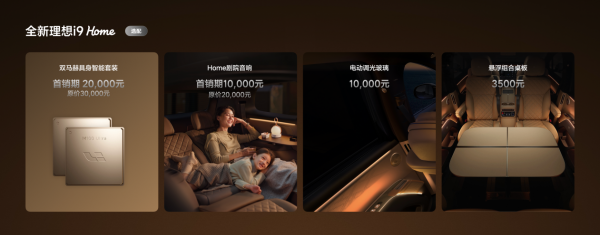
For competitors, the 400,000-yuan all-electric SUV segment is already crowded with products. Everyone offers spacious interiors, air suspension, advanced driver-assistance systems, and luxurious cabins. If the i9 were to simply offer a bit more size, a bit more configuration, and a slightly higher price, it would face a much tougher competitive environment. But at 369,800 yuan, things become simpler.
Users can directly compare it to a batch of large SUVs priced around 300,000 to 400,000 yuan. With more space, a higher positioning, and Li Auto's most familiar family flagship route, this price at least gives many people a reason to visit the store and take a look.
However, once this price is out, some people can't help but do some mental calculations. Especially existing owners who recently bought the i8 or L9 may feel a mix of emotions as the new car offers better value. Although Li Auto has arranged repurchase benefits and rights for existing users, the psychological gap caused by the price is hard to completely bridge with a few benefits.
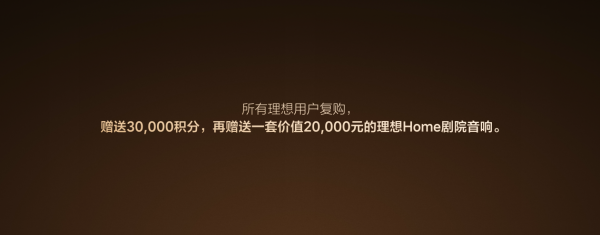
For Li Auto today, such issues will arise frequently in the future. As its user base grows larger, every new car pricing and product adjustment will affect not just potential new buyers but also existing users who are watching closely.
Epilogue
From a product perspective, I'm not too worried about the i9.
Li Auto has been researching what family users like for so many years, and you can find almost all of it in this vehicle: ample space, comfortable seats, a well-designed ambiance, fast charging, and efforts to minimize the stress of driving a large car. Coupled with a price of 369,800 yuan, the i9 already possesses considerable competitiveness.
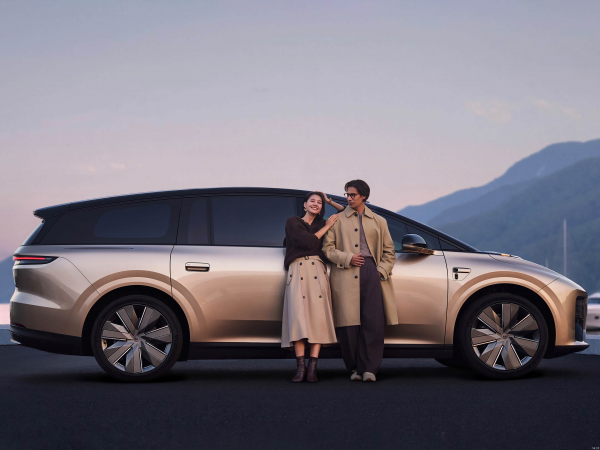
The troubles it will face next will actually come more from the Li Auto brand itself, as Li Auto is deeply associated with 'family.' This is a good thing; when users think of family SUVs, they easily think of it.
However, at the i9's stage, expectations for Li Auto are also rising. In the past, a refrigerator, a large screen, and a comfortable seat could all create surprises. Now that everyone has seen these things, Li Auto must continue to prove that its understanding of family users is still half a step ahead of others.
Another unavoidable topic is that Li Auto's brand reputation over the years has indeed been quite polarized: those who like it really like it. Some users feel that many things Li Auto does seem simple but are only truly comfortable to use. They're willing to continue staying with the brand when they change cars. But those who don't like it will naturally view Li Auto's new product launches and philosophies with a bit of scrutiny.
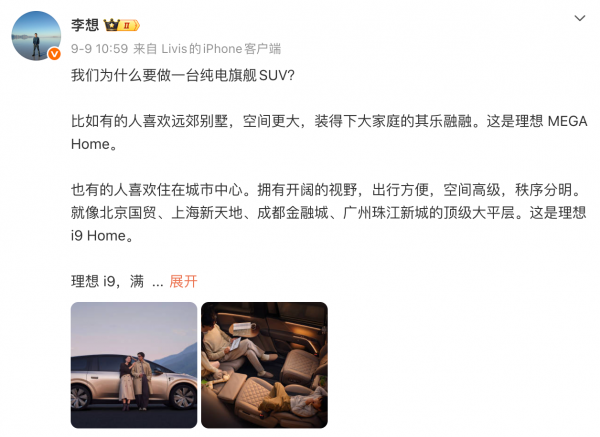
This is also partly due to CEO Li himself. He used to enjoy telling users how to choose a car, what kind of product suits a family, and what kind of needs are worth meeting. Looking back, many of his judgments have indeed been validated by the market, and many brands continue to follow the path Li Auto has blazed.
However, users' feelings towards a brand aren't solely based on who's ultimately proven right. Some accept this kind of expression, while others just don't buy it. Therefore, besides continuing to serve its original base of family users, the i9 this time also needs to win over some who weren't previously fond of Li Auto.
The pricing of 369,800 yuan exactly gives it a pretty good opportunity.
-
![]()
Total Investment of 2.05 Billion Yuan! Shihua Technology's Optical Film Material Project Aims for Production Commencement
-
![]()
Sunny Optical Invests in Zeno and Partners with Unitree: Strategic Positioning in Embodied Intelligence
-
FAW Acquires Equity in GAC: A Signal of Strategic Alliances in the Era of Major Consolidations?
-
![]()
From Creation to Sale: No-Code App Development Platforms Enter Monetization Phase
-
![]()
The 'Intense Competition' of East Asian Education is Being Re-exported Through AI
-
![]()
Mobile Phones Seek Growth from Screen Innovations
-
![]()
Size is Limited, Price Even More So. Does the Li Auto i9 Deliver Yet Again?
-
![]()
The Edge AI Battle Has Officially Kicked Off | Business Wave