27-Day Price Reduction of 40,000 Yuan: Fangchengbao Skirts Direct Rivalry with Xiaomi
 09/18 2026
 551
551
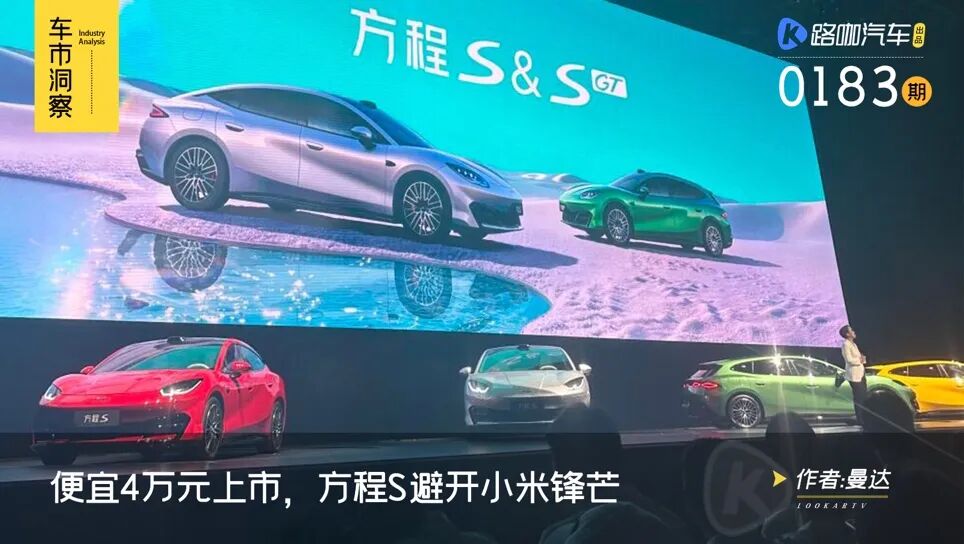
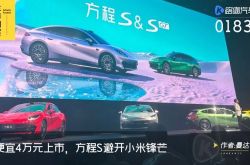
In the fiercely competitive 200,000-yuan new energy sedan market, BYD has made another bold move. The Fangcheng S enters the fray with a 40,000-yuan price cut from its pre-sale price, bringing the entry-level price below 190,000 yuan...thus avoiding direct competition with Tesla and Xiaomi.
Standard features include 800V rapid charging and the "Divine Eye B" system, while magnetorheological suspension—previously reserved for million-yuan luxury vehicles—is now available in the 200,000-yuan price bracket.
However, in this battle that extends beyond mere specifications to capturing consumer mindshare, the Fangcheng S faces significant hurdles. It must not only contend with the strong brand momentum of external competitors but also differentiate itself within BYD's own lineup.
Fangcheng S Launches with 40,000-Yuan Price Reduction, Sidestepping Xiaomi's Advantage
The competitive landscape to challenge Tesla and Xiaomi is intense. The Fangcheng S debuts at a price 40,000 yuan lower than its pre-sale price, strategically reducing the psychological barrier for budget-conscious consumers to 189,900 yuan. Shortly before, the Geely Galaxy TT lowered the entry price for mid-to-large coupes to under 150,000 yuan and introduced sub-3-second acceleration to the 200,000-yuan segment, exerting significant competitive pressure.
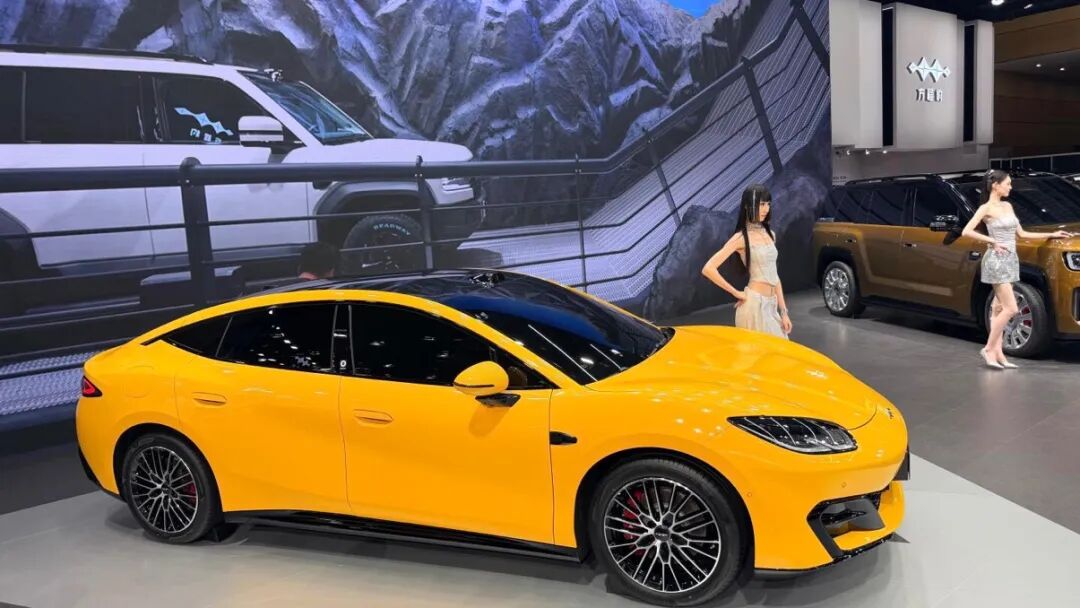
Beyond the price war, the Fangcheng S reserves its launch event's highlight for the Yunqian-M magnetorheological suspension—a chassis technology previously exclusive to million-yuan vehicles, now available as an option starting at 209,900 yuan. While competitors focus on piling on specifications and generating hype, the Fangcheng S emphasizes chassis and driving control as tangible differentiators.
The pricing strategy for the different variants is clear: the price difference between the Fangcheng S and S GT depends on battery and chassis options. The Fangcheng S ranges from 189,900 to 229,900 yuan, while the S GT spans 219,900 to 239,900 yuan. The base 189,900-yuan model comes with Yunqian C; upgrading to Yunqian-M starts at 209,900 yuan. For consumers, the budget allocation is transparent: funds are directed towards enhancing driving dynamics.
Yet, the term "base model" doesn't fully capture the essence of the Fangcheng S. Take the 189,900-yuan base variant: it's akin to a "high-spec model minus advanced suspension." With a range of 730 km, a 76.7 kWh battery, 245 kW rear-wheel drive, and an 800V rapid charging platform (claiming 9-minute charging from 10% to 97%), it also includes a 26-inch AR-HUD, a 6.9L refrigerator, a zero-gravity front passenger seat with 10-point massage, a 151L electric front trunk, frameless doors, and a hatchback tailgate—features that typically require additional purchases at this price point.
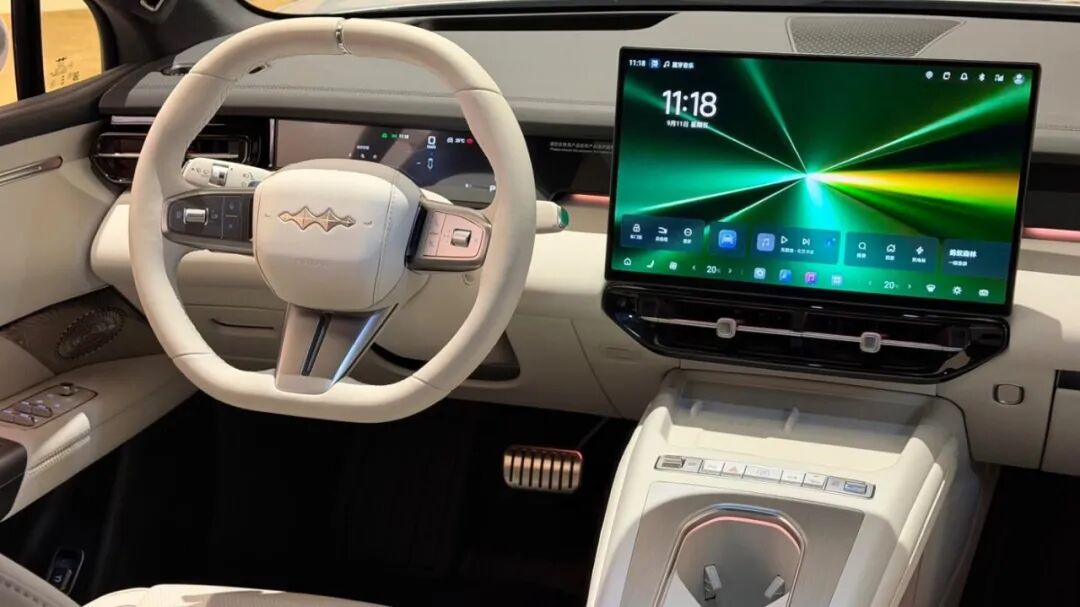
Crucially, all Fangcheng S variants come standard with the "Divine Eye B" system, covering highway and urban navigation, parking, and active safety.
This forms its second strategic layer: democratizing "high-spec experiences" that are truly perceptible by users to the starting price. Yunqian-M can be seen as an "optional performance luxury," but there's no need to increase budgets for intelligent driving, cabin amenities, or storage.
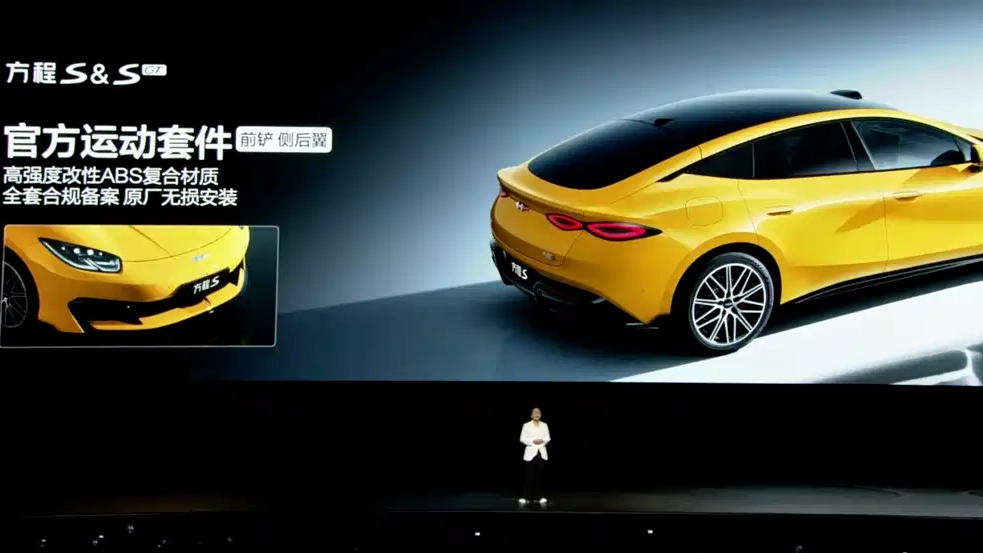
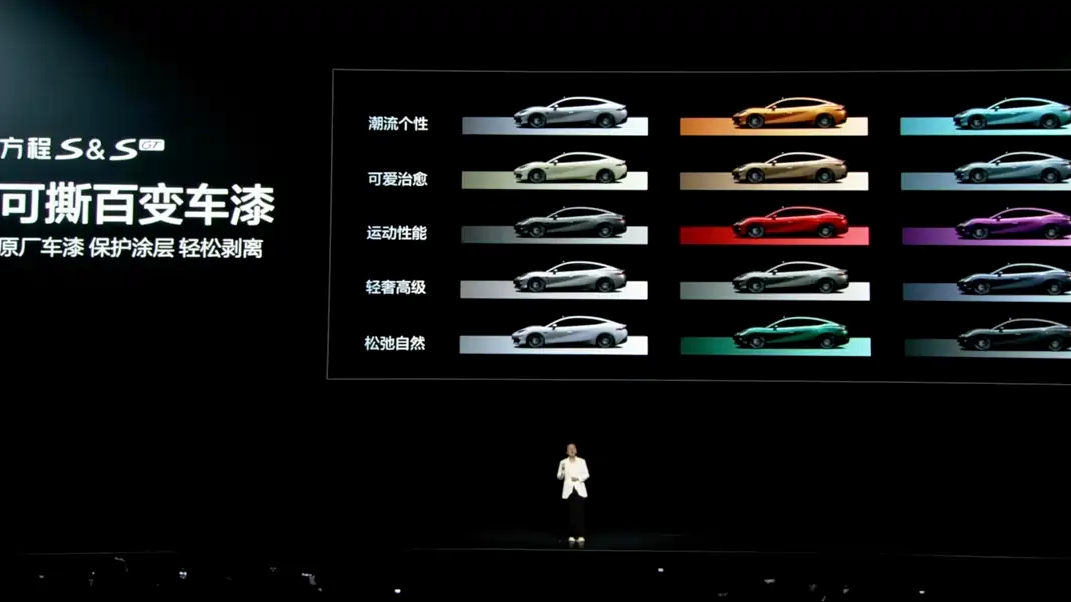
The third layer is "playability" as a system. The Fangcheng S brings "Living Metal Aesthetics" from concept to reality: a low-slung stance, wide wheel arches, six exterior colors, three cabin palettes, factory-removable liquid wraps, and sport kits eliminate concerns about "cloning."
The Fangcheng S's core strength lies in its "superior drivability." The Yunqian-M magnetorheological chassis elevates traditional "electro-hydraulic damping" response to millisecond levels, with 1,000 adjustments per second and a 100N-10,000N stepless damping range, enabling "instant support" in corners. For users, the hexagonal sport steering wheel's grip, the front double-wishbone/rear five-link suspension's road feel, and the asymmetric tires' grip and braking redundancy make "fast yet stable, stable yet fast" chassis dynamics accessible at the 200,000-yuan level.
Safety is paramount for the Fangcheng S. Its tire blowout stabilization system maintains control at high speeds on straights and curves; the body's 84.8% composition of high-strength steel, aluminum, and composites, along with a 7-longitudinal/13-transverse cage structure and 2,000MPa hot-formed steel, forms a "safety fortress" complemented by 11 airbags and a 6-second side curtain retention. Combined with the second-generation Blade Battery's advantages in rapid charging, safety, and longevity, the Fangcheng S ensures comprehensive protection throughout the ownership cycle.
BYD's Three-Pronged Strategy to Challenge Xiaomi and Tesla
The nominal 10,000-yuan price gap between the Fangcheng S and S GT conceals a classic "traffic-driving-volume-generating" tactic. The sedan-style Fangcheng S offers an 189,900-yuan base model, while the S GT starts at 219,900 yuan. Based on past sales distributions of Fangchengbao models, mid-to-high trims dominate orders, with low-end variants "luring customers into stores."
Can it compete? Let's compare rivals. The Tesla Model 3 RWD, priced at 235,500 yuan, costs approximately 45,000 yuan more than the Fangcheng S's base model, offers around 100 km less range, and is 34 cm shorter. The Fangcheng S's base 245 kW RWD motor also outperforms the Model 3's 194 kW. On paper, the Fangcheng S boasts impressive cost-effectiveness.
But the auto market isn't just about "specs"—it's a "mindshare war." The Model 3's driving reputation, brand momentum, and word-of-mouth among existing users make it one of the toughest rivals in the 200,000-300,000-yuan segment. You might outperform it in individual metrics, but replacing it on consumers' "shortlists" is no easy task.
The Xiaomi SU7 presents a different challenge. In August, the SU7 and Model 3 claimed the top two sales spots in their segment with 16,518 and 20,787 units, respectively. The SU7 excels in brand halo and holistic cost-effectiveness—Xiaomi has crafted user preferences through "synergistic storytelling" around industrial design, intelligent cabins, and vehicle consistency.
In contrast, the Fangcheng S's breakthrough lies not in "replicating the SU7" but in "delivering what the SU7 doesn't emphasize and the Model 3 won't delegate": making the Yunqian-M chassis capabilities an option in the 200,000-yuan segment.
However, the real rivals may lie within BYD's own ecosystem. The Seal 08 starts at 196,900 yuan, the Han L at 209,800 yuan, and the Fangcheng S GT at 219,900 yuan. To mitigate internal cannibalization, clear product differentiation is essential: the Seal 08 leans toward "family flagship and intelligent cabin experiences," the Han L embodies "executive luxury and brand pillar," while the Fangcheng S focuses on "sport sedans and personalized ecosystems."
The good news: the Fangcheng S has sufficient "hard differentiators" in chassis, storage, and smart ecosystems to stand apart from "same-price, same-brand" siblings. The bad news: whether channels and users clearly perceive these boundaries remains to be seen, a question that can only be answered by time and sales.
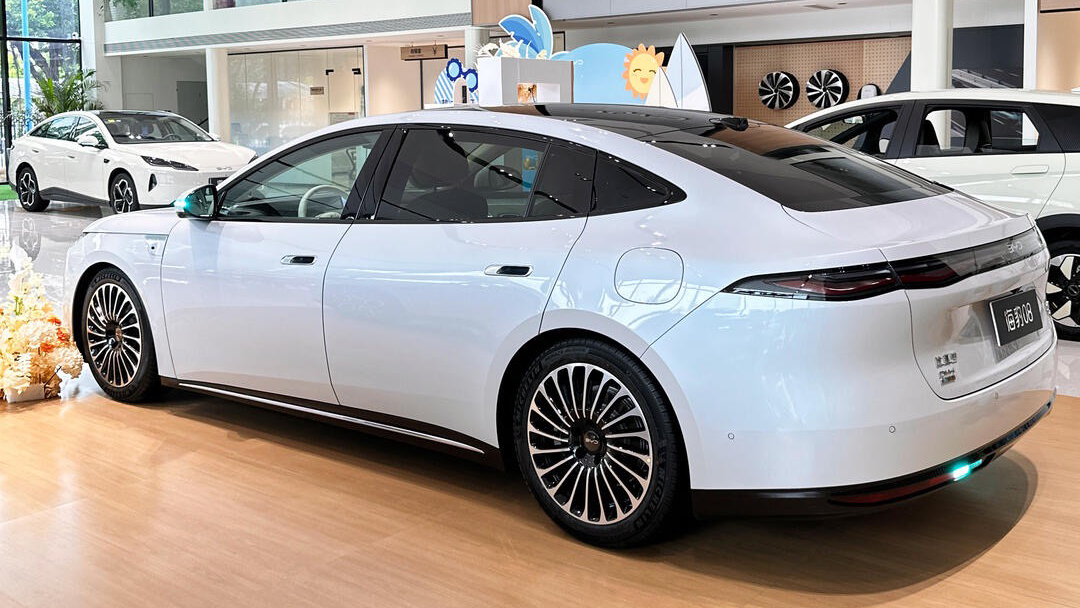
From a user decision perspective, the Fangcheng S's value proposition is clear. With a budget of around 200,000 yuan, seeking a fully-loaded entry model, optional advanced chassis, long range, rapid charging, generous storage, and reliable intelligent driving, the Fangcheng S offers a logically sound choice. At around 220,000 yuan, the Yunqian-M and four-wheel-drive performance variants deliver noticeable "driving upgrades." For travel and camping enthusiasts, the S GT's one-touch electric flat-folding and SUV-like cargo space may be more appealing.
Whether it can disrupt the "top-tier mindshare" of the Model 3 and SU7 isn't just about one product—it's a long-term brand-building challenge in the sport sedan segment. The Fangcheng S has lowered barriers, delivered experiences, and told a compelling story with authenticity. Next, it must rely on stable deliveries, tangible test drives, and genuine user word-of-mouth to drive home three pillars: "driving pleasure, joy, and comprehensive protection." If these nails sink deep enough, the third strike won't be a sniper shot—but a true head-on clash.
-
![]()
Seres Regains Autonomy: AITO's Front-End Operations Shift Back to Automaker, Huawei Returns to Supplier Role
-
![]()
Can the XPENG G9L, Touted as Unrivaled Globally, Become a Blockbuster?
-
![]()
27-Day Price Reduction of 40,000 Yuan: Fangchengbao Skirts Direct Rivalry with Xiaomi
-
![]()
Has the Savior of Traditional Fuel Vehicles Finally Made Its Appearance?
-
![]()
FAW and GAC Restructuring: Forging Ahead with Integration, Enhancing Efficiency through Synergy
-
![]()
Under the Wave of Restructuring, Are the Struggling Neta and Zotye Making a Comeback?
-
![]()
Bumper Bookings! BAIC Unveils New Car, Securing Over 30,000 Reservations in Just One Hour!
-
![]()
Li Auto i9 Priced at 369,800 Yuan 'Shakes Up the Market': Is NIO ES8's 'Sales Dominance' Under Threat?