Can the Intelligent Driving Solutions for Fuel-Powered Cars Mirror Those of Pure Electric Vehicles? Why Does Momenta Craft Specialized Algorithms for Fuel-Powered Cars?
 09/20 2026
 504
504
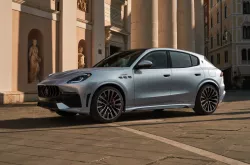
On September 16th, the latest Mercedes-Benz long-wheelbase GLE SUV made its debut in China, featuring an urban and highway navigation-assisted driving system co-developed by Mercedes-Benz and Momenta.
When unveiling this solution, Momenta explicitly highlighted its specialized algorithm tailored for fuel-powered cars.
Intelligent driving systems fundamentally serve environmental perception, driving decision-making, and vehicle control. Why, then, is it necessary to re-adapt the algorithms for the vehicle when the power source changes?
01 Intelligent Driving Capabilities Can Be Leveraged, but Vehicle Control Varies
Both intelligent driving for fuel-powered cars and pure electric vehicles rely on sensors like cameras and LiDAR to perceive the road environment, identify vehicles, pedestrians, road structures, and traffic conditions, generate driving decisions based on the current scenario, and ultimately translate these into control commands for acceleration, braking, and steering.
Therefore, fuel-powered cars do not require the development of an entirely new intelligent driving system from scratch. Perception, prediction, and certain decision-making capabilities inherently possess a strong foundation for reuse.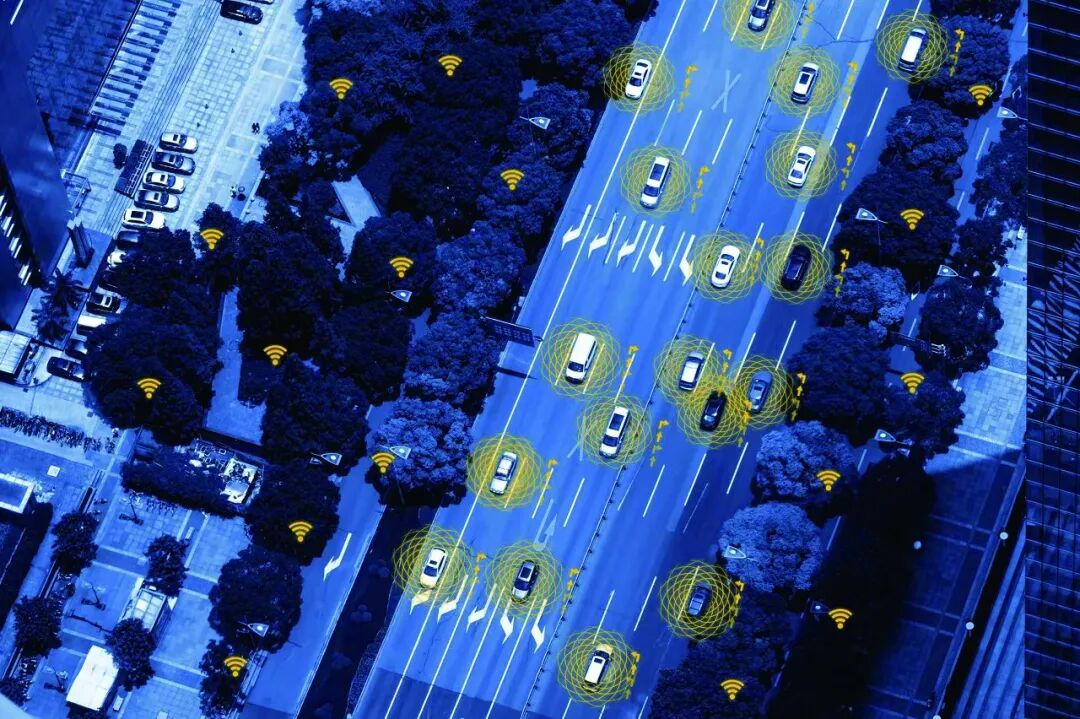
Image Source: Internet
For intelligent driving in fuel-powered cars, the real disparities typically emerge in how decisions are translated into vehicle actions.
The intelligent driving system ultimately controls not an abstract motion model but a tangible vehicle.
Pure electric vehicles are directly powered by electric motors, with torque adjustable through the motor control system.
Fuel-powered cars, however, involve multiple components such as the engine, clutch or torque converter, and transmission. Different gears and power conditions influence the transmission of driving force and the vehicle's longitudinal response.
Thus, the same acceleration/braking target will yield entirely different vehicle responses across various power systems.
For the intelligent driving system, it is crucial to master not only how the vehicle should move but also how the vehicle can achieve that movement and whether the commands can be timely and accurately transmitted to the execution end within the vehicle architecture.
02 Why Do Fuel-Powered Cars Require Re-adaptation?
Scenarios such as following, starting, low-speed acceleration and deceleration, and parking are commonly encountered during driving.
For instance, when a vehicle is following another, the intelligent driving system needs to continuously adjust longitudinal control.
If the vehicle is in a different gear or undergoing a gear shift, the power response may vary.
In this case, the controller faces not a fixed input-output relationship but a dynamic system that changes with the vehicle's state.
Therefore, in vehicle control engineering, it is necessary to establish a dynamic model tailored to the specific vehicle, perform parameter identification through testing and operational data, and then apply control compensation based on actual responses.
Model identification here can be simply understood as estimating the vehicle's power response under different states through vehicle testing and operational data, enabling the controller to more accurately judge how the current control request will ultimately affect vehicle motion.
This is also a core aspect of adapting intelligent driving for fuel-powered cars.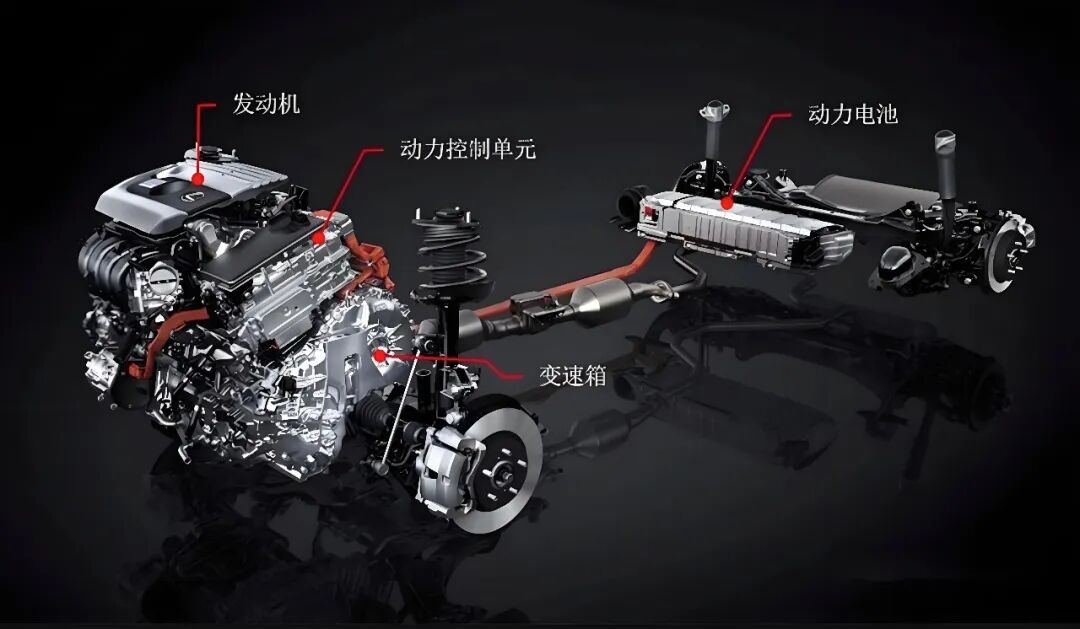
Image Source: Internet
The intelligent driving system does not simply transplant control parameters originally used for pure electric vehicles but instead establishes a more precise correspondence between upper-level decision-making and lower-level vehicle control based on the specific powertrain's operating characteristics.
The technical disclosure by Mercedes-Benz and Momenta for the new long-wheelbase GLE serves as an intriguing example.
According to their public introduction, at the software level, fine-tuned modeling and algorithm compensation were conducted around semi-clutch, shifting logic, power response, and multi-gear power output. At the hardware level, additional water-cooling was designed to ensure stable system operation in complex scenarios.
This indicates that adapting intelligent driving for fuel-powered cars involves not just modifying upper-level intelligent driving algorithms but also the system's own thermal design and coordination between intelligent driving control and the fuel powertrain.
Momenta revealed that in high-frequency parking scenarios, the system can shorten waiting times for each gear shift by issuing shift requests in advance.
During parking, the vehicle frequently switches between moving forward, stopping, and reversing.
If the intelligent driving system has already determined the next driving direction, it can coordinate the shifting process in advance rather than waiting until the vehicle needs to move to initiate the shift.
This also illustrates that intelligent driving for fuel-powered cars does not simply add an independent shifting module but incorporates the shifting process into the timing planning of longitudinal control.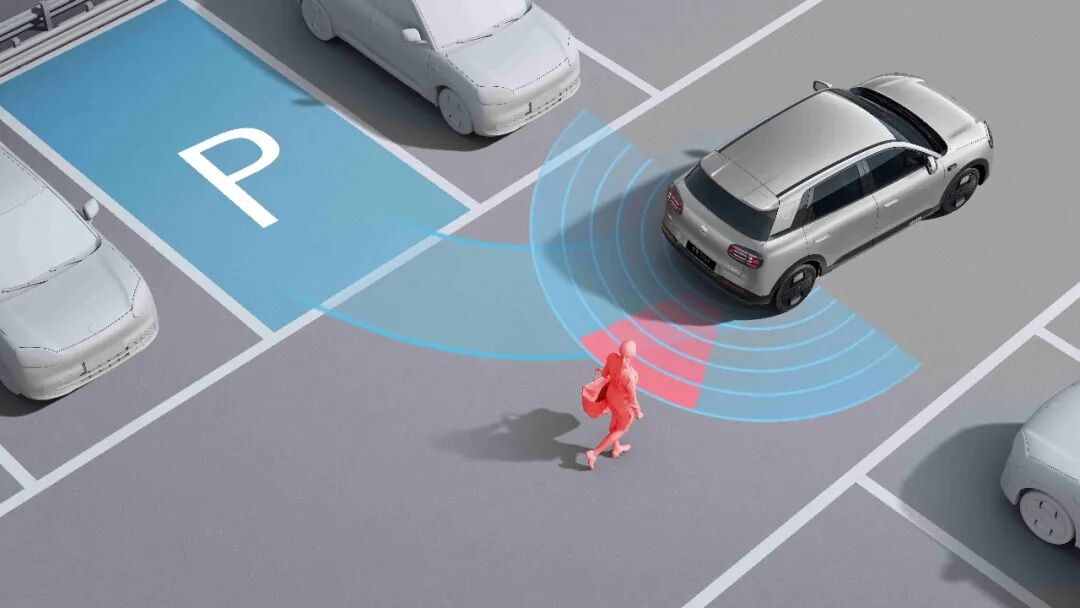
Image Source: Internet
This also echoes the earlier point about the vehicle architecture.
In addition to the powertrain, adapting intelligent driving for fuel-powered cars is also constrained by the underlying electronic and electrical architecture. Many traditional fuel-powered cars use distributed ECUs, with modules primarily communicating via CAN or CAN-FD buses. The bandwidth and latency of standard CAN and CAN-FD cannot meet the real-time transmission requirements of high-level intelligent driving for multi-channel high-definition sensor data.
However, the intelligent driving system needs to process data from multiple cameras, LiDAR, etc., simultaneously, imposing much higher demands on bandwidth, computing power, and inter-module coordination.
If the underlying communication and computing architecture cannot keep pace, data flow between perception, decision-making, and control will be restricted, making it difficult for even robust algorithms to be stably translated into vehicle actions.
Therefore, adapting intelligent driving for fuel-powered cars involves not just making the algorithms understand the powertrain but also ensuring the entire control chain functions seamlessly within the vehicle architecture.
03 Intelligent Driving Ultimately Controls the Entire Vehicle
After delving into this topic, it is evident that the technologies for intelligent driving in fuel-powered cars and pure electric vehicles are not entirely distinct.
Many capabilities at the perception, prediction, and decision-making levels can be reused; what truly needs to be reprocessed for each vehicle is the control relationship between the intelligent driving system and the specific vehicle.
The same following trajectory or acceleration target may produce different vehicle responses when applied to different power systems.
Especially in scenarios such as starting, low-speed following, acceleration-deceleration transitions, shifting, and parking, if the control system does not fully consider the powertrain's state, there may be a mismatch between the actual vehicle response and the expected control target.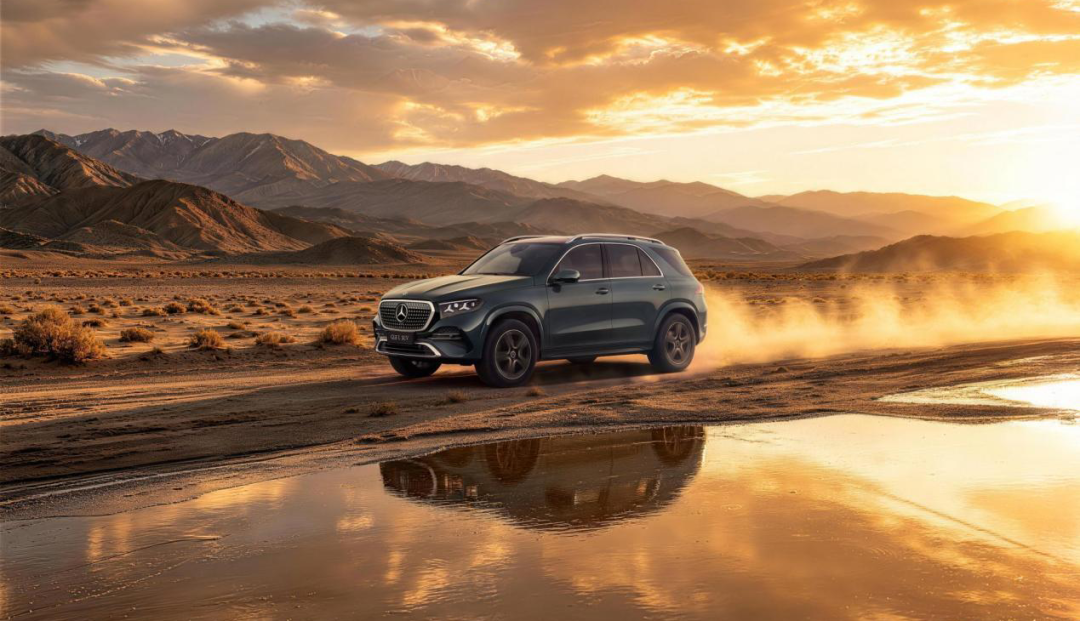
Image Source: Internet
Therefore, fuel-powered cars are not incapable of intelligent driving, nor is it necessary to develop an entirely different intelligent driving architecture. Instead, the intelligent driving system must be truly integrated into the vehicle's motion control system.
For fuel-powered cars, power transmission processes involving the engine, transmission, clutch, and shifting are not traditional mechanical links outside the intelligent driving system.
Once intelligent driving begins to participate in vehicle control during starting, following, acceleration-deceleration, and parking, the states and response characteristics of these power systems become part of the intelligent driving control problem.
This is why intelligent driving solutions for fuel-powered cars cannot simply copy those of pure electric vehicles.
While the intelligent driving system can be reused, vehicle control must be adapted to the specific power and motion characteristics.
#AutonomousDriving #IntelligentDrivingForFuelPoweredCars
-
![]()
A Detailed Explanation of Li Feifei's World Model Atlas: How It Impacts Physical AI Industries Such as Autonomous Driving and Humanoid Robots
-
![]()
China's Intelligent Driving Ventures Abroad Face Rivals: Europe and US's Momenta 'Wayve'
-
![]()
Has the Modular Architecture of Autonomous Driving Disappeared After the Emergence of End-to-End Systems?
-
![]()
OpenAI GPT-6 Practical Test Unveils: Tactile Sensors, a New Frontier in the Humanoid Robot Supply Chain
-
![]()
Can the Intelligent Driving Solutions for Fuel-Powered Cars Mirror Those of Pure Electric Vehicles? Why Does Momenta Craft Specialized Algorithms for Fuel-Powered Cars?
-
![]()
Beijing Unveils 'Ten Measures for Token Economy,' Creating a Comprehensive Industrial Development Blueprint for Tokenomics
-
![]()
Trident Crafted with Chinese Tech? Maserati's Electrification Drive Taps HarmonyOS, as European Automakers Leverage China's New Energy Prowess
-
Use Anthropic's Large Model with Caution: Handing Over Global User Data to US Intelligence Agencies