Buick’s Big Reveal: New Car Model Launching on September 23rd!
 09/20 2026
 344
344
On September 17th, Buick took to Weibo to officially announce that the updated ZHIJING E7 model will make its debut on September 23rd.

Image Source: Weibo
Just a day prior, on September 16th, the ZHIJING E7 celebrated the roll-off of its 30,000th unit. Simultaneously, Buick’s ZHIJING new energy brand marked the production of its 150,000th vehicle. Despite being on the market for only a few months, the ZHIJING E7 has swiftly scaled up its production and sales, establishing a strong presence in the 150,000-200,000 yuan segment for joint-venture plug-in hybrid mid-size SUVs.
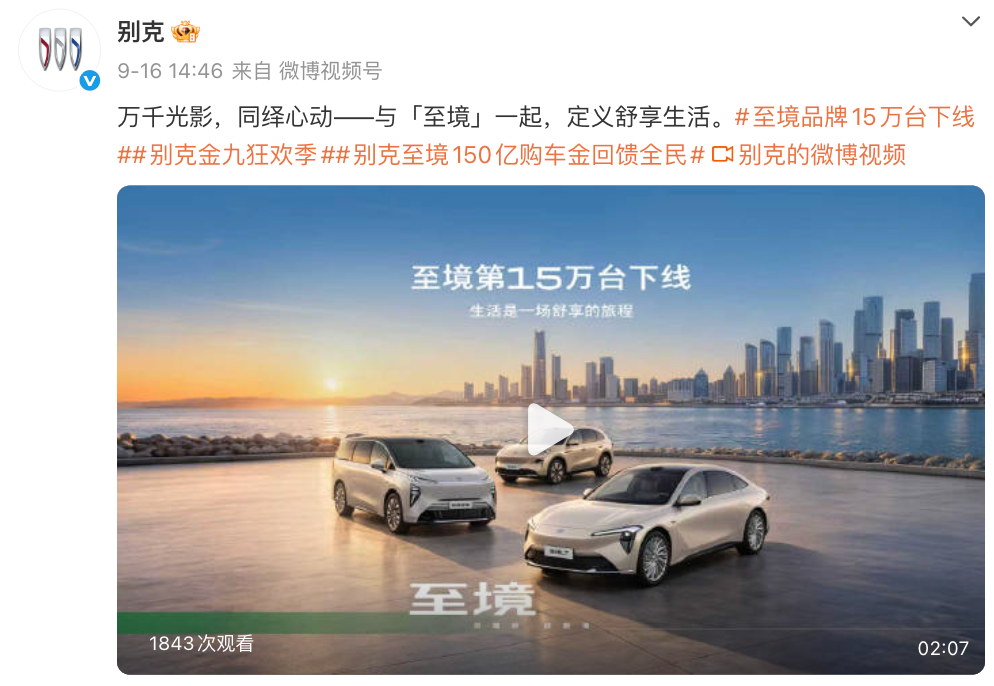
Image Source: Weibo
However, Buick has yet to disclose the specific enhancements made to the updated model, nor has it revealed the official pricing.
The current starting price of 149,900 yuan reflects a limited-time trade-in offer, which combines the benefits of the Golden September promotion. This price is not the official guide price.
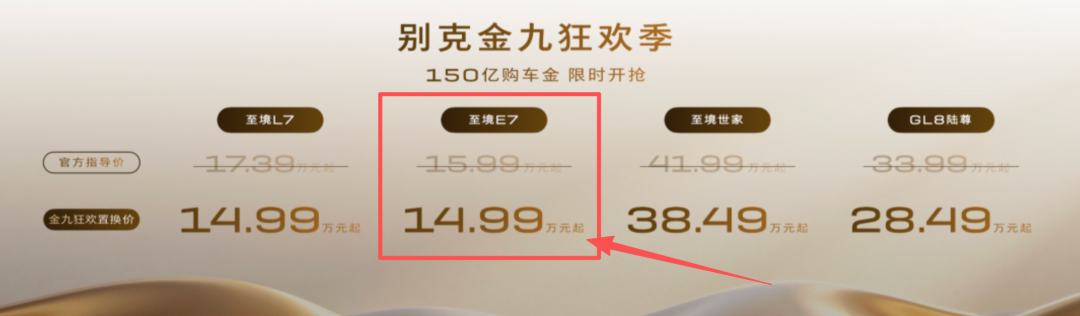
Image Source: Weibo
As the launch date nears, attention is focusing on the differences between the updated and current models, including version variations, configuration adjustments, and pricing strategies, which are key considerations for many family car buyers.
I. Roll-off of 30,000 Units: A Detailed Hardware Review of the Current ZHIJING E7
The ZHIJING E7 is designed as a spacious five-seater mid-size plug-in hybrid SUV, measuring 4850×1910×1676mm with a wheelbase of 2850mm. Built on the Xiaoyao Super Integration Architecture, its generous wheelbase ensures ample front and rear seating space. The current lineup includes three versions: 1600 Full-Loaded, 1600 Super Full-Loaded, and 1600 Super Full-Loaded Turbo, with official guide prices ranging from 159,900 to 199,900 yuan.
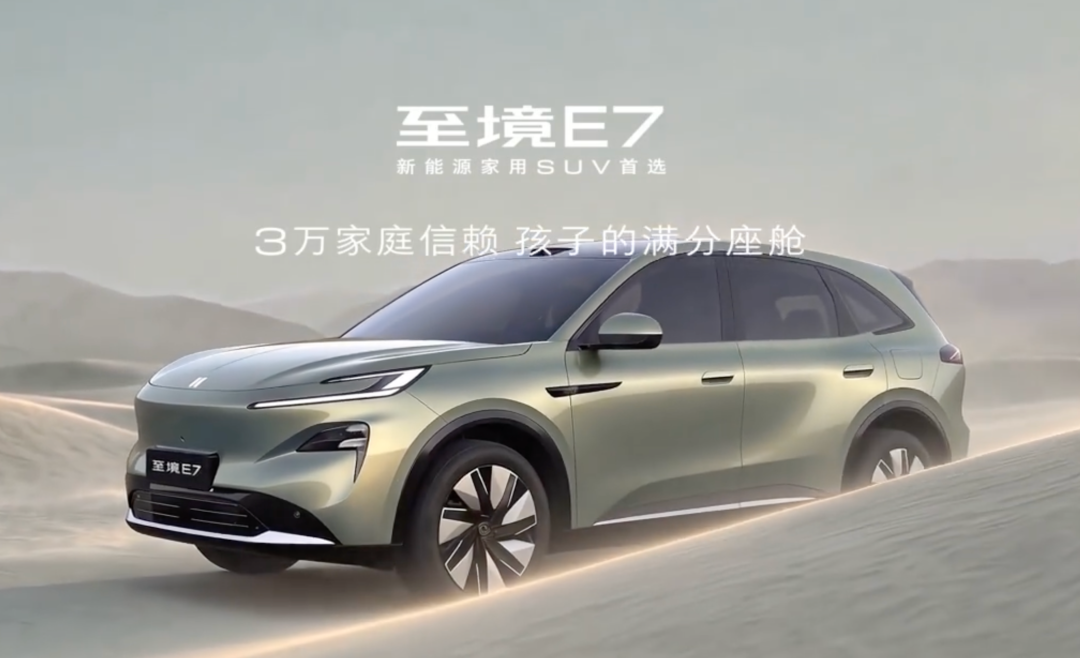 Image Source: Weibo
All versions come equipped with the Zhenlong Plug-in Hybrid Pro system, featuring a front-wheel-drive layout and a dedicated hybrid DHT transmission.
Full-Loaded and Super Full-Loaded versions boast a 1.5L dedicated hybrid engine with a maximum power of 72kW, paired with a 165kW front-mounted drive motor. This setup delivers a combined system power of 237kW and accelerates from 0-100km/h in just 7.1 seconds.
The Super Full-Loaded Turbo version steps it up with a 1.5T dedicated hybrid engine, offering a maximum power of 115kW and peak torque of 230Nm, also paired with a 165kW front-mounted motor. This results in a combined system power of 280kW and a 0-100km/h acceleration time of 7 seconds.
Buick's official calibration reveals a minimal difference of less than 0.1 seconds in acceleration between full and low battery states, ensuring consistent power delivery. The vehicle is equipped with a 32.6kWh lithium iron phosphate battery pack, providing a maximum CLTC pure electric range of 235km and a combined range of 1630km. Fast charging from 30% to 80% takes only 15 minutes. Standard features include 6kW external power discharge and a 65L fuel tank, eliminating range anxiety for long-distance travel.
In terms of chassis and body safety, the Super Full-Loaded and Turbo versions feature predictive RTD continuous damping variable suspension, which pre-scans road conditions and dynamically adjusts damping for optimal comfort and stability. The body is constructed with 78.1% high-strength steel and aluminum alloy, with key areas boasting a maximum tensile strength of 2100MPa. The battery is protected by a six-dimensional electrical safety system.
Cabin and intelligent configurations vary by version:
1.1600 Full-Loaded: Equipped with a Qualcomm Snapdragon 8155 cabin chip and a 15.6-inch Rheinland-certified central control screen. Features include Eames Zero-Gravity Recliner Seats, a silver ion preservation cold/warm box, double-layer soundproof glass, and a 20-speaker 7.1.4 Dolby Atmos sound system. Basic L2-level driving assistance is included, but no LiDAR.
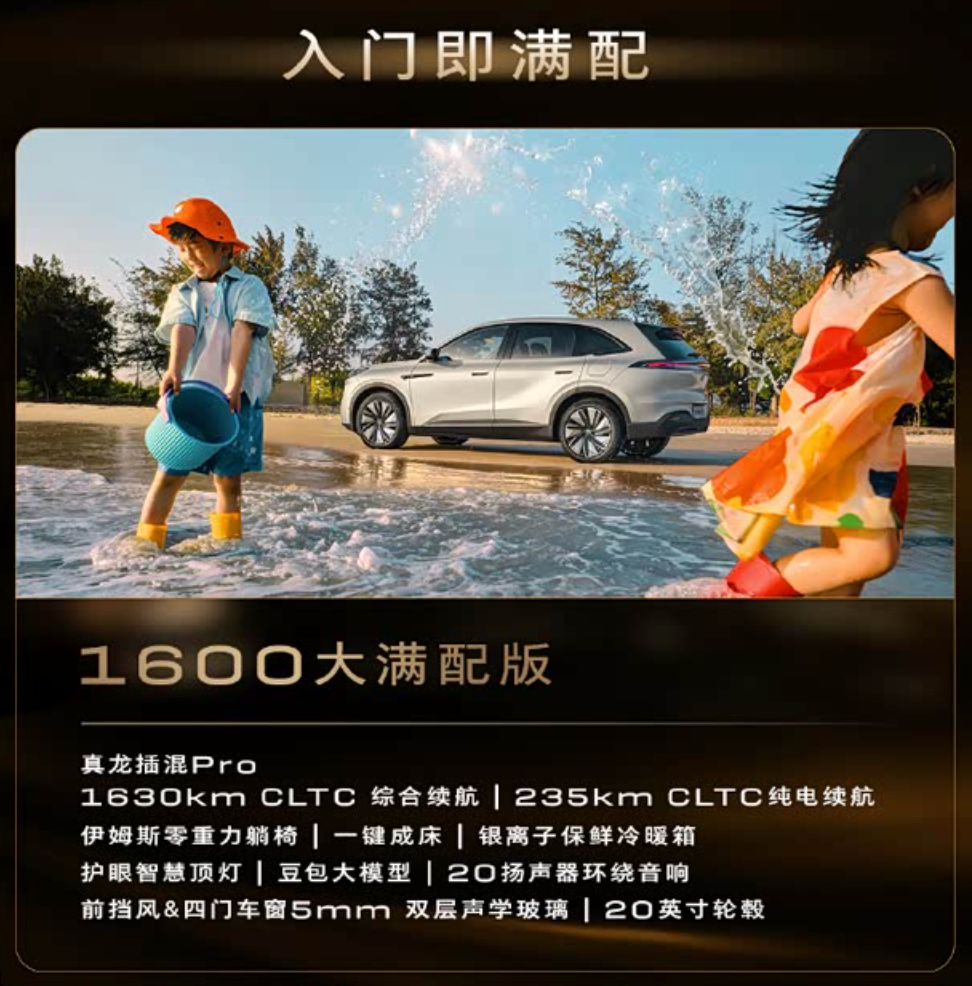
Image Source: Autohome
2.1600 Super Full-Loaded: Upgraded to a Qualcomm Snapdragon 8775 cabin chip and features a roof-mounted LiDAR. It includes the Momenta Xiaoyao Intelligent Driving high-level intelligent driving system, supporting urban NOA + highway NOA pilot assistance. Additional features include a new 50-inch AR-HUD, a second-row 15.6-inch cinema screen, a four-way driving recorder, and sentry mode.
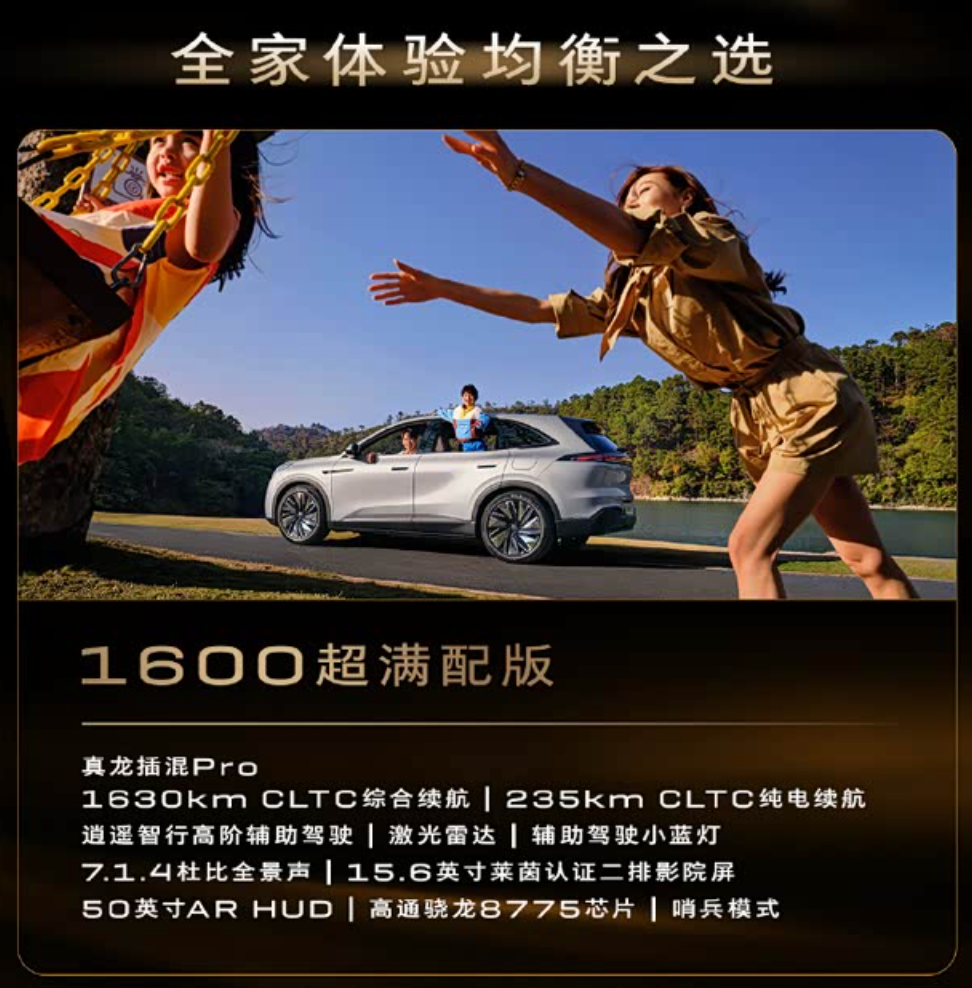
Image Source: Weibo
3.1600 Super Full-Loaded Turbo: Builds on the Super Full-Loaded version with enhancements such as Michelin ePrimacy tires, a five-constant health cabin, in-car fragrance, and a second-row multi-functional table for added comfort.
Additionally, the first non-commercial owners enjoy a lifetime warranty for the three electric systems (battery, motor, electric control). The infotainment system supports continuous OTA updates, with multiple rounds of functional updates already rolled out, including navigation waypoint expansion, customizable in-car scenarios, and intelligent driving emergency avoidance optimizations. The roll-off of 30,000 units signifies the successful mass production validation of this hardware system, with mature supply chain and vehicle assembly processes.
II. Anticipation Builds for the Updated Model: Rational Predictions on Upgrade Directions
With the launch date set for September 23rd, Buick has kept the exact configuration list for the updated model under wraps. All upgrade content is currently based on reasonable speculation from the industry and media, pending the final launch event.
Based on currently available information, the overall exterior contour, body dimensions, chassis structure, and the entire Zhenlong Plug-in Hybrid Pro powertrain are unlikely to undergo modifications. Endurance (range) and fast charging parameters are expected to remain largely consistent with the current model. The main upgrades are anticipated to focus on three areas: exterior and interior color schemes, version sequence optimization, and cabin detail functions.
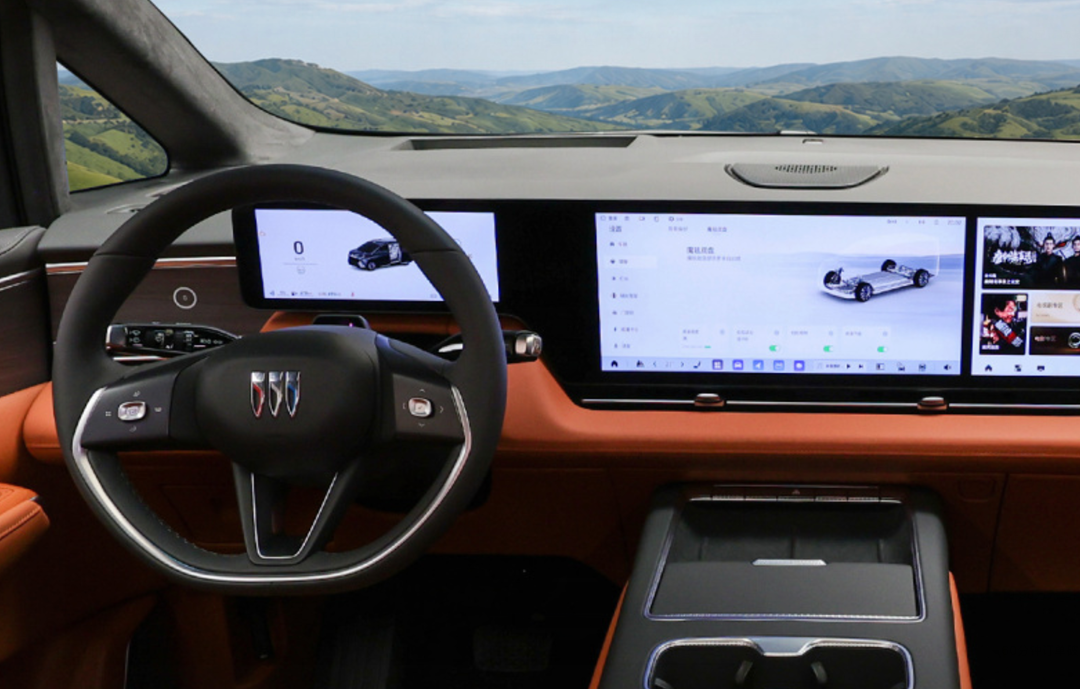
Image Source: Weibo
The exterior is expected to introduce exclusive paint colors (rumored to be ZHIJING Green), while the interior will feature new color themes (such as Bordeaux Red), enriching personalized choices for users.
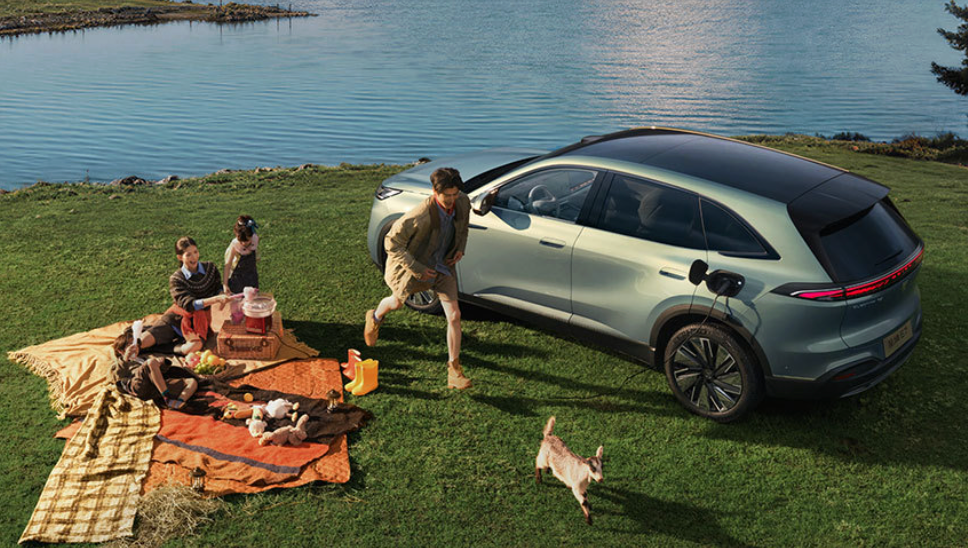
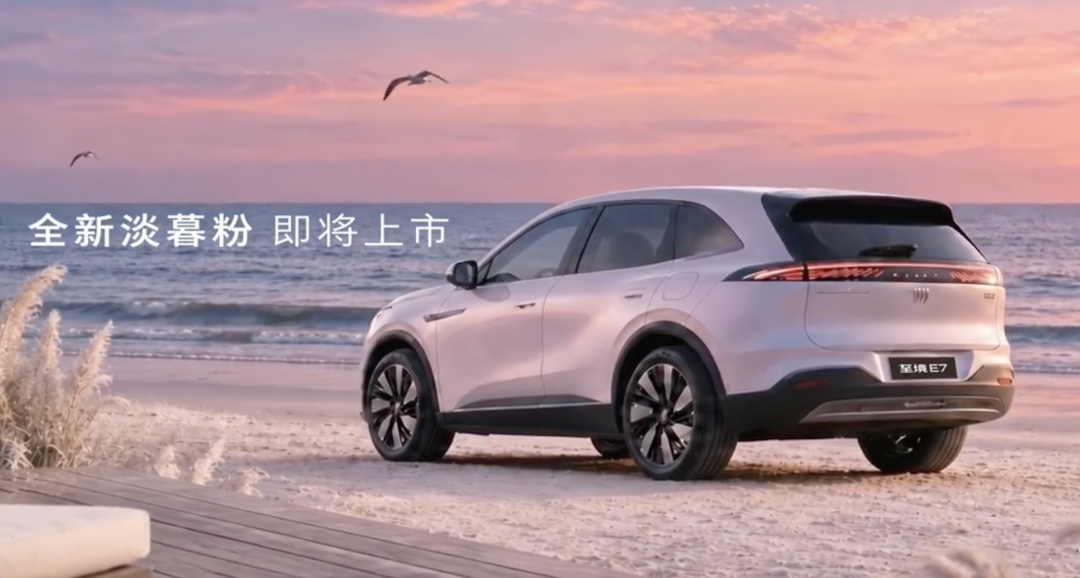
Image Source: Weibo
The current three versions have a relatively large price gap. Some users who desire high-level comfort and intelligent driving configurations currently have to opt for a higher version. The industry widely predicts that the updated model is likely to introduce an intermediate configuration version to bridge this gap, decentralize popular comfort configurations, and lower the threshold for experiencing high-level features.
At the intelligent driving hardware level, the LiDAR and Momenta high-level intelligent driving hardware are expected to remain unchanged. The focus of the update will likely be on algorithm optimization to enhance the smoothness and reliability of urban pilot assistance and automatic parking. In terms of the cabin, some OTA iteration functions will be directly included as standard factory configurations, with fine-tuning and optimizations made to seating, cabin interaction, and in-car detail experiences.
III. Pricing Transition and Interpretation of Current Model's Limited-Time Trade-In Benefits
The benefits for this Golden September promotion include: a 1000 yuan deposit deducting (offsetting) 6000 yuan from the car purchase price, up to 7000 yuan subsidy for trade-in users, and limited-time complimentary compulsory traffic insurance. After combining these benefits, the trade-in price for the Full-Loaded version starts at 149,900 yuan. The promotion is time-limited, ending on September 30th, and requires trade-in conditions, so not all car buyers can take advantage of this price.
The official guide prices for the current model are: Full-Loaded 159,900 yuan, Super Full-Loaded 179,900 yuan, and Super Full-Loaded Turbo 199,900 yuan. After the launch of the updated model, there are two possible market scenarios:
Scenario 1: Maintain the original official guide prices, with configuration upgrades without price increases, and new versions directly enriching the product matrix. The current model's Golden September trade-in policy may be extended short-term, allowing consumers to compare and choose between new and old models.
Scenario 2: Adjust the pricing system for the updated model, with new versions priced separately, and the current model's limited-time trade-in benefits simultaneously reduced, creating a clear product differentiation between new and old models.
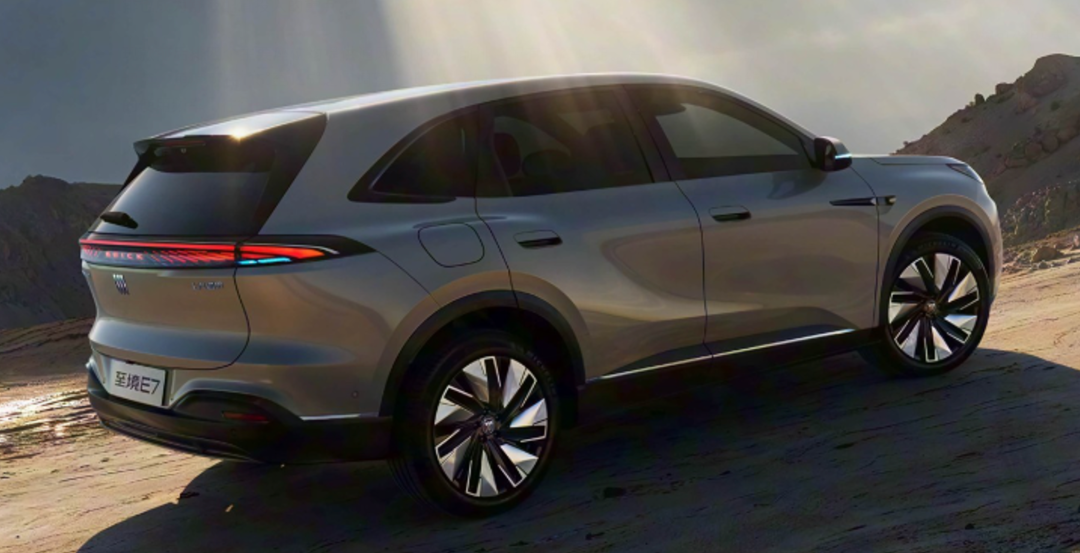
Image Source: Autohome
Whether Buick chooses to add configurations without increasing prices or reshape the pricing system, all answers will be revealed on September 23rd.
As the countdown to the launch event begins, whether this joint-venture plug-in hybrid SUV, with 30,000 units rolled off, can continue to make waves in the 150,000-200,000 yuan home-use new energy market after its update remains to be seen. We will follow up with the complete configuration, version differentiation, and official prices of the new car as soon as possible, providing objective car-buying references.
Disclaimer: This article is solely a commentary by Zhi Caijing and does not constitute any investment advice. The enterprise data and regulatory events mentioned herein are sourced from public information and are for reference only, subject to official releases. Images are sourced from the internet; if there are any copyright issues, please contact us for removal.
-
![]()
Why FAW Can Successfully Integrate with GAC While Dongfeng and Changan Fail
-
![]()
Beauty Board Secretary ‘Dilraba’ Joins O-Film Tech, Capturing Renewed Attention
-
![]()
Huawei Steps Back, Seres Faces the Music
-
![]()
Large Models: Born from Industries, Destined to Revolutionize Them
-
![]()
Buick’s Big Reveal: New Car Model Launching on September 23rd!
-
![]()
319,000 Yuan! Lexus Unveils New Car: Official Release Set for September 18th
-
![]()
1,100km Pure Electric Range, World's First! BYD’s New Car 'Drops a Bomb'
-
![]()
Exclusive: Huawei Executive Reveals All About AITO's Future at Internal Meeting