I Saw an Iceberg in Huzhou丨The Duty of Car Manufacturing Shouldn’t Just Be Upheld by Leapmotor
 09/20 2026
 571
571
Huasheng Says
Sometimes, receiving praise can be awkward.
One media outlet said, 'Leapmotor is really impressive; I didn’t expect them to be so deeply committed to technology.' Upon hearing this, a Leapmotor executive was taken aback but, seeing the sincerity in the other person's eyes, could only smile and express gratitude.
The executive shared this story with me and asked if I understood the feeling. I nodded with a wry smile: I do, all too well. It's like when people used to say, 'Huasheng, you're still doing investigations,' or now say, 'Huasheng, you're still researching companies and writing with such vitality—great job.' I'm very grateful for the recognition, but at the same time, there's a twinge of embarrassment because, well, this should be the norm, not something special.
Just as I wouldn’t praise my students for simply attending class or for not cheating on exams when I teach at school,
today, China's automotive industry holds core technologies, yet profits are razor-thin. Everyone is struggling to get by, and few are happy. What's the problem? Perhaps it lies in whether we are truly focusing on car manufacturing, genuinely creating value, and sincerely investing in technological research.
The praise for Leapmotor reflects an awkward reality: doing what everyone believes to be right has become a rare commodity.
It shouldn’t be this way.
I’ve been following Leapmotor for 11 years, and on this Technology Day, I want to share my perspective on the company.
01.
In Huzhou, I Saw an Iceberg

Huzhou finally had a moment to hold its head high.
'Living by the lake without knowing its depths,' Huzhou has long felt overshadowed. Named after Taihu Lake, it only controls a 70-meter strip of water along the lake’s embankment—like a cucumber—while the rest of Taihu Lake falls under Jiangsu's jurisdiction.
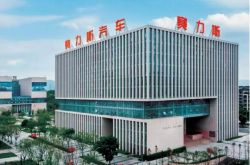
On September 17th, hundreds of media outlets, investors, and industry professionals flocked to the shores of Taihu Lake, nearly filling up all the hotels near Huzhou's Taihu area. They weren’t there for the lake crabs but for Leapmotor—a dark horse boasting monthly sales exceeding 100,000 units, three consecutive years of high growth, ranking among the top three in China's new energy vehicle sales and fourth globally.
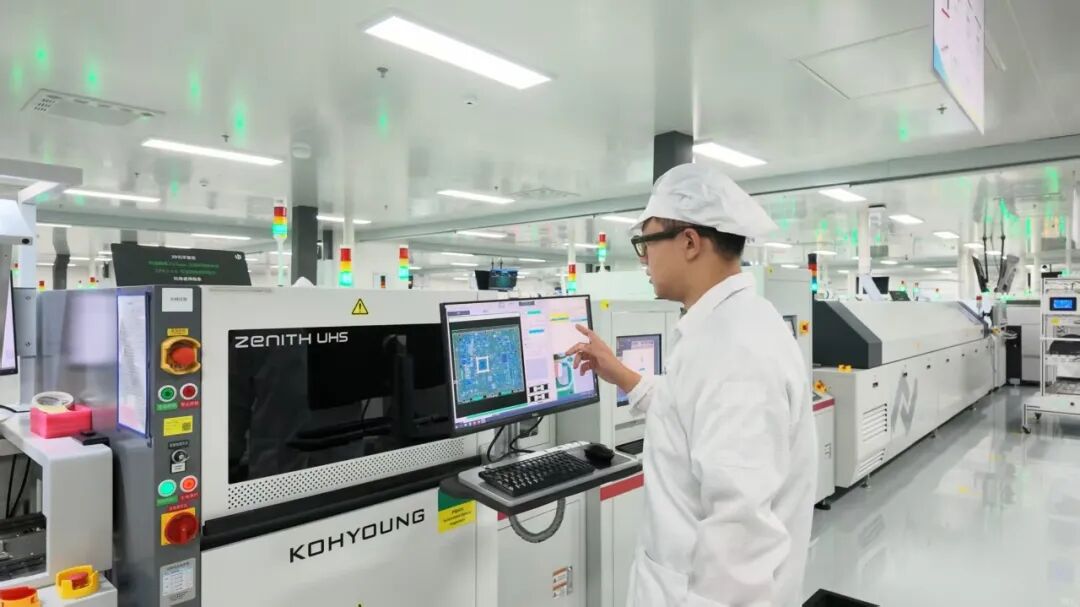
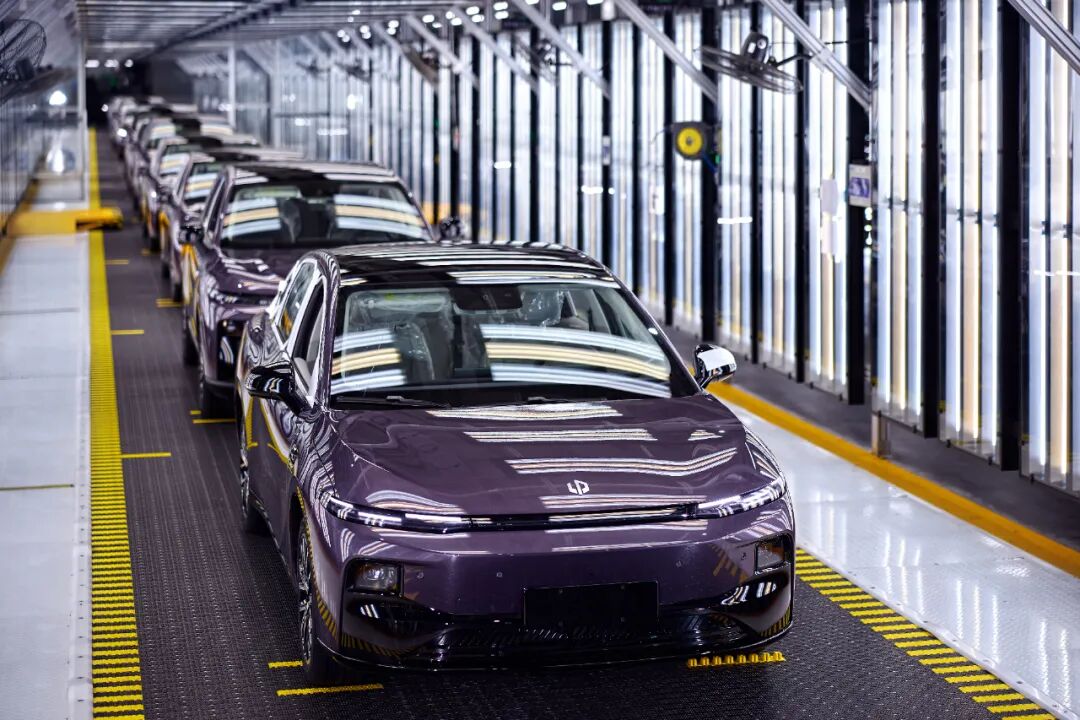
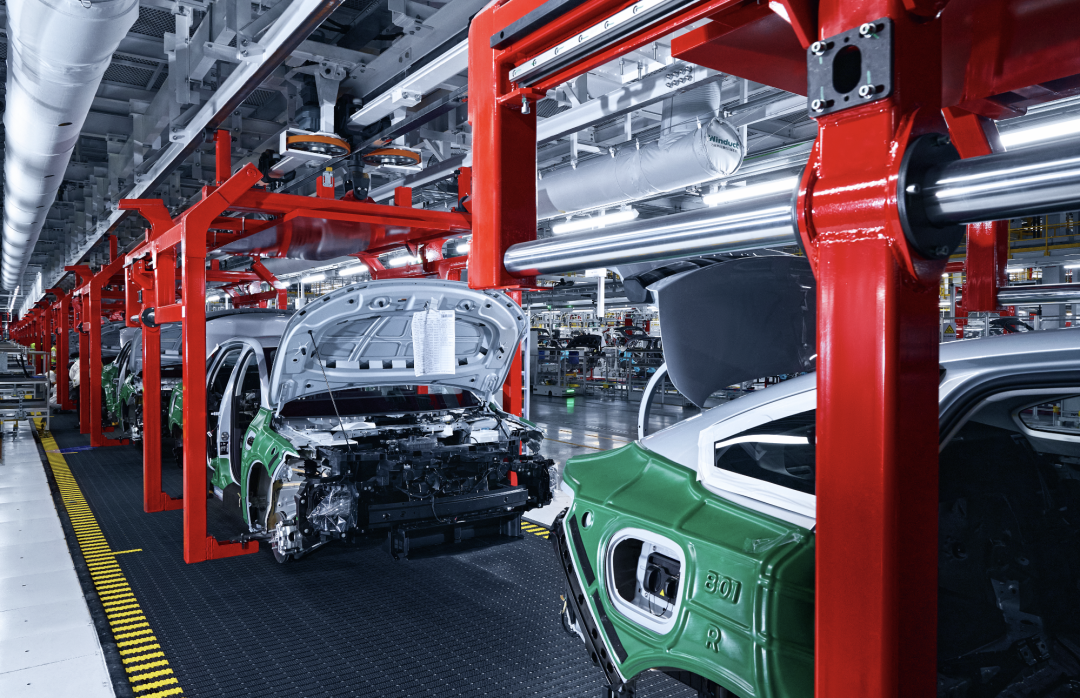
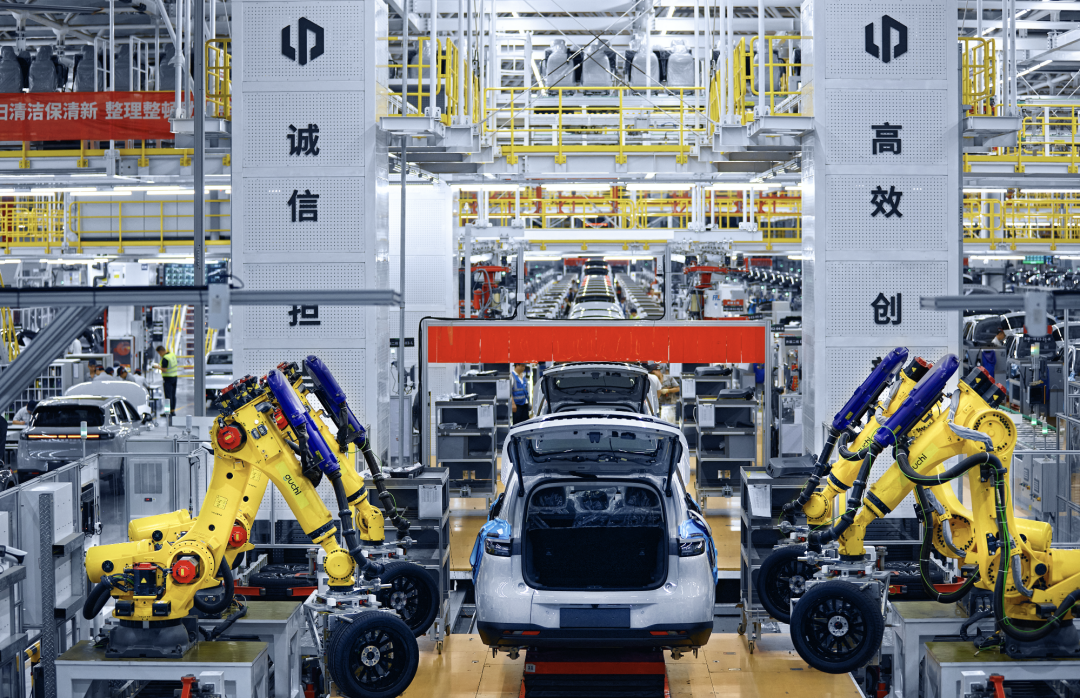
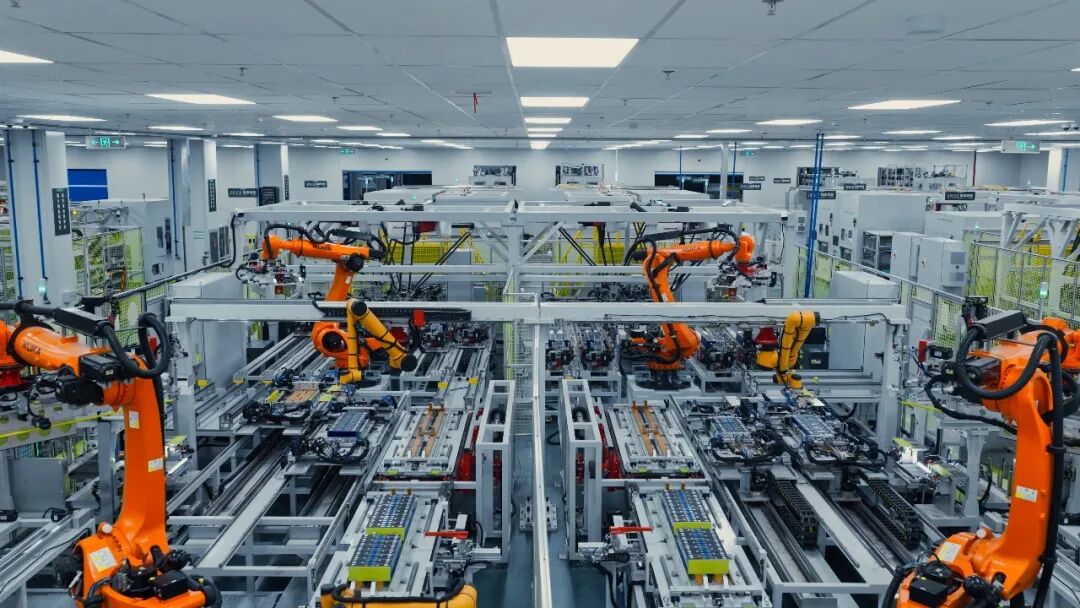
Touring Leapmotor's three factories in Huzhou—battery, electric drive, and electronic and electrical architecture—one detail left a deep impression on Huasheng: the factory areas are compact yet boast extremely high usage density and efficiency, with top-notch digitalization and mechanical equipment.
At the battery factory, Leapmotor is one of only two automakers worldwide to achieve 100% full-stack in-house research and manufacturing of battery systems. From being the first in the industry to mass-produce CTC (Cell-to-Chassis) battery-body integration, with cumulative installations exceeding 1 million units, to the release of the CTC 3.0 high-low voltage integrated battery this time, Song Yining, head of the battery product line, did some math for me: leading battery cell manufacturers average 5 to 7 production line changes per year, each causing a 20-day delay. In contrast, Leapmotor's standardized cell production ensures continuous operation 365 days a year, optimizing efficiency, cost, and quality.
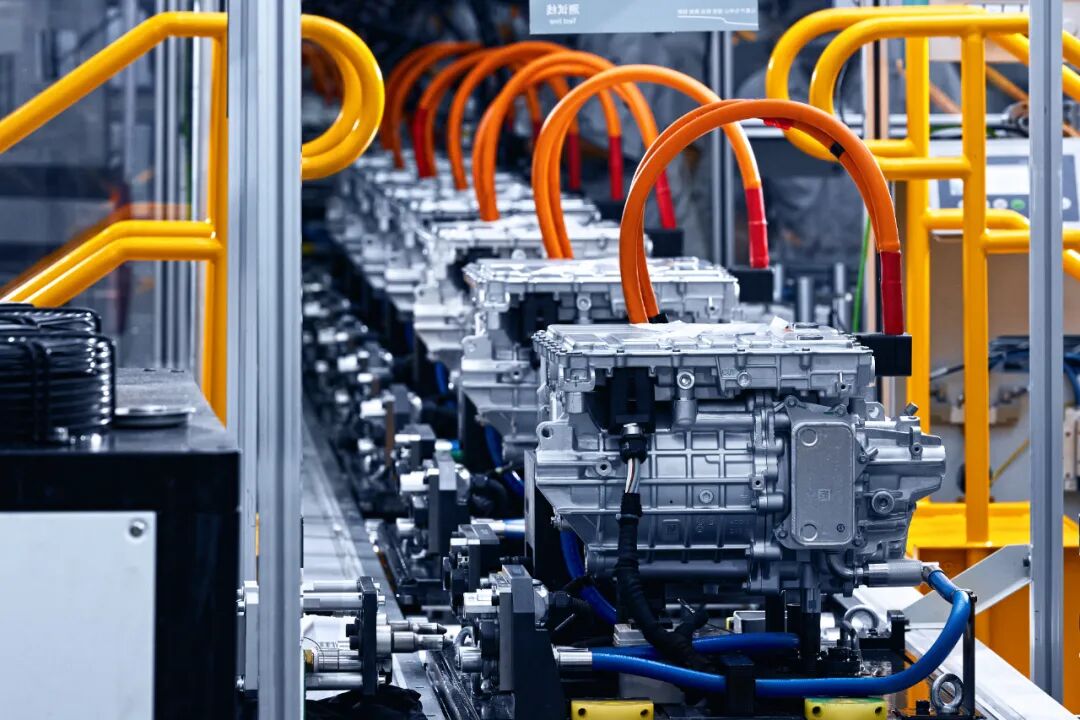
At the electric drive factory, Leapmotor boasts the world's only team with Positive (forward) research and development capabilities for power electronics drive products, holding 841 patents in electric drives, ranking first among new forces and electric drive suppliers. The newly released MM-i multi-mode hybrid electric drive replaces traditional wet clutches with electromagnetic clutches, reducing gear shift time from 400 milliseconds to 150 milliseconds. Wu Cun, head of the electric drive product line, made a memorable remark: 'The essence of new energy is not to eliminate the internal combustion engine but to decarbonize.' In his view, as long as hybrids can deliver a pure electric experience and reduce carbon emissions, they qualify as new energy technology—a system primarily designed for global customers.
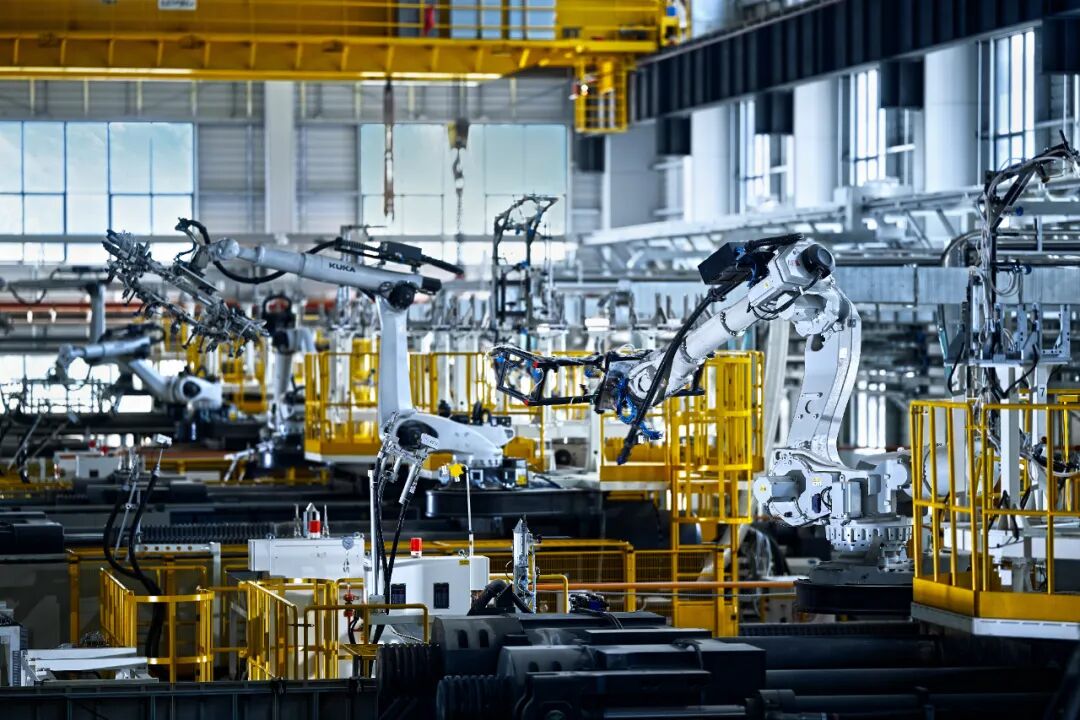
Only by chatting with the people in charge did I realize that to improve efficiency, they even provide feedback to and define equipment for suppliers to enhance production efficiency. A car company teaching robots how to work—that speaks volumes.
The tech circle loves to talk about Knowhow; our ancestors said, 'Know what it is and why it is so'—this encapsulates it perfectly.
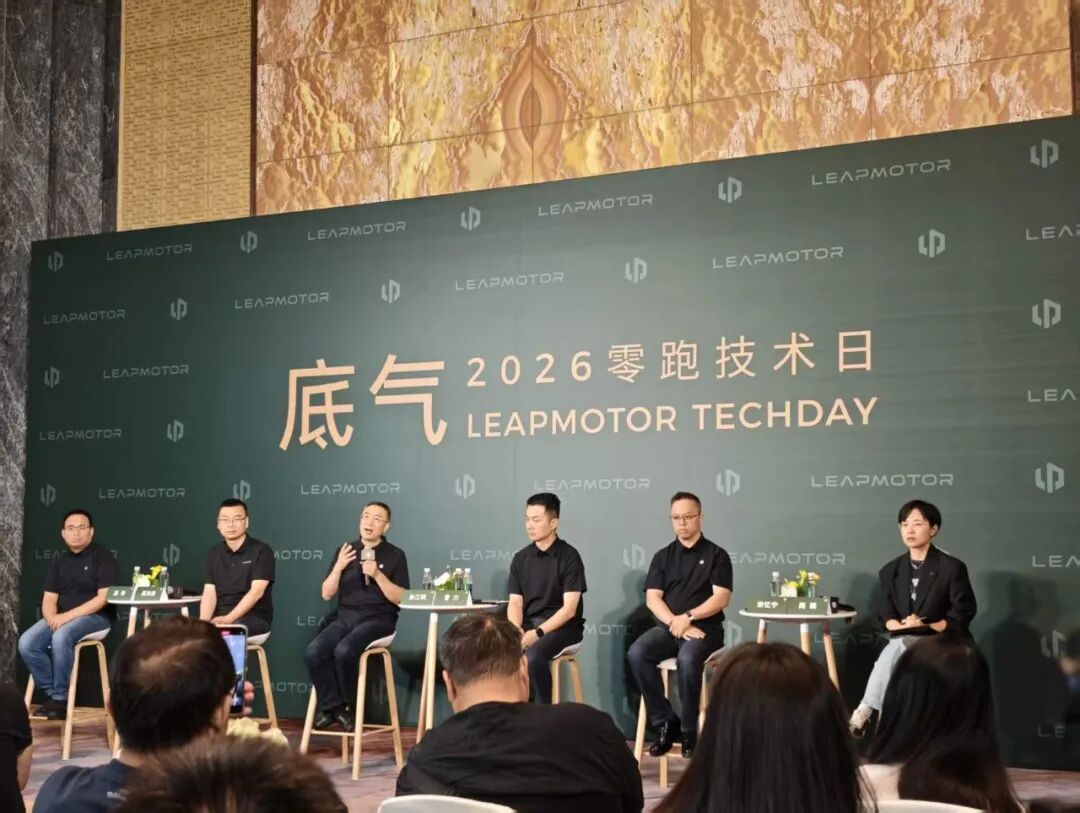
The theme of this Technology Day is 'Confidence,' visually represented by an iceberg. Above the surface lies monthly sales of 100,000 units; beneath it lie these factories, these engineers, and the systematic capabilities accumulated step by step over 11 years.
02.
In-house Research Began at the Start of the Venture
Looking ahead to 2026, in-house research by automakers is no longer rare—everyone talks about it, but the number who actually do it is discounted, and even fewer have been doing it for a long time.
Leapmotor's deep commitment to technology and full domain in-house research in key areas didn’t start halfway; it was there from the beginning.
Zhu Jiangming told me that Leapmotor initially had only 50 people, 41 of whom were engineers. From the start, they had architectural systems for electric drive control, vehicle batteries, and intelligence. Now, they’ve simply vertically integrated them one by one.
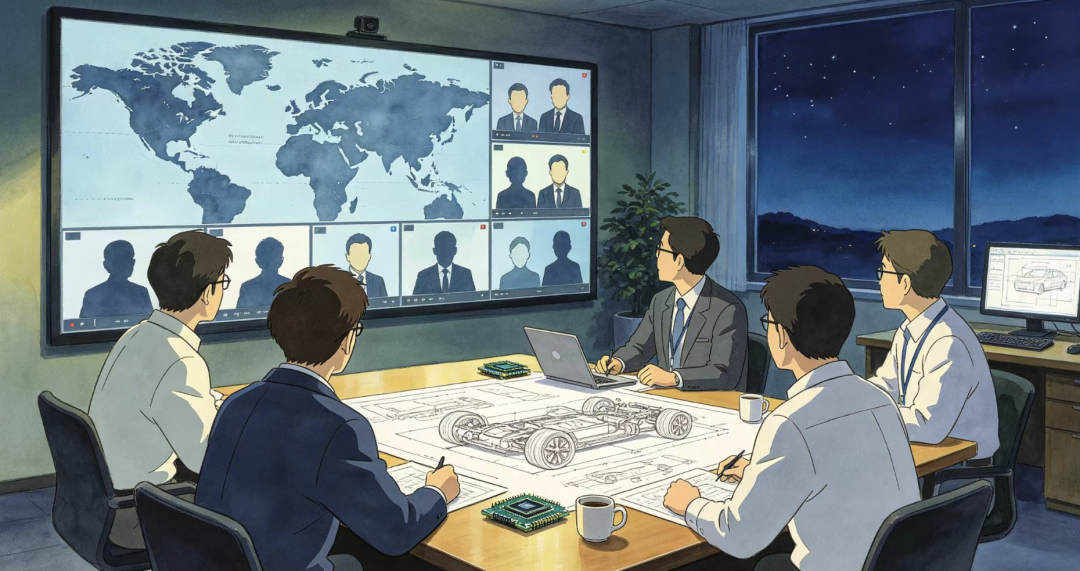
To this day, 21 members of the founding team remain at Leapmotor, leading independently, growing alongside the company, and achieving mutual success.
This is true 'beginning with the end in mind.' It’s not about suddenly deciding halfway through, 'I want to do in-house research,' but about setting a course for full domain in-house research and deep in-house manufacturing from day one and sticking to it for 11 years.
For more on this, you can read the in-depth retrospective piece I wrote on Leapmotor's 10th anniversary.
From being questioned and ridiculed to becoming an absolute leader among new car manufacturers, Leapmotor has traversed a decade. Time has provided answers to the long-termists regarding its 'unconventional' choices. True growth always defies cycles, resists inertia, and respects common sense. 'Starting low and ending high' best describes its past.
True greatness stems from the perseverance and pragmatism of 'starting from scratch.' This is Leapmotor's story and even more so a microcosm of China's new energy sector transitioning from scale leadership to quality leadership—the core confidence for China's manufacturing industry to lead globally.
—Excerpted from: 'Ten Years of Leapmotor 丨 I Witnessed a Comeback of Persistent Effort'
Frankly, this is tough. Over the past decade, what constitutes a good case in the automotive industry has been highly controversial. Initially, people even thought, 'It's better to buy than to build, better to rent than to buy'—that borrowing would yield the best cars. Later, an investor told Zhu Jiangming, 'Since Leapmotor does so much, why not stop selling cars and become a parts company instead—it would be more profitable.'
From my familiarity with Zhu Jiangming, I suspect he listened attentively, nodded with a smile, and stuck to his principles to this day.
Behind this persistence lies Zhu Jiangming's experience at Dahua. The benefits of vertical integration are tangible: low costs, fast supply, and, most importantly, knowing the entire supply chain's needs allows you to tailor them to vehicle requirements rather than being constrained by them.
This is entirely different from companies that 'suddenly decide' to make parts and start in-house research from scratch.

03.
Duty Isn’t Shouted About
Persisting in one's duty over time crystallizes into systematic capabilities.
Today, Leapmotor independently controls 65% of total vehicle costs, has built 18 parts factories, and achieved a platform generalization rate of 90%. Its four major product lines—vehicles, electronics, batteries, and electric drives—are each end-to-end integrated, from product planning to development to delivery, all the way through.
Zhou Hongtao, head of the electronics product line, has a viewpoint I agree with: software shouldn’t be seen merely as a cost; it’s inherently part of the vehicle's competitiveness. From Leapmotor's earliest Four-Leaf Clover central integrated electronic and electrical architecture to the newly released Four-Leaf Clover 5.0 central domain controller—truly central integrated control, with other domain controllers merely executing, and the entire vehicle's wiring harness under 500 meters—each iteration of the electronic architecture ultimately translates into user-perceivable experiences.
Interestingly, there have been organizational changes. Zhu Jiangming mentioned that the vehicle team no longer has specific battery or electric control engineers; instead, entire departments and related company heads lead vertical integration and collaboration.
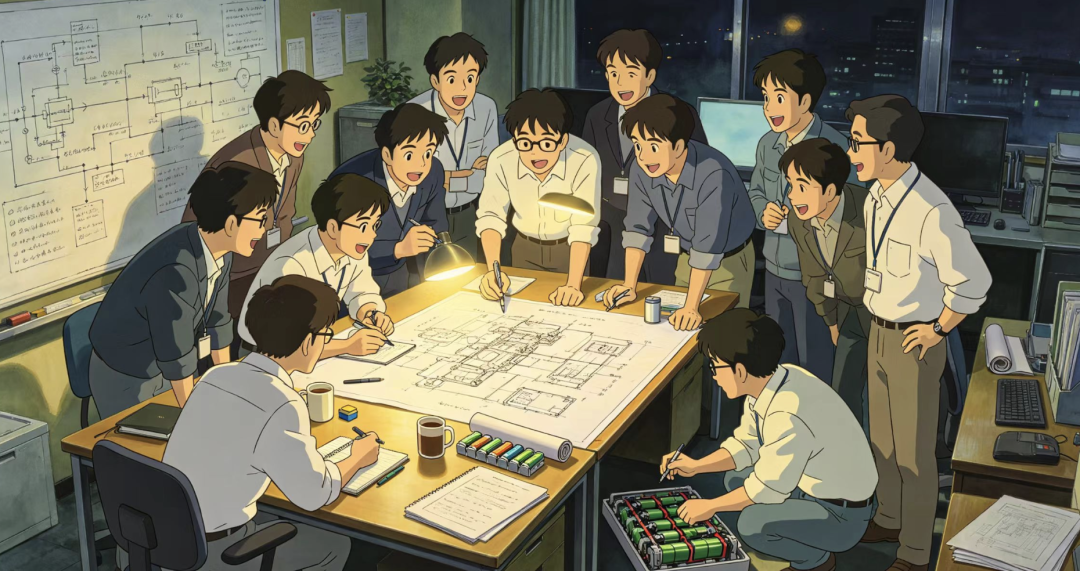
This raises an intriguing question: How do the best products from different organizations collaborate on a vehicle? How do consumer demands collected by the vehicle team feed back into the supply chain? Technologically, it’s not difficult, but organizational adjustments require skill. Zhu Jiangming explained that the four product lines operate independently but collaborate closely, forming a single team for vehicle projects—'unlike other vehicle companies where parts are merely supplementary.'
Cao Li, head of the vehicle product line, provides a more vivid description. In his view, future vehicles won’t just be transportation tools but more like homes—mobile living spaces and office scenarios. Based on this judgment, Leapmotor uses the LEAP 5.0 architecture for its second brand, transforming fixed spaces into expandable ones, achieving over 100% usable space. This approach of deriving technical architectures from user needs can only be achieved by companies with full domain in-house research.
The extremely high usage density and the practice of providing feedback to and defining equipment for suppliers seen in Huzhou's factories are the most tangible manifestations of this systematic capability. What lies beneath the iceberg ultimately translates into efficiency and cost advantages above it.
04.
Youngsters, Don’t Fear Aging
With duty as its foundation, Leapmotor's confidence soars.
Its current sales are indeed impressive, and they’ve been consistently strong for three years.
Now, some media worry: In the past decade-plus of automotive consumption booms, three years pose a significant challenge. Many once-glorious brands expanded and grew their operations during three years of advantage, only to find themselves constrained when the market changed.
But Huasheng believes Leapmotor is like a youngster. Given its goals—4 million units and overseas exports—it doesn’t need to worry about 'osteoporosis'-like issues just yet; the premise doesn’t exist.
Moreover, Leapmotor has been profitable for three consecutive half-years, with a net profit attributable to the parent company of 210 million yuan in the first half of 2026. Against a backdrop where most industry players are still losing money, simultaneous growth in scale and profitability is itself a source of confidence.
The greatest confidence for a youngster isn’t speed but a solid foundation.

05.
Huzhou, Jinhua, or Toyota City?
The confidence is also reflected in the imagination of the future.
Leapmotor is different from other Chinese brands. Domestic automakers particularly favor establishing a presence in various regions across the country—east, west, north, south, and central—just to be close to key regional markets. Leapmotor, however, takes a different approach. From complete vehicles to its self-supported parts and components enterprises, it focuses on Zhejiang, primarily in Huzhou and Jinhua.
In response to this question, Zhu Jiangming cited Toyota, a global automotive giant, as an example. He explained that by clustering enterprises in one location, it facilitates coordination and reduces costs. He even visited Toyota specifically to learn about lean production. His biggest takeaway was that all of Toyota's supporting parts and vehicle assembly plants are located around Toyota City, minimizing logistics distances. This setup allows for balancing workforce needs during peak and off-peak seasons, with suppliers also located nearby, resulting in the shortest supply chain distances and lowest costs. Leapmotor follows the same philosophy, ensuring that parts with high transportation costs are placed within a 5 to 10-kilometer radius.
After listening, Huasheng had two thoughts. First, this could be seen as repaying kindness, as the entire Zhejiang ecosystem has provided significant support to Dahua and Leapmotor. Leveraging the industrial chain in the Yangtze River Delta is a fact. Second, while Toyota does produce in Toyota City, more importantly, compared to the limited domestic market, Toyota aims for the global market. What it truly does is establish cooperative production facilities overseas, empowering the world after production in Japan.
Through Zhu Jiangming's mention of Toyota and Toyota City, Huasheng vaguely glimpsed Leapmotor's ambition hidden beneath its pragmatism—its goal is to become a truly international enterprise.
This doesn't necessarily mean building factories locally or even directly acquiring factories, but rather utilizing local production capacity directly. With the largest domestic market as its backdrop, its ultimate goal is overseas expansion.
Currently, Leapmotor has entered 45 countries and regions, with cumulative exports exceeding 200,000 vehicles. This approach of 'utilizing local production capacity without redundant investment' is indeed smarter than the rush to build factories abroad.
Zhu Jiangming said that Leapmotor spent its first decade laying foundations and building capabilities, and the next decade will focus on leveraging accumulated strengths and fostering more innovation.
In Huasheng's view, 11 years ago, 50 people gathered in an office, with 41 engineers quietly working on technology. At that time, no one saw this as a 'favor'—it was simply their duty. Eleven years later, with monthly sales of 100,000 vehicles, sustained profitability, technology supply to FAW and Stellantis, and presence in 45 countries, duty has gradually become a favor, and that favor has turned into confidence.
But confidence shouldn't be exclusive to Leapmotor. When Deepen technology cultivation (deep technological expertise) becomes a rarity, and when 'still seriously making cars' turns into a virtue worthy of praise, what this industry needs to deeply consider is not just what Leapmotor has done right, but what this industry should inherently be doing and what it is actually doing...
Written by | Li Xiyin · Huasheng
-
Three-Way Struggle for Market Share: BYD, Chery, and Geely Challenge Great Wall, Posing Immediate Risks to Wei Jianjun
-
![]()
The Reason Behind Valve's Headset Price Surge of 2400 Yuan: The End of an Era of Selling at a Loss
-
![]()
Decoding the '4S' Architecture | Report on Enterprise-Level AI Services in China
-
![]()
Li Auto Aims to Sell Three Technologies, First Buyers Unlikely to Be Major Automakers
-
![]()
Liu Zongcheng Declares Haste Makes Waste in Car Manufacturing, Yet Seres Seems to Be Rushing Headlong!
-
![]()
Did Trump Make Concessions? Chinese Automakers Are Invited to Establish Factories in the U.S., but Importing Fully Assembled Vehicles Is Off the Table
-
![]()
More Terrifying Than Runaway AI: The Tsunami of AI-Generated Vulnerabilities Has Arrived
-
AI Giants Hit the Brakes Collectively? They're Scared of Their Own Speed