Auto Companies are Collectively Creating 'Humans', Next Stop: Car Factories
 09/20 2026
 351
351
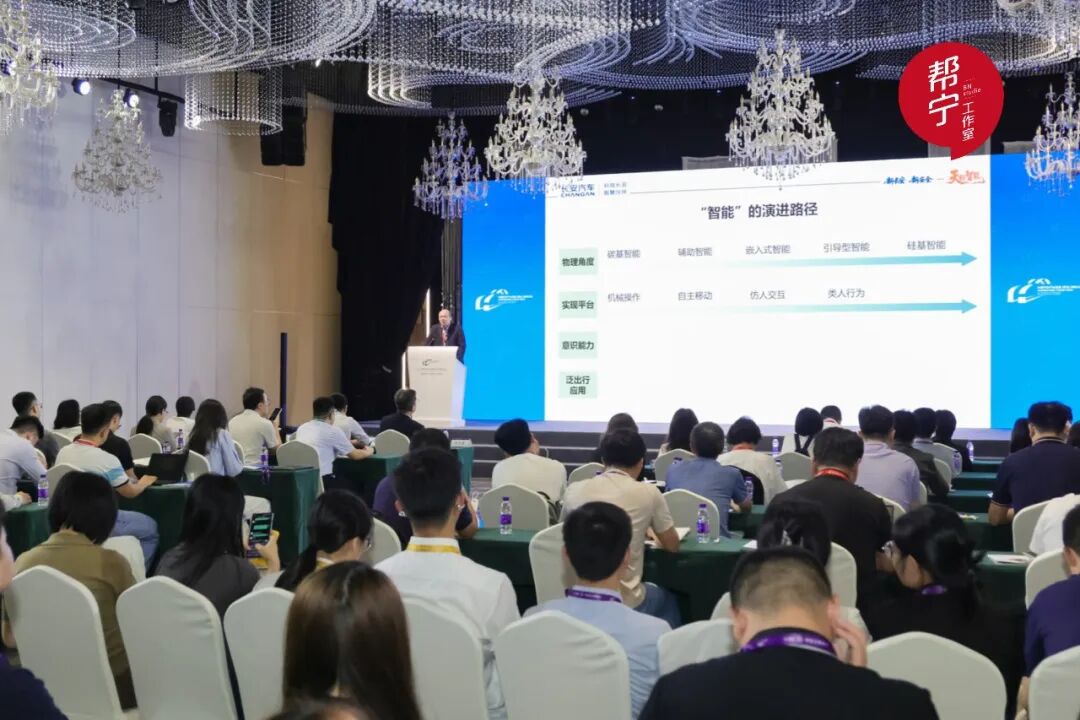
"From Just Dancing to Actually Working: Embodied AI"
'This is a slide I use in every speech I give, and it has had a huge impact on me personally.'
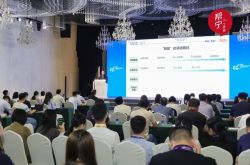
On September 18 in Tianjin, at the 22nd TEDA Forum's 'New Track Ecosystem Session: Embodied AI' special session, Tan Huan, Chief Expert at Changan Automobile and General Manager of Changan Tianshu Intelligent Robotics, concluded his speech by showcasing a cherished image—a vision diagram drawn by the American Association for Artificial Intelligence (AAAI) in 2006. The image depicted a future community using an isometric perspective.
At the street corner was an AI lab, adjacent to a medical center where robots treated patients in consultation rooms. Autonomous vehicles drove on the roads. Robots officiated as referees on sports fields. In residential buildings, robots assisted with housework and elderly care. Nearly every room featured AI presence.
On the right side of the diagram, a quote from SoftBank Group Chairman Masayoshi Son in 2017 read: 'Within 30 years, there will be 10 billion intelligent robots on Earth, matching the human population. For the first time in history, we will live alongside 10 billion robots.'
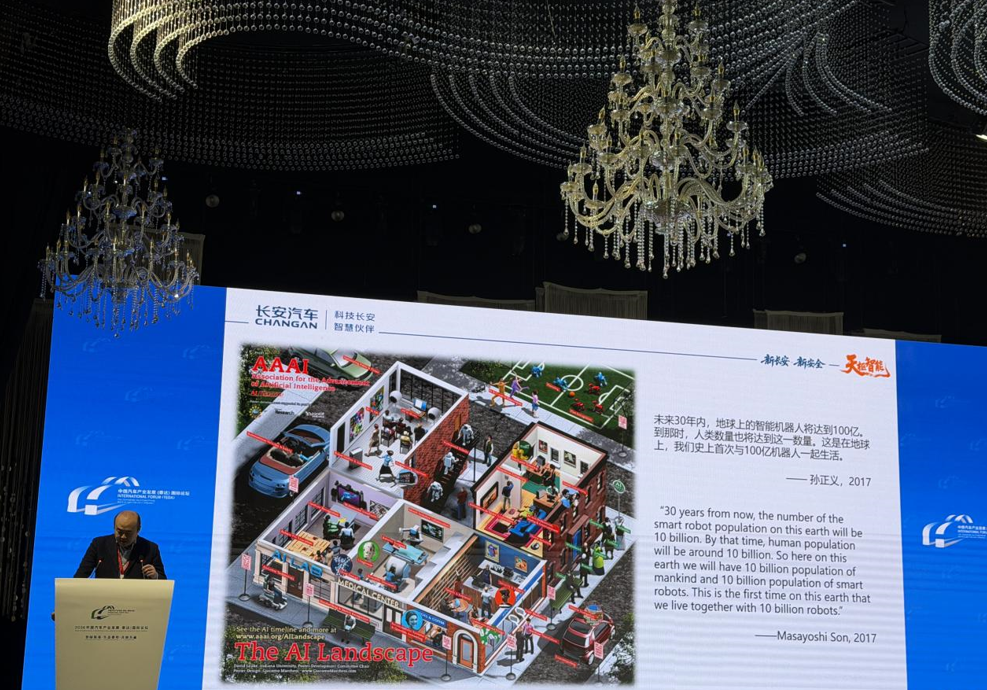
'Many thought this was pure fantasy back then,' Tan said. 'But now, nearly everything depicted has been realized.'
In the automotive sector, transformation is underway: robots are no longer just dancing and doing flips at exhibitions—they are entering car factories and performing actual work.
That same day, Kang Kai, Technical Director at China Automotive Information Technology Co., released the 'China Embodied AI Industry Development Report (2026)' at the forum, noting that the embodied AI industry has transitioned from technical validation to value validation, moving from 'demonstrations' to 'actual work' in application scenarios.
Zhang Yongwei, Chairman of the Auto100 Research Institute, recently stated that nearly 20 automakers have entered the embodied AI business, including new-energy vehicle companies like XPeng, Li Auto, and Leapmotor, as well as traditional automakers such as Changan, Dongfeng, GAC, BYD, and Chery. Embodied AI is becoming the second or third growth curve for many automakers.
As autumn 2026 deepens, automakers' creation of 'humans' has quietly reached a turning point from concept to delivery.
▍01 Intensified Progress
Over the past two months, actions in the embodied AI space have significantly intensified among automakers and leading intelligent driving companies, focusing on three fronts: financing, mass production, and IPOs.
In financing, mid-August saw Huilun Technology, incubated and established by GAC Group, secure over 100 million yuan in funding for vertical model optimization, automotive production line expansion, and core hardware iteration. By late August, XPeng Motors announced its robotics business completed its first round of over $900 million in financing, valuing it at over $6.3 billion post-investment—a record for single-round financing in China's embodied AI industry.
Subsequently, on September 17, Diguabot, incubated by Horizon Robotics, announced a $400 million Series C funding round led by Mirae Asset, with follow-on investments from Meituan Strategic Investments and several government investment platforms.
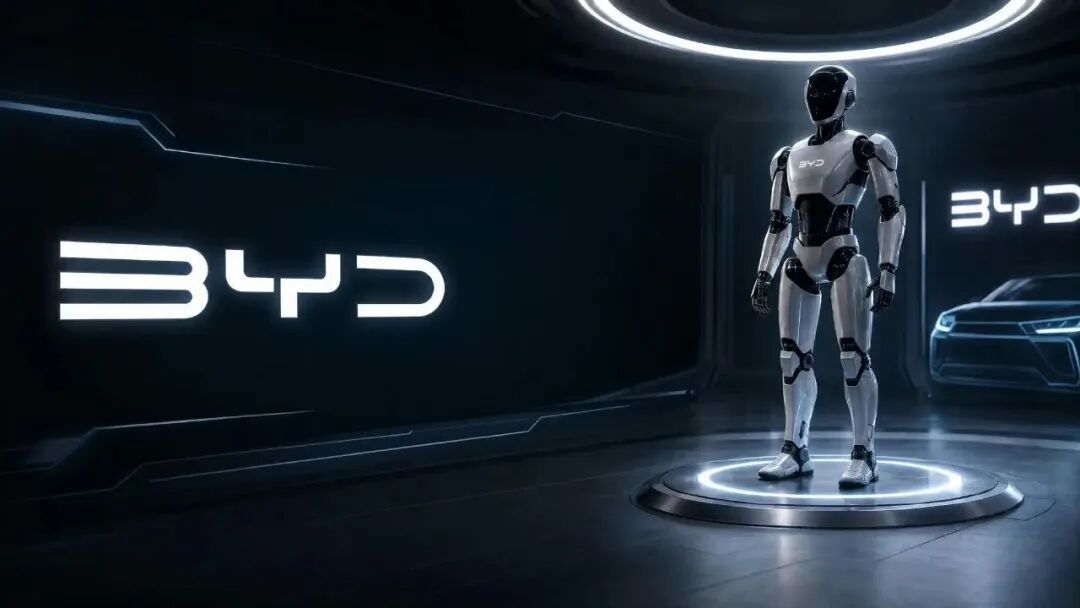
In mass production, early August marked BYD's debut of its first commercial service humanoid robot, 'Xiaodi,' at Zhengzhou Di Space. According to BYD Group Executive Vice President Li Ke, plans call for deploying 2–3 'Xiaodi' units at each dealership for reception and model explanations.
On September 9, XPeng launched its robotics production line, completing automated assembly of its advanced general-purpose humanoid robot (IRON), which autonomously rolled off the line. XPeng plans to scale IRON production by year-end, initially deploying it in stores and campuses with a monthly capacity target of over 1,000 units, followed by retail and service sector deliveries in 2027.
In IPOs, on August 19 at the 2026 World Robot Conference, Chery Executive Vice President and General Manager of International Business and Mojia Robotics Zhang Guibing confirmed to media that Mojia has initiated IPO preparations and is in discussions with multiple potential listing venues.
With progress on all three fronts, financing for robotics companies in the automotive sector exceeded $1.3 billion in just one month.
Beyond capital enthusiasm, new application scenarios are emerging.
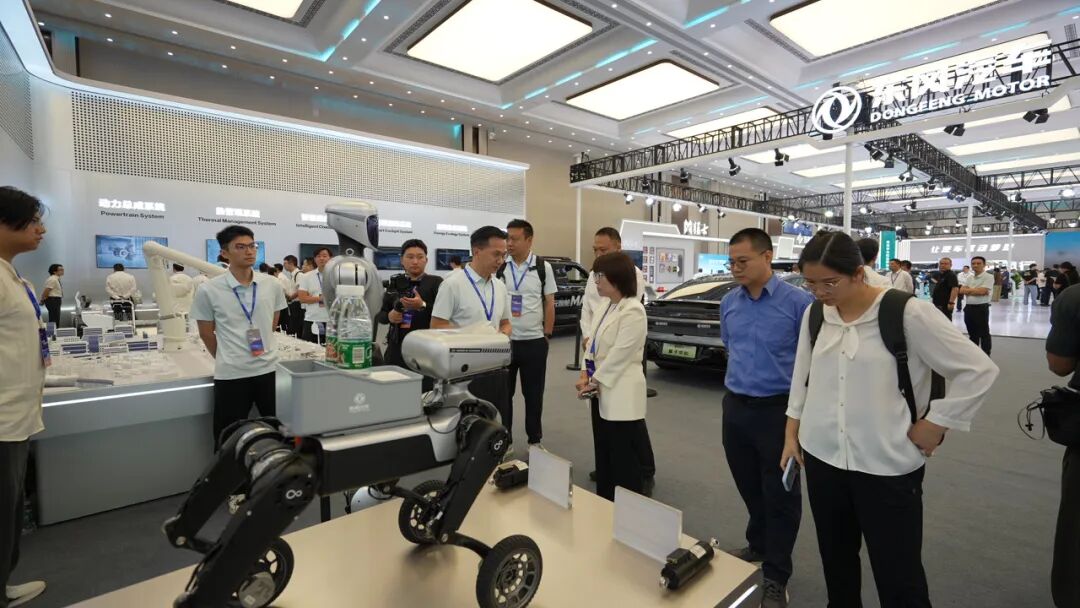
On September 14, at Dongfeng's 10th Science and Technology Innovation Week, Zhang Zhenlin, Chief General Engineer of Intelligent Technology at Dongfeng Motor R&D Institute, told media that Dongfeng's robotics efforts are not for dancing performances but target vertical automotive manufacturing domains.
According to plans, Dongfeng's humanoid robot 'Xiaodong' will enter trial production at Dongfeng's final assembly plant by year-end, handling sorting, transportation, loading/unloading, and quality inspection. Next year, hundreds of units are planned for deployment, scaling to thousands by 2028, with a goal of surpassing human operational efficiency by then.
At the TEDA Forum, Tan Huan noted that 'the future car is a robot.' Changan's strategy involves using robots to build cars, sell cars, place robots in cars, and ultimately achieve 'robots building robots to create everything in the world.' He believes hardware technologies are gradually commoditizing, and automakers must master software and 'brains.'
'I visited Changan's factory yesterday afternoon and spent four hours observing dozens of processes, with quality checks happening constantly,' Tan said. In his view, the automotive industry's century-plus of quality control and supply chain management experience is precisely what the robotics industry currently lacks. Changan aims to reconstruct robotics engineering with automotive engineering rigor.
Zhang Zhenlin shares a similar view, citing three core advantages for automakers in humanoid robotics: rich real-world scenarios, complete supply chains, and powerful intelligent algorithms.
'Many robotics companies set up staged environments, like having robots fold clothes. The data quality and density from such scenarios can't compare to real factories,' Zhang said. Dongfeng's core approach is 'one brain, multiple forms,' directly repurposing technologies accumulated in automotive intelligence for robotics.
The 'China Embodied AI Industry Development Report (2026)' mentioned earlier states that the industry considers 2026–2027 a turning point from the 'storytelling era' to the 'delivery era' for embodied AI.
▍02 Validation Thresholds
As the industry proposes deploying humanoid robots in automotive factories, a more practical question arises: When can these robots achieve large-scale implementation?
Automakers have set timelines: XPeng plans mass production by year-end, Dongfeng targets trial production by year-end and hundreds of units next year, while BYD's 'Yao-Shun-Yu' project plans 20,000 internal units by 2026. Globally, Tesla aims to produce approximately 50,000 Optimus units in 2026.
On September 17, media reported that Tesla's relevant team arrived in Ningbo on the 16th and began a new round of mass production audits for its robotics business the following day.
While a mass production turning point seems near, industry insiders remain cautious.
'Costs are still high, brain capabilities insufficient, and economic value doesn't yet justify large-scale production,' Zhang Zhenlin said. Most so-called mass production in the industry remains performative, with very few robots actually performing work.
At the TEDA Forum, Kang Li, General Manager of Tianjin Yutian Technology (a Unitree Robotics subsidiary), acknowledged that robot 'brains' remain a bottleneck for the industry—robots struggle to understand the real world and perform specific actions. Early deployments rely on data collection and large model training to have robots repeatedly practice actions until proficient.
Chen Chao, Co-founder and Chief Ecosystem Officer of Qingyan Precision Automotive Technology, stated that humanoid robots entering factories must meet three prerequisites: customers have the budget and willingness, robots can meet production rhythm and safety requirements, and 'relevant departments must approve.'
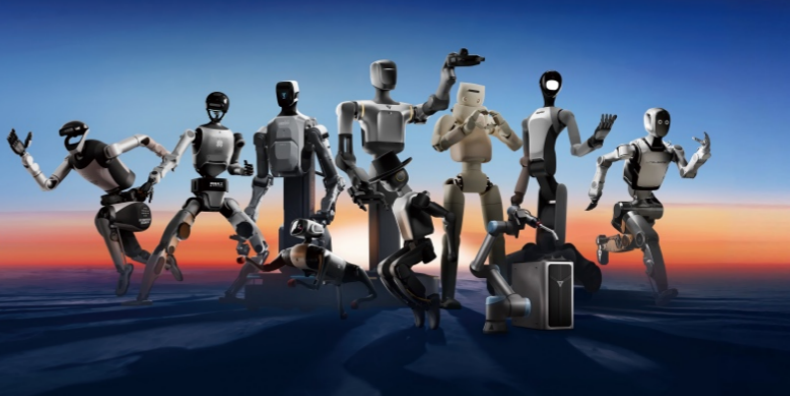
'Labor is a fundamental human right—we shouldn't deprive (deprive) humans of suitable or willing work at this stage,' Chen said. Currently, robots are best suited for tasks that are relatively simple and involve harsh working environments.
He cited a high-voltage DC internal resistance testing process on power battery production lines, where noise constantly reaches around 100 decibels, temperatures run high, and workers must wear insulating gloves, making heat dissipation difficult. During night shifts, workers often misplug connectors, potentially burning out battery connectors—a single mistake costing thousands of yuan.
'A more realistic issue is that young people increasingly refuse night shifts, even for higher pay. This is a classic example of a task suited for robots,' Chen said.
Having identified suitable tasks, how can robots become competent? Chen proposed establishing a 'pre-job training and assessment' system for robots, similar to how the automotive industry trains qualified industrial workers.
Chen introduced the automotive industry's HIL (Hardware-in-the-Loop) methodology to robotics, proposing RIL (Robo-in-the-Loop)—a hybrid virtual-real scenario to help robots complete skill training, algorithm validation, and 'graduation exams' before deployment to factories. In simpler terms: 'Guaranteed learning, mastery, and job placement.'
If this logic succeeds, the robotics industry can transition from 'ready if it can move' to a car-like complete validation process before delivery.
Tan Huan proposed a 'dual-wheel drive' theory: using knowledge and rules to guide data collection, then using collected data to reinforce knowledge and rules. In robotics, this means data accumulation is no longer blind but directional and high-quality.
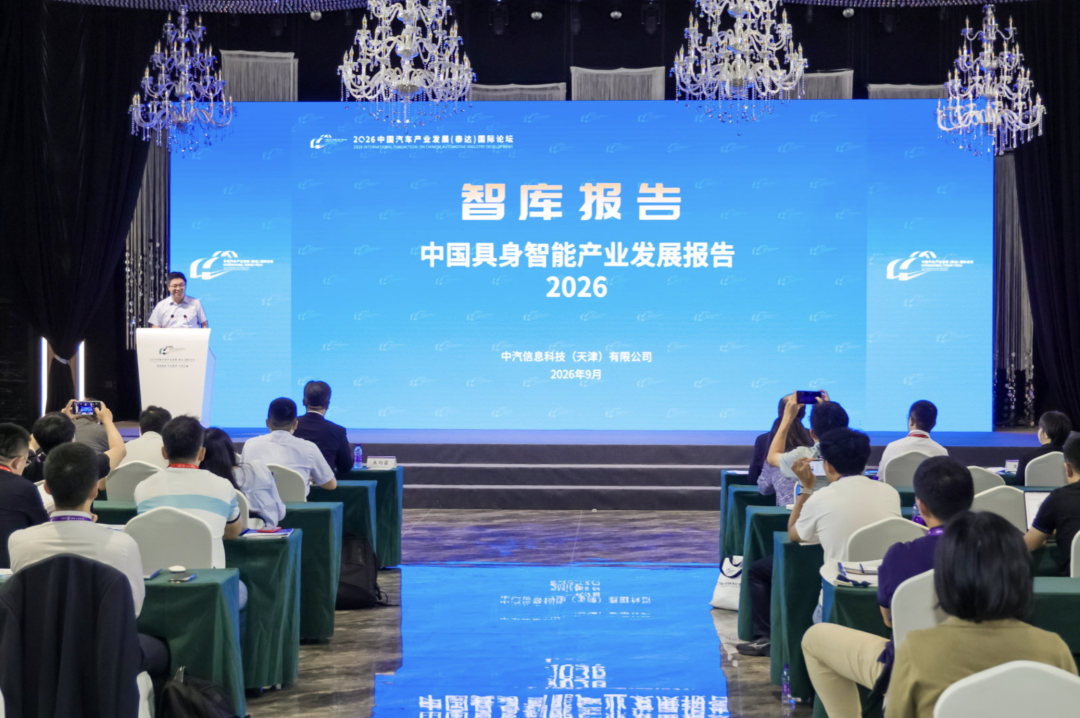
Cost reduction is another critical variable. Kang Kai stated that cost curves are key to large-scale embodied AI adoption, especially for consumer markets. He drew parallels to the automotive industry, noting that the earliest Tesla Model S sold for over 1 million yuan, while comparable new energy vehicles now cost under 200,000 yuan.
'No matter how advanced the technology, poor cost reduction will hinder industrialization,' he said.
Next year may bring more news of humanoid robots 'working' in automotive factories. They won't immediately replace humans but will first take over the toughest, most grueling, and least desirable tasks.
-
![]()
"Endured" for Six Years? Li Auto's Battery Self-Development Goes "Open"
-
Is Apple in Dire Straits Due to Supply Chain Woes? Baseband Chips, Flash Memory, and RAM in a Tangled Mix!
-
![]()
Auto Companies are Collectively Creating 'Humans', Next Stop: Car Factories
-
![]()
Zhu Huarong, 61, Embarks on the 'Final Battle' as Reappointed Chairman of Changan | MINGJINGpro
-
![]()
Are the Jobs of 16.74 Million Automotive Professionals Still Safe? Will They Remain So?
-
Zhipu Unveils Its Pioneering RSI Breakthrough, Constructing GLM with GLM Leveraging 100,000 Domestic Computing Cards
-
![]()
Huawei Bids 'Farewell' to AITO
-
![]()
Why are the satellites launched recently becoming increasingly 'smart'?