Chery Unveils New Car: Launching Late September, Designed by Ex-Ferrari Designer with L3 Autonomous Driving!
 09/21 2026
 329
329
The automotive world's most eagerly awaited new release in September is undoubtedly the Smart RX.
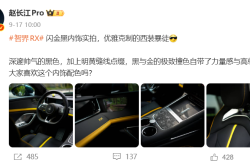
On September 19th, Zhao Changjiang, Executive Director and Vice President of Smart Auto under Chery, shared real photos of the Smart RX's Flash Gold Black interior.
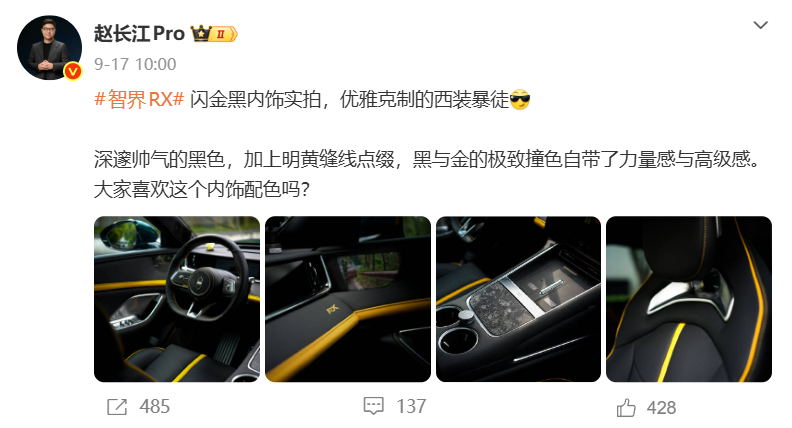
This mid-to-large pure electric coupe SUV, developed in collaboration between Huawei and Chery, is officially set to launch at the end of September. Designed by a former Ferrari designer and equipped with an L3-level autonomous driving road test license, its pre-sale price starts at 299,800 yuan. It directly targets the high-end pure electric market around the 300,000 yuan mark, going head-to-head with the Tesla Model Y, Xiaomi YU7, and NIO EC7.
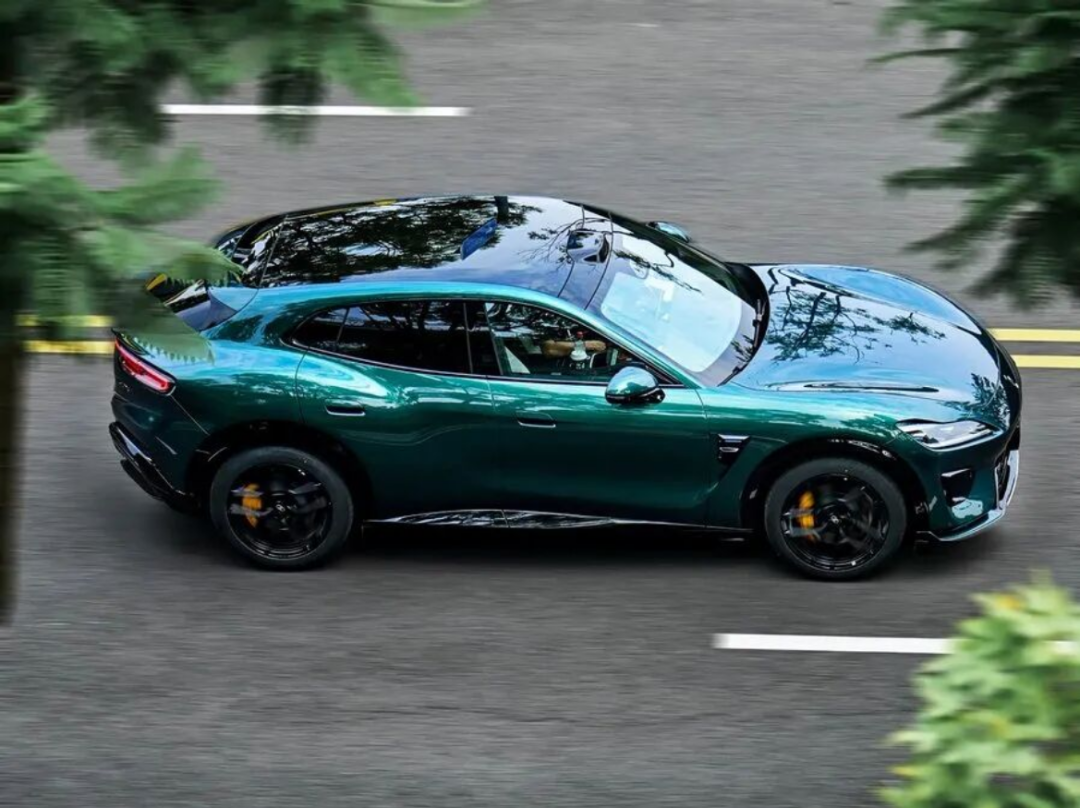
Brand-new Flash Gold Black interior, exuding a sporty cockpit vibe
The previously revealed light-colored cockpit mainly showcased a bright and cozy home-like design. In contrast, this new Flash Gold Black version takes a completely different approach, focusing solely on enhancing the driving experience.
Many might mistakenly assume that "Flash Gold" refers to traditional champagne gold trim, but it's not. The cockpit features a large expanse of black as the base color, with the so-called gold being bright yellow stitching and decorative strips outlining the multifunctional steering wheel, integrated seats, center console waistline, and the inside of the doors. The black serves as a visual anchor, while the yellow lines add dynamism, complemented by metallic accents for a seamless transition, creating an overall style reminiscent of high-performance sports gear.
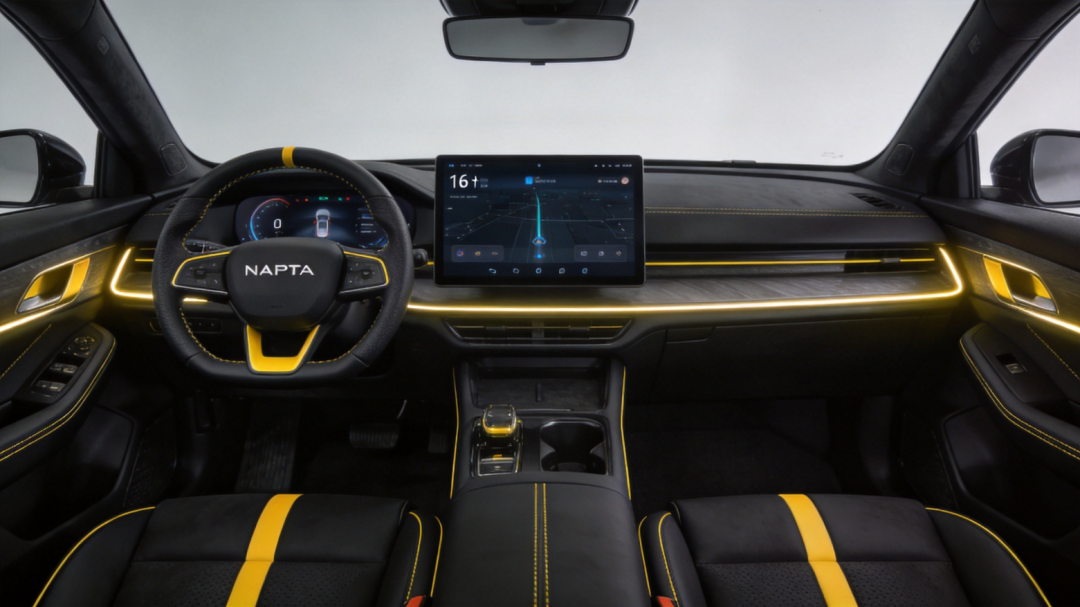
Dark interiors also offer a practical advantage: they conceal dirt well. Light-colored interiors easily show even slight shoe prints or clothing friction marks, whereas black cockpits don't readily reveal minor stains during daily use, maintaining their visual appeal over time. Of course, drawbacks must also be objectively considered—large areas of black material can heat up more after summer exposure, and the color difference performance of different material splices will ultimately depend on the actual production vehicle.
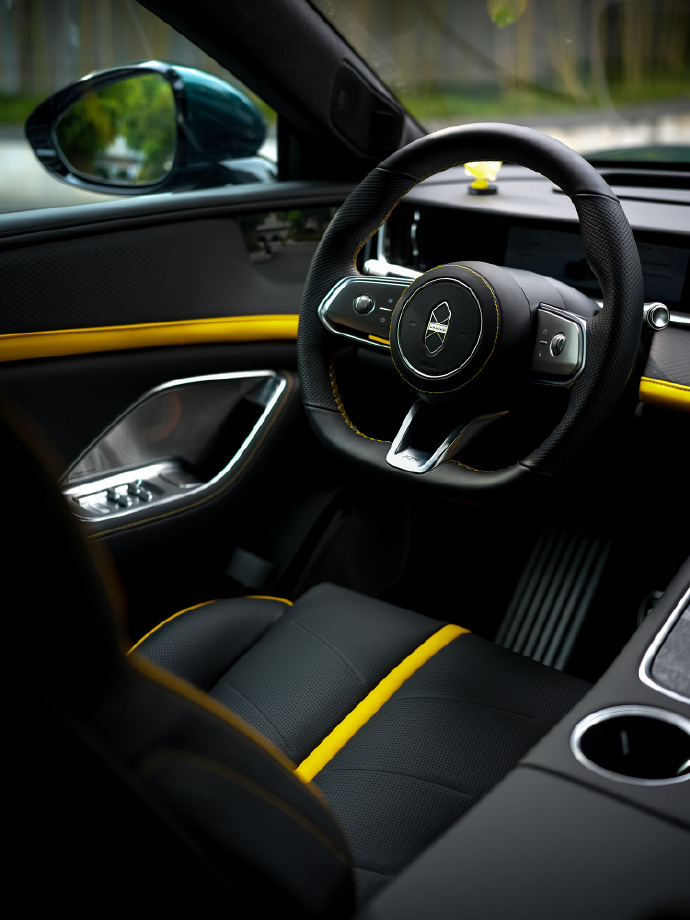
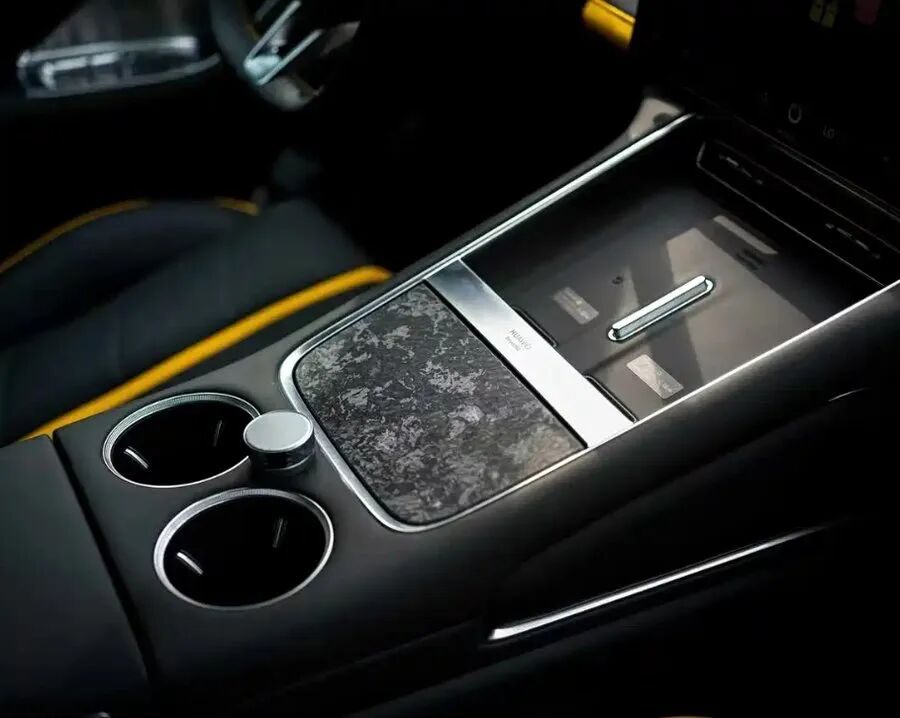
The cockpit layout has undergone practical optimizations. The new car is equipped with a flat-bottomed D-shaped leather steering wheel, and the gear shifter has been replaced with an electronic stalk shifter. By removing the central mechanical gear lever, space is freed up to accommodate two side-by-side wireless charging panels, allowing both the driver and front passenger to charge their phones wirelessly simultaneously. An 8.88-inch entertainment screen is provided separately in front of the front passenger, enabling them to binge-watch shows or browse videos without occupying the central console screen during long trips. The entire cockpit includes a full-LCD instrument cluster, a 16.1-inch central console screen, a 26-inch HUD head-up display, paired with a 3.4-meter-long ambient light strip, achieving a five-screen linkage.
The seats don't blindly adopt hardcore fixed bucket seats. The Smart RX is equipped with intelligent wrap-around seats that rely on pressure sensors to identify occupants' body types and dynamically adjust side wing support. The side wings tighten during turns to provide lateral support, and relax during straight-line driving to reduce clamping force, attempting to balance sporty support and long-distance comfort. Of course, the side wing response speed and whether there will be a sense of oppression during prolonged rides still need to be verified through actual test drives.
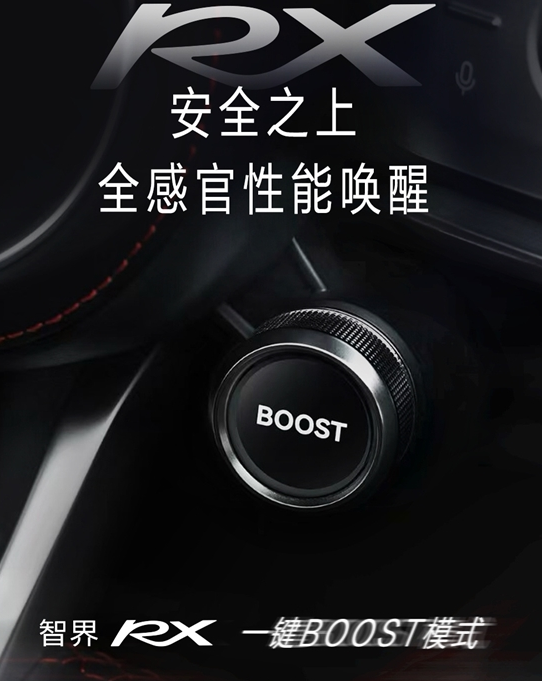
In response to netizens' hot discussions about the BOOST full-power release button, Zhao Changjiang gave a clear answer: the BOOST button is only equipped on four-wheel-drive models. This feature is solely linked to the powertrain form and is not exclusive to the most expensive top-tier version.
Additionally, the vehicle retains traditional exterior mirrors + electronic imaging dual systems, with optical mirrors preserving the observation habits familiar to experienced drivers, while electronic imaging supplements blind spots. However, nighttime imaging clarity, image delay, and the smoothness of switching between the two fields of view still need to be experienced in the actual vehicle.
Empowered by Tuling Platform, Featuring Dual-Chamber Air Suspension + 3.6-Second Zero to Hundred
The Smart RX is built on Huawei's Tuling platform, with a body size of 5020/2007/1585mm and a wheelbase of 3000mm. With a length exceeding 5 meters paired with a low-slung fastback design, the appearance was personally designed by former Ferrari designer Werner Gruber, featuring a wide and grounded coupe stance; the chassis was tuned by former Mercedes-AMG head Tobias Moers.
The chassis hardware specifications rank among the top tier in its class: front full-aluminum double-wishbone and rear five-link independent suspensions, with high-end models equipped with a dual-chamber air suspension + dual-valve continuously variable damping shock absorbers. The powertrain offers two options: a single-motor rear-wheel-drive and a dual-motor four-wheel-drive. The single-motor delivers a maximum power of 277kW; the dual-motor combines for a total power of 437kW, with the four-wheel-drive version achieving a zero-to-hundred acceleration of 3.6 seconds and a hundred-kilometer braking distance of 32.4 meters.
The new car is equipped with an 800V high-voltage platform, offering a maximum CLTC range of up to 852km, with multiple versions covering ranges from 672km to 852km, catering to both commuting and long-distance travel.
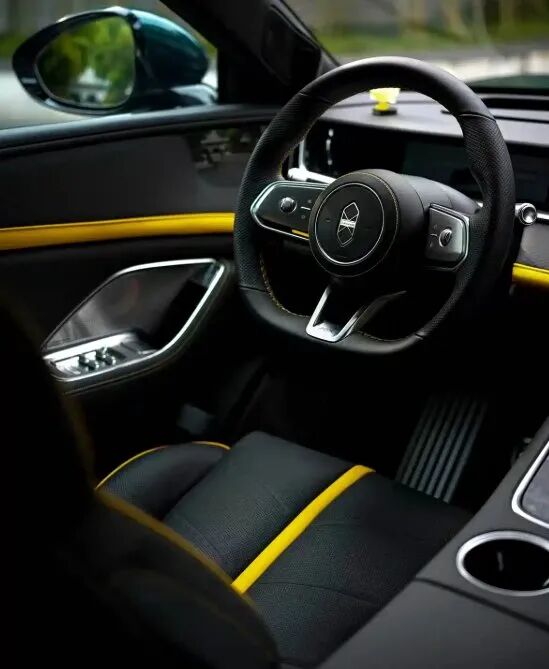
D-shaped steering wheel and yellow trim strips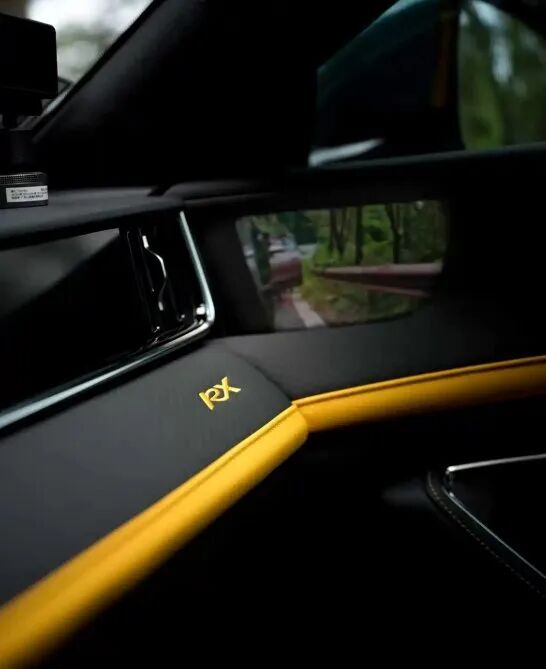
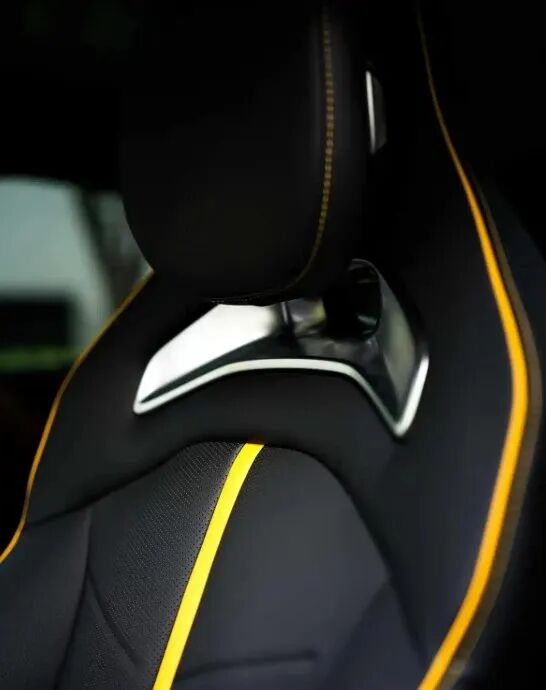
However, the fastback design has its pros and cons. A visually appealing coupe roof inevitably compresses the interior vertical space. Concerns about rear headroom, ease of entry and exit, and trunk opening cannot be fully addressed by just looking at the wheelbase on paper—the actual space performance must be experienced in the actual vehicle.
L3 Intelligent Driving + Quad-Laser Radar, Eight Redundancies, Over 90% of Pre-sale L3 Version Orders
If appearance and chassis are value-added features, L3-level autonomous driving is the Smart RX's core selling point.
Currently, the Smart RX has obtained an L3-level autonomous driving road test license, a fact personally confirmed by Yu Chengdong. Here's a key point to clarify: possessing an L3 test license and being equipped with L3 architecture hardware does not mean being able to directly activate L3 functions upon vehicle delivery. The timing of function availability, applicable roads, and driving responsibility boundaries must all comply with regulatory policies and official subsequent notifications—this should not be overhyped.
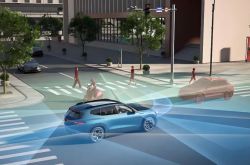
The hardware stack is very robust. The L3 architecture version is equipped with 38 fused perception hardware units, including one 896-line dual-light-path image-grade main laser radar, plus three high-precision solid-state laser radars, paired with 4D millimeter-wave radar. Most critically, the vehicle features redundancy across eight systems: perception, positioning, communication, power supply, computing, steering, braking, and interaction.
Simply put, this means multiple layers of safety insurance: if one braking system fails, a backup braking system immediately takes over; if the main computing chip malfunctions, a backup chip instantly takes control, assisting the vehicle in safely pulling over. This full-link redundancy design is also the safety foundation for L3 intelligent driving implementation and is not on the same level as mainstream L2 assisted driving systems on the market.
In terms of pricing, the new car's pre-sale price range is 299,800 to 399,800 yuan, with four models available, and small deposits are now being accepted. The shared optical path in-cabin laser radar version starts at 299,800 yuan, while the L3 intelligent driving architecture version starts at 359,800 yuan.
During the pre-sale phase, orders for the L3 architecture version accounted for over 90%, with an average order price close to 380,000 yuan. It's clear that users choosing Huawei-branded models value high-level intelligent driving capabilities over "sofa and TV" features. However, it's important to note that this high proportion only represents the preferences of early interested users—the total order volume has not been disclosed by the official and cannot be directly equated with final delivery sales.
First Answer Sheet After Harmony Intelligent Mobility's "Graduation System," Directly Competing with Model Y
Not long ago, Huawei announced that it would return the five major aspects of AITO to Seres' leadership, formally implementing a "graduation system" for Harmony Intelligent Mobility. After reallocating resources, the freed-up technology and supply chain resources were prioritized for Smart Auto, and the Smart RX is the first major model delivered under this new strategy.
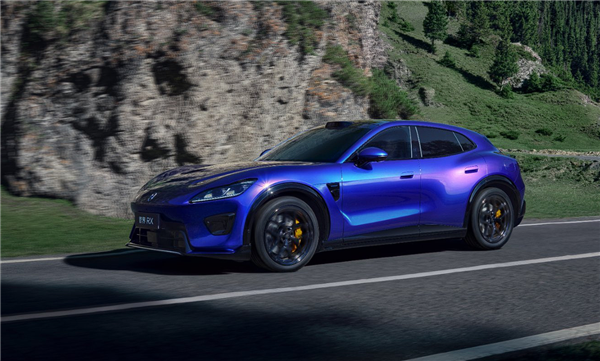
Within the Harmony Intelligent Mobility ecosystem, Smart Auto is the only brand that has achieved full category coverage, including sedans, coupe SUVs, family SUVs, and MPVs. Chery continues to invest billions of yuan, directing core R&D talent to Smart Auto. The division of labor is clear: Huawei is responsible for intelligent and three-electric core technologies such as Qiankun Intelligent Driving, Harmony Cockpit, 800V high-voltage platform, Gigawhale Battery, and Tuling Chassis; Chery handles vehicle R&D, manufacturing, chassis, supply chain, and quality control.
The 300,000 yuan pure electric coupe SUV segment sees fierce competition among the Model Y, Xiaomi YU7, and NIO EC7. Previously, this market has been a weak spot for Harmony Intelligent Mobility. The Smart RX's mission is to fill this gap and directly challenge Tesla's core market.
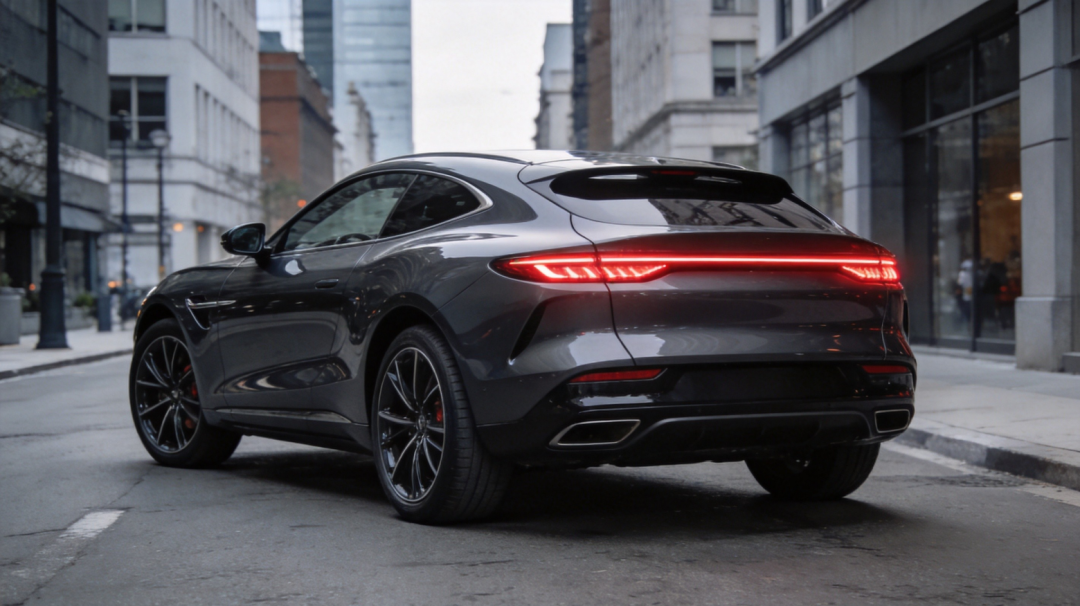
Many netizens feel that the starting price of 299,800 yuan is on the high side. However, when compared horizontally, few models in the same price range are equipped with quad-laser radar, L3 hardware architecture, and an 800V high-voltage platform simultaneously. While most automakers are still competing over L2 assisted driving hardware, Huawei has already obtained an L3 test license—Model Y has not yet touched L3 test qualifications in China, making the gap in high-level intelligent driving visibly apparent.
Of course, impressive hardware specifications don't necessarily equate to a flawless experience. When L3 functions will be released, the daily practicality of a coupe SUV, and the quality control stability of the production vehicle are all challenges this car must face. With its launch at the end of September, all mysteries will be unveiled.
Can this Smart RX, featuring a Ferrari designer's exterior, AMG chassis tuning, L3 intelligent driving, and an 800V platform, shake up the 300,000 yuan pure electric market and challenge the Model Y's position? Welcome to share your thoughts in the comments section.
Disclaimer: This article is solely a financial and technological commentary by Smart Finance and does not constitute any investment advice. All corporate data and regulatory events mentioned herein are sourced from publicly available information and are for reference only—please refer to official announcements for details. Images are sourced from the internet; if there are any copyright issues, please contact us for removal.
-
![]()
Chery Unveils New Car: Launching Late September, Designed by Ex-Ferrari Designer with L3 Autonomous Driving!
-
![]()
Shocking News: Xiaomi Clinches 'Top Spot in Weekly Orders,' Outpacing BYD? Pengcheng Order Figures Unveiled
-
![]()
China’s Space Sector Hits Stride in September: 7 Launches and 50+ Satellites Deployed in 20 Days
-
![]()
Why Does the Intelligent Driving Sector Strive for Larger Cloud Models While Shrinking On-Board Models?
-
![]()
Is It Really Over? Huawei Pledges Ongoing Support for AITO! New MPVs, Sedans, and More on the Horizon
-
Is There Genuine ‘Overcapacity’ in China’s New Energy Vehicle Sector? A Closer Look at Three Misunderstood Aspects
-
![]()
ZTE’s New Doubao Phone: Playing It Safe in the AI Race
-
ZTE’s New Doubao Phone: A More Cautious Approach