Facing Fierce Competition, Pricing Emerges as the Top Challenge for the Brand-New Hongqi H7
 09/21 2026
 368
368
Capitalizing on its model update, the brand-new Hongqi H7 PHEV has officially stepped into the plug-in hybrid vehicle market, with a price tag hovering around RMB 200,000. At first glance, the limited-time trade-in price, starting from RMB 168,800, may not seem steep. However, when both price and product are taken into account, the situation becomes more nuanced. After the price was announced, doubts surfaced among netizens, with comments such as, "This price lacks competitiveness," and "It's tough to succeed without a RMB 30,000 price drop." While these remarks are blunt, they underscore consumers' primary concern: Can the product prowess of the brand-new Hongqi H7 justify its price? 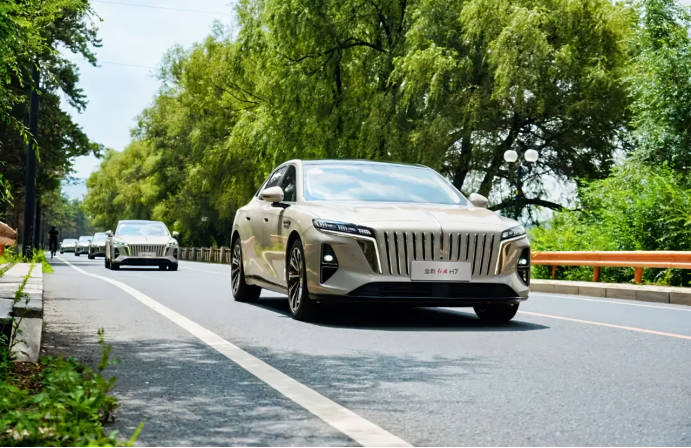
Before jumping to conclusions, let's delve into the product strengths of the brand-new Hongqi H7 to assess whether the price is warranted. This model refresh brings substantial changes to the powertrain. The new vehicle comes equipped with the Honghu plug-in hybrid system as standard, featuring a 1.5T dedicated hybrid engine paired with an electric motor, with the engine delivering a maximum power output of 110kW. The powertrain is available in both two-wheel-drive (2WD) and four-wheel-drive (4WD) configurations. The 2WD version boasts a combined system power of 278kW, while the 4WD version reaches an impressive 479kW, achieving a 0-100km/h acceleration time of just 3.9 seconds.
For a mid-to-large sedan exceeding 5 meters in length, these power figures are far from mediocre. Beyond power, range is another crucial aspect of plug-in hybrid vehicles. The mid-range 2WD version of the brand-new Hongqi H7 achieves a CLTC combined range of 1,954km and a WLTC fuel consumption of 4.4L/100km when the battery is depleted. This enables greater reliance on pure electric mode for daily commuting while alleviating concerns about frequent energy replenishment for long-distance travel.
More impressively, leveraging its Honghu super hybrid technology, the vehicle achieved an astonishing 2,916.171km range on a single tank of fuel and a full battery charge without any replenishment, setting a new Guinness World Record for mass-produced plug-in hybrid sedans. From a range perspective alone, the performance of the brand-new H7 is indeed striking. 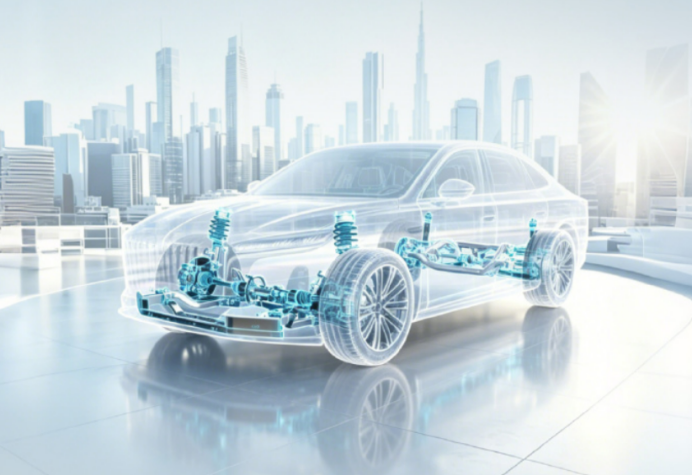
Meanwhile, the brand-new Hongqi H7 does not lag behind in the intelligence domain, which is vital for new energy vehicles. The new vehicle is outfitted with the Lingxi Cockpit 5.0 system, featuring a trillion-parameter AI large model that supports over 600 functions, including trip planning. Additionally, the brand-new Hongqi H7 is equipped with the Sinan Intelligent Driving System, offering full-scenario navigation assistance and intelligent parking capabilities. Clearly, the brand-new Hongqi H7 has addressed shortcomings in intelligent cockpit and driving assistance, aligning with the mainstream trends in current new energy vehicle intelligence.
Nevertheless, the brand-new Hongqi H7 is not without its flaws. When compared to its peers, it exhibits certain weaknesses. Regarding the chassis, the new vehicle adopts a MacPherson strut independent front suspension, whereas competitors like the Lynk & Co 10 and Fengon A9L utilize double-wishbone independent front suspensions. Simply put, the MacPherson structure is more prone to noticeable body roll during cornering and more pronounced front-to-back sway during abrupt braking, resulting in an overall driving experience that falls slightly short of the double-wishbone structure. 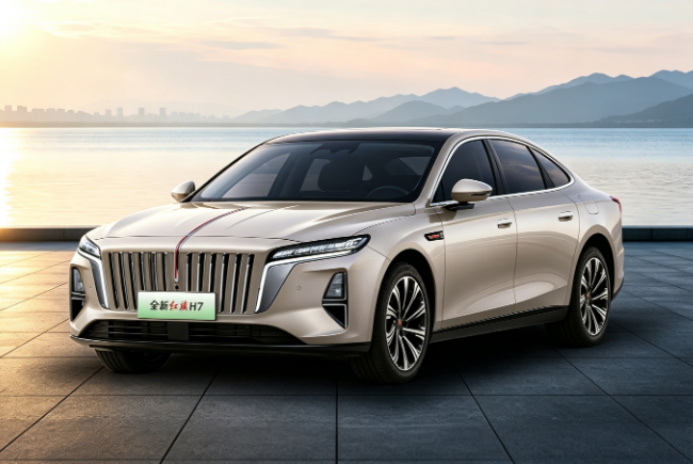
Furthermore, the brand-new Hongqi H7 has a wheelbase of 2,970mm, slightly shorter than potential rivals like the Lynk & Co 10 and Fengon A9L, resulting in relatively inferior rear passenger space. In terms of range, the base model is equipped with a 23.9kWh battery, offering a WLTC pure electric range of 151km and a CLTC pure electric range of 180km, which is adequate for daily commuting. However, in the plug-in hybrid sedan market priced around RMB 200,000, the pure electric range advantage of the brand-new Hongqi H7 is not prominent.
Compared to competitors offering over 200km of pure electric range, its competitiveness appears somewhat lacking. Given its product performance, whether the new vehicle's pricing holds up in the same market segment necessitates comparison. In the price range of around RMB 200,000, the Fengon A9L is priced even lower, with a limited-time red packet price starting at RMB 139,900 for the 2027 model, and the top-spec 4WD version priced at just RMB 197,900. The Lynk & Co 10 EM-P recently introduced the 240 4WD Max model, priced at RMB 169,800 for a limited time.
In comparison, the brand-new H7's limited-time trade-in price of RMB 168,800 comes with certain conditions, whereas the Lynk & Co 10 EM-P's RMB 169,800 price represents a direct discount. Thus, while the brand-new Hongqi H7 has lowered its price threshold, when compared within the same market segment, its pricing advantage is not prominent, and its overall product strength falls slightly short. 
In fact, for the brand-new Hongqi H7, the challenges extend beyond just specifications and pricing—they also involve the brand image that Hongqi has previously cultivated in the market. Although Hongqi positions itself as a premium luxury brand, its actual transaction prices for mainstream models are not high. Currently, many of Hongqi's mainstream models are priced below RMB 150,000. The entry-level version of the Hongqi H5 has a bare car price of approximately RMB 121,000, with some older clearance models even priced as low as RMB 99,800. The Hongqi HS5 is offered at a feedback price starting from RMB 134,800, and with trade-in subsidies, it can go as low as RMB 119,800.
These repeated price reductions have created a discrepancy between Hongqi's "luxury" positioning and the actual transaction prices consumers pay. For the brand-new Hongqi H7, relying solely on the "Hongqi" brand to justify a premium price tag in the RMB 200,000 range is not straightforward. In other words, consumers will ultimately evaluate the product itself to determine whether the RMB 200,000 price is warranted.
To be candid, while the brand-new Hongqi H7 offers certain strengths in terms of power, range, and intelligence, when placed within the same market segment, its product and pricing do not present a clear leading edge. Coupled with the fact that the Hongqi brand's current premium positioning is insufficient to support a price tag around RMB 200,000, the brand-new Hongqi H7 faces significant competitive pressure. Whether it can convert its launch hype into actual sales remains to be seen and will ultimately be determined by the market.
(Images sourced from the internet. Removal upon infringement notice.)
-
![]()
From Didi Shrimp to Doubao Car: Why Are Automakers Obsessed with Integrating AI into Vehicles?
-
![]()
Stellantis, Which Incurred a €223 Million Loss Last Year, Is Pinning Maserati's Future on China
-
![]()
Evergrande Auto, a Company Without Car Production, Posts 500,000 Yuan Gross Profit in Six Months
-
![]()
Facing Fierce Competition, Pricing Emerges as the Top Challenge for the Brand-New Hongqi H7
-
![]()
For Seres, Enduring Short-Term Pain Is Preferable to Long-Term Misery
-
Why Is Assessing Xiaomi's Business in India Increasingly Challenging?
-
Copper Prices Plunge: Unraveling the Logic Behind AI-Driven Metals
-
Reassessment of Three Key Values: Seres Presses Ahead, the Market Holds the Key