BYD Plans to Construct 20,000 Stations, Sunwoda Aims for 10,000 Stations: The Boom of Flash Charging in China
 09/21 2026
 519
519
Produced by Zhineng Technology
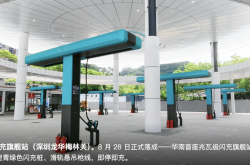
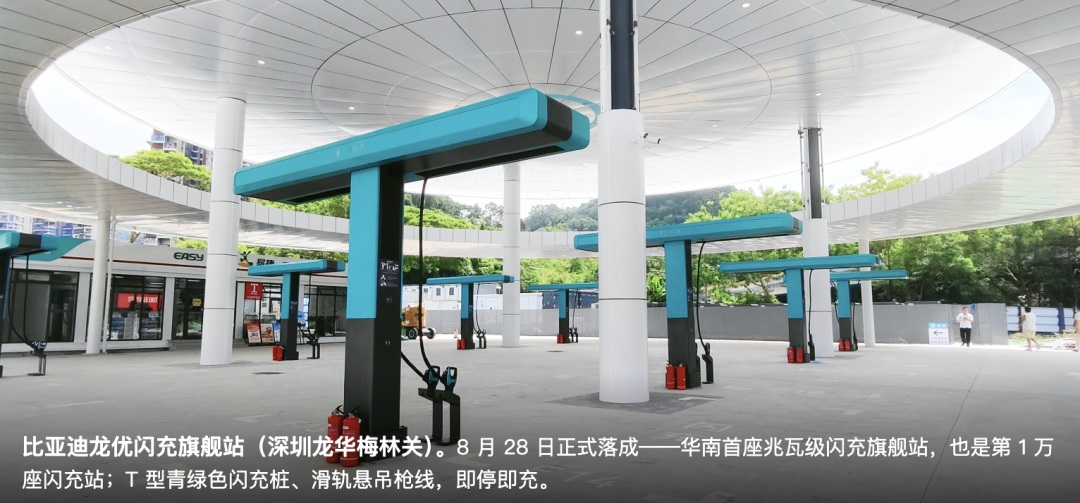
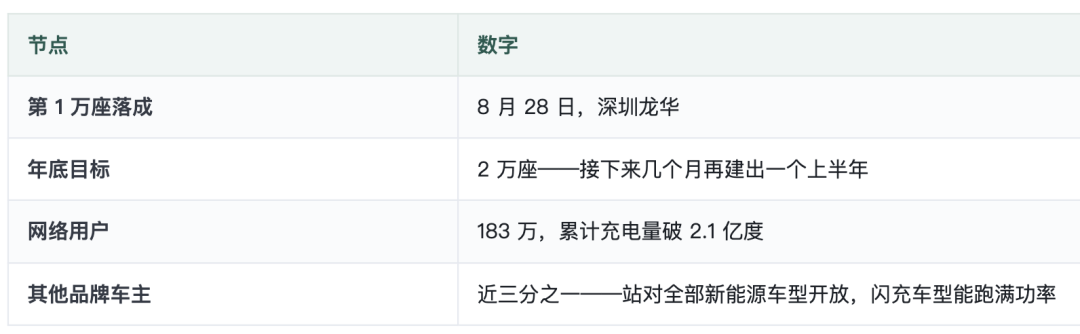
On August 28, 2026, BYD unveiled its 10,000th flash charging station in Longhua, Shenzhen. By the end of the year, it plans to double this number to 20,000 stations, essentially constructing another network comparable to what was built in the first half of the year within just a few months.
At that point, the network boasted 1.83 million users, with cumulative charging surpassing 210 million kWh. Nearly one-third of this power was consumed by owners of vehicles from other brands. Flash charging stations are being erected on a large scale, and an increasing number of vehicles are utilizing them.
At the Zaozhuang Conference, Sunwoda introduced its peak 15C battery and a photovoltaic-storage flash charging solution, also setting a target of 10,000 stations. China is rapidly scaling up its flash charging infrastructure.
01 China's Gap: It's Not Just About the Quantity of Charging Stations
China is not lacking in total charging facilities.
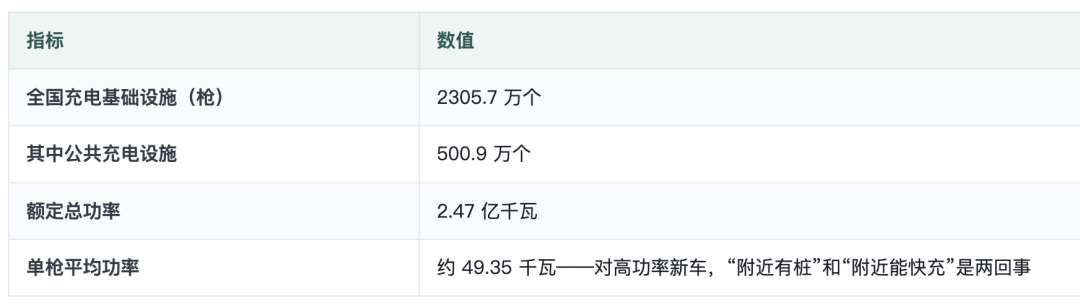
As of June 2026, the National Energy Administration reported that there were 23.057 million charging infrastructure units (guns) nationwide, including 5.009 million public charging units with a total rated power of 247 million kW and an average single-gun power of approximately 49.35 kW.
For a new vehicle that supports high-power charging, "having a charging station nearby" and "having fast charging nearby" are two distinct concepts.
Policies are being implemented to bridge this gap.
The "Three-Year Doubling Action Plan for Electric Vehicle Charging Infrastructure Service Capacity (2025-2027)" proposes adding 1.6 million DC charging guns in cities by the end of 2027, including 100,000 high-power guns, and constructing or upgrading 40,000 charging guns with a power output above 60 kW in highway service areas.
Not all guns need to be of megawatt-class capability. Different charging speeds are required for daily parking, urban temporary charging, and highway travel. It is more crucial to invest in areas with the highest traffic and longest wait times rather than blindly pursuing the highest power output.
BYD's Approach to Station Construction:
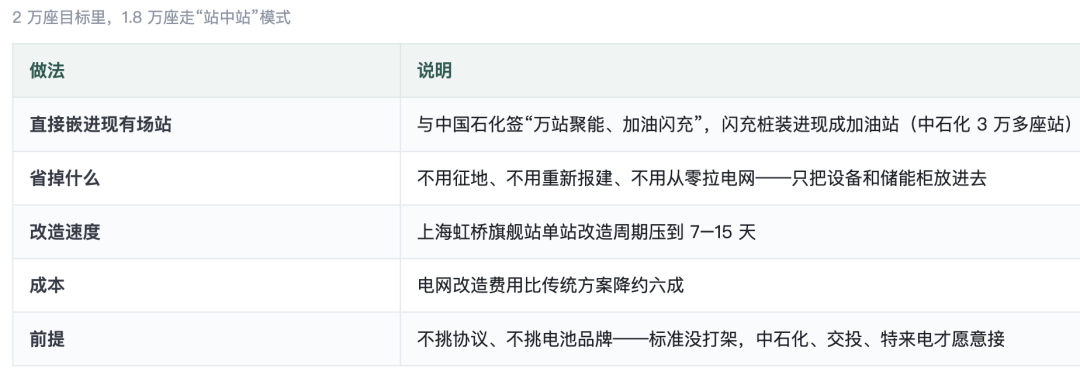
◎ Out of the 20,000-station target, 18,000 will adopt the "station-within-a-station" model, integrating into existing facilities;
◎ A "10,000-Station Energy Aggregation, Fueling, and Flash Charging" agreement with Sinopec will install flash charging units in existing gas stations.
Sinopec's network of over 30,000 stations nationwide comes with readily available land and power access, allowing BYD to bypass the need for land acquisition, new construction approvals, and grid extensions. Only equipment and energy storage units need to be installed.
The renovation cycle for the Shanghai Hongqiao flagship station has been compressed to 7-15 days, with grid transformation costs reduced by about 60% compared to traditional methods. Securing sites, traffic, and existing operational networks accelerates station construction.
This model's rapid expansion is protocol- and brand-agnostic.
The "station-within-a-station" model integrates into existing facilities, with flash charging units open to all new energy vehicle models, although models capable of flash charging can utilize their full power.
Because it does not conflict with existing vehicles or stations, players like Sinopec, transportation investment groups, and Teld are willing to participate. The rapid station construction is supported by standardized compatibility.
02 Faster Station Construction Makes Power Supply Even More Critical

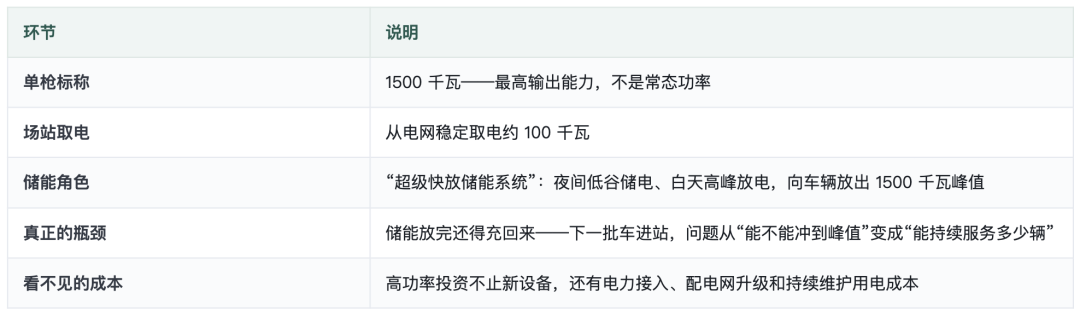
◎ A gun marked 1,500 kW represents its peak output capacity;
◎ Whether a station can support simultaneous fast charging by multiple guns depends on its access capacity, transformers, cabling, and the local grid.
BYD's solution involves energy storage buffering: Each station is equipped with a "super-fast discharge energy storage system" that stores electricity during off-peak nights and discharges it during peak days. The station draws a stable 100 kW from the grid while delivering a peak of 1,500 kW to vehicles.
Sunwoda showcased this approach in Zaozhuang, offering standardized 176, 352, and 528 kWh energy storage units that enable megawatt-scale upgrades without the need to demolish existing stations or replace transformers.
Both companies follow the same path: Using energy storage as a power buffer to bypass the need for capacity expansion in megawatt charging.

Energy storage must recharge after discharge.
As the next batch of vehicles arrives, the challenge shifts from "reaching peak power" to "serving how many vehicles continuously." This is why national plans link distribution grid upgrades with station construction.
Investing in high-power charging involves not just new equipment but also hidden power access costs and ongoing maintenance and electricity expenses.
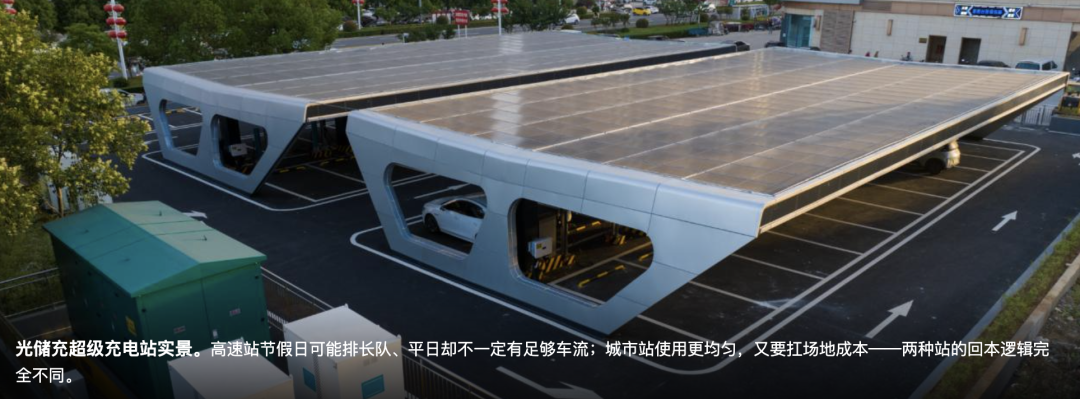
Finally, there's the matter of cost recovery.
Highway stations may experience long queues during holidays but insufficient traffic on weekdays; urban stations have steadier usage but face higher site costs.
A station's revenue depends on actual charging volume and service fees, while builders face real cash outlays.
Higher peak power does not necessarily translate to better business; stable utilization across more vehicles and times is key to balancing the books.

Summary
China's fast charging network is expanding at a remarkable pace, showcasing the country's formidable capabilities in infrastructure development.
-
![]()
Why Has OPPO Slowed Down When the Entire Industry is Rushing into AI?
-
![]()
BYD Plans to Construct 20,000 Stations, Sunwoda Aims for 10,000 Stations: The Boom of Flash Charging in China
-
![]()
Chinese Computing Power Expands Its Global Reach in ASEAN
-
![]()
Analysis of Competitive Strategies for Home Appliance Enterprises in the Stock Market: The 'Four Alls and One Diversification' Approach
-
![]()
Gross Margin Dips Below 10%, Li Auto Temporarily Sets Aside Its 'Competitive Edge'
-
YC's Latest Insight: Harness Matters More Than the Model
-
A 1000 Yuan Price Gap: Three Key Differences Between iPhone18 Pro and Max
-
![]()
From Didi Shrimp to Doubao Auto: Why Automakers Are Keen on Integrating AI into Their Vehicles