Profitability Breakthrough for Electric Vehicles: Ten Structural Design Measures to Achieve 10%–25% Reduction in Material Costs
 10/08 2026
 472
472
The global electric vehicle market is collectively encountering a profitability challenge: as car purchase incentive policies (purchase incentive policies) gradually phase out, raw material prices for batteries, such as lithium and nickel, fluctuate repeatedly, and price competition in domestic and overseas end markets intensifies. Most automakers' EV businesses are trapped in a situation where 'sales continue to rise while profit per vehicle continues to narrow.'
McKinsey's latest industry research suggests that the key to cost control for EVs does not lie in back-end manufacturing and supplier negotiations but is already determined during the front-end product definition, vehicle architecture, and core technology selection phases. The report calculates that automakers can reduce vehicle material costs by 10%–25% by implementing ten structural design optimization measures without sacrificing vehicle performance and driving experience. This represents a practical path for the entire industry to improve EV profitability and overcome the dilemma of increasing revenue without increasing profits.
▍Electric Vehicles Enter the 'Cost Design Decisive Period'
The global EV market is currently experiencing significant differentiation: demand has not shrunk, and sales in mainstream markets continue to rise, but the industry's profitability logic has changed. The extensive growth supported by policy subsidies and market dividends has reached its limit. EVs have entered a phase of market-driven competition, where product economic viability and cost-effectiveness are paramount.
Automakers' profitability challenges stem from pressure on both ends. On one end is the battery, which accounts for about 35% of the total vehicle cost. High raw material prices continuously compress profit margins. On the other end is scale. Most automakers' EV production capacities have not yet achieved the same scale effects as those of internal combustion engine (ICE) and hybrid vehicles. Combined with redundant vehicle architectures, fragmented development processes, and outdated model specifications, profit per vehicle is further eroded.
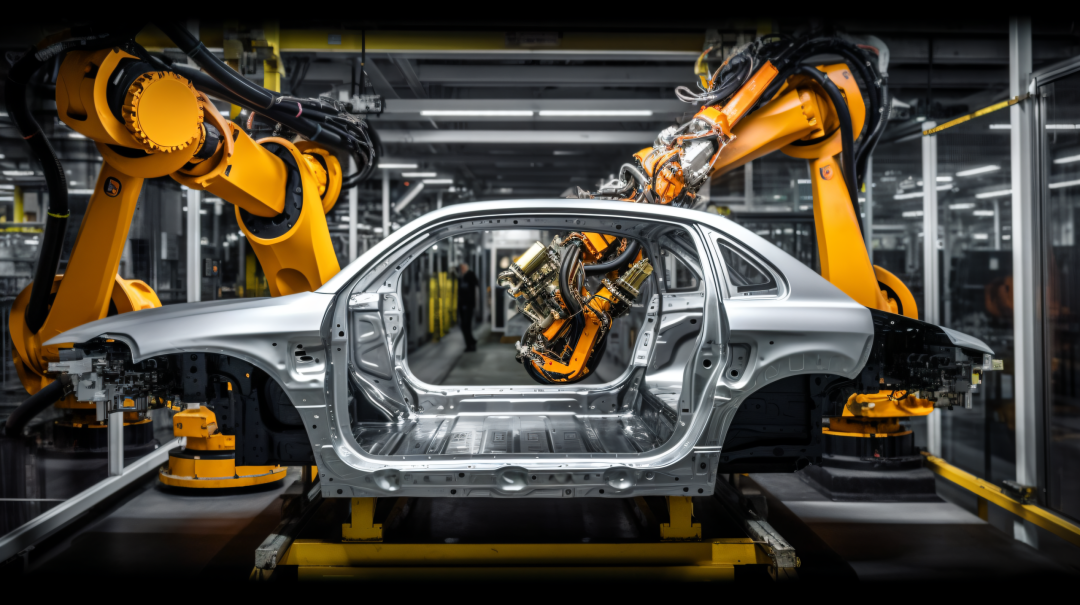
The report calculates that the cost of goods sold (COGS) for EVs varies by as much as 20%–50% across different brands and models. Breaking it down, one-third stems from product design and material selection, one-third from production process efficiency, and the remainder is determined by external factors such as policies and utilities. In other words, to break through profitability bottlenecks, automakers must primarily focus on structural optimization of front-end product design, as back-end passive cost reduction has limited impact.
▍Ten Structural Cost Reduction Measures
Passive cost reduction typically relies on layoffs, supply chain compression, and terminal configuration reductions. Structural design cost reduction takes a different approach, viewing costs from the perspective of the vehicle's entire lifecycle. By optimizing architecture, streamlining redundancies, iterating technologies, and integrating systems, ineffective costs are systematically eliminated without compromising range, safety, or driving experience.
1. Optimize Vehicle Energy Consumption to Precisely Reduce Battery Capacity
The battery is the largest cost component of EVs and the primary focus for cost reduction. Automakers can reduce vehicle aerodynamic drag, lightweight the vehicle, decrease tire rolling resistance, iterate electronic and electrical architectures, improve electric drive efficiency, and enhance thermal management capabilities. By doing so, range remains unchanged while the required battery capacity is reduced accordingly.
2. Define Products Based on Demand and Eliminate Redundant Configurations Users Do Not Notice
Automakers should stop 'piling on configurations and competing on parameters' and instead return to users' actual driving needs, matching component functions accordingly to reduce waste from ineffective designs. Take seating configurations, for example: eliminating redundant adjustment features and non-essential ventilation configurations that users barely notice, and replacing high-end leather with high-fit synthetic leather, can reduce costs per vehicle without affecting user satisfaction.

3. Rationally Iterate Technology Routes to Balance Performance and Cost
The choice of battery chemistry, power electronics materials, and motor topology directly determines a model's cost, performance, and supply chain stability. For mainstream family models, replacing high-nickel battery systems—such as nickel-manganese-cobalt (NMC) and nickel-cobalt-aluminum (NCA)—with lithium iron phosphate (LFP) can reduce battery pack costs by $10–20 per kilowatt-hour. Based on this figure, a 75 kWh model can save $750–1,500 in material costs.
At the power electronics level, silicon-based insulated gate bipolar transistors (IGBTs) remain the most cost-effective solution for 400V low-voltage architectures. Silicon carbide (SiC) devices are better suited for 800V high-voltage platforms and have higher upfront costs but meet the fast-charging needs of premium models. Automakers must choose based on model positioning. Motor design must also balance operational efficiency and supply chain risks, avoiding unnecessary cost increases for the sake of 'high-end' features.
4. Deeply Integrate Vehicle Systems to Simplify Redundant Architectural Components
The core feature of profitable EV architectures is system integration. Automakers integrate inverters, motors, and transmissions into multi-in-one electric drive units and connect the thermal management loops of the battery, cabin, electric drive, and power electronics to achieve full-domain thermal system integration. This allows for the elimination of independent auxiliary heaters, downsizing of radiators and compressors, and a further reduction in battery usage by 1–1.5 kWh, maintaining range while reducing costs on multiple fronts.
5. Transition to Software-Hardware Decoupling, Using Software Differentiation to Replace Hardware Redundancy
The traditional approach relies on different hardware configurations to differentiate model versions, resulting in an ever-growing variety of parts and high production costs. Instead, using uniform hardware across all vehicles and differentiating models through software-unlocked features can significantly reduce hardware variants. This model can save $150–400 per vehicle while also lowering production line and supply chain adaptation costs.

6. Merge Cross-Functional Features to Streamline Vehicle Subsystems
Electrified architectures create new opportunities for integrating vehicle functions: combining propulsion and voltage reduction functions, enabling multi-functional compressors to serve multiple purposes, recovering waste heat from motors, and integrating cooling channels into the battery housing floor all help streamline independent subsystems. Battery packs can also be incorporated into the vehicle's load-bearing structure, reducing the body-in-white weight by 3% and significantly cutting stamping die investment and welding processes, thereby lowering manufacturing and material costs.
7. Build Multi-Energy Universal Platforms to Unlock Economies of Scale
Developing internal combustion engine, plug-in hybrid, and pure electric vehicles independently is a capital-intensive model. Instead, automakers should build modular platforms compatible with multiple powertrain forms, maximizing parts sharing. The optimal industry implementation model is to have pure electric and extended-range models share a dedicated platform, while internal combustion engine and plug-in hybrid models share a standardized platform. This amplifies scale effects in parts procurement and manufacturing, improves model iteration speed and technology adaptation flexibility, and significantly reduces platform R&D amortization costs.
8. Reconstruct Requirement Standards to Break Free from Outdated ICE Specifications
Many EVs directly inherit outdated design specifications from internal combustion engine models, leading to significant standard redundancies. Automakers must reassess core parameters such as EVs' actual operating cycles and thermal envelopes, eliminating unreasonably high specification requirements. For example, optimizing motor design standards to reduce heavy rare earth usage without compromising reliability can save $10–20 per motor. Systematic demand optimization can achieve upfront cost reductions of $120–240 per vehicle.
9. Promote Component Standardization to Adapt to Suppliers' Optimal Modules
The old approach of customizing parts for single models should be abandoned. Instead, automakers should design vehicles based on suppliers' mature, optimized modules, naturally reducing non-standard, exclusive components. Leading domestic new energy automakers have applied standardized rear-drive units, universal door control drives, and power modules across hundreds of models, replacing complex custom parts with a 'less but better' component layout, thereby compressing supply chain and quality control costs.

10. Iterate Electronic and Electrical Architectures and Software to Streamline Vehicle Wiring Costs
The electronic and electrical architecture accounts for 5%–10% of total vehicle material costs, representing an often-overlooked cost reduction opportunity. Switching to a new zonal EE architecture reduces wiring and copper usage by 30%, streamlines vehicle assembly processes, and enables deep software-hardware decoupling. By prioritizing software platformization and architectural design, automakers can reduce the development and adaptation costs of vehicle electronic systems from the source.
Generative AI is also transforming automakers' R&D cost reduction methods. During the product definition phase, AI can assist with user requirements research (demand research), organize technical requirements, and quickly identify reusable design modules to avoid redundant development. In the design verification phase, deep learning simulation models and automated design tools can rapidly evaluate multiple design options, balancing cost, performance, and energy consumption to find the optimal solution.
Looking ahead, cost competition in the EV market can no longer be resolved through simple supply chain negotiations or terminal configuration reductions. The battleground has shifted to front-end areas such as product definition, architecture design, and technology selection. Whether automakers can balance user experience, product performance, and production costs while building their product development systems around these ten measures will directly determine the sustained profitability of their EV businesses.
Layout | Zheng Li
Source | McKinsey
Image Source | Qianku.com

Seminar on Technological Innovation and Public Opinion Risk Response for Intelligent Connected Vehicles Held in Beijing
2026 China Automotive Net Promoter Score (NPS) Results Released: Tesla, GAC Toyota, Tank, and NIO Rank First in Their Respective Segments
'China Speed' from an Overseas Perspective: The Coordination Revolution of Manufacturers and Suppliers

-
Moonshot AI Launches Pre-IPO Funding Round, Eyes HKEX Listing in Q1 2027
-
Leapmotor's World Model Hasn't Yet Broken Free from Dahua's Shadow
-
![]()
Data Centers Can No Longer Keep Up with AI’s Ambitions
-
Vanishing 340 Billion! MiniMax’s Market Value Plummets by 80%, Signaling End of Capital Splurge in Large Model Sector
-
What Exactly is Holding Back the 'Last Mile' of Enterprise AI Implementation?
-
![]()
When World Models Become the 'Intermediary'
-
![]()
Is Apple Exerting Ecological Dominance? Forcing Developers to Comply with iPhone Duo Standards
-
![]()
Which Competitor's Market Share Does the Yijing X9 Target with Its Full-Huawei-Tech Stack at the 300,000 Yuan Price Point?