Trading "Battery Sovereignty" for "Price Sovereignty": Why Does BAIC Believe Battery Swapping Can Succeed?
 11/25 2026
 531
Recently, BAIC Motor issued an announcement that its wholly-owned subsidiary, BAIC Powertrain, plans to publicly list on the Beijing Equity Exchange a portfolio of assets related to 112 battery swap stations, including inventory, fixed assets, construction in progress, and intangible assets.
Just four days before the announcement, Arcfox, a BAIC brand, launched the "Extreme+ Era" universal battery swapping ecosystem, announcing a partnership with CATL to build 30,000 battery swap stations.
On one hand, the company is putting battery swap stations it has operated for ten years on the block; on the other, it is entrusting its next ten years of battery swapping to CATL. Why does BAIC—one of the earliest Chinese automakers to invest in battery swapping—now believe that its own decade-long effort "did not succeed," yet that doing it together with CATL can "succeed"?

The Foundation of a Battery Swapping Pioneer
BAIC's credentials in battery swapping go back further than most of its peers.
In 2011, BAIC began research on battery swapping technology. In 2014, BAIC BJEV teamed up with Sinopec to explore the model. By the end of 2015, the first batch of 200 EU220 battery-swap taxis was put into operation in Beijing. In October 2016, the first batch of 10 charging and battery swap stations jointly built by BAIC BJEV, Sinopec, Aulton New Energy, and Shanghai Dianba was delivered in Beijing. In 2017, BAIC released the "Pillar of Heaven Plan," proposing to invest 10 billion yuan by 2022, build 3,000 solar-storage battery swap stations, and deploy 500,000 battery-swap vehicles.
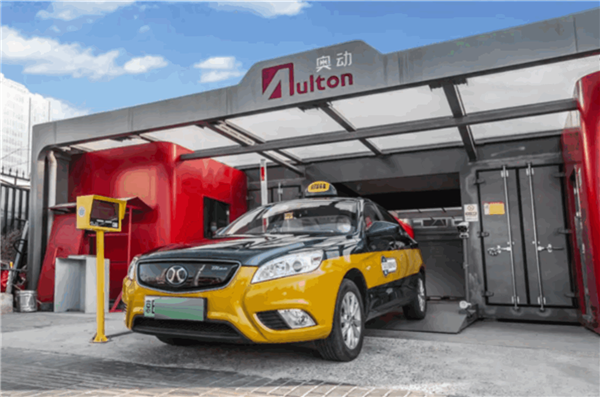
That was one of the most ambitious battery swapping blueprints China had ever seen. In 2019, BAIC operated 13,000 battery-swap taxis and built 148 battery swap stations across 15 cities. In the first quarter of 2021, it expanded to 19 cities and 255 stations. By mid-2022, BAIC BluePark had promoted and built 294 battery swap stations nationwide. BAIC also led the drafting of China's first national battery swapping standard, GB/T 40032-2021, and held more than 300 patents and 6 national and international standards, at one point becoming the "largest battery swapping vehicle service provider in the country."
And then—nothing more.
By the time of the listing in November 2026, BAIC Powertrain had 112 battery swap stations under its name. The completion rate of the 3,000-station target was less than 4%.
BAIC led the national standard but lacked the ability to make its own standard become the industry standard. The real significance of BAIC's transfer of 112 battery swap stations, therefore, is the signal it sends: BAIC no longer plans to hold this battery swapping network itself.
At the launch event just four days earlier, Zhang Jianyong, Chairman of BAIC Group, put it bluntly: "Battery swapping is a heavy-asset, high-maintenance-cost business for vehicle manufacturers; but when led by a leading battery company, it is a natural match of endowments, expanded scale advantages, and multiplied efficiency."
BAIC is not "giving up on battery swapping," but "doing battery swapping in a different way."
The Advantages of Battery Swapping Are Gradually Being Unleashed
In the real cost calculation of battery swapping, there are two accounts that have often been underestimated in the past: the safety account and the user ownership account. And these two accounts are precisely where NIO and CATL—despite their different models—find their strongest common ground.
Recently, both NIO and CATL have been turning up the volume in the battery swapping field. NIO and CATL are the top two in China's battery swapping sector. Although their paths differ, on user value the two actually point in the same direction: battery swapping turns the battery from a "black box that ages with the vehicle" into a "centrally managed asset."
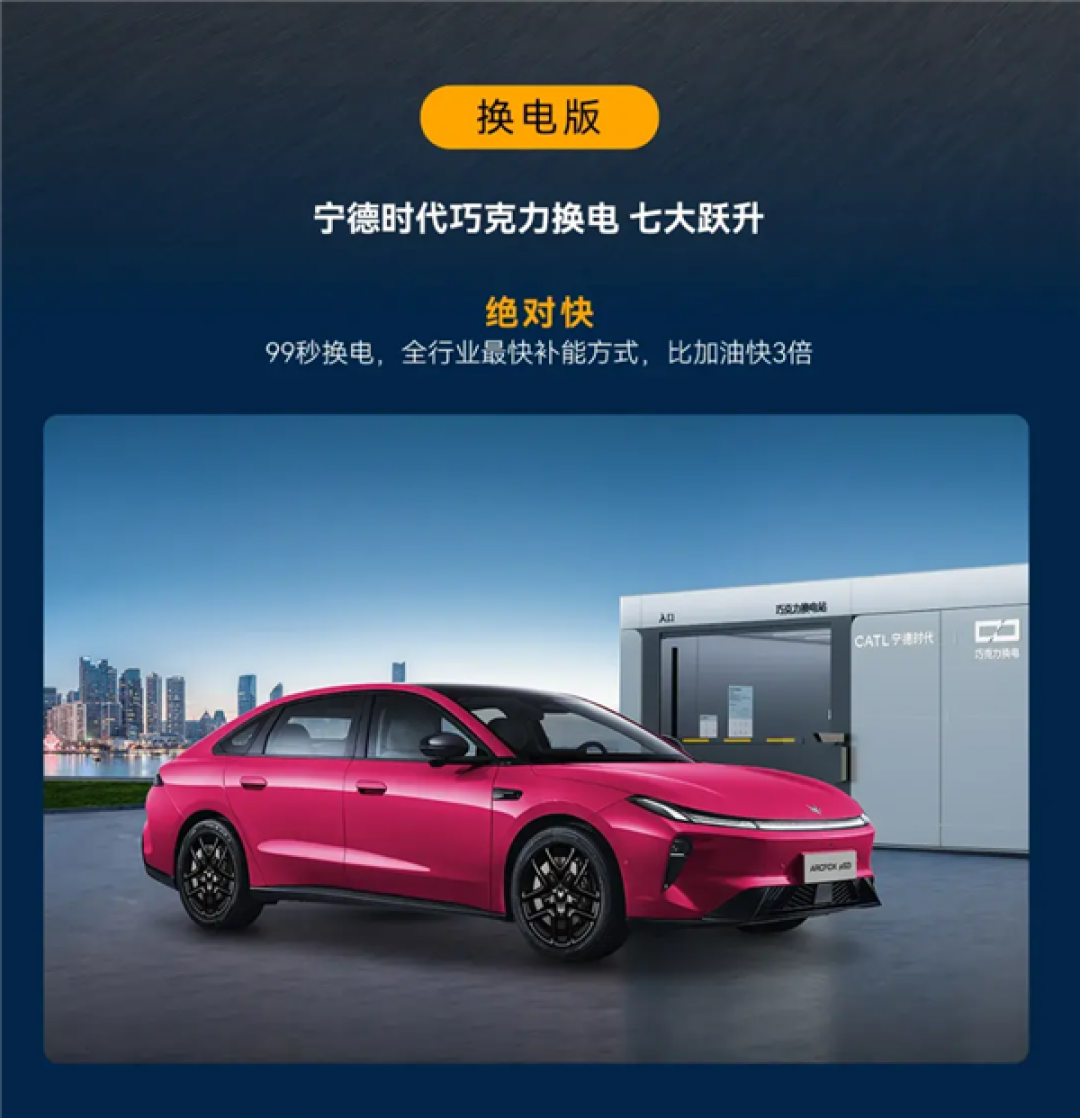
Compared with the charging model, the biggest advantage of battery swapping is that batteries are centrally charged in battery swap stations, managed under constant temperature and humidity, and monitored in real time for health status. Each swap is equivalent to a battery health check: thermal runaway risks can be flagged in advance, and degraded batteries can be screened out in time. For users, battery swapping brings not only "recharging in a few minutes," but also "battery safety backed by a professional system."
The same is true for the cost account. Vehicle-battery separation strips the battery from the vehicle price, directly lowering the purchase threshold by tens of thousands of yuan. Battery leasing takes over the risks of degradation, repair, and scrapping from users, so users no longer bear battery depreciation. Battery swapping is used on demand and paid by mileage, allowing flexible matching for daily commuting and occasional long trips.
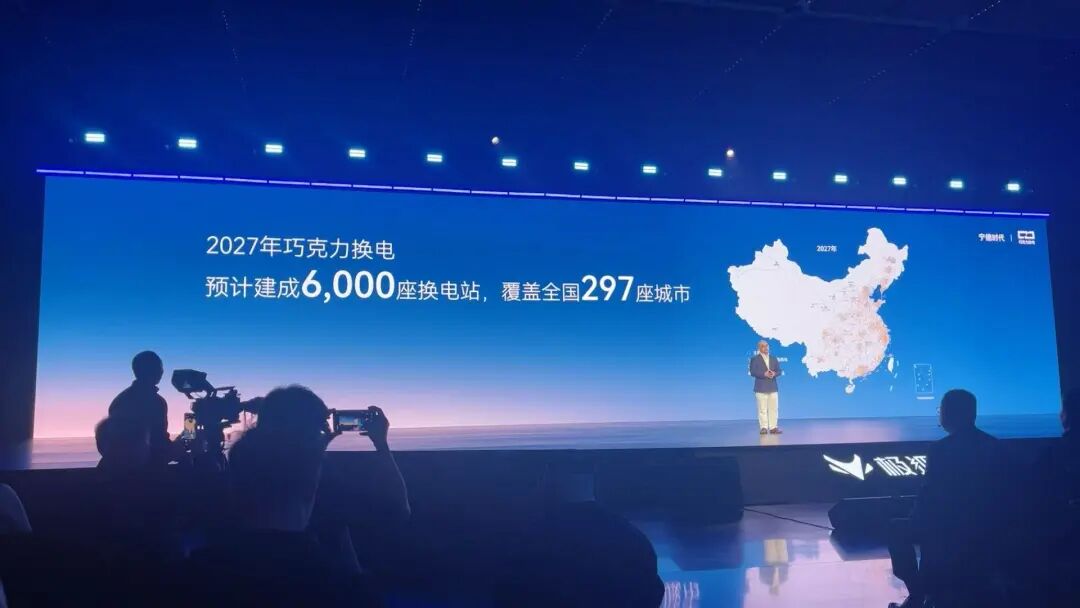
NIO has proven in the high-end market that users are willing to pay for "swappable and upgradeable," while CATL is pushing this capability to larger-scale mainstream price segments within a standardized network. Together, they show that battery swapping is not about making users spend more, but about turning the battery—the most expensive and uncertain component—from a one-time vehicle purchase cost into a manageable, shareable service cost.
When the battery swapping network is greatly expanded and the convenience of battery swapping is significantly improved, once the safety and cost accounts are clearly calculated, the likelihood of battery swapping being accepted by consumers will continue to rise.
Trading "Battery Sovereignty" for "Price Sovereignty"
Now more and more automakers are also expanding their vehicle models into the battery swapping field. But the reason BAIC is walking "ahead" lies not only in its early deep cultivation of battery swapping, but also in the tangible benefits BAIC has gained after cooperating with CATL in battery swapping.
According to disclosures from Arcfox, a BAIC brand, after its launch, the Arcfox Beta S3 topped the 100,000-yuan-class pure electric sedan sales ranking for four consecutive months, with 7 out of every 10 users choosing the battery swap version; users swap batteries an average of 3.6 times per month, and 99.9% of orders are swapped immediately upon arrival at the station; one owner traveled 8,837 kilometers across 8 provinces in 7 days and swapped batteries 21 times. These figures show that "vehicle-battery separation" is not a false demand in the 100,000-yuan-class market, but a real one.
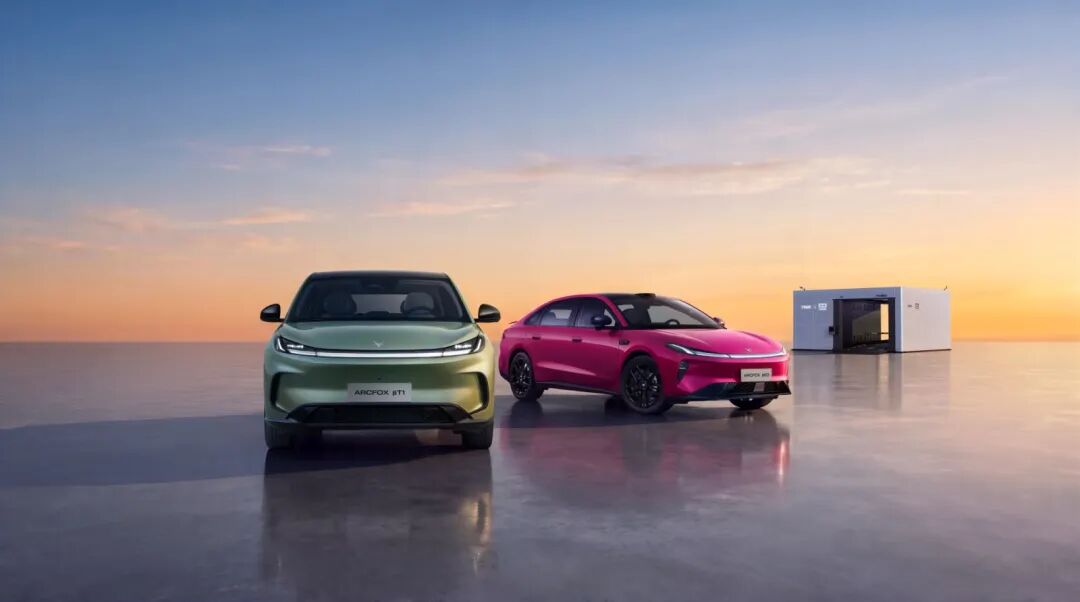
The newly launched Arcfox Beta T1 battery swap version starts at 52,000 yuan, and the Beta S3 535 ULTRA laser battery swap version is within 80,000 yuan, with a family monthly package rental of 399 yuan including 5,000 kilometers. This price is only possible after stripping the battery from the vehicle price.
Then look at the channel account. In addition to CATL's own battery swapping network construction, what is more noteworthy is that BAIC has integrated its own marketing network into the battery swapping network.
BAIC's station-building logic is "where there is a store, there is a station": precise layout around dealership stores, building battery swap stations wherever stores open. For CATL, this is the most scarce "last mile": land, electricity, customer flow, and after-sales are all in the stores. So for BAIC, it has sold the "stations," but retained the "stores"; it has sold the "assets," but retained the "users."
There are reports that the buyer of BAIC's battery swap stations is very likely CATL itself, but this news has not yet been confirmed by either side. However, it is clear that in the battery swapping field, the 1+1>2 scale effect between BAIC and CATL has already emerged.
Of course, there is a price. Battery standards, BMS data, returns on battery assets, and even part of user operation rights have been ceded to CATL. But BAIC's calculation is: batteries are standardized components anyway, so giving them up is no pity; vehicle definition, intelligent driving, channels, brand, and users are its "soul."
If it continued to build the network itself, it would have to use vehicle profits to fill a network that can never catch up with NIO or CATL—and that would be the real "loss of sovereignty."
Zhang Jianyong said: "A lone traveler goes fast, but many travelers go far." BAIC chooses to be one of the "many travelers," not a "lone traveler."
-
![]()
Data Analysis, Information Research, and Content Creation Emerge as the Most Commonly Assigned Tasks for Office Agent Users — Part I of the "China Office Agent Market User Research Report 2026"
-
![]()
Dell: The New Cloud "Brake" Didn't Hit Orders — But Did It Hit Valuations?
-
![]()
Former Apple and Meta Employee, Columbia PhD Founder Secures $18 Million Seed Round
-
![]()
WorkBuddy, Qwen Office, and Doubao Work Lead Office Agent Usage, Report Finds — Part II of the China Office Agent Market User Research Report 2026
-
Jensen Huang Is Back, but AI Hardware Will Struggle to Rally Again
-
Chinese Industrial Tycoons Are Collectively Betting on DeepSeek
-
Lei Jun: Xiaomi Sold 12.6 Million Fewer Phones in Q3, Yet Revenue Held Steady
-
2027 Smartphone Manufacturers' Shipment Targets Revealed: vivo Down 29% Year-over-Year, Xiaomi Shrinks 25%