Commercialization Paths for Eye Tracking, ToF, AI Glasses, and Metalens Become Clearer
 09/18 2026
 439
439
Metalens is Driving Innovation in XR Optics
By VR Gyroscope Wickey
At the recently concluded CIOE 2026, in addition to more mature display and optical routes in the XR industry such as Micro-OLED, Micro-LED, and optical waveguides, Metalens also significantly increased its presence.
During the exhibition, NIL Technology showcased metaEye, an AR/VR eye-tracking solution based on Metalens technology, with plans to advance to mass production in the fourth quarter of this year. Concurrently, the "Metasurface & Micro-Nano Optical Manufacturing Technology Forum," hosted by the China International Optoelectronic Expo, Fudan University, Tsinghua University, and others, focused on discussions about metasurface lens design, manufacturing, and mass production issues for near-infrared metasurfaces.
This shift is not limited to the exhibition. In May of this year, the POSTECH team combined RGB achromatic Metalens with an OLED panel to complete a full-color VR near-eye display verification. In June, MetaOptics began sending AI glasses evaluation units equipped with colored Metalens camera systems to customers in Europe, Japan, and the Philippines. Meanwhile, at CIOE in September, Afalon showcased the "Flying Fish" metasurface lens using SiC-Metalens and a Micro-LED+Metalens optical engine solution.
Compared to previous near-infrared applications mainly focused on ToF and 3D perception, the application boundaries of Metalens in XR-related scenarios have further expanded this year, appearing more frequently in colored imaging, micro-display engines, and AI/AR glasses validation.
01 Why is a "Flat" Lens So Highly Anticipated in the XR Industry?
For XR devices, optics must navigate a set of practical contradictions: the devices need to become lighter and thinner without significantly compromising field of view, clarity, and light efficiency.
When displays, chips, batteries, and sensors are all compressed into a limited head-mounted space, the volume of the optical module directly affects the overall device weight and form factor. In recent years, VR/MR has gradually shifted from Fresnel lenses to Pancake optics, while AR continues to seek the optimal balance between FOV, light efficiency, rainbow patterns, and thinness along the optical waveguide route. However, as AR moves closer to the form factor of regular glasses, balancing volume, efficiency, field of view, and system complexity becomes increasingly difficult.
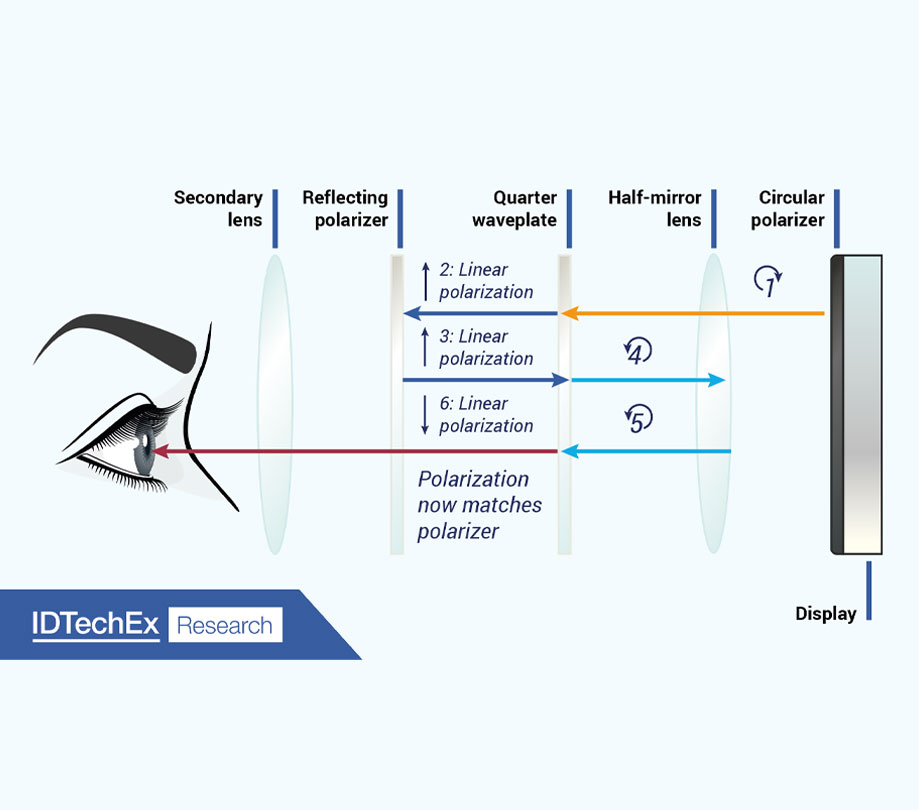
In VR/MR devices, traditional refractive optics primarily rely on lens curvature and material refractive index to control light, while Pancake optics further fold the optical path through polarization and multiple reflections. In AR glasses, the mainstream approach typically involves micro-display engines working together with optical waveguides for near-eye imaging. Metalens, however, can directly manipulate light through subwavelength micro-nano structures on a flat substrate, enabling a nearly flat "mirror" to perform functions like focusing, collimation, and aberration correction.
The value of Metalens lies in its potential to integrate some optical functions, consolidating tasks that previously required multiple lenses into fewer components. For space-sensitive XR devices, reducing the number of lenses and shortening assembly distances can directly impact overall device design.
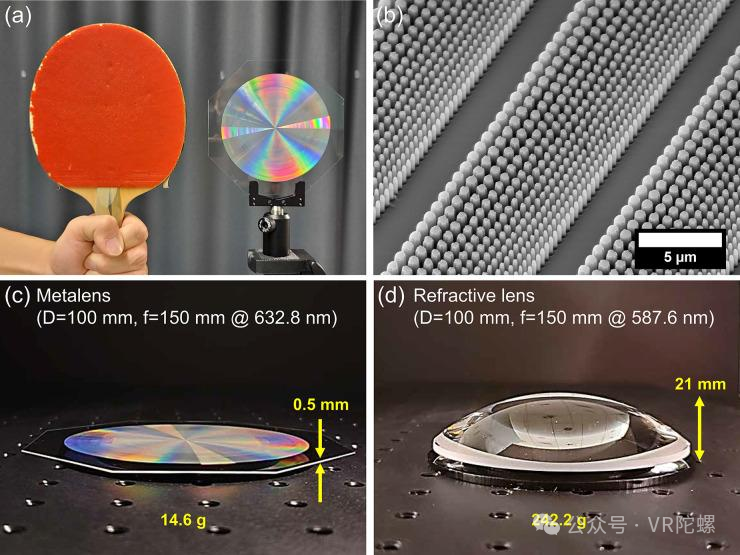
Source: ACS Nano (Comparison of a 100 mm all-glass Metalens with a traditional refractive lens. The former has a thickness of about 0.5 mm and weighs 14.6 g, while the traditional lens has a thickness of about 21 mm and weighs 242.2 g.)
However, despite its existence for many years, Metalens has not yet entered mainstream XR display solutions. The primary reason is its difficulty in simultaneously achieving wide spectrum, large aperture, high NA, and high efficiency. Yet, some research on XR near-eye displays this year has further propelled Metalens toward more complete optical systems.
In May, a team from Pohang University of Science and Technology (POSTECH) published a study in Nature Communications on full-color near-eye displays, achieving RGB achromatic Metalens through inverse design for manufacturing constraints and combining it with an OLED panel to build and validate a full-color VR near-eye display system.
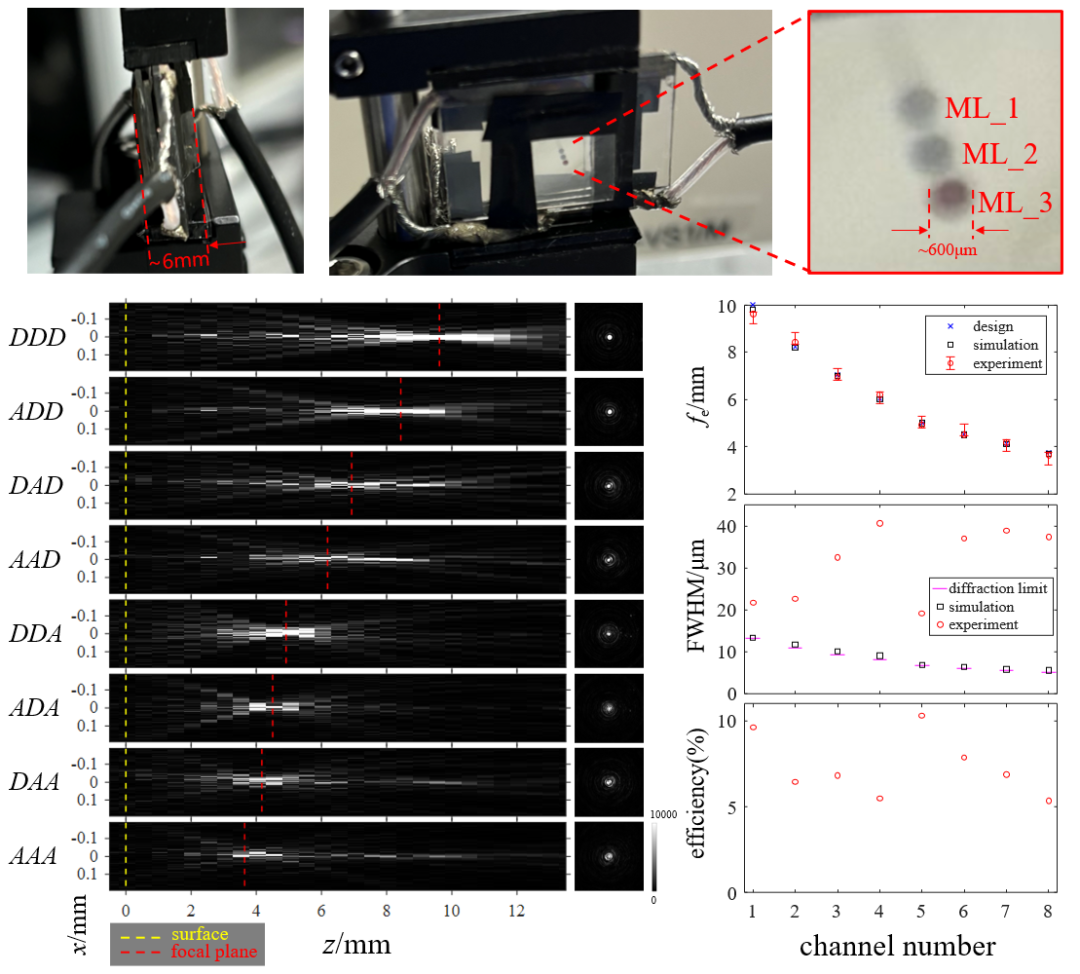
Source: Nature Communications (POSTECH combined RGB achromatic Metalens with OLED to complete full-color VR near-eye display validation.)
In early June, POSTECH announced another manufacturing-oriented study, replicating 3D achromatic Metalens with varying height structures through grayscale nano-templates and nanoimprint lithography, and similarly validated full-color imaging with OLED near-eye displays. These two studies, one after the other, advanced full-color Metalens from both optical design and replication processes, reflecting a shift in research focus from single-device performance to display systems and manufacturing capabilities.
A team from Tsinghua University also unveiled an electrically tunable zoom Metalens, combining metasurfaces with liquid crystal structures to achieve 8-step focal length switching within approximately 6 mm thickness, covering a focal length range of 3.6—9.6 mm, and listing AR/VR as potential application directions. For near-eye displays long plagued by vergence-accommodation conflict, such research indicates that Metalens is extending from fixed-focus components to adjustable-focus optical functions.
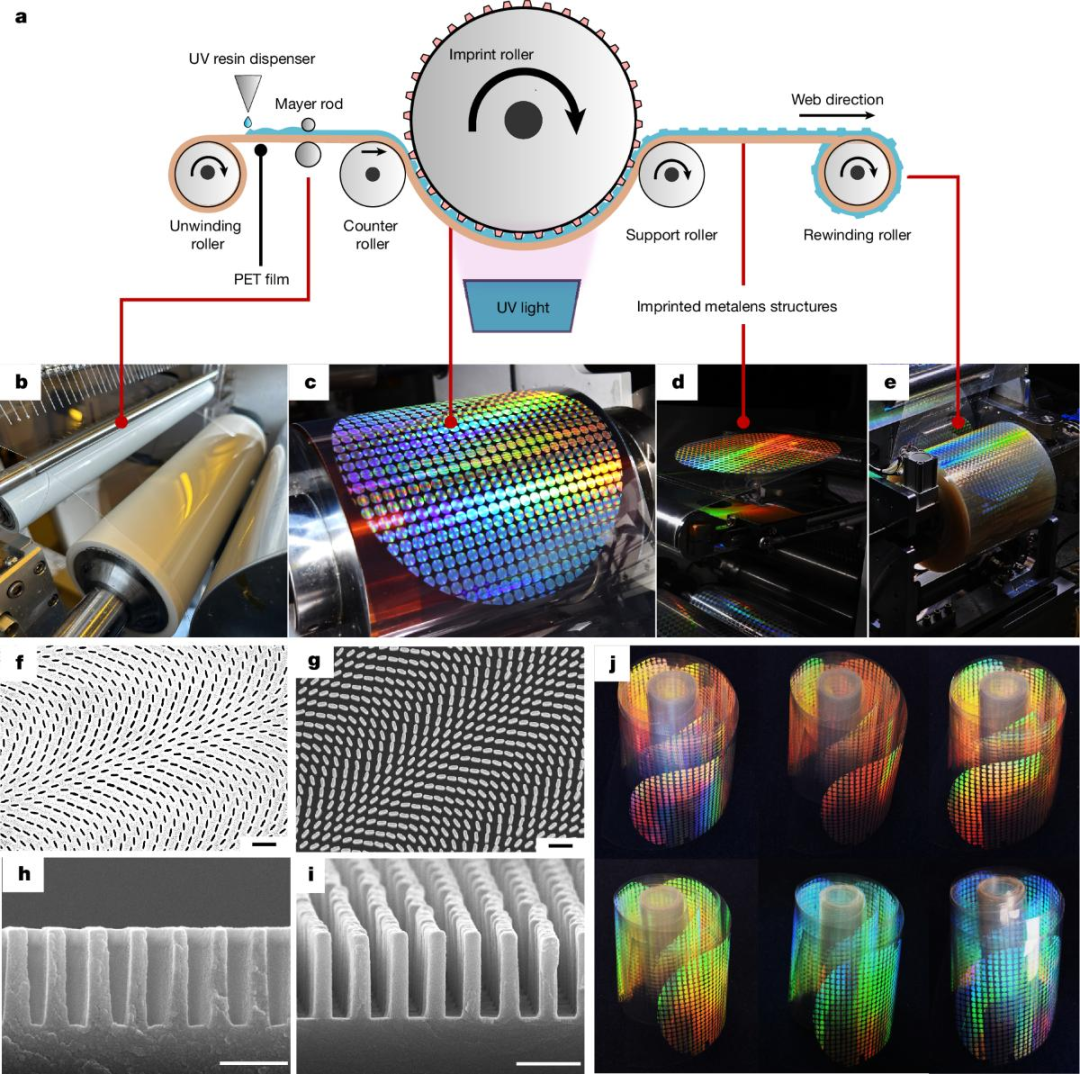
Source: Tsinghua University (The Tsinghua team combined Metalens with liquid crystal structures to achieve 8-step electrically tunable focal lengths within approximately 6 mm thickness.)
Overall, recent Metalens research in XR is gradually shifting from single-device studies to complete near-eye display systems, with new progress in full-color achromatism, dynamic focusing, and large-scale replication. However, transitioning from laboratory validation to industrial applications, Metalens still faces challenges like full-color efficiency, large aperture, yield, consistency, and manufacturing costs, remaining some distance away from direct integration into mainstream display systems.
02 Beyond Displays, XR Perceptual Modules Are Already Using Metalens
During the 2026 Optoelectronic Expo, Gyroscope had a conversation with Jason, CTO of the Hong Kong Applied Science and Technology Research Institute, and learned that despite recent academic progress in wide-spectrum achromatism and RGB multi-wavelength imaging, Metalens is still some distance away from mature full-color applications.
One core challenge remains chromatic dispersion. Different wavelengths produce varying phase responses and focal positions when passing through the same nanostructure, while XR main displays also need to balance visible spectrum, efficiency, field of view, and imaging quality simultaneously. In contrast, perceptual modules like eye tracking and ToF typically operate in fixed or narrow near-infrared bands, imposing lower demands on wide-spectrum achromatism, making them more viable early applications for Metalens.
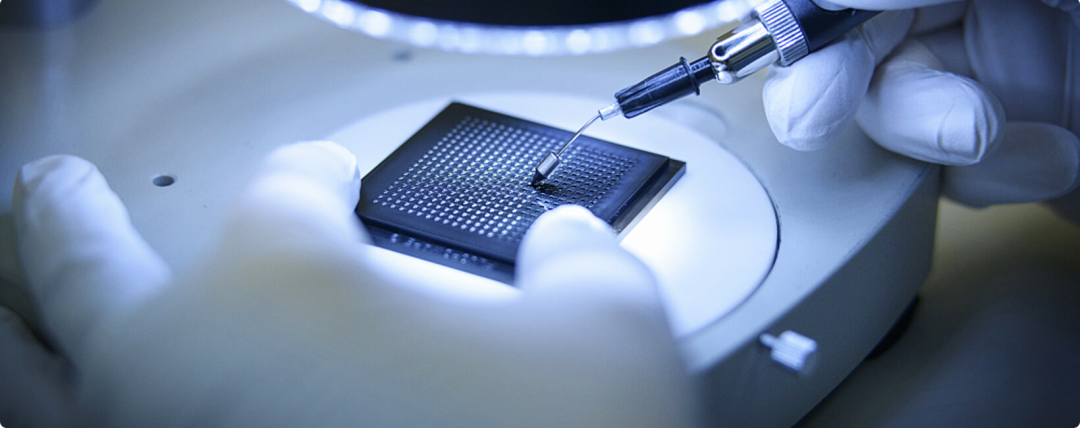
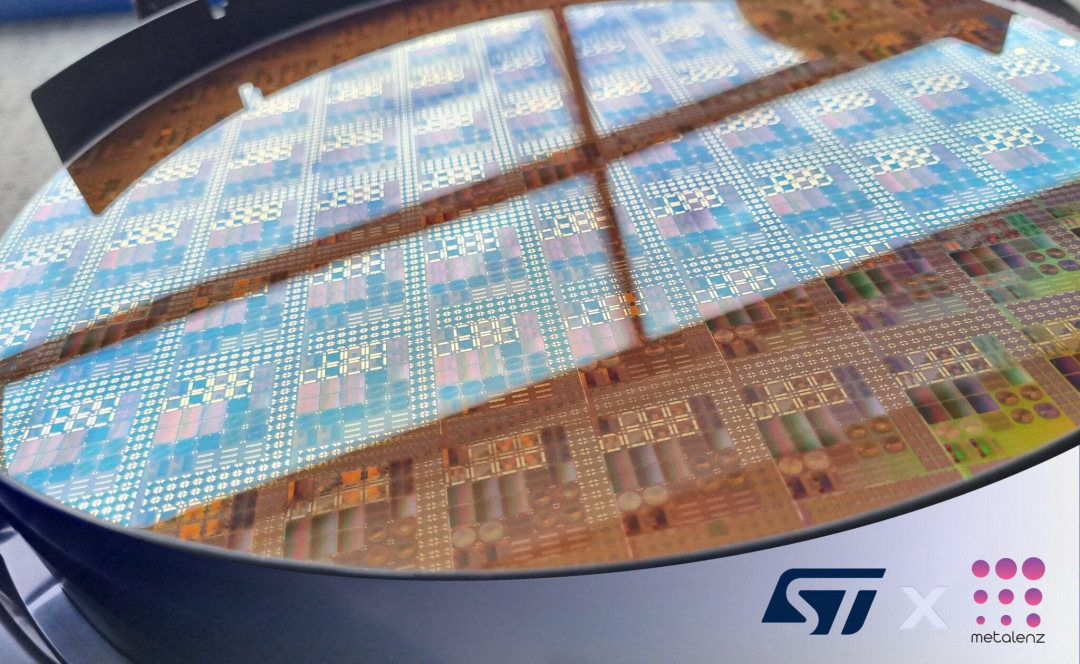
In 2022, Metalenz and STMicroelectronics confirmed the integration of metasurface optical components into the VL53L8 dToF module, and the two companies have since expanded their collaboration. According to Metalenz's latest disclosure, by 2026, the number of its first-generation metasurface optical components in the market had exceeded 300 million. Compared to visible light displays for human eyes, modules like ToF and 3D perception typically operate in fixed near-infrared bands, imposing lower demands on continuous and wide-spectrum achromatism, making them among the earliest scenarios for Metalens to achieve large-scale commercialization.
Today, VR/MR and AR devices require perceptual components like eye tracking, iris recognition, ToF, and gesture recognition in addition to display modules. These modules are also constrained by frame space and overall device weight but do not need to handle full-color imaging tasks, making them more realistic entry points for Metalens.
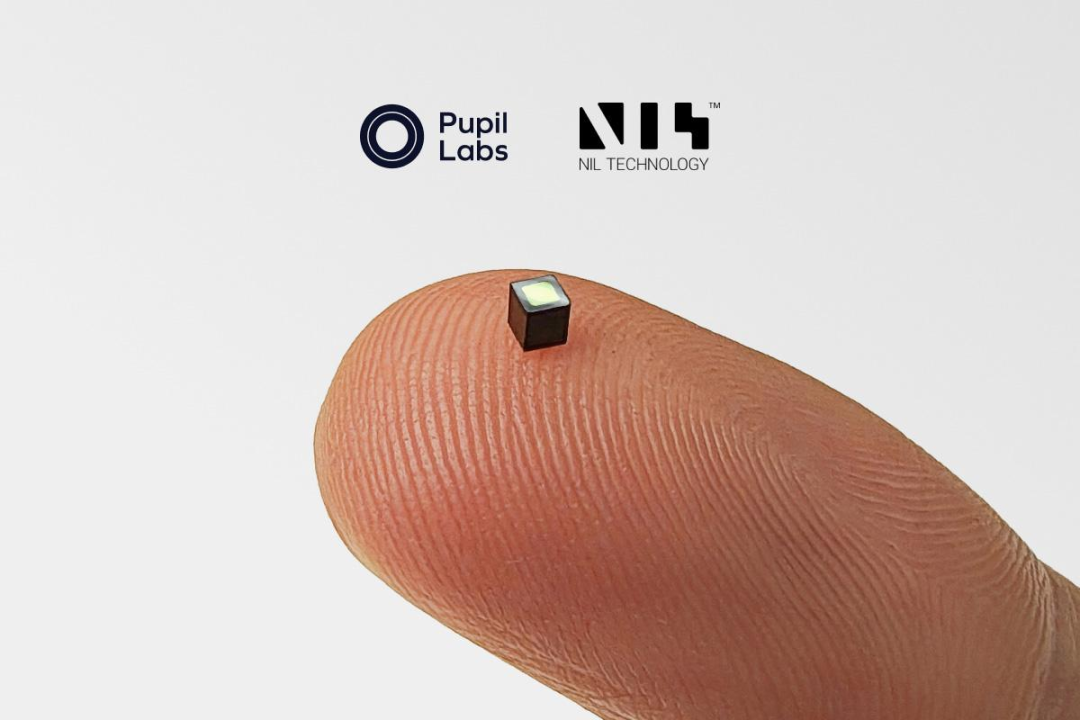
This year, NIL Technology and Pupil Labs have begun using metaEye for next-generation eye-tracking product validation. NILT's latest information indicates that evaluation kits and Beta samples have been provided to customers, with plans to advance product launch and mass production ramp-up in the fourth quarter of 2026. Samsung and POSTECH have also previously utilized Metalens to develop infrared eye-tracking cameras, compressing the total optical path of the system to approximately 1.76 mm at a 120° field of view for pupil tracking and iris recognition.
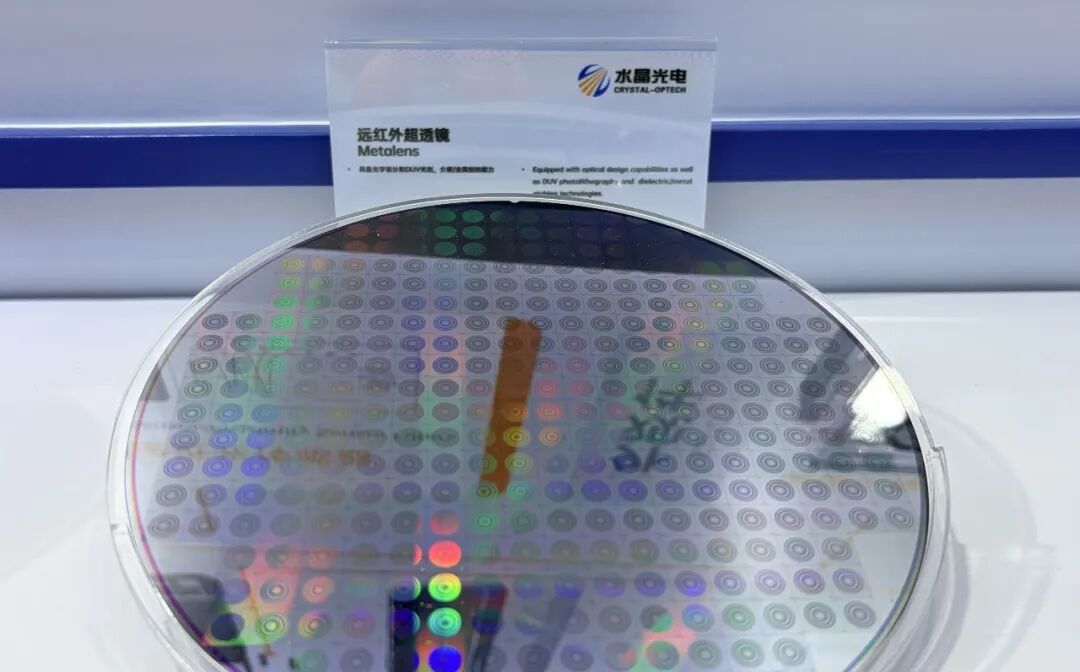
Domestic manufacturers are also making similar moves. Crystal-Optech incorporated Metalens into its AR optical product layout alongside eye-tracking modules this year. Meanwhile, Shenzhen MetaLenX has established a near-infrared metasurface lens production line with a publicly stated capacity of 2 million units per month, and its near-infrared products have entered stable delivery phases.
From these developments, it is evident that vendors with faster commercialization are almost all starting with smaller, more functionally defined optical nodes like eye tracking, ToF, 3D perception, and micro-imaging. This approach of first compressing specific modules and reducing traditional lens counts aligns better with Metalens' current industrialization pace.
03 Beyond Eye Tracking, Metalens Further Enters Reference Designs and Display Engines
Metalens' early entry into perceptual modules like eye tracking represents a practical choice given the current immaturity of full-color applications, coinciding with the trend of AI glasses increasingly adding perceptual capabilities.
However, compared to previous years when Metalens was mainly concentrated in single perceptual devices like ToF and eye tracking, a more noteworthy change this year is its further integration into complete AI/AR glasses and extension into colored imaging and display engines. In 2023, analyst Ming-Chi Kuo predicted that Apple might first introduce Metalens in 3D perception systems like Face ID and gradually extend it to AR glasses. At that time, the market's imagination for Metalens was largely confined to "entering glasses someday," but by 2026, more concrete industrial cases have emerged.

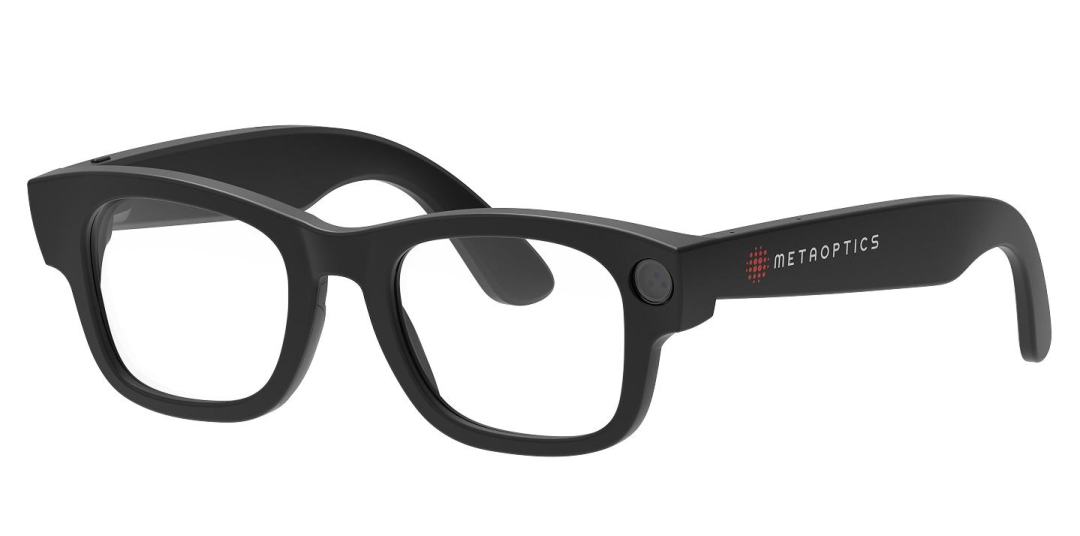
In June of this year, MetaOptics began sending AI smart glasses evaluation units equipped with Metalens to consumer electronics brands, operators, and ODMs in Europe, Japan, and the Philippines. Unlike previous products mainly targeting near-infrared perception, this AI glasses model features a compact colored Metalens camera system and is powered by the Qualcomm Snapdragon AR1 platform for image capture and gesture interaction. MetaOptics currently labels this product as a prototype and sampling stage, but Metalens has already advanced from standalone perceptual devices into complete AI glasses reference designs.
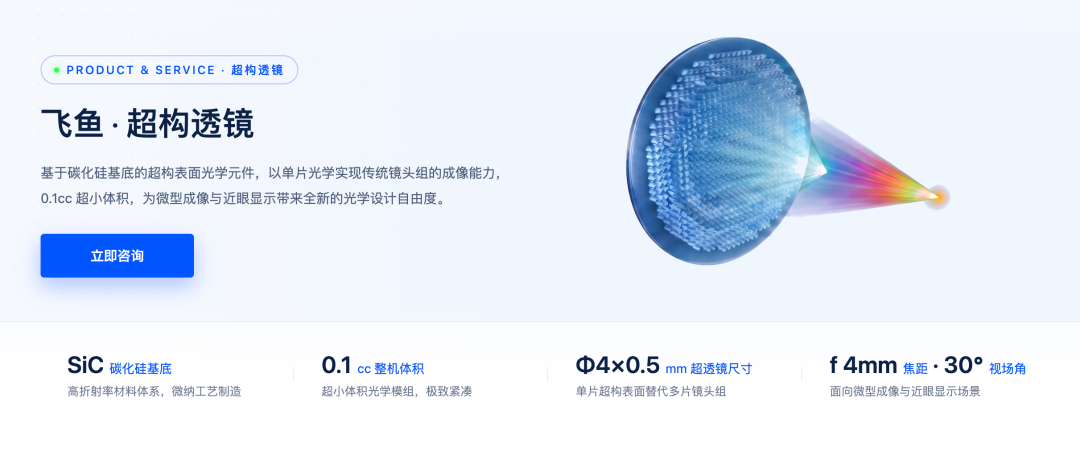
In addition to camera modules, Metalens is also genuinely entering the optical systems of AI glasses. Recently, Afalon released the "Flying Fish" metasurface lens using an SiC substrate, with a single-lens size of approximately Φ4×0.5 mm and an entire optical module volume of about 0.1 cc, covering applications in micro-imaging and near-eye displays. The concurrently exhibited solution also combines MicroLED with SiC-Metalens to form a metasurface optical engine, further compressing the engine volume by replacing traditional multi-lens assemblies with a single metasurface lens.
Although Metalens has not yet directly entered optical waveguides, Afalon introduced the MGW metasurface optical waveguide solution based on metasurface micro-nano structures. Similar to how Metalens uses subwavelength structures for focusing and collimation, MGW also relies on micro-nano-scale modulation of light fields, but its target is no longer a single lens but the coupling and propagation structures within optical waveguides. Official data shows that its waveguide lens weighs about 3 g, has a thickness of approximately 0.5 mm, achieves an FOV of over 53°, and has both transmittance and color uniformity exceeding 90%. Specifically, Afalon's application of metasurface technology extends beyond Metalens or micro-display engines to the AR optical waveguide itself.
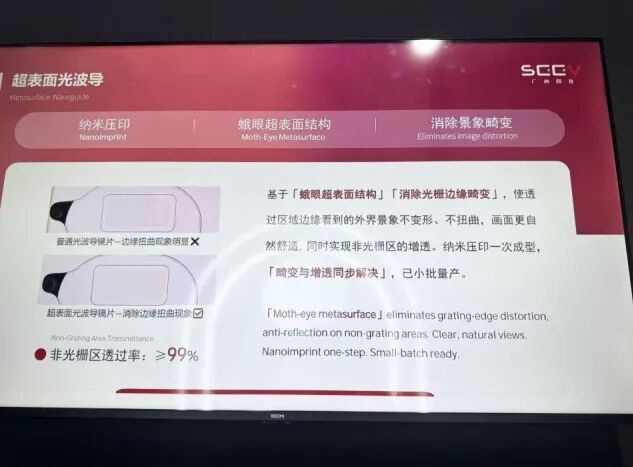
In addition to Alphalon, Guangna Siwei also showcased a metasurface optical waveguide solution, which directly integrates the 'moth-eye metasurface structure' into a nanoimprint template. This allows the corresponding micro-nano structures to be formed in a single imprinting step, reducing some of the subsequent coating processes. The solution focuses on improving distortion at the edges of the grating and enhancing anti-reflection in non-grating regions. Officially, it claims a transmittance of over 99% in non-grating areas and has already entered small-batch production.
According to MoneyDJ, this year Radiant also revealed that it is developing AI glasses-related technologies with brand clients, including an integrated solution for Waveguide and Metalens. Judging from this year's industry moves, the commercialization boundary of Metalens has begun to expand outward.
Compared to previous applications like ToF and eye-tracking, Metalens is evolving from perception modules with relatively single bands and clear functions to encompass color imaging, micro-display optical engines, and complete glasses reference designs. For the industry, the next step is to verify whether these components can be stably integrated into the optical systems of AI/AR glasses and form mass-producible product solutions.
04 Conclusion
From Fresnel to Pancake and now to optical waveguides, the evolution of XR optics over the past decade has essentially aimed to achieve more complex light control within smaller spaces. Metalens has garnered attention for its further reduction in device weight and space.
The difference is that it no longer merely compresses the optical system by folding, reflecting, or guiding light paths but delves deeper into the optical components themselves, redefining the functions a lens can perform through nanostructures. For XR devices increasingly resembling ordinary glasses, many changes do not necessarily require a complete overhaul of an optical architecture to begin.
Of course, from a single Metalens in the lab to its stable integration into XR products, a series of engineering challenges remain, including efficiency, chromatic aberration, field of view, manufacturing yield, cost, and system compatibility. At this stage, it more resembles adding a new degree of design freedom beyond existing optical routes rather than a definitive final solution.
-
![]()
Apple Enters Foldable Phone Arena: A New Dawn or the Twilight of Smartphones?
-
![]()
Commercialization Paths for Eye Tracking, ToF, AI Glasses, and Metalens Become Clearer
-
【Insight】Product Structure Upgrade Drives Accelerated Development of China's Automotive Thermostat Industry Chain
-
![]()
Smartphones Might Be About to Change Forever
-
![]()
Research on the Quality Performance of Chinese Automobile Products in 2026: The Main Battlefield of Quality is Shifting from Hardware to Software, and Intelligent Experience Becomes a New Weakness
-
![]()
The Race for AI Data Infrastructure Behind the Trillion-Dollar Market
-
![]()
Can 3 Billion Yuan in Funding Revive Nezha Auto?
-
![]()
A DeepSeek Engineer’s Midnight Reflection: What Kept the Tech World Wide Awake?