No AI Until High School! NYC Establishes the Most Stringent Educational Boundary in U.S. History
 09/14 2026
 324
324
Educational technology products are prohibited from entering campuses for a minimum of one year.
The prohibition, which officially came into force on September 2, encompasses 600,000 students ranging from kindergarten to eighth grade, and also aims to curtail students' daily screen time. Effectively, educational technology products are banned from campuses for at least a year.
New York City's public schools boast an astonishing 600,000 students, roughly accounting for two-thirds of the entire student population.
Throughout the forthcoming school year, students from kindergarten to eighth grade will be prohibited from utilizing generative AI tools. This decision positions New York as the most stringent region in the U.S. concerning AI regulation for students.
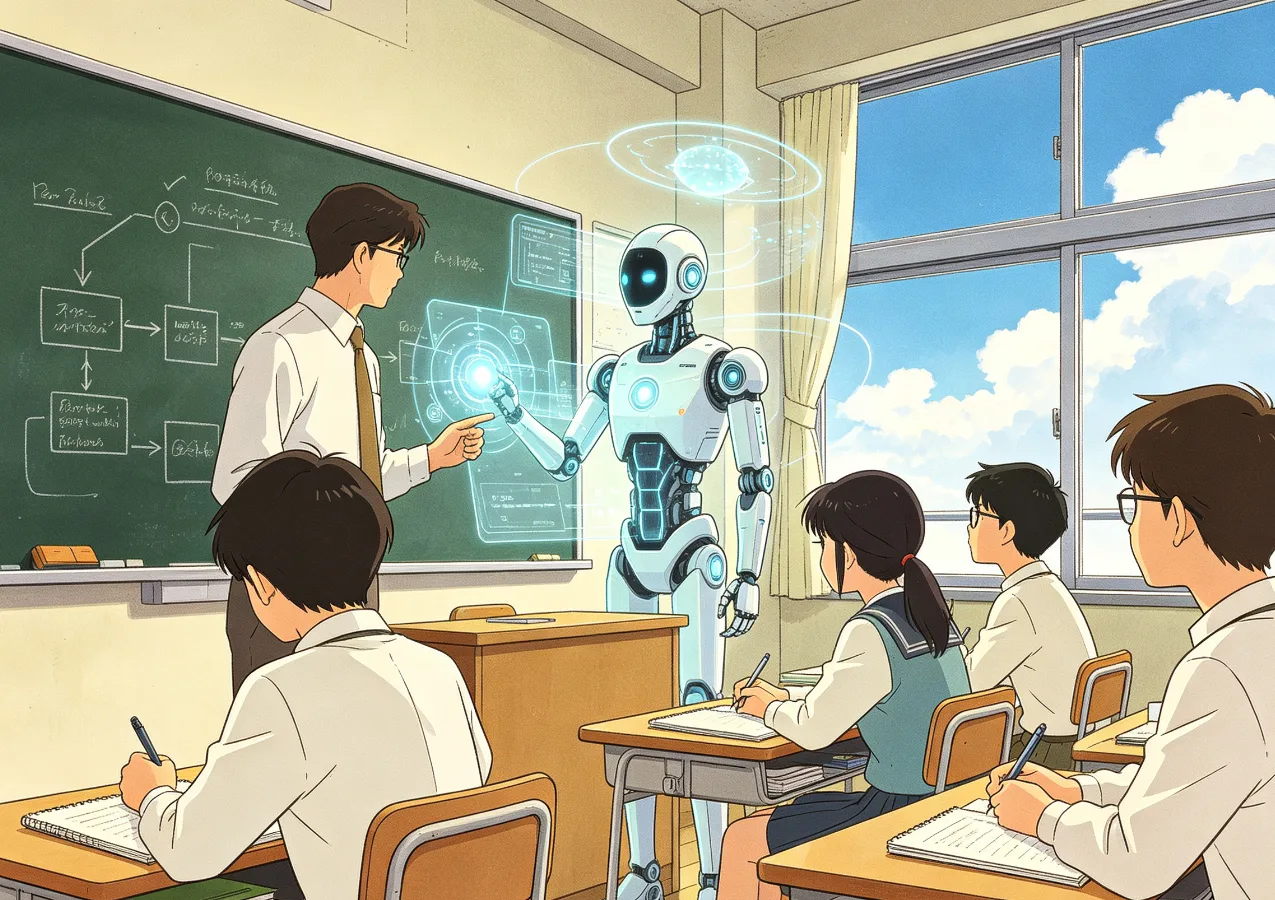
Image source: Generated by Doubao AI
This policy was not formulated on impulse. Officials gathered over 6,000 public opinions, and with persistent advocacy from the city council, this sweeping ban on AI in schools was enacted.
Moreover, Xiaolei discovered that this one-year ban will significantly disrupt the K-12 educational technology market. The policy will undergo reassessment in 2027, at which point its future trajectory will become clearer.
On one hand, AI has already become ubiquitous in the workplace, with its development far surpassing the phase when everyone hastily purchased student computers during the pandemic.
Many within the education sector express concerns that completely barring children from AI from a young age will leave them ill-equipped to keep pace when they enter the workforce and encounter pervasive AI tools.

Image source: Generated by Doubao AI
Numerous teachers also contend that instead of an outright ban in schools, it would be more beneficial to educate children on the proper use of AI under school supervision and guidance.
Otherwise, children may still resort to using AI clandestinely at home without proper oversight.
Nevertheless, New York City Mayor Mandani remains resolute: Implementing AI without adequate safeguards will only squander resources and generate a plethora of issues.
Michael Mulgrew, president of the American Federation of Teachers, also remarked, “Parents now harbor significant concerns about AI. After all, they are constantly bombarded with news about AI-related mishaps. It's only natural for them to have reservations out of a desire to safeguard their children.”
Not just New York, but the entire United States is grappling with challenges such as AI protection for minors and cybersecurity.
The largest public education system in the U.S. has directly prohibited AI products targeting K-12 students from entering campuses. Other school districts will undoubtedly closely monitor New York's pilot program.
In the future, it will be virtually impossible for educational technology companies to market AI chat tools to students. The current opportunity lies with teachers: Backend tools focused on lesson preparation assistance, translation, and equipped with robust privacy protections are more likely to gain acceptance from schools.
However, risks persist: Long-term restrictions on electronic devices may impede the development of children's keyboard skills and digital literacy.
This ban represents only a temporary suspension, valid for one year. By 2027, policymakers, parents, and the entire industry will confront a major decision.
New York is essentially conducting a large-scale real-world social experiment. Its outcome will directly shape AI policies in schools across the U.S. It's not that New York's approach is necessarily flawless, but its scale renders it unavoidable.
The crux of the issue is not whether AI should enter the classroom. Rather, it's whether this one-year “AI detox” will compel the development of more comprehensive regulatory rules or instead exacerbate the digital divide among children.
Source: Leikeji
Images in this article are from: 123RF Royalty-Free Image Library. Source: Leikeji
-
[Data Microscope] 100 Million Foldable Phones Split the Smartphone Market in Half
-
Every "Hello" to AI Comes with a Price Tag
-
![]()
Why Does a More Mature End-to-End Autonomous Driving System Require More Error-Prone Data?
-
![]()
Profit, Yield, and Bargaining Power in the Foldable Screen Industry Chain Restructured After Apple's Entry with iPhone Duo
-
Tianlong-3 Yao-1 Mission Update: Insights from the 189.5-Second Flight
-
The Untold Undercurrent of CIFTIS: Chinese Tech Goes Global, Shifting from Quick Profits to Sustainable Value
-
![]()
Confirmed! Apple CEO Cook Admits to ‘Drawing Inspiration’ from Huawei; Luo Yonghao Offers Direct Criticism
-
![]()
Zhang Yiming’s Global Empire Surges: TikTok Achieves Scalable Profitability Across Key Markets!