AutoNavi's Street Exploration List: One Year On, No Need to Be Another Dianping
 09/14 2026
 426
426

AutoNavi's Street Exploration List 2026 Annual Launch Event. Image Source: Photographed by Tang Chen
AutoNavi's Street Exploration List will not be another Dianping.
On September 10th, AutoNavi's Street Exploration List marked its first anniversary. At the same venue, I witnessed the release of its initial list and the latest comprehensive AI transformation. This version, known as AutoNavi's Street Exploration List 2026, features the biggest change encapsulated in the official slogan: "Starting with the list, but going beyond the list."
Guo Ning, CEO of AutoNavi, explained the logic behind the transformation at the event: "In the AI era, generating content that looks authentic is becoming increasingly easy, and answers are no longer scarce. What is truly scarce is trust, taste, a sense of presence, and interconnected context."
He also stated that the world exists not only in language but also in two-dimensional network topologies, three-dimensional spatial structures, the flow of the real world, and changes over time.
This means that after a year of refinement, AutoNavi's focus has long shifted beyond Dianping's position. The list is merely a starting point; what it truly aims to convey is how AutoNavi can anchor itself in the coordinates of physical AI through the comprehensive AI transformation of the Street Exploration List.
If made concrete, this can correspond to another set of questions: What does the Street Exploration List ultimately aim to achieve? Its answer is not to become the next Dianping, so what will it be?
A "Review List" Created by Real People's Footsteps
Over the past year, AutoNavi's Street Exploration List has grown from scratch within the map, effectively creating a Dianping-like platform.
Data shows that it has served over 880 million users cumulatively, with a total of 36.6 billion kilometers navigated to listed merchants. In 2025, merchants on the Local Flavors List saw a year-on-year increase in orders of 424% after one year, while those on the Top Performers List grew by 159%.
In response, Guinness World Records issued a certification to the Street Exploration List, recognizing it as the world's largest "vote-with-your-feet" list.
Earlier this year, Alibaba Group CEO Wu Yongming included the Street Exploration List alongside Taobao Flash Sales and Qianwen App in his New Year's letter as three significant victories achieved in 2025.
This success was achieved through the genuine efforts of real people, one step at a time.
A representative from Huajiayiyuan stated, "We can roughly figure out the evaluation dimensions of previous platform lists and work towards them to see if we can make the cut. However, we still don't fully understand the logic and rules behind AutoNavi's Street Exploration List."
He expressed a representative sentiment: "It's precisely this 'blind list' where we don't know how to exert effort that makes me feel it has higher credibility, is more objective, and is more convincing. After all, the data is generated by real people driving there."
The hold in high esteem of the "blind list" also confirms the credibility of the Street Exploration List from another angle. It indicates that practices such as spam reviews and agency operations, common in the Dianping system, have no effect under the Street Exploration List's rules.
Guo Ning defined this as, "Comments can be generated, but footsteps cannot be faked."
The Street Exploration List 2026 strengthens the quality assessment of authentic navigation-to-store behavior, further increasing the weight of behaviors such as dedicated visits and multiple visits in merchant ratings, thereby redefining the criteria for a good store.
In other words, the Street Exploration List places its bets on "trust-taste-sense of presence" solely based on "real people coming." The navigation records accumulate behavioral data, with traffic being merely a shadow trailing behind.
However, if positioned as a counterpart to Dianping, AutoNavi's Street Exploration List still faces at least three challenges:
1. Content Mindshare Retention: AutoNavi is a tool-oriented product, far from "seeding" and "content." Users' behavioral inertia is to "use AutoNavi for travel and turn to others for seeding," such as finding guides on Xiaohongshu, selecting stores on Dianping, and finally initiating navigation on AutoNavi. This is not due to the Street Exploration List's inadequacy but is determined by the user mindset cultivated by AutoNavi over two decades.
2. Transaction Closure: Users discover good stores on AutoNavi but switch to Meituan for group-buying deals. Discovery belongs to AutoNavi, while transactions belong to others. Although the Street Exploration List drove a 424% year-on-year increase in orders for listed merchants last year, it is unclear how many of these orders were completed within the AutoNavi App. AutoNavi has not disclosed this information, and outsiders have no way of knowing.
3. Monetization Paradox: "Never commercializing" is the foundation of trust for the Street Exploration List and a promise repeatedly emphasized by Guo Ning. However, this also cuts off the most direct monetization path for the list. Peripheral fee structures (such as premium listings and service provider agency fees) are difficult to scale and cannot meet Alibaba's commercial expectations for the Street Exploration List. The pitfalls Dianping encountered may not be avoidable for AutoNavi.
Today, the list landscape has evolved from a duopoly to a quadrilateral competition. Dianping's Must-Eat List has dominated for nearly two decades, Douyin's Heartthrob List has rapidly risen with content seeding, and JD's Review and JD's Authentic List have also entered the fray, promoting themselves as the "world's first objective list based on artificial intelligence."
The window for AutoNavi's Street Exploration List to continue as a mere list is narrowing, leaving it with only two choices: either continue to break through along the original path or adopt a new strategy.
The Ace Up AI's Sleeve, Moat, and New Battlefield
Clearly, AutoNavi has chosen the latter, with the new strategy being the comprehensive AI transformation of the Street Exploration List 2026. AutoNavi has done its homework in three areas:
The ace up the Street Exploration List 2026's sleeve lies in real people. The new version introduces professional ratings, with over 15 million expert users from various fields joining the True Explorer Creator Program. Their evaluations help 58 million people make travel decisions daily.
For example, in professional categories like cafes, the opinions of experts carry more weight. While a large model can generate 10,000 "elegant environment, attentive service" reviews in a second, it cannot capture the nuances of a small shop offering 50-60 types of single-origin beans and a dozen hand-brewed options.
Cafes like Weishui Coffee on Qianmen West Xinglong Street have become the first on the Top Performers List through repeated visits from neighbors. Such stores cannot be boosted through traditional score-brushing methods.
Beyond rating rules, a more significant move is the introduction of spatial intelligence. Guo Ning breaks down understanding the real world into three layers of capabilities: vivid three-dimensional spatial representation, responsible for restoring the sense of presence; real-time continuous dynamic perception, responsible for capturing every moment of change in the world; and precise and stable spatiotemporal inference, responsible for seeing through interconnected context.
These three layers are supported by AutoNavi's nearly 1 billion monthly active users, a daily peak of nearly a trillion calls to Beidou positioning, and tens of trillions of spatiotemporal samples accumulated from road networks, buildings, terrain, and street views, along with a 3D native city world model, ABot-Earth 0.7.
While Dianping's content can be "cheated" by general-purpose large models, AutoNavi's spatiotemporal data cannot be replicated by others. This is the true moat of the Street Exploration List and the divergence between the two products in the AI era.
No matter how deep the moat is, it must ultimately be reflected in the product. The new battlefield for the Street Exploration List 2026 is to transform the adjective "sense of presence" into a product and connect the entire link :
During decision-making, authentic navigation-to-store behavior determines ratings, with dedicated visits and multiple visits given higher weight;
Before departure, Flying Street View 2.0 relies on the world model to reconstruct the destination into a freely explorable three-dimensional space, allowing users to see theater seat views and mall internal routes in advance;
Upon arrival, Navigation Live turns the camera into a "search box for the real world," with a Lightning Protection Guide (Lightning Guide) using 15 dimensions to preemptively eliminate risks such as time conflicts, closures, and congestion. 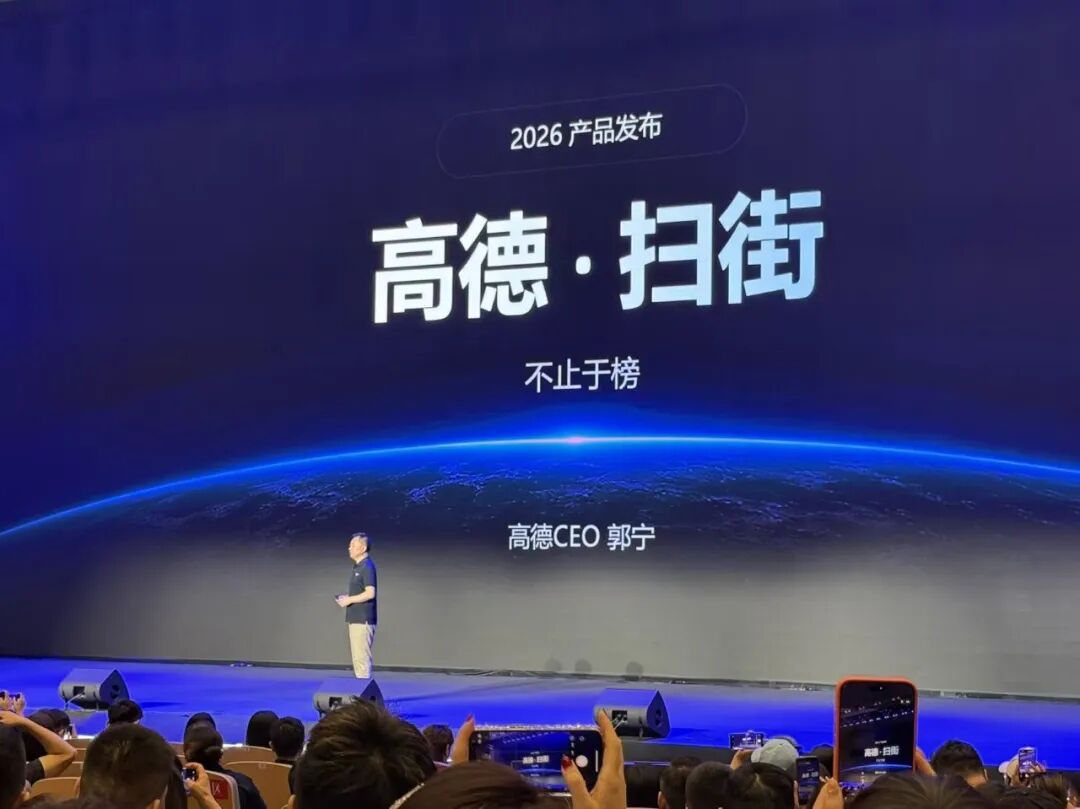
Guo Ning, CEO of AutoNavi. Image Source: Photographed by Tang Chen
According to official statements, after comprehensive AI transformation, AutoNavi's Street Exploration List extends its services to the entire process of user decision-making, departure, and arrival, seamlessly connecting recommendations, itineraries, and on-site experiences.
In this scenario, navigation transforms from guiding a route to accompanying users throughout the day, reconstructed as a long-range intelligent agent with spatial perception and action capabilities.
At the launch event, AutoNavi also presented practical results. It showcased three five-day travel guides for Guizhou, two generated by general-purpose large models and one a highly praised, comprehensive guide with over 10,000 likes. AutoNavi conducted spatiotemporal inferences on these guides, and without exception (without exception), all of them failed.
Sun Chong, head of AutoNavi's navigation products, explained that AutoNavi can calculate the guide's correspondence to the day's timeline and how the physical world operates according to certain law (laws).
This is a public debunking of general-purpose large models by spatial intelligence: the latter generates content that "looks right," while the former calculates what is "truly feasible."
The difference lies in the quality of the data. General-purpose large models read the world written online—second-hand, outdated, and embellished—while AutoNavi reads the world pressed out by car wheels—first-hand, real-time, and unaltered.
The land (implementation) of physical AI can only rely on the latter.
With this set of actions, the intentions behind the Street Exploration List 2026 are clear: the list has transformed from a ranking at the finish line to the starting point of a link (chain).
The Street Exploration List 2026: Going Beyond the List
Guo Ning repeatedly emphasizes, "Starting with the list, but going beyond the list." In my view, these four words have two layers of meaning.
The first layer is how to answer old questions. Answering within the original framework only leads to being locked down by old thinking and battles. More concretely, it means how to become the next Dianping. After over a year of practice, this path holds little significance for AutoNavi, as the question itself is outdated.
The review mode thrived in an era of "content scarcity," relying on people writing reviews and trusting them; the Street Exploration List emerged in an era of "answer surplus," where reviews can be infinitely generated, and trust has become the scarce commodity.
The second layer is a new problem-solving approach. The comprehensive AI transformation of the Street Exploration List 2026, within the broader context of AutoNavi and Alibaba's AI, has a more precise positioning: to explore a path for Alibaba's physical AI.
Alibaba has been searching for this path for many years. From Koubei and Taodiandian to merging Ele.me and Koubei into one, and now to AutoNavi, Alibaba has changed its face several times in the local services business. In previous attempts, it focused on transactions and subsidies, clashing head-on with Meituan in the same battlefield.
This time, the Street Exploration List 2026 bypasses the frontlines and cut into (cuts in) from data and the physical world. It extends into different segmented lists based on scenarios, appearing more like precise data annotation requirements.
For example, it was officially announced that the Street Exploration List 2026 would expand the Top Performers List from three categories (food, hotels, attractions) to six, adding coffee, bars, and entertainment; the Local Flavors List would increase coverage from 133 cities to 269, fully extending to county-level areas, and for the first time, launch a national BEST100 series list covering four categories: food, attractions, small shops, and coffee.
Data is the core bottleneck and underlying fuel for the development of physical AI, determining the upper limit of model capabilities. The Street Exploration List serves as a free lever to mobilize data, gradually building Alibaba's physical AI data pool.
Over the past year, all actions of the Street Exploration List have aimed to reconstruct the review system from a data perspective, with no intention of simply competing with Dianping at the content level.
As Photon Planet analyzed, the Street Exploration List has constructed three layers of data dimensions:
The first layer is itinerary data, consisting of navigation mileage, dedicated visit ratios, repeat customers, and local resident proportions. For example, Huajiayiyuan in Beijing has a 78% local resident proportion, a data form rarely seen in the industry before.
The second layer is high-quality data after cleaning. For instance, 8.38 million users with Sesame Credit authorizations prepared for data collection, contributing nearly 50 million evaluations, each tied to a real identity.
The third layer is scenario data. This is a new data source after AutoNavi's AI transformation, mainly including Flying Street Views of what AutoNavi claims to be "2.6 million merchants," operating statuses, and customer flow tides, all provided and maintained by the merchants themselves.
After this link (chain) is established, AutoNavi began searching for more and newer interfaces with the physical world.
At the event, I saw AutoNavi's own robotic dog "Tutu," smart glasses, watches, electric vehicles, and other intelligent terminals equipped with AutoNavi services, also on a significant scale.
This indicates that AutoNavi's Street Exploration List is entering multiple types of terminals to provide users with more authentic life service recommendations.
Notably, Mercedes-Benz has partnered with AutoNavi's Street Exploration List. In the future, Mercedes-Benz smart cockpits will deeply integrate AutoNavi's Street Exploration List capabilities, intelligently recommending selected destinations to users and further enhancing the intelligent travel experience.
Under this model, terminals distribute services on one end for AutoNavi and become new dimensional data collection touchpoints on the other. The Street Exploration List also continuously supplies data to AutoNavi's world model.
Simply put, AutoNavi is using a less commercial approach to obtain a continuous, real-time, first-person data stream of the real world. 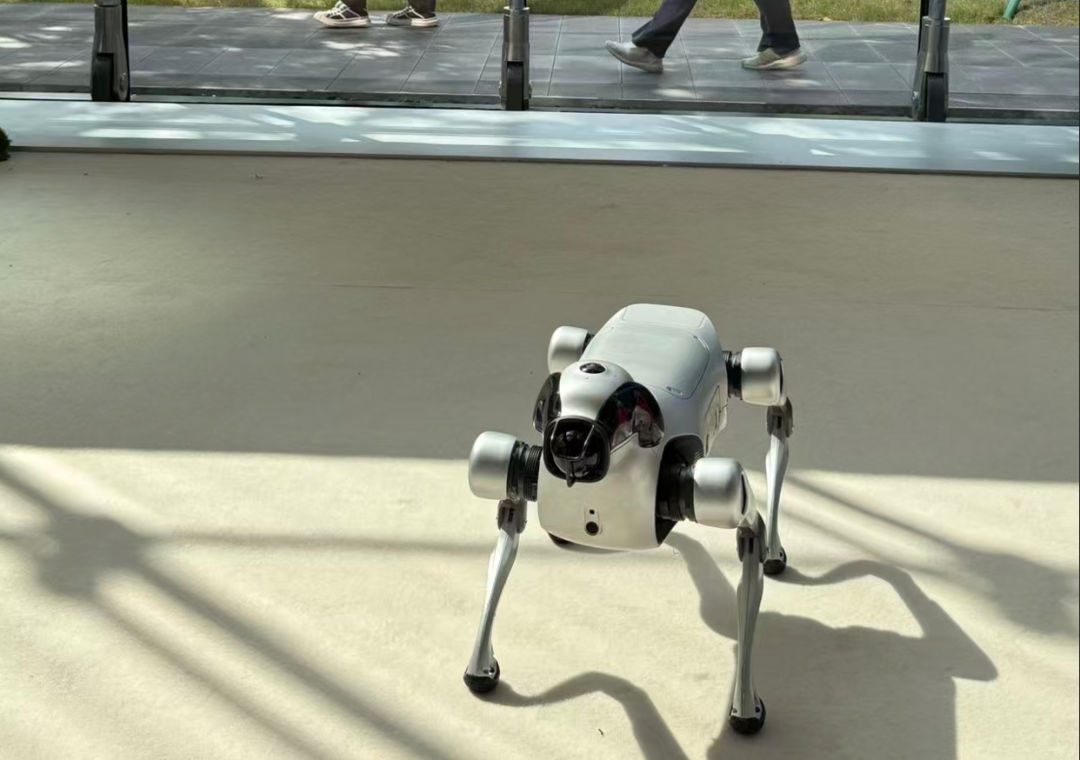
AutoNavi's quadruped robotic dog. Image Source: Photographed by Tang Chen
Under this problem-solving approach, the Street Exploration List 2026 truly becomes a new species that "goes beyond the list."
In the AI era, "travel decisions" and "consumption decisions" are becoming one and the same. Where you come from, which route you take, which store you stop at, and how long you stay are all part of a continuous behavior, only previously separated by two apps: navigation and review.
What AutoNavi aims to do is to bridge this gap: where you are, where you're going, what you'll pass along the way should naturally connect with what you eat and play. When maps can truly understand the physical world, the starting point of travel and the starting point of consumption coincide.
The comprehensively AI-transformed Street Exploration List also gives AutoNavi more options: it can serve as a data entry point for physical AI or support Alibaba's local services imagination. Its challenge remains proving its commercial value to the group.
As for how to answer this question, Guo Ning may elaborate further in subsequent launch events. I also hope the Street Exploration List will continue, and perhaps I can sit in the same venue again to see its updated and evolved form.
References:
Photon Planet, "AutoNavi's Street Exploration List: Exploring a Path for Alibaba's Physical AI"
AutoNavi Maps Official Press Release, "AutoNavi's Street Exploration List Goes Fully AI"
-
![]()
Can Neta Automobile Truly Be Revived? Will Taiyi Shenglian Rejuvenate It with 3 Billion Yuan?
-
![]()
Zotye Auto Initiates Trial Production of New Vehicle, Signaling a Potential Comeback
-
![]()
"Chinese Version of Cullinan" is Here: A Sneak Peek at New Cars from MIIT
-
![]()
Growth Slows Again: Denza Z9GT Makes Car Buying More Accessible
-
![]()
Can the Besturn Xiaoma, Equipped with CATL Batteries, Reverse Its Declining Sales Trend?
-
![]()
BAIC's August Sales Report Omits Joint Venture Data
-
![]()
AutoNavi's Street Exploration List: One Year On, No Need to Be Another Dianping
-
Buying AI as Effortlessly as Topping Up Your Phone: Large Model Vendors Now on E-commerce Platforms