Graduating Means Unemployment? AI Disrupts Job Market, Driving College Students to Switch Majors, Career Paths, and Industries
 09/15 2026
 431
431
AI will only eliminate those who can't think.
Like many of her peers, 20-year-old Stephanie Parker has been closely monitoring the impact of AI on her career prospects.
Parker, a sophomore at a small liberal arts college in the northeastern United States, told CNBC Make It that her ultimate goal was originally to become a doctor and researcher. But she admitted, “AI makes me wonder what these professions will look like by the time I finish all my studies and training.”
She used to care most about patient care—the “humanistic aspect of medicine.” But now, as more and more people turn to AI chatbots for emotional support and health advice, she worries that the future medical industry will no longer value “human connection and warmth.”
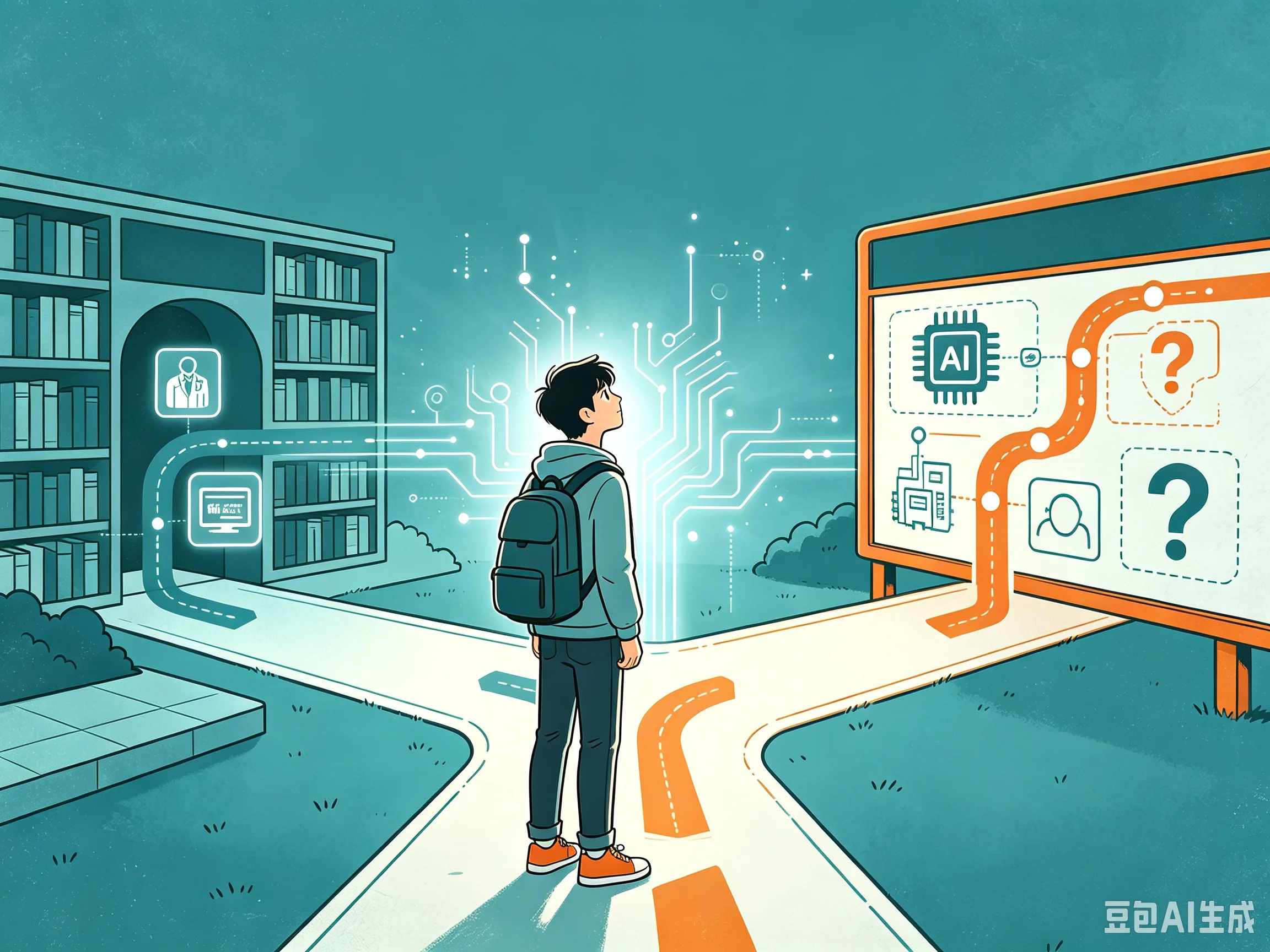
(Image source: Generated by Doubao AI)
Nearly 40% of Students Want to Switch Career Paths: AI Disrupts Career Planning
Parker’s anxiety is not unique. Many college students are now wondering: What will their dream jobs look like in a few years? Will the job market even be hiring new graduates by then?
Quite a few have already made significant choices or considered changing directions because of AI.
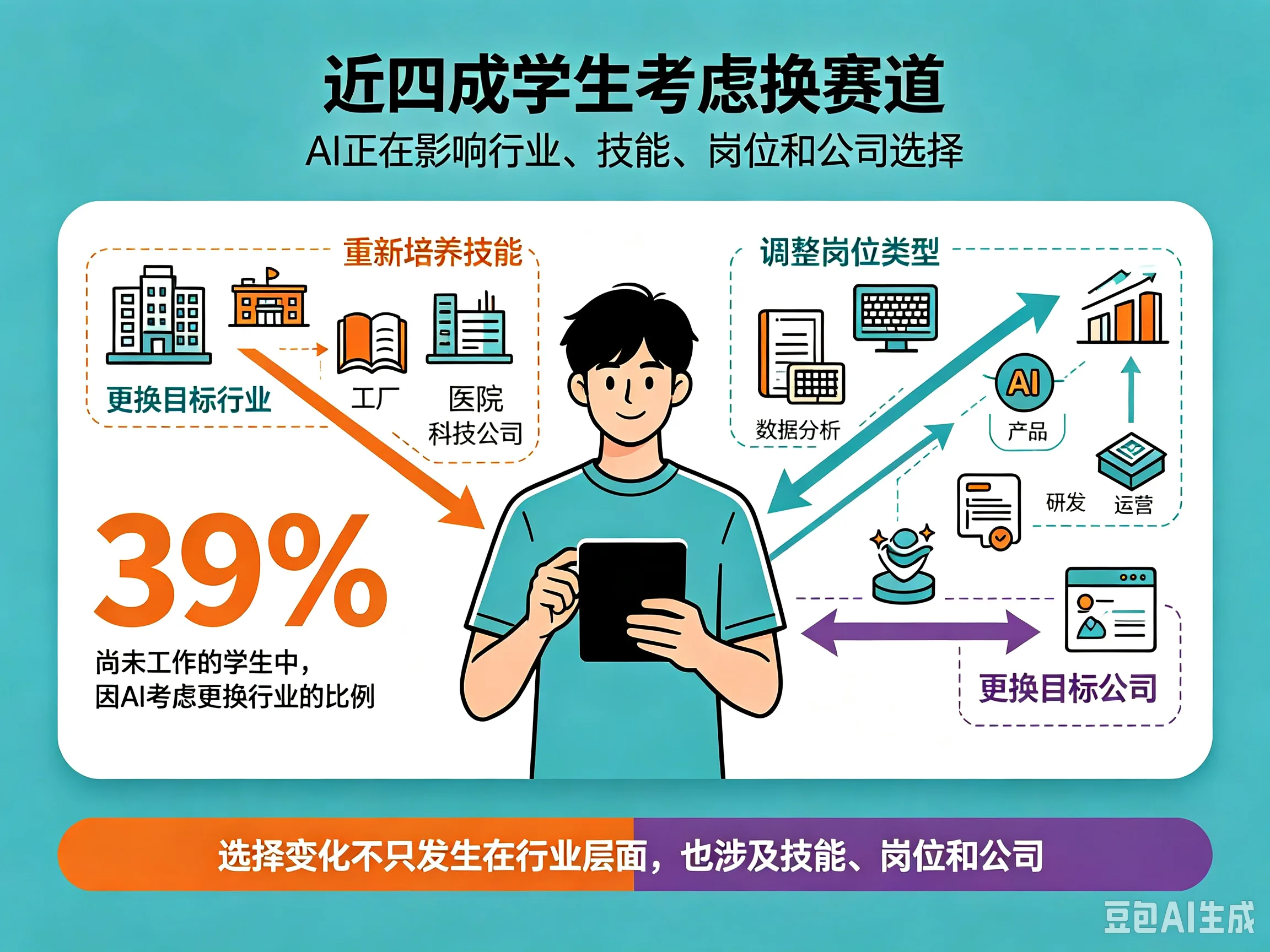
On August 19, CNBC, in partnership with SurveyMonkey, released the Quarterly AI & Employment Survey Report, which showed that nearly one-third (31%) of currently enrolled students and working learners have already switched or are considering switching their target industry due to AI. Among students not yet in the workforce, this proportion rises to 39%.
The adjustments to career planning extend beyond industry choice:
45% have changed or reconsidered the skills they aim to develop
34% have adjusted the types of positions they plan to apply for
35% have switched their desired target companies
The survey was conducted from July 22 to 27 and included 1,686 students and working professionals across the United States, with a sampling error of plus or minus 2 percentage points.
(Image source: Generated by Doubao AI)
Allison Srivastava, an education and labor market economist at the school ranking and review site Niche, said that AI is destined to disrupt the job market, and it is natural for students to worry about their career prospects.
“People hear so many conflicting messages—one minute AI will create tons of new jobs, the next it will eliminate many existing ones. This back-and-forth leaves everyone confused,” she said.
However, Srivastava also expressed concern that many students are “making decisions before fully understanding AI’s real impact on various professions,” noting that much remains uncertain.
Even Computer Science Cools Off? Nearly 40% of Students Consider Switching Majors
The anxiety surrounding AI has directly affected college students’ major choices.
CNBC’s survey found that nearly 40% of enrolled students and working learners have considered switching majors, adjusting their research focus, or changing their course plans due to AI; among students not yet employed, the proportion considering a major switch rises to 44%.
A report released in April by Gallup and the education nonprofit Lumina Foundation reached a similar conclusion: Based on a survey of 3,801 U.S. students in October 2025, about 42% of undergraduate students and 56% of associate degree students said they had considered switching majors “to a considerable extent” due to concerns about AI’s impact.
Dr. Courtney Brown, vice president of impact and planning at Lumina Foundation, told CNBC Make It in April that many students’ core concern is whether “the time and money they invest in their degree will pay off in the job market.”
(Image source: Generated by Doubao AI)
Jessica Roffe, a college career planner and founder of the career consulting firm Career Beginnings, said she understands why students are now “taking a wait-and-see approach to many majors.”
Take computer science as an example: In 2024, the unemployment rate for computer science graduates in the United States rose to 7%. Moreover, after a wave of enrollment expansions in previous years, many major tech companies have now scaled back their campus recruitment efforts.
However, Roffe emphasized that this does not mean computer science is no longer worth pursuing: “Every industry needs computer science talent, not just tech giants. Even if you study computer science and end up in a technical role at a bank or hospital, you will still be highly valuable.”
Don’t Panic About Switching Majors—First, Develop These Core Skills
Roffe’s advice to students is to shift their mindset: Instead of obsessing over which major or industry guarantees “stable employment,” think about “what skills will make you more competitive in the job market.”
In her view, the job market currently values critical thinking above all else, followed by problem-solving abilities, curiosity, and a questioning spirit. These skills are especially crucial in roles that involve heavy AI use: Companies need people who can rigorously evaluate AI outputs and assess their accuracy, not those who “take everything AI says at face value.”
Srivastava, meanwhile, hopes students will follow their genuine interests rather than just pursuing careers that “seem to offer more job opportunities.” “You don’t need to have your future perfectly planned out,” she said. “Focus on learning what interests you and what you’re good at, and hone those abilities—that’s enough.”
This article is compiled by Leikeji from CNBC
Original link: CNBC Survey: Students Are Reconsidering Their Majors, Career Paths, and Industries Due to Artificial Intelligence
Source: Leikeji
Images in this article are from the 123RF licensed image library. Source: Leikeji
-
![]()
Domestic Computing Power Reaches a Turning Point: Hardware is No Longer a Bottleneck, Software Ecosystem is the Real Challenge
-
AI Enters the Second Half: Anthropic, DeepSeek, and Zhipu Stockpile Resources for Battle
-
![]()
Graduating Means Unemployment? AI Disrupts Job Market, Driving College Students to Switch Majors, Career Paths, and Industries
-
![]()
AI-Generated Fake Ads: Stealing Faces, Exploiting Influencers, and Undermining Credibility
-
Exploring Cross-Border E-Commerce: How Xiaohongshu's Redshop Thrives in a Specialized Market
-
![]()
AI Data 'Refinery' | Research on China's Data Annotation Industry
-
![]()
Rescuing Neta Auto: Even Taiyi Zhenren Steps In, and Associated Company’s Value Soars by 2.5 Billion Yuan
-
Why Does 'Taiyi Shenglian' Step In to Save Neta?