A DeepSeek Engineer’s Midnight Reflection: What Kept the Tech World Wide Awake?
 09/18 2026
 533
533


Career Uncertainty in the AI Era
Image Source | Internet (Please contact us for removal if this constitutes infringement.) Partially generated by AI.
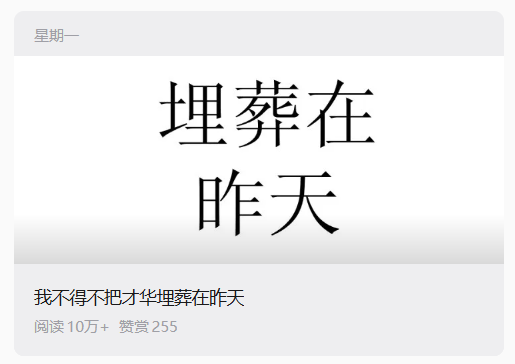
On the night of September 14th, a 3,000-word article quietly circulated within the tech community before rapidly gaining traction overseas. Authored by Liu Shengyu, the lead developer of the Attention operator for DeepSeek V4.1, the piece, titled "I Must Bury My Talent in Yesterday," amassed over 100,000 reads on WeChat Official Accounts, topped Zhihu’s trending list, and garnered approximately 1.48 million views on X.
Some speculated that the article was AI-generated, to which Liu responded, “I wrote this myself.” The irony—a professional worried about being replaced by AI, only to have his words mistaken for AI output—captures the essence of the situation.
Let’s set the stage. Liu Shengyu was a member of Peking University’s 2021 Turing Class, former captain of the Peking University Weiming Supercomputing Team, and represented his school at the SC23 International Collegiate Supercomputing Competition. Despite receiving PhD offers from Berkeley and Carnegie Mellon, he declined them to join DeepSeek in April 2025.
Just days before publishing his article, Liu delivered the main Attention operator for DeepSeek V4.1, a critical component directly influencing model inference efficiency.
His daily work involves analyzing hardware pipeline stalls at the granular level of PTX assembly and SASS machine code within GPU architecture, optimizing register allocation and shared memory scheduling. This represents one of the most challenging areas for human programmers to be replaced—and he had just completed such a task.
Then, he did the math. A year ago, AI could only assist him in searching documentation, reading code, and identifying bugs. A year later, AI could independently read CUDA, PTX, and SASS code, analyze stall times for each instruction using professional tools, and optimize operators on its own.
He wrote, “In another six months or a year, the operators written by AI will likely be as good as mine, or even surpass them. AI can process 300 tokens per second, type a command in half a second, and write a piece of code in twenty seconds—I can’t.”
This is the crux of his article. Liu Shengyu described his predicament as a “technological paradox”: the better he wrote operators, the faster new models could train and infer; the faster models progressed, the sooner AI would replace his craft.
Practitioners know they’re laying the tracks to their own obsolescence but keep greasing them anyway.
So why did he write this? He later clarified that his intent was not to express anxiety about unemployment or provoke a confrontation between DeepSeek and Anthropic, but to bid farewell to the era of handwritten operators.
He offered a vivid metaphor: like a skilled weaver suddenly confronted with a machine capable of producing equally perfect garments given yarn and patterns.
You know that with your accumulated aesthetic and expertise, you’ll still use the machine better than others—your livelihood isn’t threatened—but the joy of “listening to the rain by the window while threading needles” is ultimately crushed by the machine’s roar. “My hands hold more gears, but my heart has fewer rhythms.”
Yet “a craftsman’s farewell” alone doesn’t explain the article’s viral spread. The industry collectively trembled because this piece punctured a veil everyone sensed but no one had articulated so directly.
Previous AI narratives fell into two camps: founders’ “disrupt-everything” bravado or doomsday alarmism. Liu Shengyu’s account occupies the middle ground—not selling anxiety but describing the visceral experience of “structural replacement.”
More importantly, the voice didn’t come from an anxious bystander but from someone at the very heart of AI production, personally accelerating this process. The operators he just wrote are teaching models to write operators even faster.
This “reflexivity” represents a narrative structure never seen in previous discussions about AI replacing humans. When a young man from Peking University’s Turing Class, who declined Berkeley and CMU PhD offers to work on DeepSeek’s most fundamental core components, sits at 2 AM and seriously states, “In another six months to a year, AI will probably surpass me,” this candor itself constitutes the most impactful industry signal.
An often-overlooked context: just two days before Liu’s article, Anthropic CEO Dario Amodei published a long essay calling for AI companies to slow down advancements in frontier model capabilities. Liu directly responded at the end of his article: “I don’t trust Anthropic or OpenAI to do this, and I especially don’t want Anthropic to control the most advanced AI or AGI. To exaggerate, its severity isn’t less than Hitler obtaining atomic bomb technology before the Allies.”
This passage was extensively quoted and discussed by overseas readers. Some commented: “Chinese models represented by DeepSeek are now fighting back against Anthropic. And it’s not the PR department doing it—it’s an engineer.” Liu later clarified that the final section was just “random thoughts” and didn’t represent his company’s stance.
But undeniably, this geopolitical-technological ethical tension expanded the article’s reach from tech circles to broader public discourse.
His ultimate conclusion wasn’t “unemployment” but “career transition”—the job remains, but the opportunity to practice what he once loved is gone forever. He wrote, “Of course, I hope not to be revolutionized, but if it must happen, I hope the one revolutionizing me is myself.”
This isn’t a warning about unemployment. It’s about an “engine builder,” at the moment his creation catches up, choosing to turn and face the future first.
-
![]()
The Race for AI Data Infrastructure Behind the Trillion-Dollar Market
-
![]()
Can 3 Billion Yuan in Funding Revive Nezha Auto?
-
![]()
A DeepSeek Engineer’s Midnight Reflection: What Kept the Tech World Wide Awake?
-
![]()
Insta360 H1 Revenue Soars 50%, Yet Net Profit Plummets 90%; Nearly 2 Billion Yuan Spent on Memory Chip Procurement; Inventory Surges to 6.2 Billion Yuan Amid Negative Operating Cash Flow; Stock Price
-
![]()
Second-Generation Doubao Phone Hits the Shelves: The Moment of Truth for AI Agent Smartphones
-
![]()
Second-Gen Doubao Phone Hits Shelves: Can AI Agent Phones Step Up?
-
![]()
How Long Can Domestic Foldable Screen Smartphones Laugh After Apple's Entry?
-
From Rent Collection to Vehicle Management, Didi Land's Hong Kong Stock Market Journey Still Has the Second Half to Go