Revenue Drops, Net Profit Plunges by 56%: Is Supcon Technology Navigating Through Growing Pains in Its Transformation?
 09/18 2026
 550
550
By Yang Jianyong
Large models are undeniably at the forefront of current technological advancements, with various industries rapidly adopting large model services to boost their intelligence. In the industrial manufacturing sector, the integration of large models has spurred a continuous rise in digitalization, automation, and intelligence, including the widespread use of industrial robots, leading to notable enhancements in production efficiency.
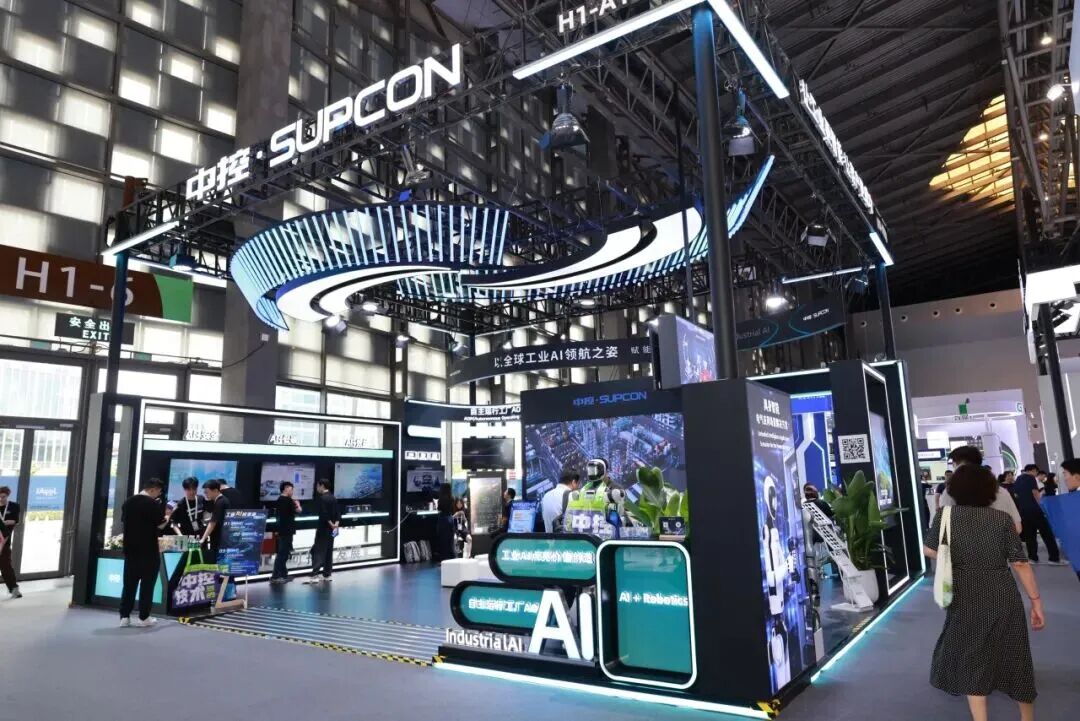
AI Strategic Shift: Profitability Faces Challenges
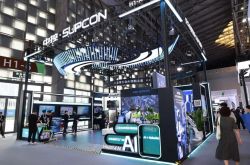
As artificial intelligence enters the era of generative AI, fueled by large model technology, a new wave of industrial intelligence is on the rise. Faced with the industrial opportunities presented by large models, Supcon Technology, a leader in process automation, clearly outlined its 'ALL in AI' core strategy in 2024, embarking on an AI-driven industrial transformation and launching the TPT large model for process industries.
Unfortunately, Supcon Technology has experienced a downturn in both revenue and net profit, with profitability halving. This sharp decline casts a shadow over Supcon, which is now in a crucial phase of its industrial AI strategic transformation.
In the first half of 2026, Supcon Technology's revenue amounted to 3.635 billion yuan, a 5.1% decrease year-on-year; its net profit stood at 155 million yuan, a 56.2% drop year-on-year, and its adjusted net profit decreased by 64%. This indicates not only sluggish revenue growth but also pressure on its core business profits.
Looking back at the period from 2017 to 2023, Supcon Technology achieved a compound annual growth rate of 30% in both revenue and profit. During this time, the company capitalized on opportunities in the industrial automation market to experience rapid growth. However, factors such as rising raw material prices squeezing profit margins, weak demand, and intensified industry competition have now led to a simultaneous decline in both revenue and net profit.
TPT Large Model Commercialization Gains Momentum, Industrial AI Revenue Hits 384 Million Yuan
It is noteworthy that Supcon Technology's full commitment to developing industrial AI business has led to innovative ventures like the time series large model TPT achieving large-scale commercial deployment.
Industrial AI products and solutions, such as the time series large model TPT, have been implemented in nearly 200 industrial installations at leading companies including PetroChina, Sinopec, Wanhua Chemical, China National Coal Group, and Huayi Group, fully entering a phase of widespread application. In the first half of 2026, revenue from the industrial AI business reached 384 million yuan, marking a significant milestone in the comprehensive advancement of its industrial AI strategic transformation.
The time series large model TPT is a versatile industrial AI platform developed through pre-training with massive industrial data and a hybrid expert model architecture. It boasts five major capabilities: simulation, control, optimization, prediction, and assessment, enabling it to cater to a variety of industrial scenarios.
Furthermore, based on these five capabilities of TPT, various industrial agents can be constructed, such as production equipment status perception agents, operational performance assessment agents, production decision optimization agents, and operational control execution agents. This has established a complete intelligent application system spanning the full chain of perception-identification-decision-execution, enhancing efficiency across all aspects of production and manufacturing in process industries and accelerating their move towards intelligence.
The integration of AI large models and industrial agents has facilitated the construction of a comprehensive intelligent ecosystem, fully stimulating the demand for digital transformation among industrial enterprises and opening up new growth avenues for the industrial automation and industrial AI markets. IDC projects that by 2029, the investment scale in China's industrial AI market will reach 108.72 billion yuan, with a compound annual growth rate of 33.6% from 2024 to 2029, entering a period of rapid expansion.
As Supcon Technology, with over 30 years of deep involvement in the process industry automation sector, confronts the development trend of large model technology, it has proactively embraced technological change and made strategic deployments. Based on the technological development of industrial AI and the latest strategic guidance, it has charted a new development path: using industrial data as the foundation, AI large models as the core, and full-scenario agents as the touchpoints to drive sustainable industrial development with AI and facilitate the company's transformation into an industrial AI company.
However, given the current situation of sluggish revenue and a significant decline in profits, the commercialization of the TPT large model will be a key factor in enabling Supcon Technology to break through. Additionally, through the deep integration of industrial AI and robotics technology, especially advanced technologies such as humanoid robots, tremendous potential is being unlocked in the manufacturing sector.
Finally, as the industrial automation process continues to accelerate and deepen under the profound drive of AI technology, and industrial technologies achieve comprehensive upgrades with the aid of AI algorithms, intelligent manufacturing will enter a new stage of high-quality development.
Overall, intelligent manufacturing has become the main theme of industrial upgrading, with strong demand from industrial enterprises for new technologies. In particular, the combination of new technologies such as AI large models and big data is bringing new impetus to industrial transformation and upgrading. For vendors deeply involved in industrial automation and intelligent manufacturing, broader development spaces are expected to emerge.
Yang Jianyong, a contributor to Forbes China, expresses views that are his own. He focuses on in-depth observations of technological fields such as AI large models, artificial intelligence, industrial robots, the Internet of Things, cloud computing, and intelligent hardware.
-
![]()
Domestically Overlooked, Yet Coveted Abroad: How China’s Bus Industry Rakes in $26 Billion Annually
-
Has the FCC靴子 Finally Landed? Can Domestic Optical Module Companies Breathe a Sigh of Relief?
-
![]()
From Purchasing Cells to Defining Cell Specifications: The Shifting Power Dynamics in the New Energy Industry Chain
-
![]()
If ByteDance Goes Public, Could It Become China’s Largest Company by Market Capitalization?
-
![]()
Revenue Drops, Net Profit Plunges by 56%: Is Supcon Technology Navigating Through Growing Pains in Its Transformation?
-
![]()
Huawei Takes a Step Back, AITO Steps into the Spotlight
-
![]()
A Photo Retouching Company with 37 Employees Fetches $2 Billion in Acquisition
-
![]()
The Automotive Industry Steps into the 'Era of Collaboration': Will BAIC and Li Auto Join Forces?