Why Has OPPO Slowed Down When the Entire Industry is Rushing into AI?
 09/21 2026
 492
492
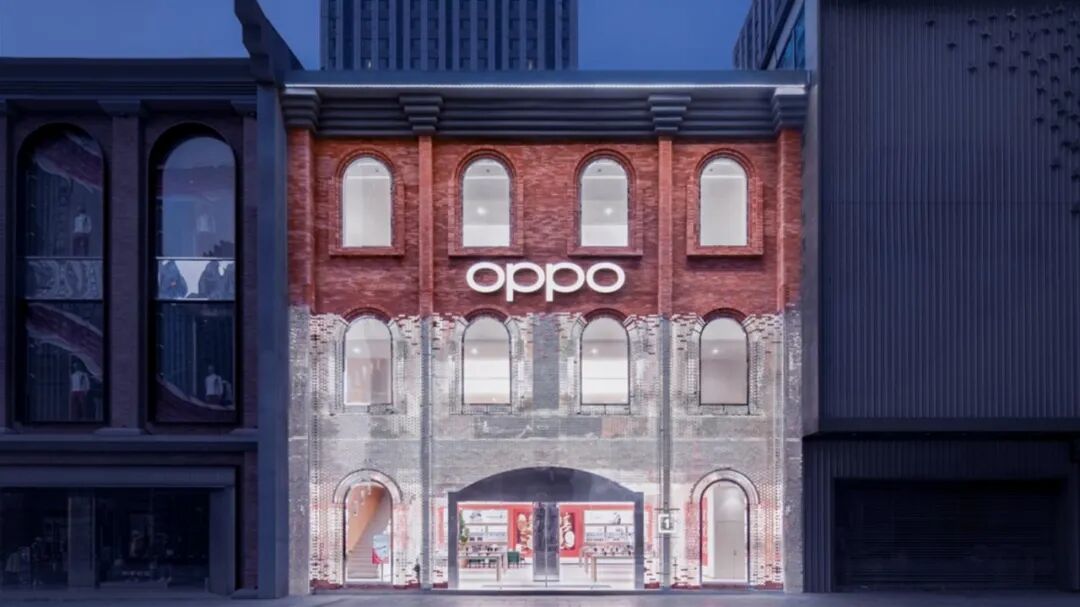
Before the release of the OPPO Find X10, I want to discuss the company's three-year journey of deliberate pace.
Recently, I came across an official announcement from OPPO.
The Find X10 series features Hasselblad's ultra-clear original camera, debuting the LUMO color palette, and supports exclusive skin tone protection and 18 style effects. Several portrait samples were shared, with accurate tones and excellent skin texture preservation.
I reviewed the smartphone industry news from the past month and found something interesting.
The entire industry is rushing into AI. Certain manufacturers have released new AI assistants, others have integrated large models, and some smartphones can now order takeout, book flights, and write emails on your behalf. In presentation PPTs, the word "AI" appears more frequently than "camera," "battery," and "screen" combined.
OPPO is also working on AI. On September 17th, they held a developer conference and released ColorOS 17, which Liu Zuohu described as an "AIOS experience that is personalized and proactive." The Breeno Next plan, on-device Multi-Agent system, on-device large models, and Linear Attention architecture were all mentioned.
But here's the interesting part: during the Find X10's preheat (teaser period), OPPO talked more about imaging than AI.
Dual 200-megapixel sensors, Hasselblad ultra-clear original camera, LUMO color palette, Danxia color science, and 17EV dynamic range. Liu Zuohu said this is OPPO's "most thorough generation in pursuing authentic imaging."
Now, the question arises.
In 2026, when AI smartphones have been hyped for two years and everyone feels "falling behind without AI," why has OPPO placed its focus on the seemingly "traditional" imaging track with the Find X10?
I reviewed OPPO's product launches, founder's speeches, and market data from the past few years and found that the story behind this is more complex than it appears.
01 The Day Chen Mingyong Urged Everyone to "Slow Down"
On September 17th, in Zhuhai, at the OPPO Developer Conference.
Chen Mingyong took the stage and delivered a speech. There were no grand narratives about AI, no use of terms like "disruption" or "revolution." He said that with the arrival of AI, everyone is rushing, but sometimes, we need to slow down.
I checked—this was one of Chen Mingyong's rare public appearances in the past two years. The last time he spoke extensively to the public was at the 2024 OPPO Developer Conference.
A founder, at their own developer conference, urging the entire industry to slow down in front of everyone. That's an interesting scene.
What was the industry like at the same time? Huawei released the Mate series, focusing on AI and AI OS; Xiaomi's HyperOS also centered around AI; vivo's Blue Heart Assistant had already iterated to its third generation. Everyone was vying to be the "first AI smartphone."
OPPO's pace seemed a half-beat slower.
But if you extend the timeline, you'll see that OPPO's imaging strategy actually began taking shape three years ago.
In 2023, the Find X6 series was released. That generation was the first to bring large-aperture telephoto lenses to flagship smartphones, introducing the concept of "light and shadow imaging."
In 2024, the Find X7 series added Hasselblad color calibration.
In 2025, the Find X9 Ultra debuted with the world's first 50-megapixel 10x optical telephoto lens.
Now, in 2026, the Find X10 arrives with dual 200-megapixel sensors, Hasselblad ultra-clear original camera, and LUMO color palette.
Across four years and four product generations, each iteration has added another layer to imaging capabilities.
During the Find X10 teaser period, Liu Zuohu said, "The technical accumulation since the Find X6 series has materialized in the Hasselblad ultra-clear original camera."
This might sound like PR talk, but if you examine the imaging specifications of each generation, you'll see that OPPO has been relentlessly pursuing one direction: authenticity.
What is authenticity? It means capturing exactly what your eyes see. Skin texture, light variations, color accuracy—without excessive beautification or algorithms making every photo look the same.
This direction is somewhat counter to the 2026 smartphone industry consensus.
Most manufacturers are pursuing "good-looking" imaging. AI beautification, AI retouching, AI scene optimization—making people look ten times better than real life, skies ten times bluer. Users love it, and it looks great on social media.
But OPPO chose a different path.
I asked several friends who use OPPO flagship phones why they chose OPPO. The answers were surprisingly consistent: authentic photos, without the filter-like feel.
This demand might seem small, but it's stable. Unlike an "AI assistant writing my weekly report" feature that feels novel once, this is a difference you notice every time you take a photo.
02 The Unfinished Accounting from ZEKU to Hasselblad
When discussing OPPO's imaging, we can't ignore one event: ZEKU.
In 2023, OPPO shut down ZEKU Technology, the self-developed chip team that once held high hopes. Over 3,000 people were let go overnight. The industry lamented, calling it a significant loss for China's self-developed chip efforts, while some said OPPO couldn't afford to burn money anymore.
I reviewed the public information from that time. ZEKU was working on SoCs, the main chips for smartphones. This was a money-consuming project—a single tape-out cost hundreds of millions, with R&D investment in the billions.
Where did OPPO's technical team go after ZEKU's shutdown?
According to subsequent industry reports, ZEKU's core architecture team was retained. The complete IP stack, raw domain processing technology, and low-power imaging computing architecture accumulated by the MariSilicon X imaging NPU were preserved. Now, OPPO's Tidal Engine and underlying chip adaptation optimizations are handled by this former ZEKU core team.
This shift was crucial.
OPPO didn't continue pouring billions into smartphone main chips, a track (track) too expensive and dominated by MediaTek and Qualcomm. Instead, it refocused its technical efforts on areas where it could excel and where users could truly perceive value.
Imaging was that area.
While the MariSilicon X didn't iterate to a second generation, its accumulated imaging processing capabilities were fully integrated into OPPO's imaging algorithms and tuning. Raw domain processing, night scene computing power, video optimization—these technologies didn't disappear; they transformed.
The "light and shadow imaging" of the Find X6, the Hasselblad color tuning of the Find X7, the 10x optical telephoto of the Find X9, and now the dual 200-megapixel ultra-clear original camera of the Find X10 all owe their existence to the technical foundation left by ZEKU.
This might seem like a bad deal to outsiders. Hundreds of billions spent, only to produce an imaging NPU and some technical accumulations.
But from OPPO's perspective, this was more about stopping losses and refocusing.
It didn't continue burning resources in a low-probability track (track), instead consolidating technical resources into areas where it had advantages and where users truly cared.
Imaging is OPPO's advantageous track (track).
Since the Find series, OPPO has never stopped investing in imaging. Its collaboration with Hasselblad began in 2022 and has now lasted four years—enough time to solidify a brand's imaging identity.
What's the first thing that comes to mind when you think of OPPO's imaging now?
Hasselblad. Authenticity. Portraits.
These three labels are what OPPO has spent four years building.
03 Is Imaging in the AI Era a Breakthrough or an Obsession?
This brings us to an unavoidable question.
It's 2026, and everyone is talking about AI smartphones. Why is OPPO investing so heavily in imaging? Is this the right choice for breaking into the high-end market, or is it just an obsession?
I reviewed this year's market data.
According to IDC, in Q2 2026, Huawei led the Chinese smartphone market with a 22.6% share, followed by Apple at 18%. OPPO and vivo tied for third place, each holding 16%. OPPO's shipments declined by 9.7% year-over-year.
The overall market is shrinking. China's smartphone market fell by about 6% year-over-year in Q2. While Huawei and Apple grew, other brands declined.
At this point, OPPO's pressure to move upmarket is greater than ever.
Huawei has its self-developed chips and the brand appeal of the Mate series. Apple has its iOS ecosystem and brand premium. To break through between these two giants, OPPO needs a differentiated reason for users to buy.
Imaging is that reason.
I did a small comparison. In the first half of 2026, in the 6,000+ RMB price segment, Huawei and Apple combined held nearly 70% of the market. Of the remaining 30%, OPPO, vivo, and Xiaomi split the share. OPPO's ability to hold its ground in this segment owes much to imaging.
The Find X9 Ultra, within six months of launch, became one of the best-selling Android models in the 6,000-8,000 RMB price range. This success is inseparable from its 10x optical telephoto and Hasselblad imaging.
Users are willing to pay more for better imaging—this is the foundation of OPPO's high-end strategy.
What about AI? Is OPPO abandoning it?
Of course not.
On September 10th, Liu Zuohu spoke at the Bund Summit in Shanghai alongside Ant Group CEO Han Xinyi and Alibaba Chief Scientist Zhou Jingren. He said, "Proactive intelligence will be the true turning point for AI smartphones."
He also disclosed a data point: in the past few months, the number of users purchasing goods through Breeno Assistant has doubled.
This data is interesting. It shows that OPPO's AI is already driving real transaction conversions, not just staying at the "answering questions" stage.
Breeno Assistant integrated with Alipay's "Abao" 200 lifestyle services. You can tell Breeno to pay utility bills, check deliveries, or order takeout. AI has transformed from a tool into an assistant that gets things done.
At the September 17th Developer Conference, OPPO announced on-device large models, Linear Attention architecture (reducing memory usage by 48% and optimizing energy consumption by 55%), the Breeno Next plan, and on-device Multi-Agent systems for collaborative intelligence.
OPPO hasn't skimped on AI investments.
It's just that OPPO chooses to hide AI in the system's background while placing imaging front and center for users.
This strategy is clever.
AI is a backend capability, and users perceive it slowly. Telling users, "I have an on-device large model, 128K context, Linear Attention architecture," means nothing to them. But telling them, "This phone takes incredibly authentic portraits," and letting them try it—they understand immediately.
OPPO uses imaging as the foreground and AI as the background. The foreground drives purchases; the backend ensures long-term experience.
This approach resembles Apple's strategy. Apple's AI features are never the headline of their launches, but you feel AI working everywhere in iOS.
While all manufacturers rush to promote AI narratives, OPPO chooses to amplify the one thing users can truly touch, capture, and see.
I'm not sure if this strategy will ultimately help OPPO regain market share. The high-end competition is brutal—Huawei is pushing up, Apple is pressing down, and the middle ground is shrinking.
But one thing I'm fairly certain about.
When all smartphones offer similar AI features, users will still choose based on the most fundamental factors: photo quality, screen comfort, battery life, and feel in hand.
AI is a bonus, not a necessity—at least not yet.
OPPO has spent three years solidifying its imaging fundamentals. In an era where everyone is rushing into AI, this choice seems slow and perhaps even foolish.
But in high-end market competition, sometimes the winner is the one with the most solid fundamentals.
This article is original to Xinmou. For reprint authorization or business cooperation, please contact us.
— END —
-
Apple Finds Itself in a Tight Spot: iPhone18 Pro's Camera Trails Behind Huawei's Year-Old Model
-
![]()
Li Xiang's Investment Ambitions: Becoming Second Largest Shareholder of Sunwoda and 'Sweeping Up' Robot Companies
-
![]()
Why Has OPPO Slowed Down When the Entire Industry is Rushing into AI?
-
![]()
BYD Plans to Construct 20,000 Stations, Sunwoda Aims for 10,000 Stations: The Boom of Flash Charging in China
-
![]()
Chinese Computing Power Expands Its Global Reach in ASEAN
-
![]()
Analysis of Competitive Strategies for Home Appliance Enterprises in the Stock Market: The 'Four Alls and One Diversification' Approach
-
![]()
Gross Margin Dips Below 10%, Li Auto Temporarily Sets Aside Its 'Competitive Edge'
-
YC's Latest Insight: Harness Matters More Than the Model