Singapore Hardware Veteran Creates an AI Golf Personal Trainer
 09/22 2026
 427
427
Hey, I'm Uncle Chen.
Today, let's talk about a sport: golf. In the past, golf was considered an aristocratic sport due to its large land requirements, high investment, maintenance costs, and weather dependency, making it relatively expensive to play.
Nowadays, indoor golf is on the rise, significantly lowering the barriers and costs. Golf, tennis, and pickleball have been dubbed the "three emerging middle-class sports."
Golf is a sport that heavily relies on muscle memory and repetitive training. Without a good coach, it can lead to blind repetition, where more practice doesn't necessarily yield better results.
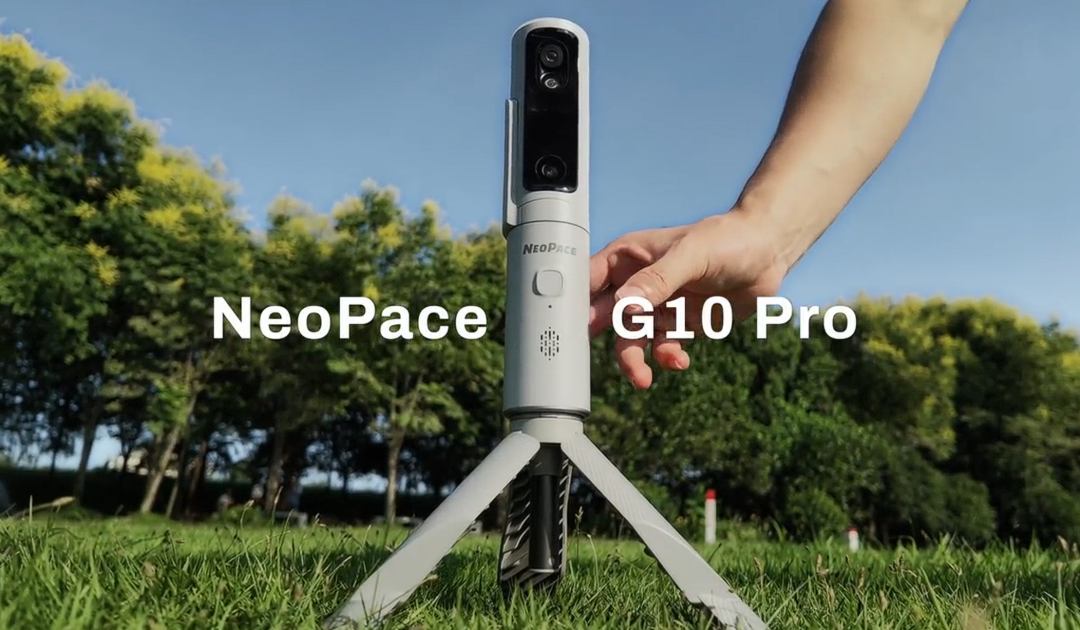
Singapore-based AI vision company Pixel Field has targeted this user scenario, aiming to solve this problem with a single device. They have created an imaging hardware brand called NeoPace, with the product model G10 Pro, which is now live on Kickstarter at a crowdfunding price of $899. Although the total amount raised is not high, it has garnered support from several hundred backers, validating the feasibility of the demand.
The core solution of the G10 Pro is a "three-camera + radar" fusion system.
At the hardware level, it integrates three cameras + a 24GHz Doppler radar system. Two 480fps high-speed cameras are aimed at the hitting zone, while a 120fps camera records the full-body swing. The radar tracks ball speed (up to 223.7 mph). All data is processed in real-time on the device, without the need for a phone or cloud connection.
For a single swing, it can collect 49 data points: 22 ball and club data points, plus 27 body data points, including chest rotation, pelvic movement, wrist angle, elbow flexion and extension, and knee swing.
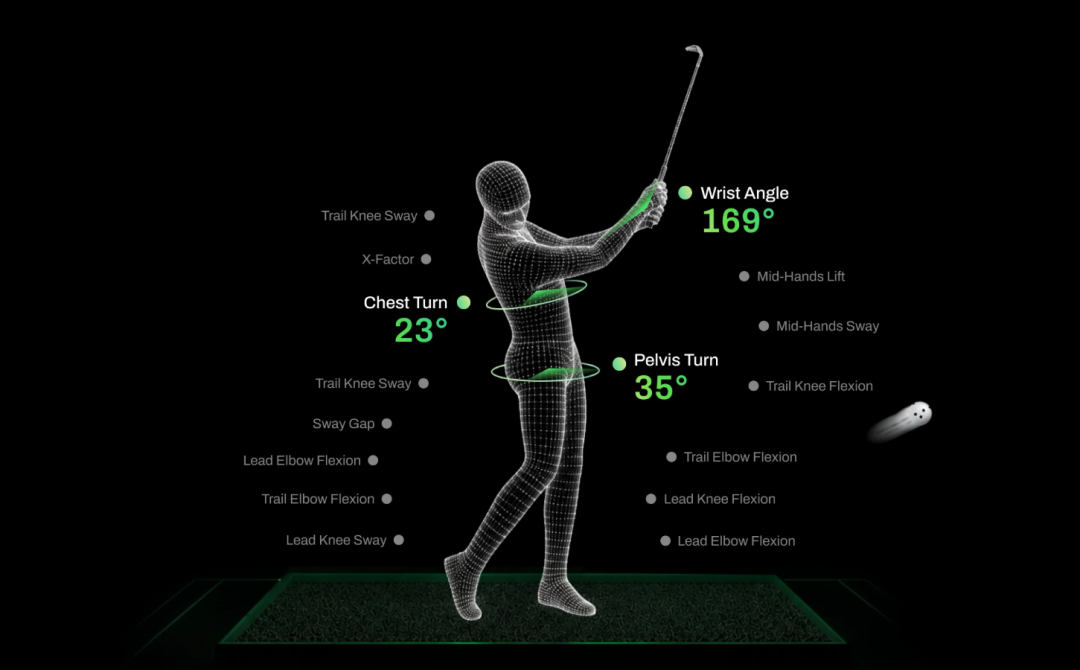
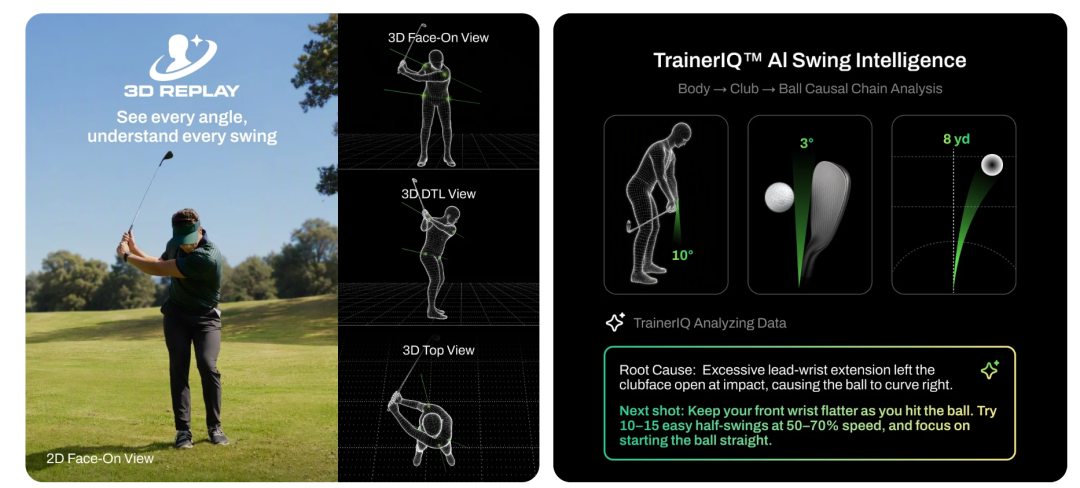
What sets the G10 Pro apart from other launch monitors on the market is its 3D Replay feature. Every swing is reconstructed into a 3D model, allowing you to rotate the perspective (Note: ' perspective ' is kept as is since it's a term that may not have a direct English equivalent in this context, but it refers to 'viewing angle') 360 degrees, replay in slow motion, and examine seven key swing nodes frame by frame.
Combined with the TrainerIQ "brain" system, it can analyze how body movements affect club delivery and how club delivery affects ball flight along the causal chain of body → club → ball, then recommend targeted training exercises.
A Hardware Veteran with Millions in Shipments Chooses a Niche Track
The G10 Pro is entering a market dominated by giants: the golf launch monitor track. The global golf launch monitor market is not very large, considered a niche segment worth several hundred million dollars.
In 2025, the global portable launch monitor market was approximately $184 million, expected to reach $224 million by 2032, with an average unit price of around $780 and gross margins between 20% and 40%.
The market is highly concentrated by brands, with the top five manufacturers—TrackMan, Foresight Sports, SkyTrak, Full Swing, and FlightScope—occupying about 76% of the global market share.
The differentiation between G10 and other traditional brands lies in the AI technology layer. While most launch monitors on the market provide data, and a few swing cameras offer visuals, the closed loop of "data + visuals + causal analysis + training recommendations + progress tracking" is currently only being done by NeoPace.
NeoPace G10's parent company, Pixel Field, is not a new startup. Headquartered in Singapore, they are a company focused on AI vision and smart hardware.
Before launching NeoPace, they had mature engineering experience in computer vision, edge AI, and consumer hardware mass production. The company has extensive experience in the smart hardware field, with a global cumulative shipment of over 1 million units across its product portfolio (covering sports, health, and lifestyle categories) since 2018.
NeoPace is the first time this Singaporean company has vertically integrated its AI vision capabilities into a specific sports scenario.
Is the Golf Smart Hardware Market Exploding?
In the golf hardware space, many other teams are also targeting this direction. For example, there's a team called PathFinder, founded in 2024, which enters through the golf scenario, providing intelligent equipment and solutions tailored to professional sports scenarios.
Their product, BirdieSense, is positioned as a "Sports AI Agent" that identifies user problem patterns through continuous data accumulation and provides personalized training recommendations. In April 2026, they secured several million yuan in angel round funding from Jinqiu Fund. It is understood that PathFinder has already received thousands of orders from the industry.
Overseas, there are also companies venturing into this direction and gaining market and capital recognition.
For instance, Sportsbox AI is an AI company specializing in golf biomechanics and 3D motion capture. Its technology can capture 3D motion data of swings from a single-view video. The company was co-founded by engineer Samuel Menaker and former LPGA Tour player Jeehae Lee.
In April 2026, an investment group led by golf star Bryson DeChambeau completed a multi-million-dollar acquisition of Sportsbox AI.
Another example is HackMotion, a tech company from Latvia, whose core product is a wrist-worn sensor that helps golfers correct their wrist movements through real-time biomechanical feedback.
Its products have been sold in over 70 countries, with a cumulative total of 70,000 units sold. In 2024, the company's revenue reached €7.26 million, with a profit of €2.15 million.
Uncle Chen's Postscript:
Beyond golf, the sports hardware field is witnessing an innovation revolution in smart hardware across various ball sports.
Tennis is the most bustling track, as previously written about, with major brands including Acemate, Tenniix, Ponbot Aura, LUMISTAR, and Yisi Intelligence. Chinese-made AI tennis robots are a hit overseas! 25 million tennis fans now have an on-demand ball partner.
In basketball, there's Carry, also launched by LUMISTAR, which is equipped with four cameras and a 190-degree tracking system, capable of recognizing gestures and automatically adjusting pass speed, spin, and landing point. Nearly $1 million in two days! China's AI basketball robot Lumistar Carry becomes another small hit.
Other ball sports are also following suit, such as Ponbot explicitly supporting pickleball and padel tennis. There's also a company whose AI badminton training system has already won awards at CES, creating personalized training plans through high-speed cameras and generative AI.
Although the ball sports hardware market looks vibrant now, it currently faces the dilemma of "acclaim without sales." There's still a long way to go to truly get users to open their wallets and continue using these products.
-
![]()
China’s Premier Independent Token Factory: Secures 2.9 Billion Yuan in Funding
-
FAW and GAC Toyota: Collaborating Without Full Merger?
-
Honor Expands Partnership with Alibaba: Who Will Lead the AI Smartphone Revolution?
-
![]()
Yunqi Conference Heralds Computing Power Growth: Alibaba Cloud’s Data Center Capacity to Surpass 20GW by 2032, T-Head Reveals AI Chip Zhenwu V900
-
![]()
Singapore Hardware Veteran Creates an AI Golf Personal Trainer
-
![]()
Data Integration Throughout the Production Chain! Haomi Optics Initiates MES and ERP System Upgrade Project
-
![]()
3.56 Billion Yuan in Overdue Payments and Unpaid Salaries! What’s Ailing Lianchuang Electronic’s Automotive Optics Business?
-
Volkswagen Can't Bear a Profit Margin Cut to 1%! Thousands of Workers Protest: We Won't Accept It