QianWen Computers Have Arrived! When Thought Becomes a Tradable Good, Alibaba’s Ambitions Reach Farther Than You Think
 09/23 2026
 354
354
From Vibe Coding to Vibe Working, We’re Still Just at the Beginning.
“In the future, the total volume of thinking produced by machines will surpass human thinking by more than a thousandfold.”
On the morning of September 22, as the 2026 CloudTown Conference opened its doors, Wu Yongming, CEO of Alibaba, made this bold prediction. Over the past year, AI has advanced from Vibe Coding to Vibe Working, with AI Agents taking on increasingly complex and long-term tasks.
In Wu Yongming’s view, this is just the start—much like the electric light bulb in 1882, today’s AI Coding represents only the earliest stage of the machine intelligence era. The defining products of this era have yet to emerge.
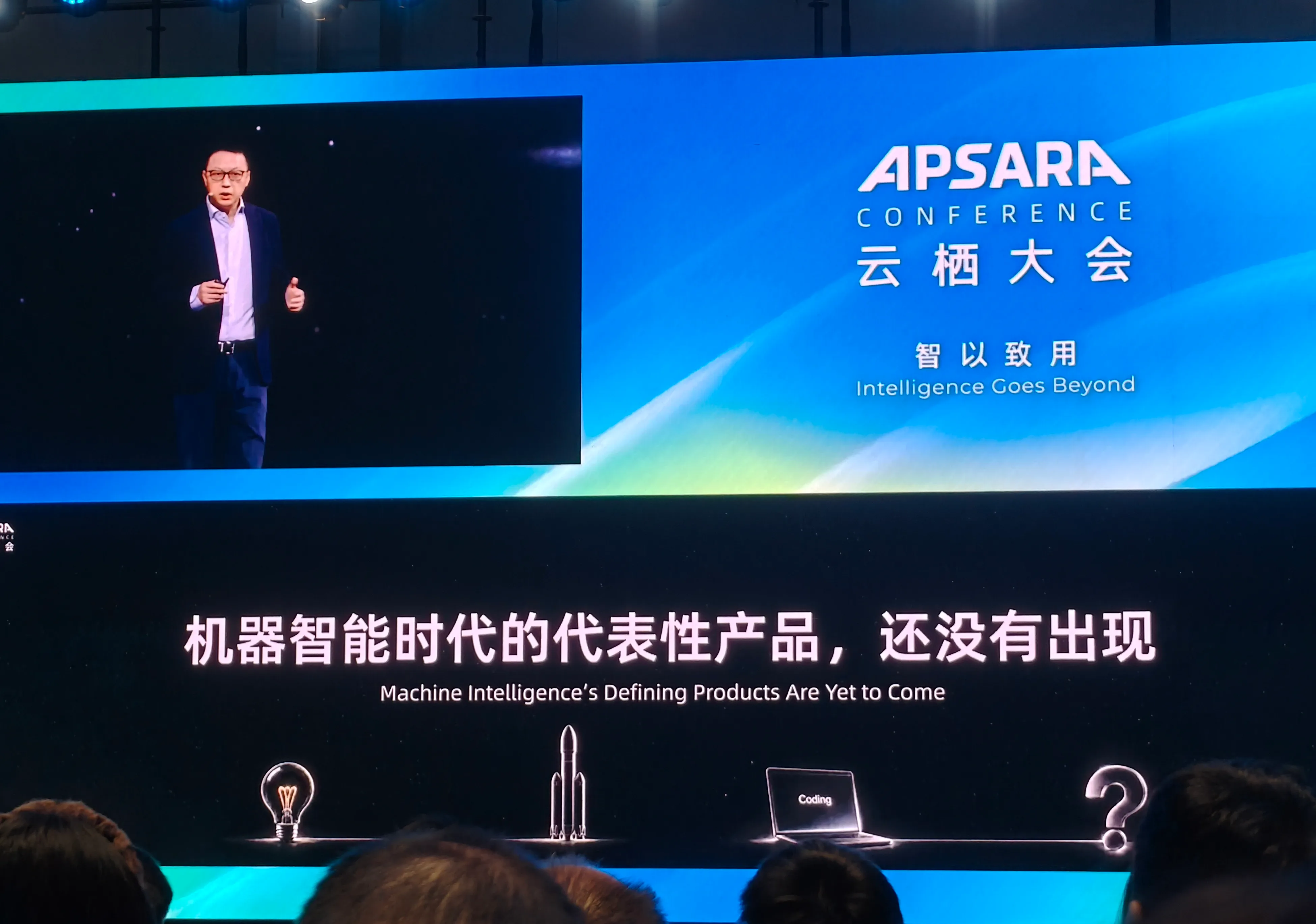
Image Source: Leitech
Interestingly, this year’s CloudTown Conference also ventured beyond CloudTown for the first time.
With a larger venue, expanded exhibition areas, and a lineup spanning models, chips, and AI clouds, all the way to glasses, earbuds, computers, and phones, the event showcased a series of new QwenNote products, the all-new Qwen Book AI Agent computer, and next-generation AI Agent phones from Honor and OPPO, along with a variety of AI hardware devices.
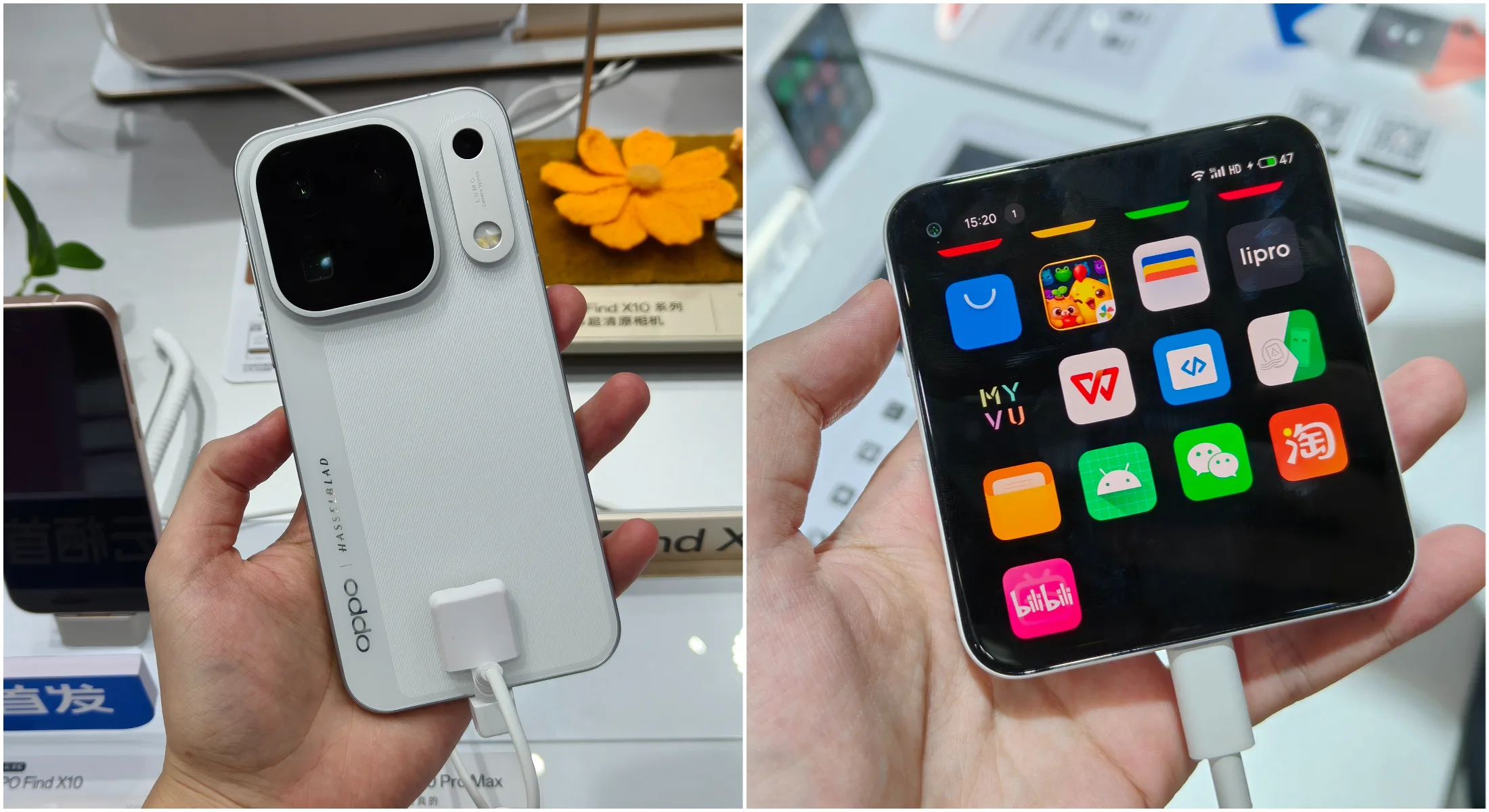
Image Source: Leitech
All of this made this year’s CloudTown Conference markedly different—it’s no longer just an “Alibaba Cloud” event. Beyond cloud computing, this year’s conference also tackled questions like: If “thinking” can truly be mass-produced and consumed like electricity in the future, who will produce the Tokens, who will distribute them, and which devices and applications will ultimately consume them?
Judging by this year’s CloudTown Conference, it’s clear that Alibaba’s ambitions extend far beyond a couple of AI hits. To some extent, the conference’s expansion beyond CloudTown perfectly encapsulates Alibaba’s growing AI ecosystem.
From AI Glasses to Computers, QianWen Is Everywhere
To be honest, Alibaba’s AI ambitions became even more concrete in this year’s exhibition hall. The most noticeable change is that “QianWen” is now appearing on an increasing number of hardware devices—AI glasses, AI earbuds, AI recording cards, desktop robots, and even an unexpected AI Agent computer.
First, Alibaba itself brought significantly more AI hardware to the table. The new generation of QianWen AI glasses—the N1 and N1 Pro—along with the first AI earbuds, the Qwen Clip, followed by the QwenNote A2 and QwenNote Eva for office use, and the surprisingly introduced Qwen Book, cover a wide range of scenarios including vision, hearing, meetings, and desktop productivity.
Behind this expansion is QianWen’s newly proposed Personal Agent—an Agent that truly understands you must first gather sufficient Context, and beyond phones, different hardware devices provide unique sensory entry points.
The new generation of QianWen AI glasses, the N1 series, is a prime example. Compared to the previous G1, the new models further enhance photography and AI capabilities, with the N1 Pro adding eye-tracking and iris verification. Not only can they “see where you look”—QianWen can combine gaze data to determine what you’re asking about—iris verification also streamlines payment confirmations.
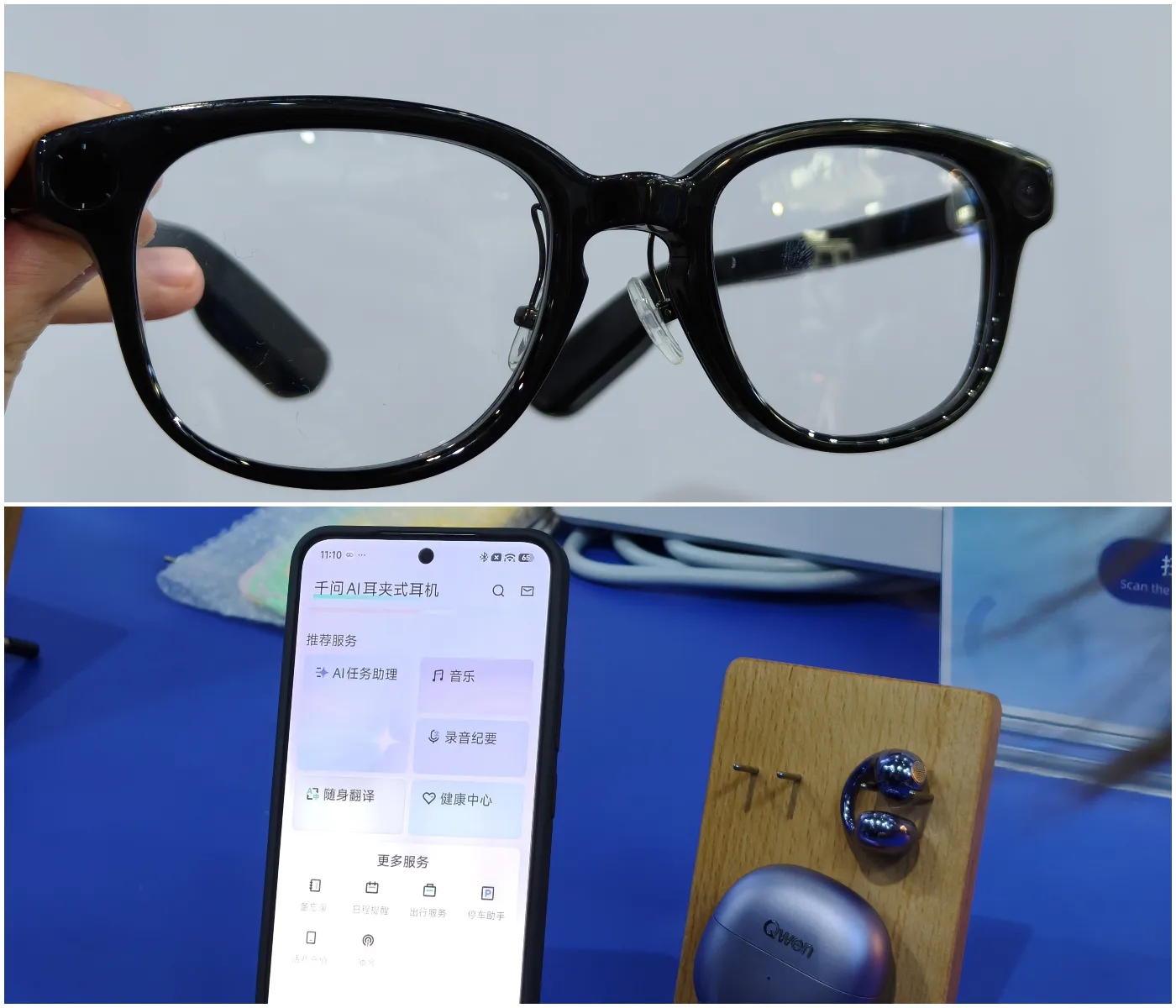
Image Source: Leitech
Unlike the traditional method of telling a system “what we want” by tapping on a phone, with AI glasses, vision, voice, and the environment itself begin to shape how AI understands user intent. That’s why QianWen is also developing AI open earbuds like the Qwen Clip, supporting face-to-face translation, AI note-taking, and voice-based task execution—all centered around providing QianWen with another long-term online sensory entry point.
Song Gang, General Manager of QianWen AI Hardware, also refers to AI wearables as a crucial platform for Personal Agents, hoping to establish cross-device personal Context through first-person perspective and voice interaction.
This shift is also evident in a series of products like the QwenNote A2, QwenNote Pin, and QwenNote Eva.
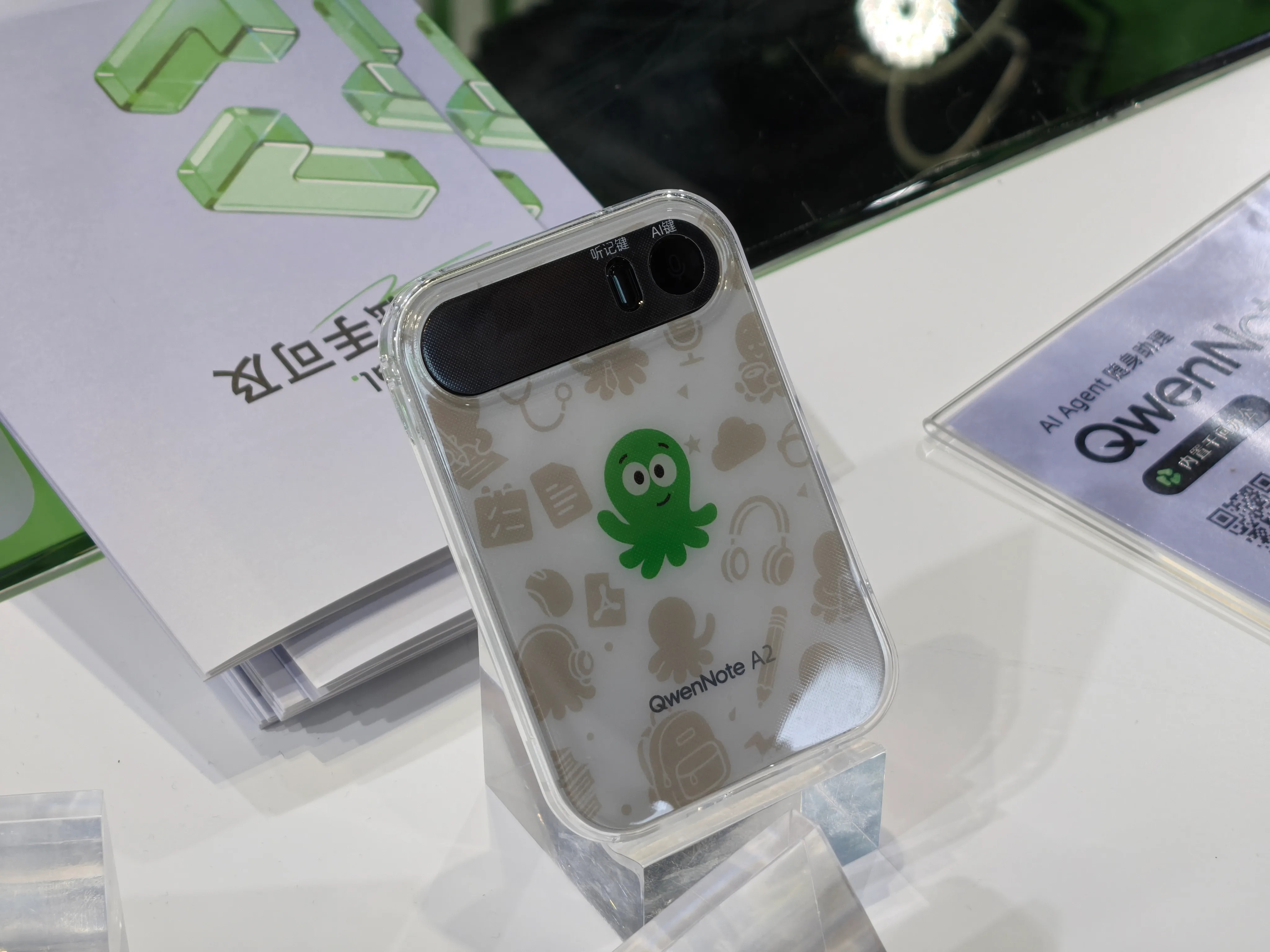
Image Source: Leitech
Especially the QwenNote A2, an upgraded version of DingTalk A1, weighs only 67g and features a six-microphone array that can magnetically attach to the back of a phone. Notably, the A2 has a built-in IoT card, allowing it to connect to the internet independently of a phone and directly integrate with QianWen Office.
For example, after finishing an interview or meeting, instead of just having AI organize the recording, pressing and holding a button can directly hand over follow-up tasks to QianWen Office in the cloud to continue completing them. As Chen Yusen expressed in his speech theme at the QianWen Office session, “Context is All You Need,” the QwenNote A2 takes AI recording devices a step further:
Recording only captures Context—what truly matters is letting the Agent continue the work.
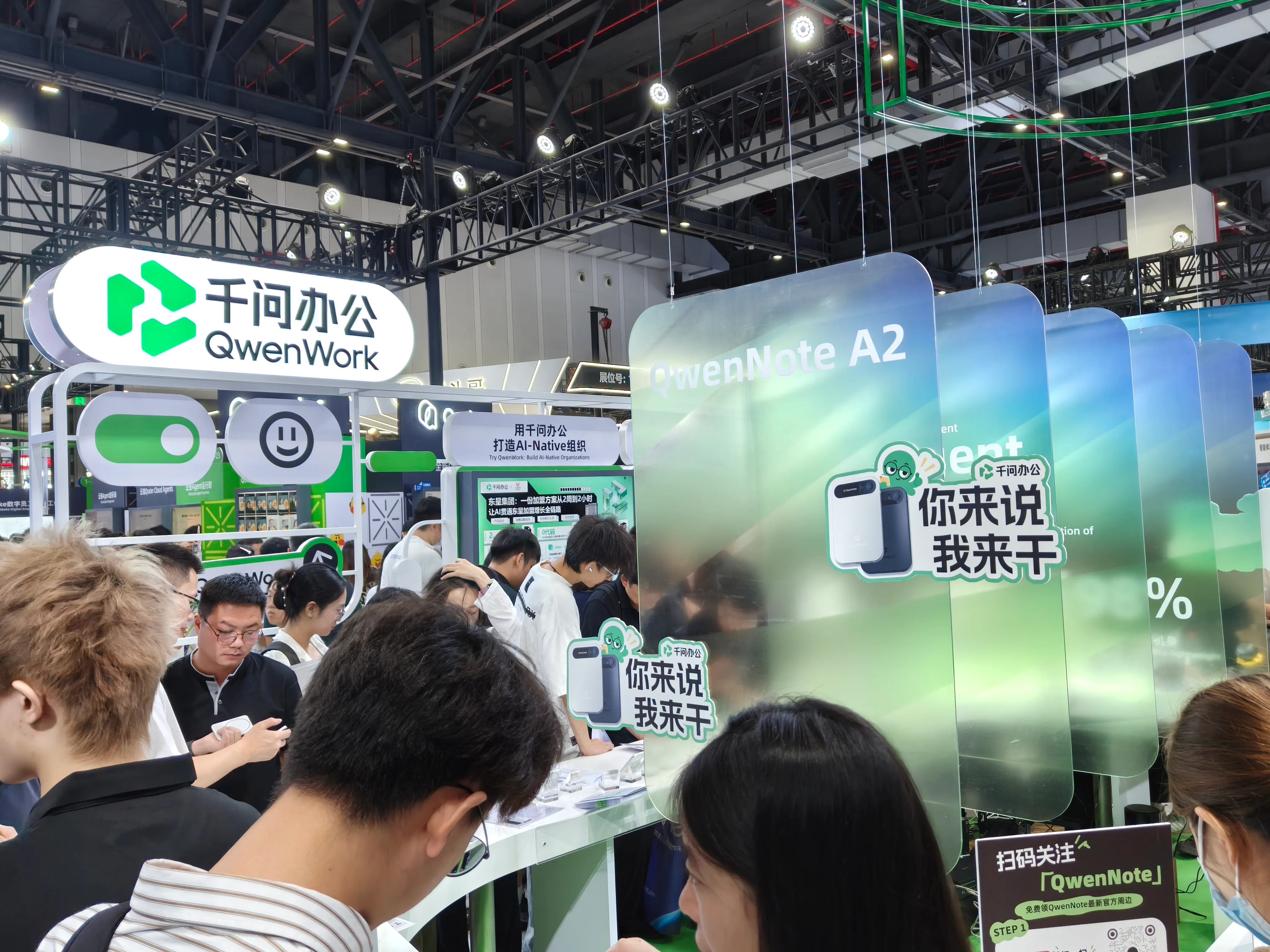
Image Source: Leitech
Especially in enterprises, much of the truly important information isn’t in structured databases but in meetings, communications, discussions, and even spontaneous ideas. The A2 can continuously bring this real-world information into QianWen Office.
This leads to QianWen Office’s new enterprise product—Enterprise Context—which attempts to solve the Context problem that has long plagued enterprise Agents, allowing already intelligent models to understand what’s happening in a company at any given moment.
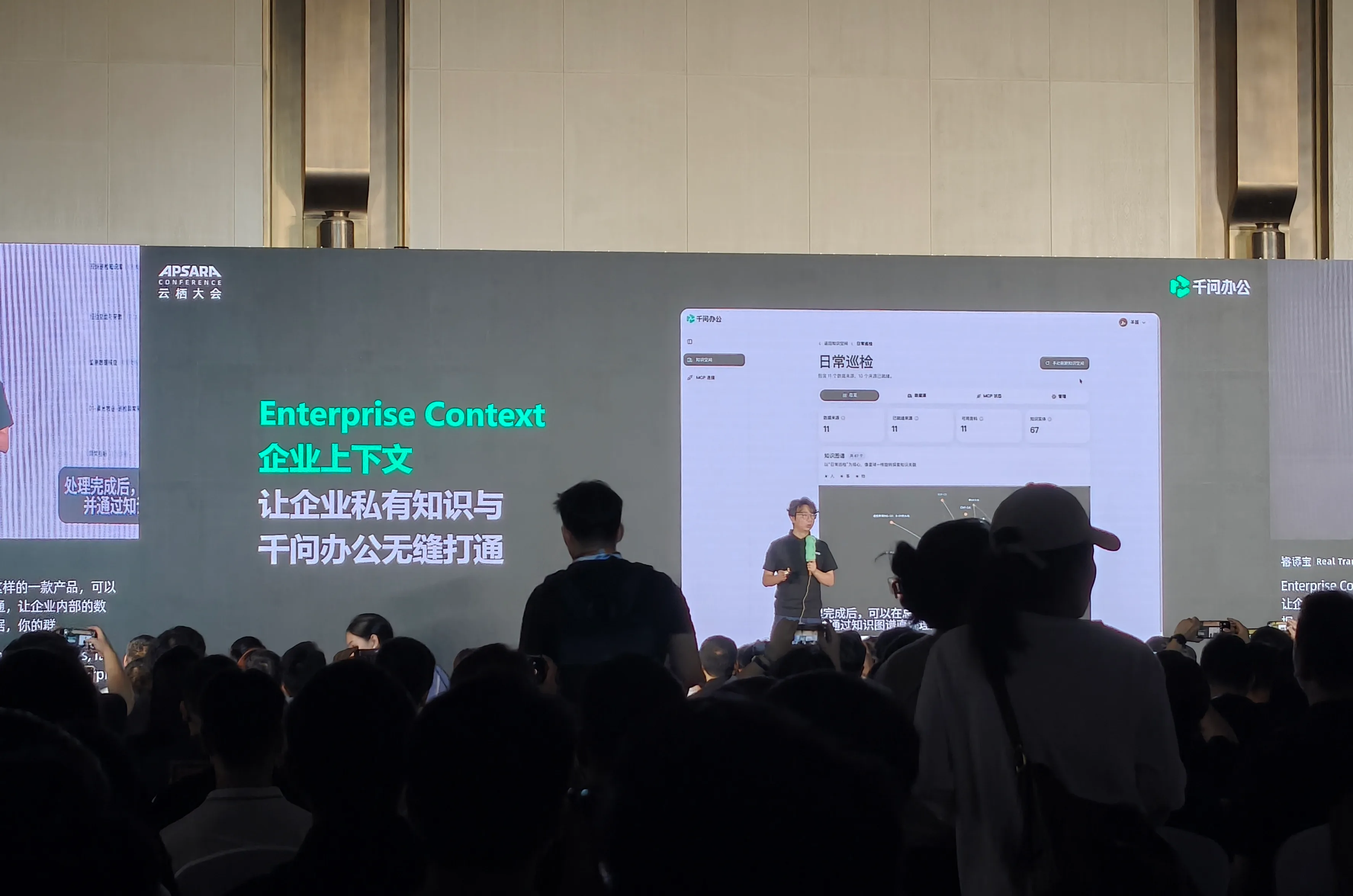
Image Source: Leitech
QianWen Office’s “Enterprise Context” compresses and structures information scattered across group chats, documents, knowledge bases, etc., continuously updating it as business changes, and then provides Agents with only the specific information they need for a task, rather than overwhelming them with enterprise data.
Similarly, the QwenNote Eva, a desktop robot priced at 899 yuan, can use a user’s phone to identify the user via voice and vision, provide task progress feedback, and also connect to QianWen Office to execute tasks.
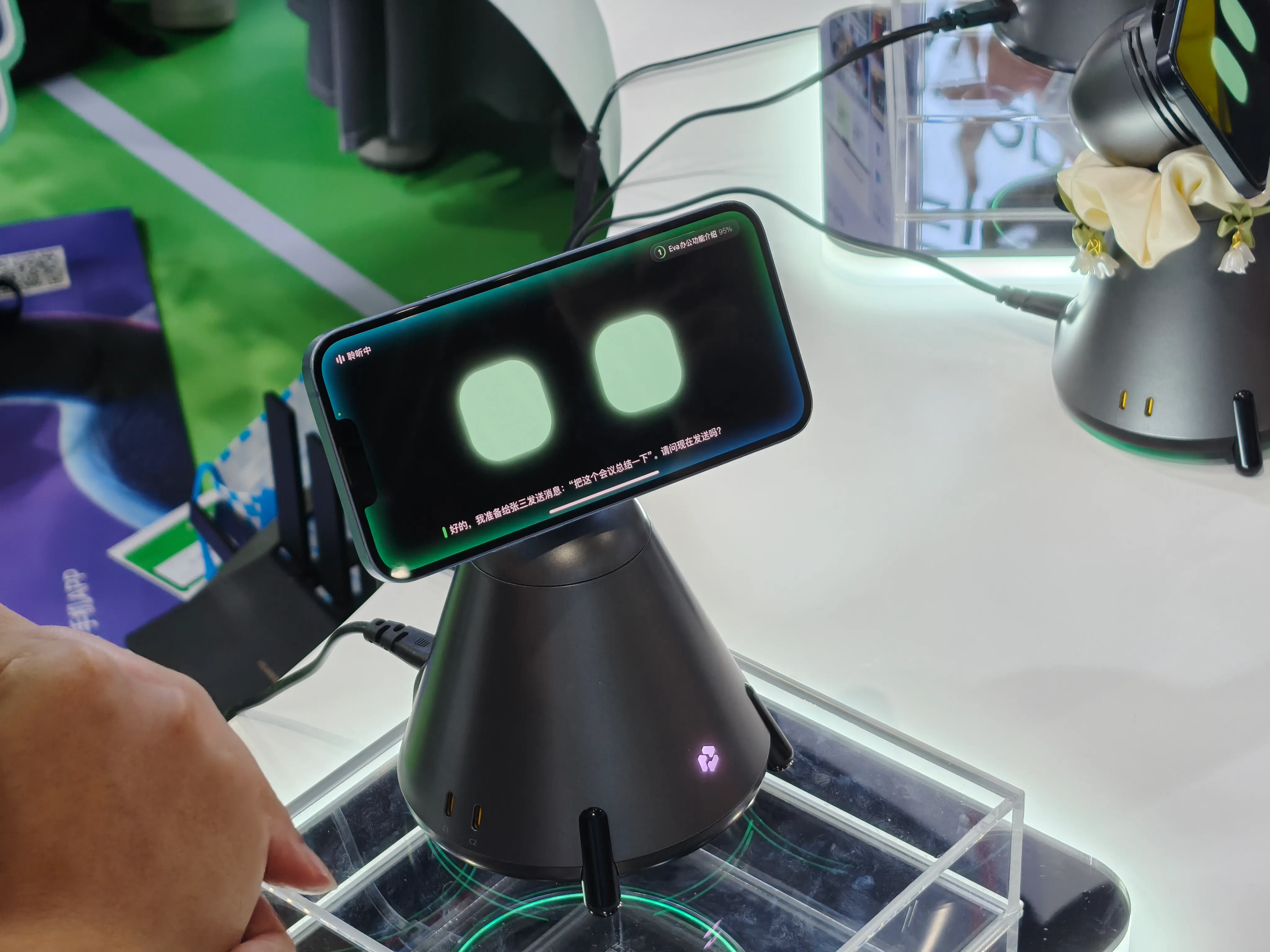
Image Source: Leitech
Of course, the biggest surprise at the event today was the Qwen Book.
As a “native AI Agent computer,” the Qwen Book adopts a tablet-plus-keyboard-touchpad form factor and features dedicated QianWen buttons. According to on-site staff, it runs on Alibaba’s self-developed system, with core interactions redesigned around QianWen and Agents.
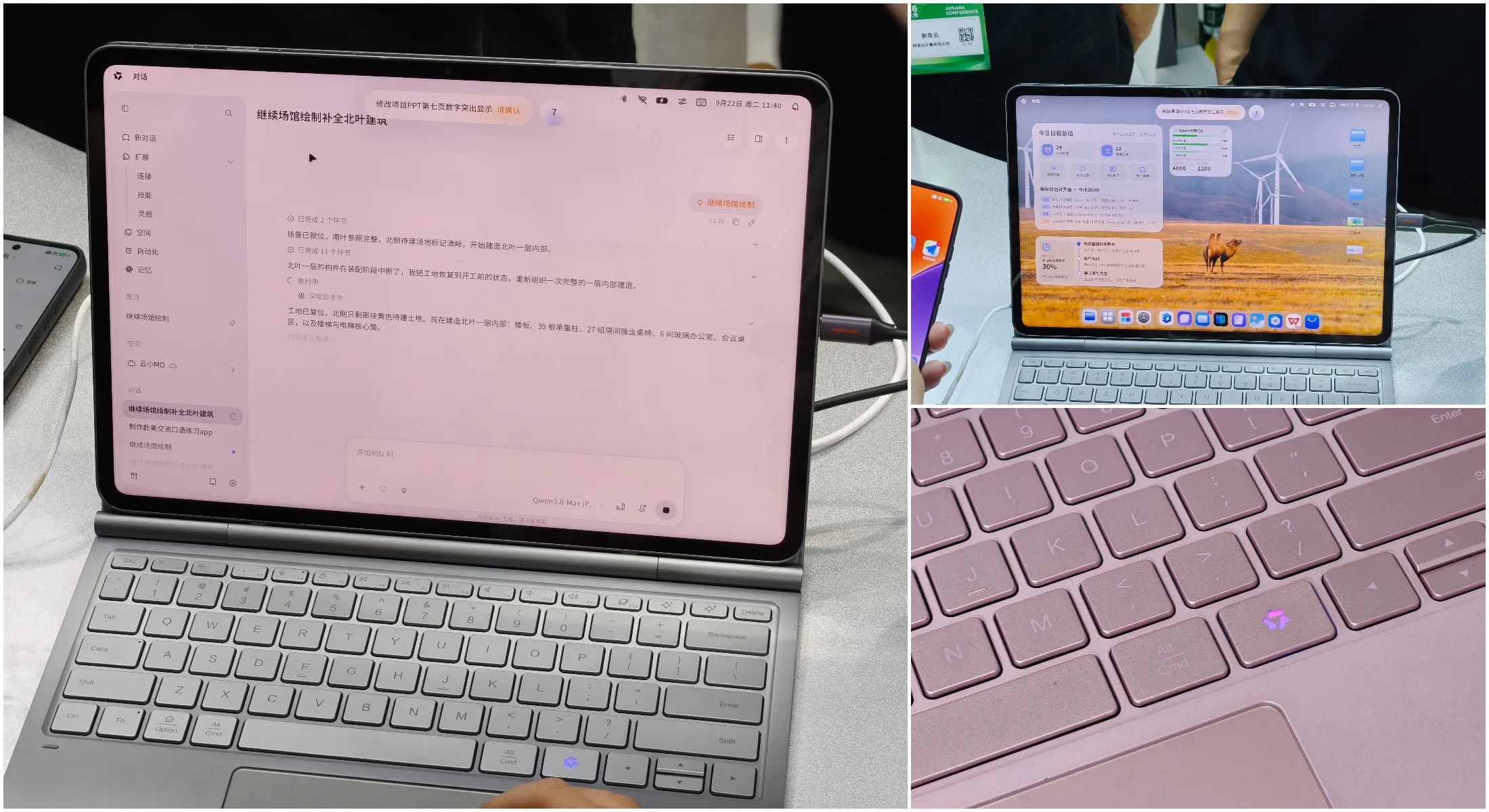
Image Source: Leitech
Of course, it’s still far from a mature computer. At least in the demo we saw on-site, the available third-party applications were quite limited, relying on cloud-based Windows, Android, and Linux ecosystems. Negotiations for third-party ecosystems are still ongoing, and no specific release date has been set.
But the interesting thing about the Qwen Book lies in this “immaturity.”
However, Alibaba isn’t planning to build all endpoints itself. The Qwen Intelligence solution announced today is a full-stack AI phone solution Alibaba is offering to phone manufacturers.
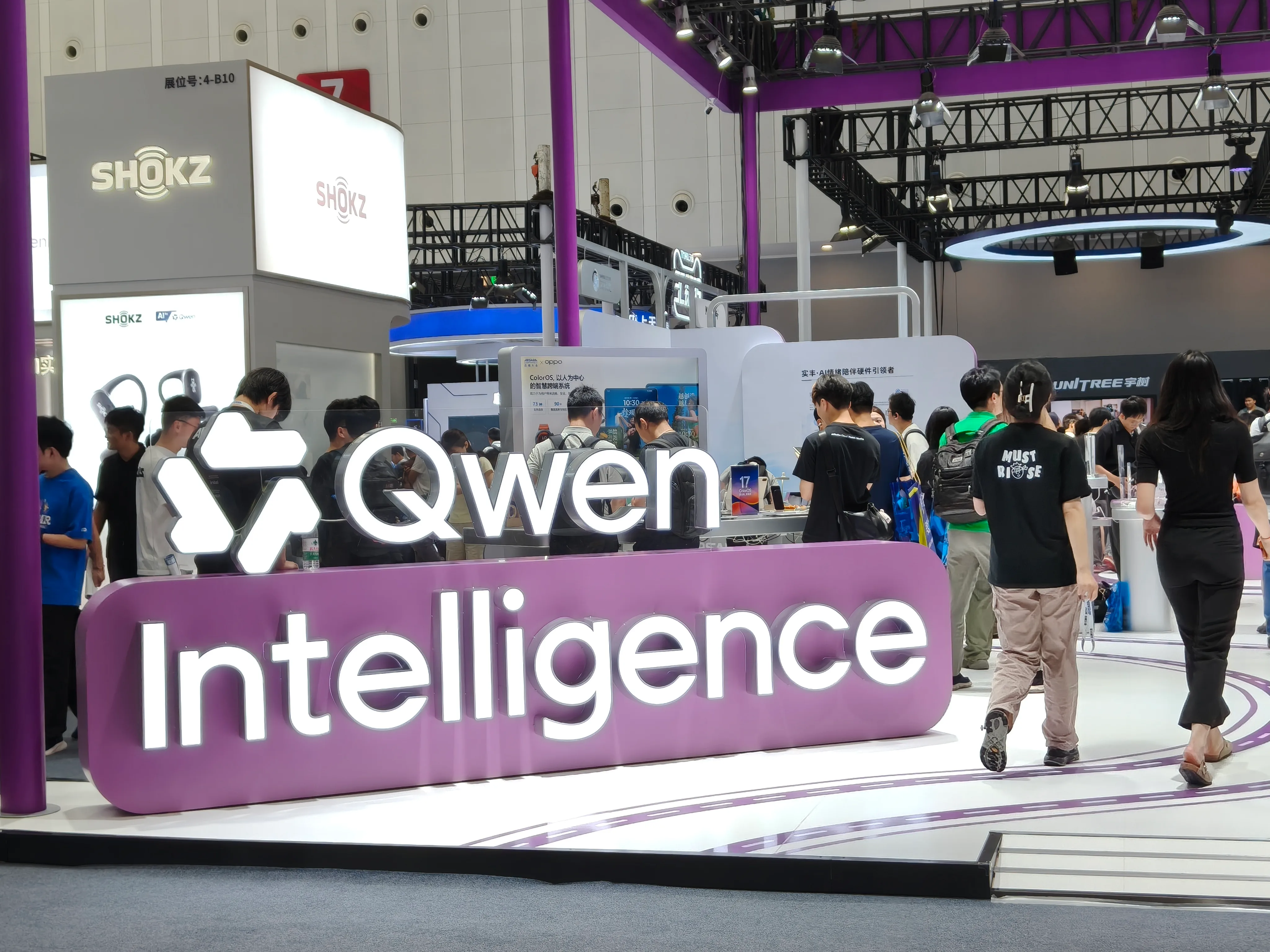
Image Source: Leitech
According to introductions, Alibaba is further integrating QianWen models and Agent capabilities into the system layer, aiming to enable AI to complete complex, cross-application, multi-step tasks. The upcoming Honor Magic9 series has been confirmed as the first batch of devices to feature this solution, with Honor and Alibaba jointly developing vertical models and solutions for phones based on MagicOS and Qwen Intelligence.
Not just Honor. At the Qwen Intelligence exhibition area, Leitech also saw the newly released OPPO Find X10 series, announced on the evening of September 22, as well as the yet-to-be-released Meizu “AI Cube.”
The nearby Shokz exhibition area showcased the OpenFit 2 AI open earbuds, Shokz’s first earbuds to implement AI recording, translation, and other functions based on the Qwen model, also featuring a flip-to-record transcription function through an open design. During on-site testing, the real-time recording transcription experience was remarkably smooth and accurate.
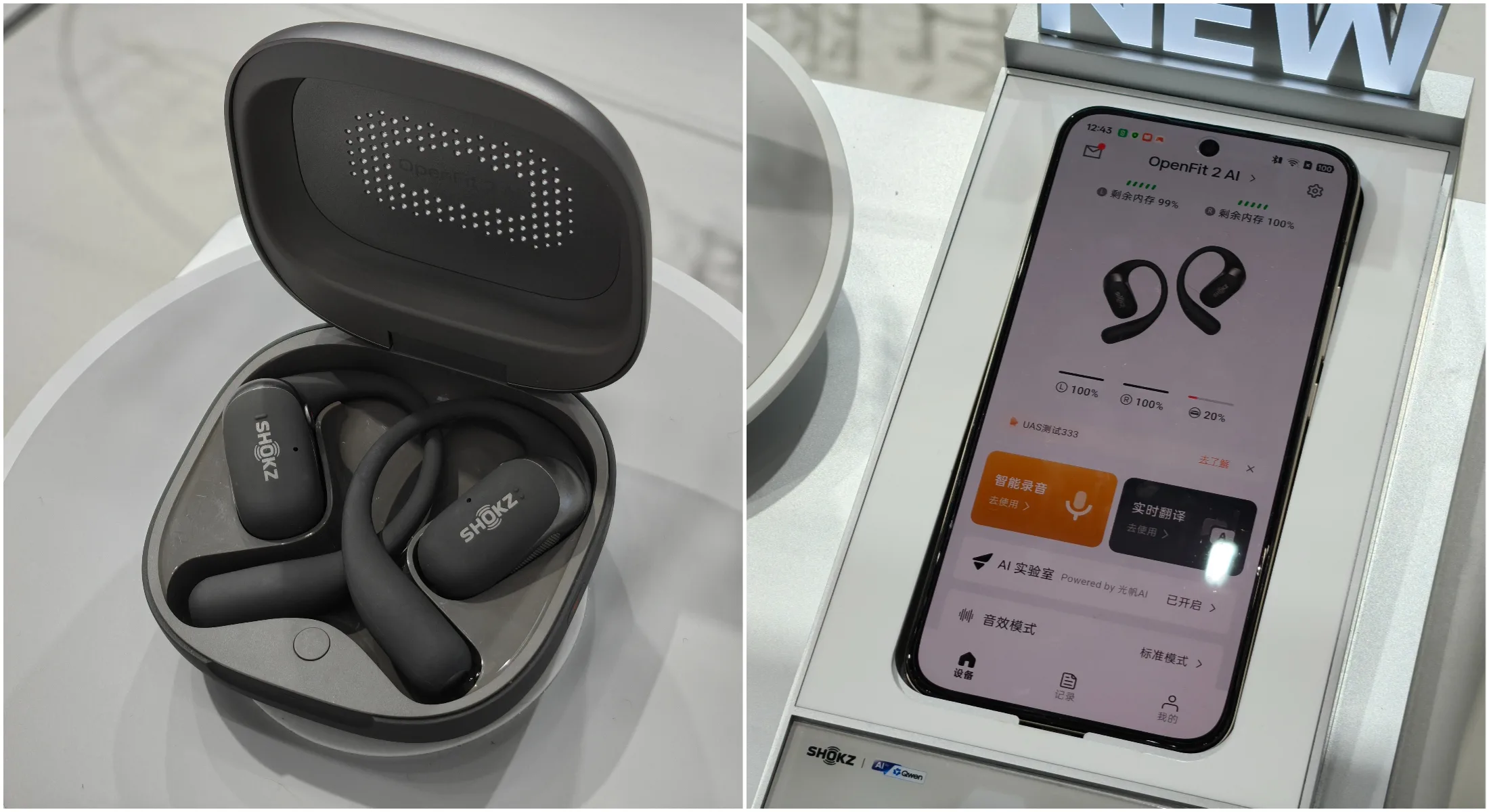
Image Source: Leitech
There’s also the newly launched “AI Lab” feature, including smart dialogue, to-do lists, quick notes, and message assistants, all allowing open earbuds—a wearable-friendly product—to add greater value to daily life.
All of these, in essence, are answering a key question of the machine intelligence era: Where will all these Tokens ultimately be consumed?
When “Thinking” Becomes a Commodity, Alibaba Aims Even Higher
If there’s one clear change at this year’s CloudTown Conference, it’s that Alibaba is redefining its understanding of the AI business. Wu Yongming used a metaphor throughout the event:
The Industrial Revolution turned power into a scalable commodity, while in the machine intelligence era, “thinking” will be mass-produced.
Quantitative change will lead to qualitative change. By his judgment, the total volume of machine thinking could eventually exceed human thinking by more than a thousandfold. Complex goals previously limited by human numbers and costs can now be broken down into thousands of tasks for Agents to work on continuously.
In other words, intelligence consumption will no longer simply correlate with population size but will depend on how many inferences machines can make, how many tools they can invoke, and how long they can operate.
This is why Alibaba keeps mentioning Tokens.
“If Tokens are the electricity of the AI era, then chips are the generators,” Wu Yongming extended the metaphor to the cloud: chips produce Tokens, while the cloud delivers them where needed. Alibaba views AI models, AI chips, and AI clouds as the “three pillars of the machine intelligence era.”
At the CloudTown Conference, T-Head unveiled the Zhenwu V900, with performance three times that of the M890. Combined with self-developed interconnect and super-node architectures, a single AI cluster can scale up to 500,000 cards. Below that, CPUs, smart NICs, interconnects, and even storage-related chips are gradually being completed.
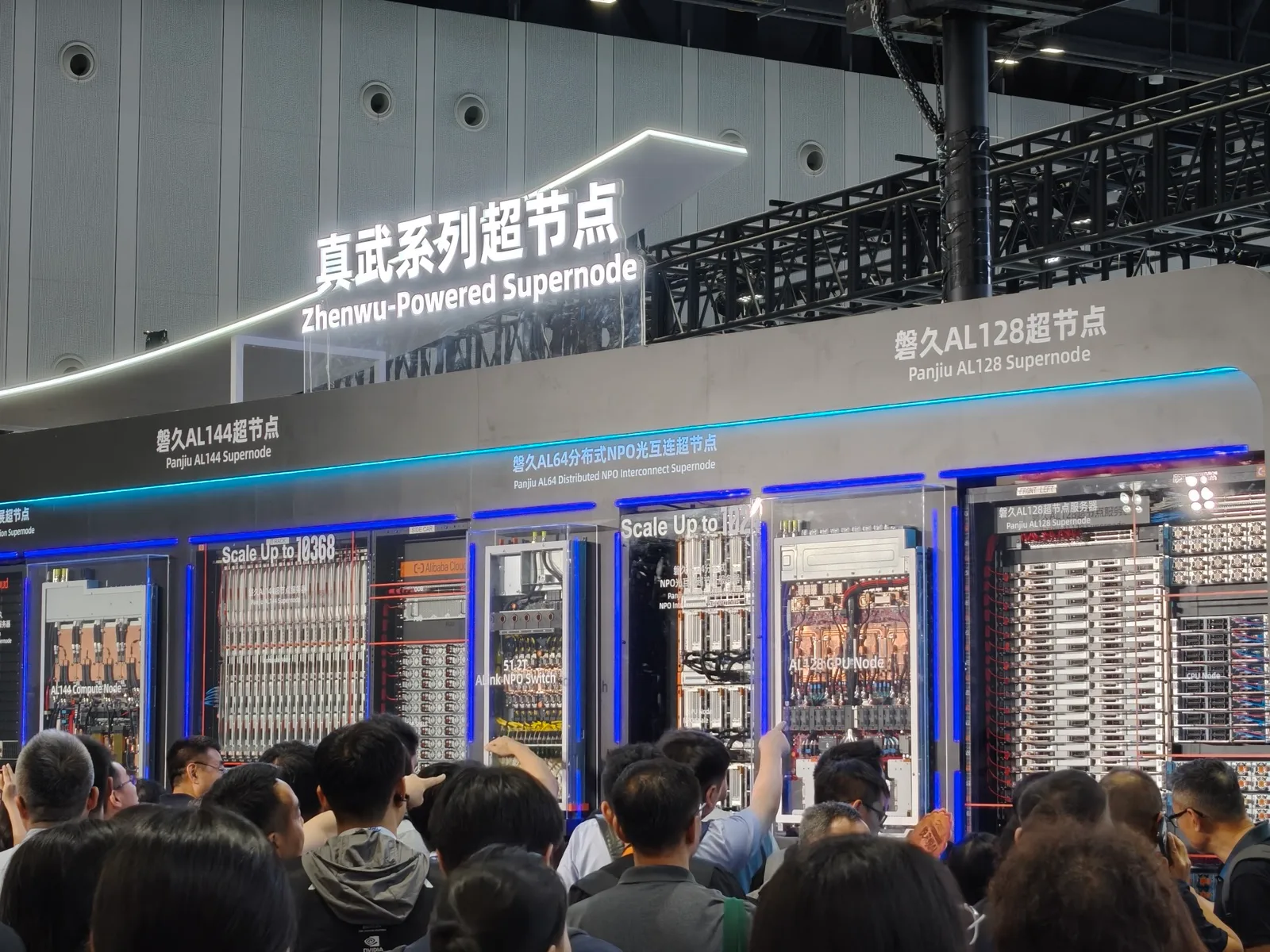
Image Source: Leitech
Continuous model training and inference, along with Agents executing long-term tasks, all require a constant supply of Tokens and computing power.
QianWen 3.8 Max is the most direct example. Compared to the previous 3.7, its real user revenue grew 8.5 times two months after launch, while Token consumption increased 12 times. Meanwhile, 3.8 Plus reduced training costs to one-ninth of the previous generation, with million-Token inference costs dropping to one-fourth.
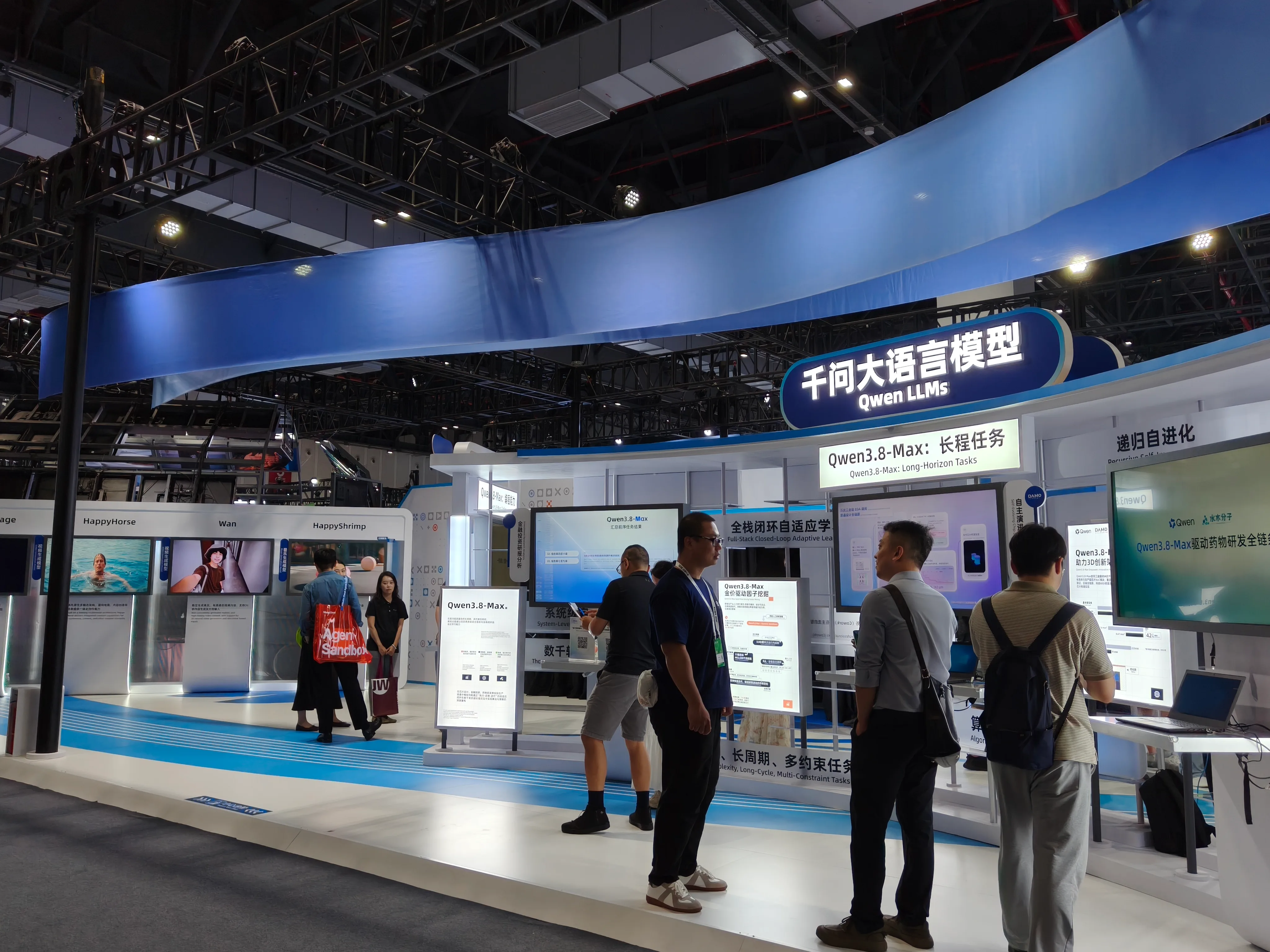
Image Source: Leitech
Alibaba is even beginning to have these layers “feed data” to each other. Qwen3.8 Max can autonomously adapt to T-Head’s new GPU, boosting single-instance inference throughput by 96%. After connecting to a real EDA environment, it ran continuously for over 60 hours, invoked tools tens of thousands of times, and reduced chip module area by 42%.
Qwen4 has already entered training, with Qwen4.5 and Qwen5 planning to scale up to 5 trillion to 10 trillion parameters. Meanwhile, QianWen has begun experimenting with Recursive Self-Improvement (RSI), identifying issues from real production feedback, building datasets, designing experiments, and completing 33 effective iterations in just over a month.
With chips supporting models, and models in turn optimizing chips, Alibaba’s “chip-model-cloud” flywheel appears to be spinning in a new direction.
At the same time, Alibaba is focusing on two “cores” at the application end—QianWen and QianWen Office.
On one side, QianWen is iterating from a personal AI assistant to a Personal Agent. According to Zheng Sishou, QianWen’s product lead, “giving everyone their own AI assistant” has always been QianWen’s goal. Now, with user authorization, QianWen is beginning to access health, fitness, finance, and even personal portfolio data, allowing AI to continuously provide services based on a person's long-term state rather than re-learning with every conversation.
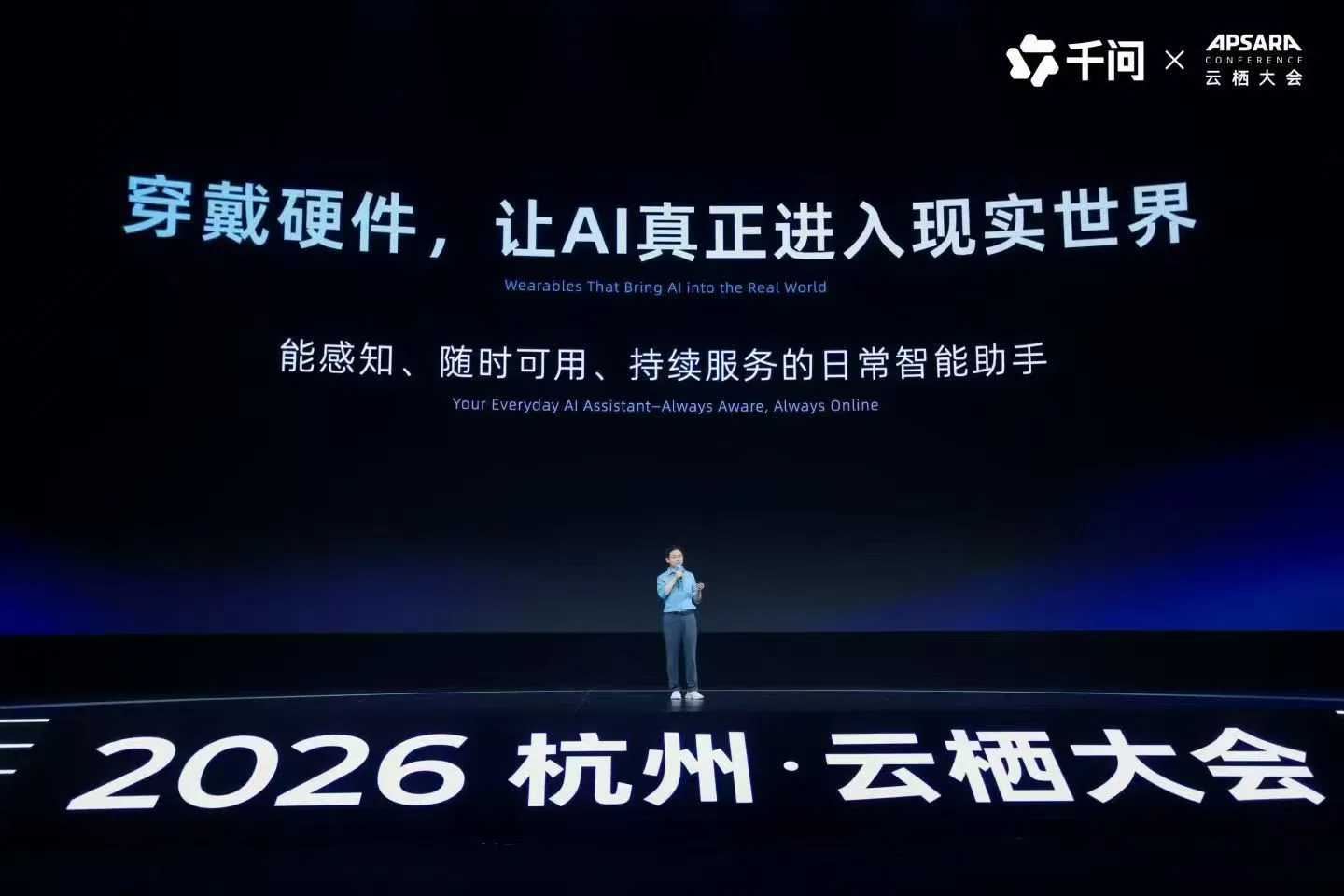
Image source: Yunqi Conference
Qwen is also transforming more external services into Skills that can be utilized by Agents. Currently, the Qwen open platform covers over 20 domains, with more than 1,000 partner applications seeking entry. These partners can integrate with Qwen through agents, Skills, professional data, and even hardware.
Qwen Office is evolving as well. Chen Yusen, Vice President of Alibaba Group and CEO of Qwen Office, pointed out when discussing Qwen Office that improving individual efficiency does not automatically translate into enhanced organizational productivity.
As models and Agents become increasingly powerful, they can already assist individuals in writing documents, researching information, and conducting analyses. However, once deployed within enterprises, they must also understand business processes, integrate into workflows,
Qwen Office aspires to transcend the realm of merely being a more intelligent AI-driven office software; it envisions empowering Agents to genuinely integrate as an indispensable component within enterprise structures. These Agents would be structured with defined departments, roles, designated responsible individuals, authorization boundaries, and lifecycle management. They would be capable of collaborating with humans on IM platforms such as DingTalk, as well as working in tandem with other Agents to accomplish sequential tasks including inquiries, quota requests, and contract processing.

Image source: Leikeji
It's evident that Alibaba's current focus extends beyond the success of a solitary model or application. The crux lies in the recognition that if machine intelligence ultimately evolves into a commodity that can be mass-produced, distributed, and consumed akin to electricity, then Alibaba, through its offerings from Qwen to T-Head, and further encompassing Alibaba Cloud and Qwen Office, aspires to establish a dominant presence at pivotal junctures along this value chain.
In Conclusion
Glasses discern your gaze, earphones perceive your auditory intake, QwenNote documents your ongoing tasks, smartphones orchestrate applications and services, and computers tackle the most intricate productivity endeavors. What these devices are truly competing for is not merely hardware entry points but rather Context.
An Agent that progressively comprehends you and can genuinely act in your stead ultimately signifies a greater propensity for continuous machine cognition and Token expenditure.
After delving into all these aspects, we revert to the insights shared by Wu Yongming earlier in the day.
Alibaba undoubtedly aims to craft products such as glasses, computers, and chips like the Zhenwu V900. However, when these products are seamlessly interconnected, Alibaba's clear objective is not to dominate with any single piece of hardware but to ensure Qwen AI's ubiquitous presence—observing what you observe, listening to what you listen to, understanding your actions, and subsequently perpetuating the task at hand.
Source: Leikeji
The images featured in this article are sourced from the 123RF licensed image library. Source: Leikeji
-
![]()
In-Depth Performance Analysis of iPhone 18 Pro: Unmatched Superiority, Enhanced Cooling, and the Advantages of 2nm Chip Technology
-
![]()
OPPO Find X10 Pro Max Imaging Review: Perfect for Beginners in Street Photography, The Only 'All 200MP' Claim That Stands Up
-
![]()
QianWen Computers Have Arrived! When Thought Becomes a Tradable Good, Alibaba’s Ambitions Reach Farther Than You Think
-
![]()
AI Office Track: A Telecom Operator Makes Its Debut
-
![]()
The AI Landscape Evolves: How Can Kimi Bridge the 'Dark Side of the Moon' Gap?
-
![]()
Seres Chairman Addresses Huawei Cooperation Adjustment: Partnership Intact, Commitment Strong
-
Muse Leads the Charts, QianWen Joins the Race: The Dawn of the Personal Agent Era
-
vivo's Journey to the High-End Market: Focused on Imaging, Yet Constrained by It?