In Suzhou, Intel Unveils Advanced Process Roadmap, with 14A on the Horizon
 09/23 2026
 336
336
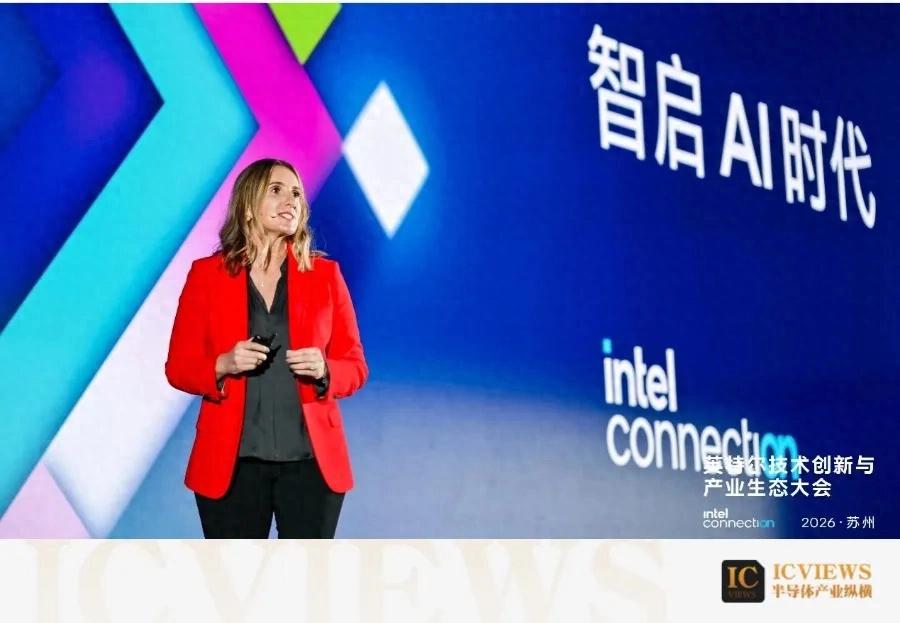
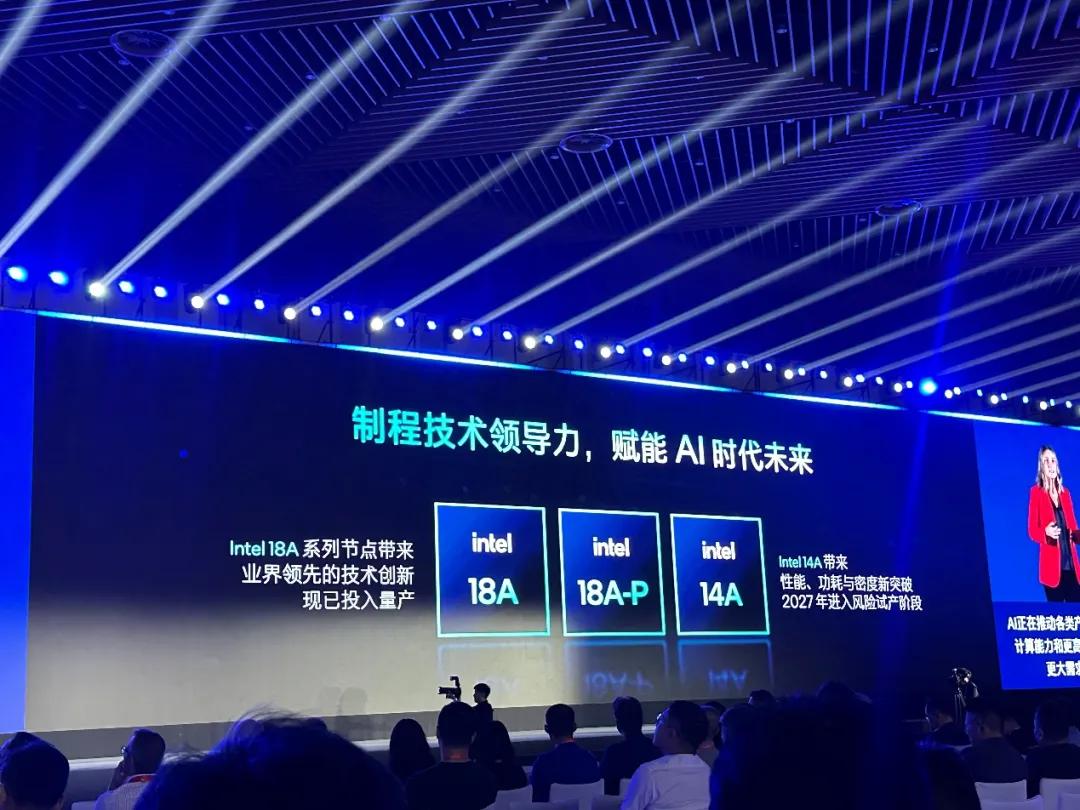
Intel's 18A process has commenced mass production, 18A-P has entered risk production, and 14A is set to commence risk production in the latter half of 2027, with large-scale production slated for 2028.

A large model with 35 billion parameters can now run locally on a single PC. By 2030, over 80% of global servers are projected to still operate on x86 architecture. The 18A process has entered mass production, with 14A progressing as planned. These three key data points collectively signify Intel's redefinition of AI competition: as AI transitions from "content generation" to "task execution," success no longer hinges on a single chip but rather on the ability to integrate PCs, edge devices, data centers, custom chips, and process packaging into a seamless chain for intelligent deployment.
At Intel Connection 2026 today, Annie Shea Weckesser, Intel's Chief Marketing and Communications Officer, presented a series of deployment figures: over 70 software vendors are collaborating to optimize AI PCs, domestic cloud service providers have launched more than 200 Xeon 6 and Xeon 6+ instances, and over 100 robotics companies are integrating intelligence into real-world scenarios. Through her speech, we gain a clear insight into Intel's strategic focus.
CPU Re-emerges as the System's "Central Scheduler"
Many envision AI computing power as a solitary GPU performing continuous matrix operations. However, real AI workloads are far more intricate, encompassing planning, retrieval, reasoning, tool invocation, and action execution. The surge in model computing represents just one facet, with the remainder relying on general-purpose computing power for connectivity. This serves as the foundation for one of Intel's strategies—to forge an open platform spanning PCs, edge devices, and data centers, enabling intelligence to operate in the "most suitable location."
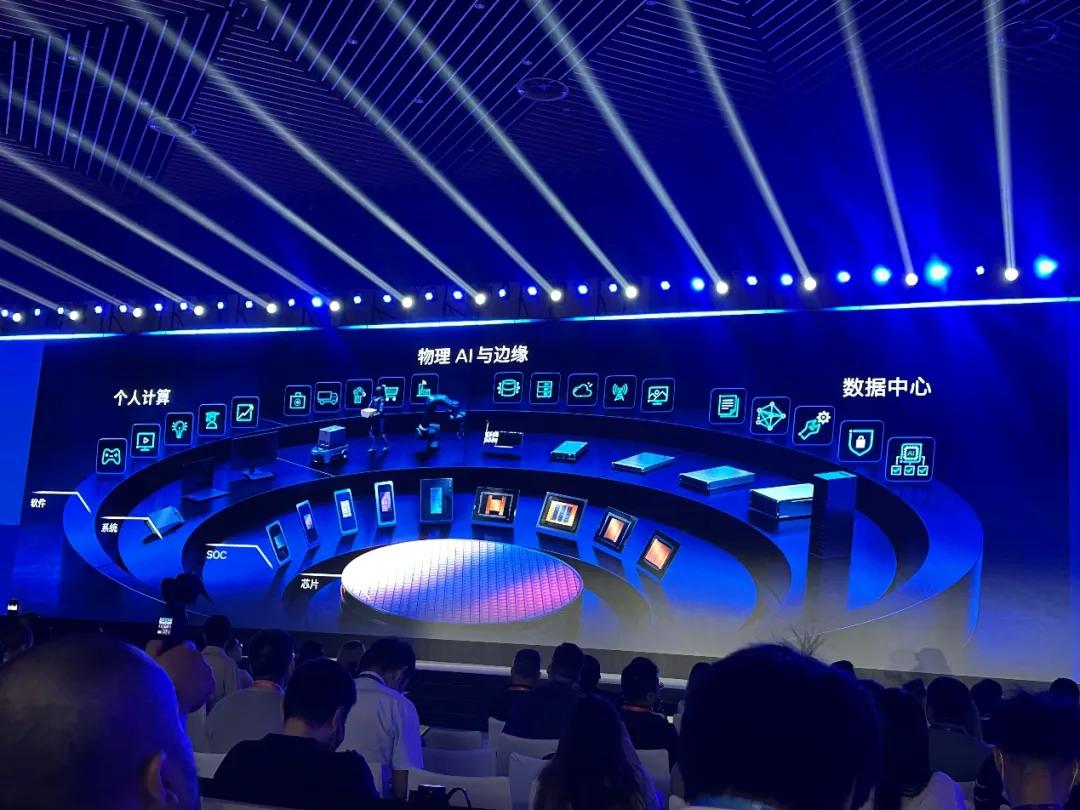
In data centers, the CPU serves as the orchestrator. As AI workloads expand, CPU demand rises rather than falls, with the computing power ratio between CPUs and GPUs shifting from 4:1 to 1:1. Accelerators handle the explosive model computing, while CPUs coordinate applications, data scheduling, and acceleration units to drive tasks to completion. This assessment is not merely Intel's self-promotion; Jensen Huang has also echoed this sentiment: "The CPU is no longer just supporting model operation; it is driving the model." The CPU's role as the central scheduler is becoming a pivotal position contested by industry giants. Intel's confidence lies in x86 architecture. Intel predicts that by 2030, over 80% of global servers will adopt x86. Xeon 6 offloads "laborious tasks" such as encryption, networking, and compression to built-in accelerators, freeing up GPUs and other accelerators for model computing. This approach has already been validated at Alibaba Cloud, which offers over 117 cloud instances based on Xeon 6, with more than 50 instances utilized in generative AI scenarios, supporting agents from experimentation to production.
On the PC front, the Core Ultra 3 series integrates CPU, GPU, and NPU, scheduling diverse tasks to the most appropriate computing units. Intel's hybrid AI agents, deployed in collaboration with partners like Doubao and Marvis and based on Intel Core Ultra, run large models with 35 billion parameters locally, with the model itself determining when to operate on the edge and when to offload to the cloud. On the edge side, collaborative robot manufacturer Jacob's products, powered by Core Ultra, utilize kernel virtual machines to integrate motion control, autonomous planning, and task execution into a unified edge architecture. Robots necessitate real-time environmental perception and precise motion control, relying on the computing density and instant responsiveness of Core Ultra 3. These examples illustrate that the evaluation criteria for AI computing power are shifting from "peak performance" to "system task completion."
Custom Chips to Cater to Differentiated Workloads
Intel's second strategic focus addresses another query: what happens when standard platforms fail to meet all needs due to diversified workloads? Intel's response is to collaborate with customers and hyperscale cloud providers to develop custom chips (ASICs), investing in architecture, design, and IP while leveraging advanced packaging and manufacturing capabilities to swiftly translate specific needs into scalable solutions.
Customization does not equate to fragmentation. Only companies with a general-purpose platform, a comprehensive IP library, and manufacturing and packaging capabilities can fulfill custom demands, with each custom project yielding reusable modules. Annie Shea Weckesser stated on-site, "If you're developing differentiated solutions beyond standard platforms, we welcome you to contact us." The transition from selling standard chips to co-defining chips with customers represents a redefinition of AI competition in itself.
Process and Packaging in Tandem: 18A in Mass Production, 14A on the Way
Intel's third strategic focus is manufacturing, with all narratives ultimately converging on process and packaging. Intel's advanced process roadmap is now clear. Annie Shea Weckesser disclosed that 18A has entered mass production, with the derivative version 18A-P entering risk production; 14A is progressing smoothly, with risk production scheduled to commence in the latter half of 2027 and large-scale production in 2028.
Parallel to process advancement is the second route of advanced packaging. AI systems demand increasingly heterogeneous computing power, with CPUs, GPUs, various accelerators, and IP from disparate sources unable to fit on a single chip. Advanced packaging technologies like EMIB and Foveros enable Intel to integrate multiple computing engines and IP into a single package, facilitating data transmission and task scheduling through high-speed interconnects.
As optimization of single chips approaches physical limits, integrating more computing units with shorter data paths into a single package emerges as a new source of performance.
Connection as the Approach, Deployment as the Outcome
Intel narrates a comprehensive story about "connection": connection imbues intelligence with purpose, bringing together technology, talent, and ideas to transform possibilities into tangible progress. Within this technical narrative, "connection" encompasses at least three layers of meaning—connecting models with data, software, and devices; connecting general-purpose platforms, custom chips, and process packaging; and connecting chip companies with chip users. The aforementioned data points serve as the most compelling footnote to Intel's "connection" capabilities.
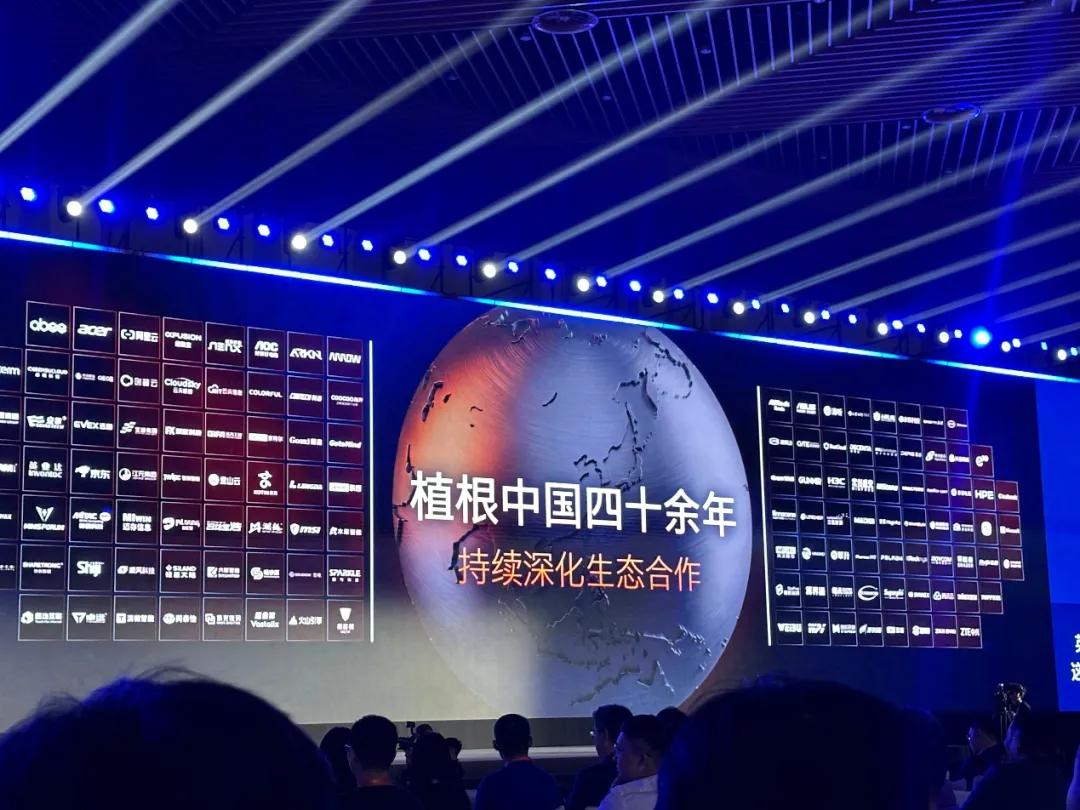
Since entering the Chinese market in 1985, Intel has maintained a presence in China for over four decades. This time, Intel aims to tell a more enduring story: AI competition is not about a single chip launch but about deployment capabilities across the entire chain—35-billion-parameter models running locally, agents transitioning from labs to production lines, and robots completing tasks in real-world scenarios. This is the true essence of "Enabling the AI Era."
*Disclaimer: This article is authored by the original writer, and the content reflects their personal views. Our republication is solely for the purpose of sharing and discussion and does not imply endorsement or agreement. If you have any objections, please contact our backend.
-
![]()
Chinese Brands Ascend to Dominance in Global Handheld Smart Camera Rankings: DJI and Insta360 Command 93% Market Share
-
![]()
Meta’s Market Value Rockets by Nearly $200 Billion Overnight, Cloud Town Conference Takes the Lead: AI Applications Begin to Boom, Six Key Beneficiaries Unveiled
-
![]()
World Model: The First Year of AGI for Robots
-
![]()
Is the Second-Generation Doubao Smartphone a Wise Purchase?
-
![]()
Is the Second-Generation Doubao Smartphone a Worthy Purchase?
-
Zhou Jingren Steps Down from Center Stage
-
![]()
In Suzhou, Intel Unveils Advanced Process Roadmap, with 14A on the Horizon
-
Qunhe Technology: The AI Enterprise with the Most Compelling Narrative in the 2026 Hong Kong Stock Market