A Wake-Up Call for Businesses: The Peril of Blindly Using AI for Layoffs
 09/24 2026
 567
567
Think Twice Before Using AI as a Tool for Layoffs.
Over the past three years, Ford has made a strategic move by specifically hiring 350 seasoned senior engineers, many of whom are former employees who have been rehired. The rationale behind this is straightforward: these engineers possess the expertise to uncover issues that automated quality inspection systems and AI detection tools might overlook.
The Vice President of Hardware Engineering at Ford acknowledged that the company had previously oversimplified the process. They believed that by merely implementing AI systems and inputting design requirements, they could effortlessly produce high-quality products. However, the outcomes revealed a stark contrast to this belief.
Ford is not alone in this regard.
In February 2024, payment platform Klarna boasted that its AI customer service could replace the roles of 700 human customer service representatives.
Yet, by May 2025, they had quietly begun rehiring. The CEO candidly admitted that their sole focus on cost-cutting had severely compromised the quality of their services.
A survey conducted among senior managers from 1,000 large and medium-sized enterprises revealed that 39% of these companies had laid off employees under the guise of AI adoption. More alarmingly, over half of them acknowledged that they had laid off the wrong individuals or positions.
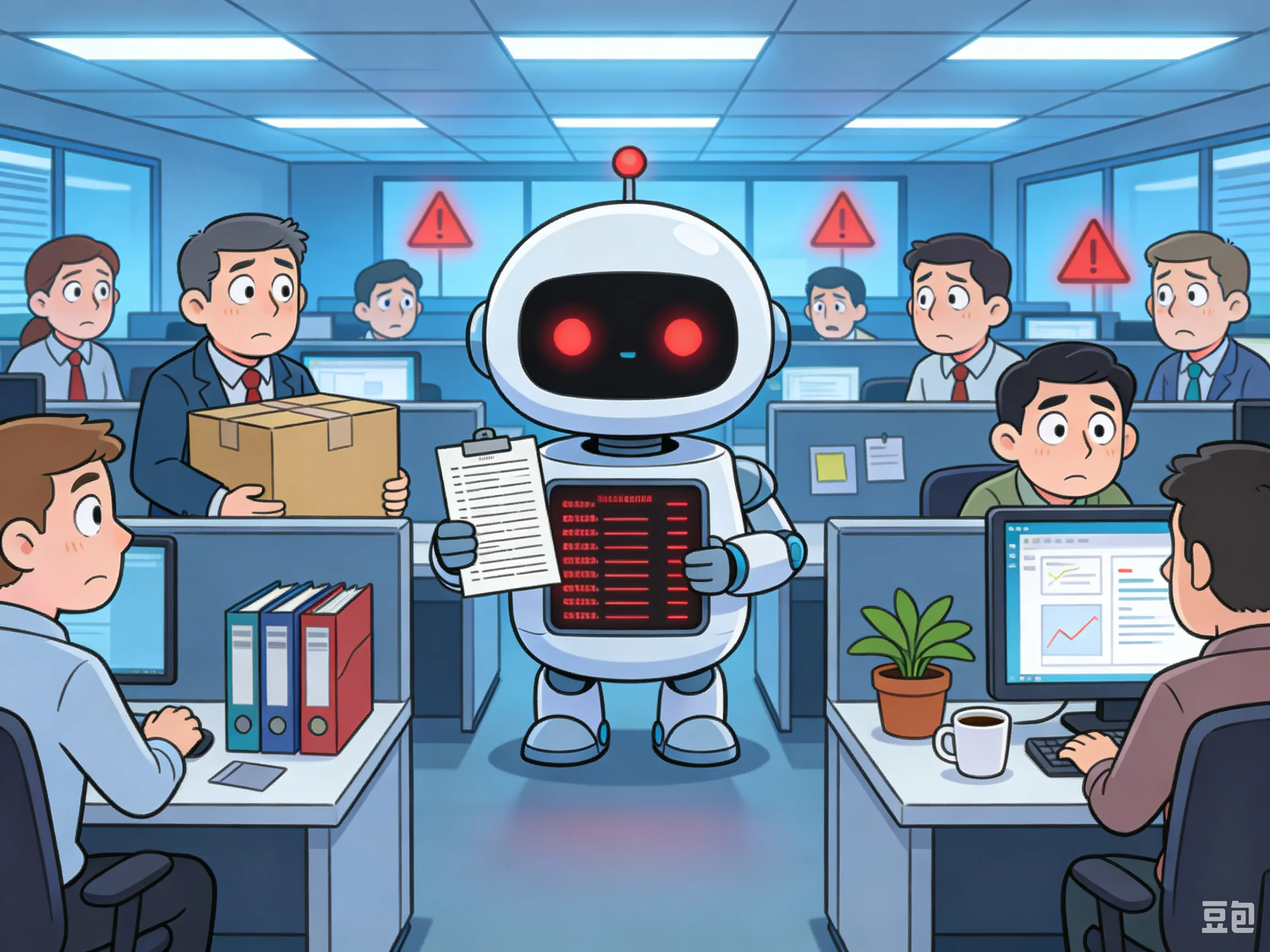
Image Source: Generated by Doubao AI
Gartner predicts that by 2027, half of the companies that resorted to AI for layoffs will find themselves rehiring for similar roles.
The cycle of laying off and then swiftly rehiring employees underscores a fundamental flaw in the process.
Many attribute this to the immaturity of AI technology.
However, consider the role of Ford's rehired veteran engineers: they are not only mentoring newcomers and training young engineers but also optimizing and training the AI systems that were initially intended to replace them.
One of the most crucial responsibilities of experienced employees is to accumulate and impart skills. This intangible value is often overlooked in job descriptions. While people may focus on the superficial, repetitive aspects of a job, they fail to recognize that this invisible value has vanished with the layoffs.
The root cause of layoff issues in most companies lies not in the ineffectiveness of AI but in their fundamental misunderstanding of a position's role and core value.
The most challenging aspect of AI transformation is not the technological implementation but the redesign of work patterns. Here's a structured approach to help you navigate work restructuring in the AI era:
Every position within a company is established to fulfill a specific value. This is the cornerstone of all work restructuring efforts: first, clarify the core objectives of the position, and then coordinate tasks between humans and AI to achieve these goals.
It is crucial to differentiate between objectives and tasks. Objectives represent the end results, while tasks are the specific actions undertaken.
Some objectives can be achieved by simply following a planned set of tasks. For instance, customer service representatives explaining product information, after-sales rules, and refund policies to customers can adhere to a predefined process.
However, some objectives cannot be accomplished through routine, assembly-line-style tasks.
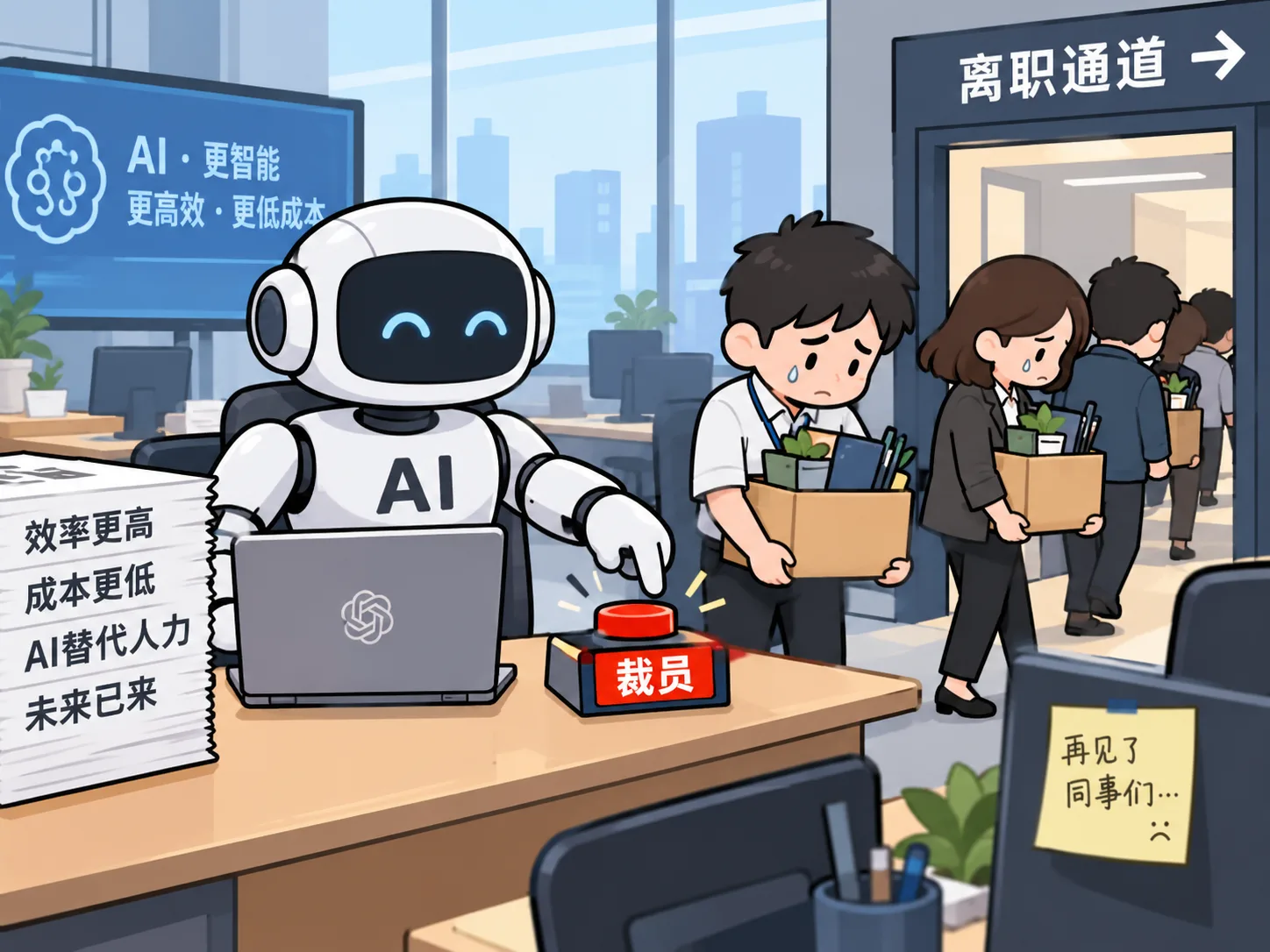
Image Source: Generated by Doubao AI
Focusing solely on 'what specific tasks to do' will only scratch the surface and overlook the most critical value. Only by starting with 'position objectives' can you fully meet all needs.
Here are three recommendations:
Step 1: List all position objectives. Include both explicit and implicit goals, even those not mentioned in job descriptions.
Step 2: Identify objectives that necessitate human completion. Ask yourself: Can the final objective be perfectly achieved if all related work is done by AI?
Step 3: Deconstruct automatable work and categorize it accurately. For objectives that AI can achieve through task completion, break down the corresponding work step by step. Then, based on your company's actual situation (disregarding vendors' exaggerated claims), categorize them into three types: fully automated, AI-assisted human work, and temporarily not automatable.
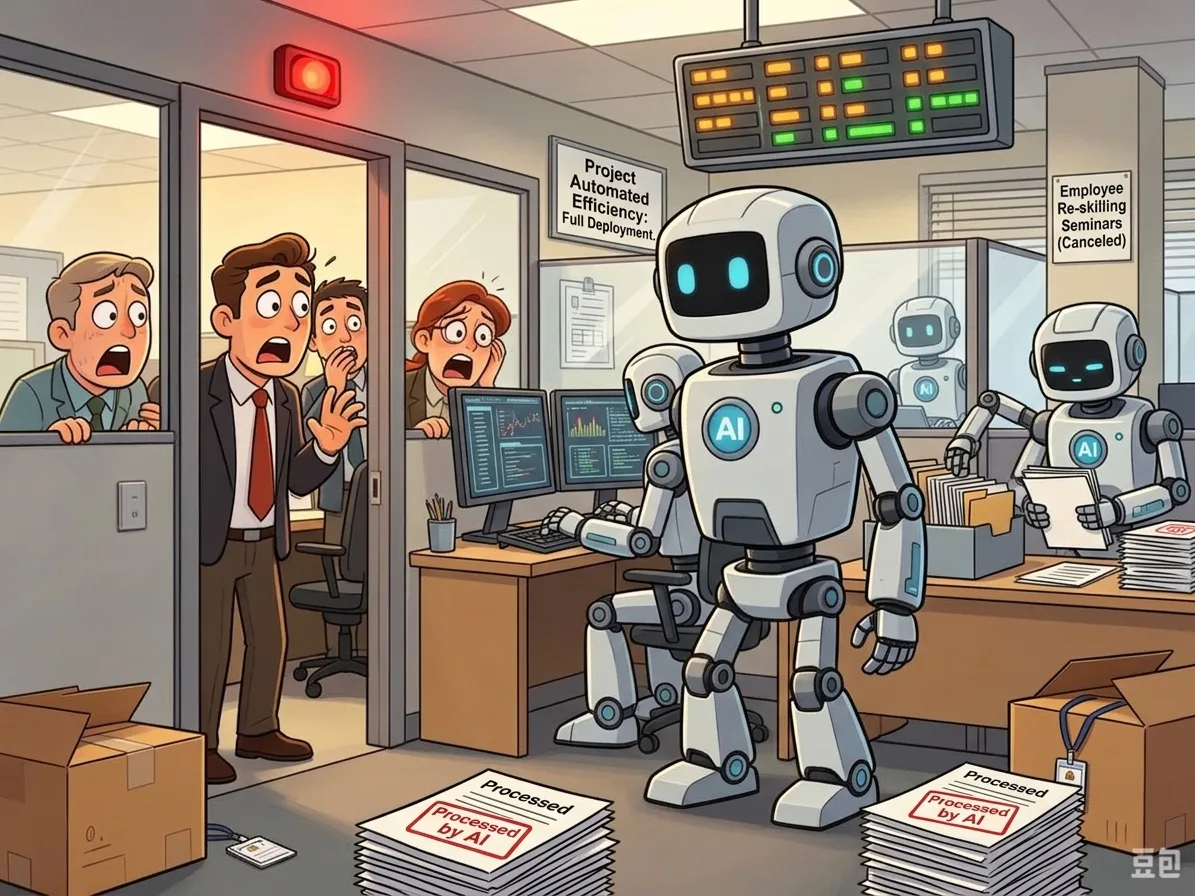
Image Source: Generated by Doubao AI
When restructuring work in the AI era, there is no need to be overly fixated on technological advancements; the key lies in understanding work and positions.
Without a clear understanding of a position's value, do not blindly deconstruct work, lay off employees, or alter modes. This is why many large companies, such as Atlassian, Moderna, and Lumen, have HR leaders spearheading AI transformation.
Rushing into layoffs and then retroactively adjusting will only disrupt team dynamics and hinder the onboarding of newcomers.
The most reliable approach is to get it right from the outset: first, clarify the core value of the position, distinguish which work cannot be done without humans, and then allocate human resources judiciously.
The human value that you now deem 'replaceable' will ultimately still need to be shouldered by someone in the future.
This article is compiled by Leikeji from Fast Company.
Original Link: A Guide to Work Reshaping in the Age of Artificial Intelligence: Understand It Before Eliminating a Job
Source: Leikeji
Images in this article are from the 123RF licensed image library. Source: Leikeji
-
China’s Commercial Rockets: The Rise of a ‘Second-Tier Player’
-
Why Did China’s Flopped AI Assistant Suddenly Go Viral in the US?
-
Xianyu Navigates Through Turmoil: Wang Chengyuan Fortifies Its Position in Second-Hand E-Commerce with AI and Community
-
![]()
A Wake-Up Call for Businesses: The Peril of Blindly Using AI for Layoffs
-
![]()
Tengshi Z9S Unveiled: Industry-Leading 1100km Pure Electric Range
-
![]()
The 'Original Data Sin' in the AI Industry: Unraveling the Zhipu ZCode Controversy
-
![]()
Li Yanhong’s Good Looks Can’t Rescue Baidu AI’s Struggles
-
![]()
JAC Motors: Is It the New 'Star Player' in the Eyes of Investors?