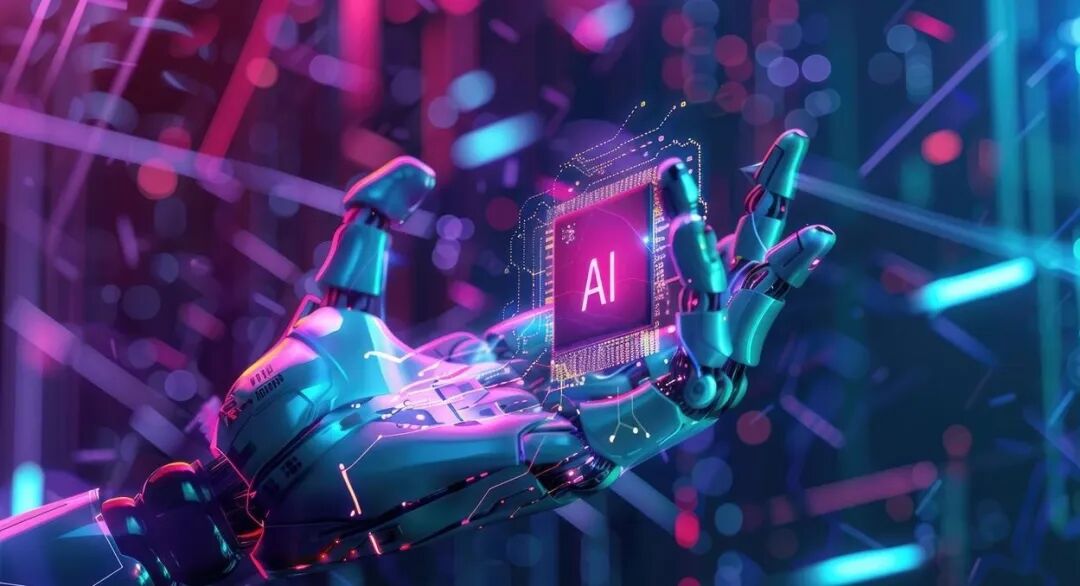
Why is interaction, rather than intelligence, the core of Physical AI?
 09/24 2026
 553
553
This is the 129th original article from Thinking AI Society.
Approximately 1430 characters in total, with an estimated reading time of 5 minutes.
In the past two years, the launches of robots and autonomous driving technologies have become increasingly frequent, yet one thing has become clearer: while everyone talks about parameters, chip computing power, and degrees of freedom, what truly determines whether a machine is usable is a more fundamental concept—interaction.
Jensen Huang refers to the next generation of artificial intelligence as "Physical AI," stating that AI is moving beyond screens into the real world, where it can act and make mistakes. However, once it enters the physical world, the rules of the game change entirely.
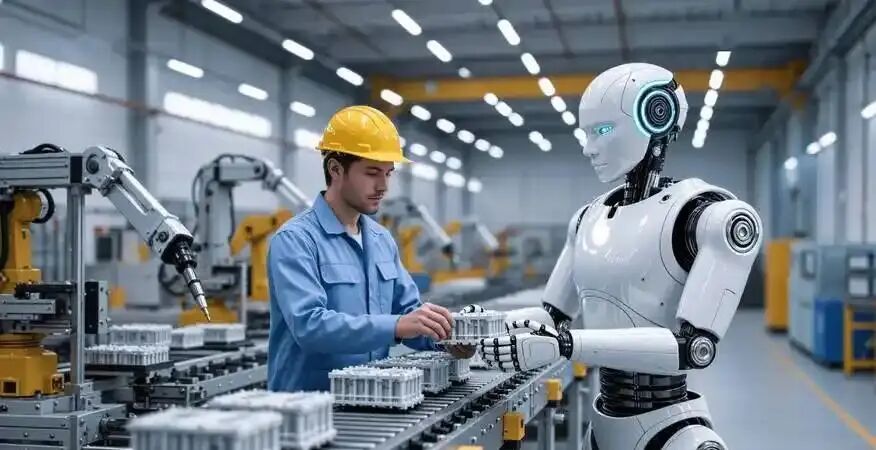
On-screen, AI only needs to "speak"; in the physical world, it must "respond"
Let's first understand what makes the current wave of large models powerful. Their strength lies in generation: you provide a prompt, and they generate text or an image. This process is essentially one-way, like a person delivering a speech with their eyes closed, considering the task complete once finished. Even if they make a mistake, they can simply rephrase the next sentence at almost zero cost.
The physical world doesn't work like that.
When a robot reaches out to grab a cup, it doesn't know in advance whether the cup is slippery or hot, whether the table is wobbling, or whether applying too much force will shatter it.
It must first take an action, immediately sense the feedback from the world, and then adjust its next move. Act, observe, act again.
This is interaction. It's not a one-time output but a continuous loop: perception, understanding, action, feedback, and back to perception. Intelligence doesn't reside in a single action but in how quickly and accurately this loop operates.
A few days ago, I wrote about Unitree's world model. Unitree's newly open-sourced 6-billion-parameter brain achieved seven top global open-source rankings. What they're desperately trying to solve is allowing robots to "rehearse" this loop in their minds before acting—because real-world interaction is too costly, too slow, and might even result in broken objects.
Why interaction, not intelligence, is the core
Many have an intuition: if the model is smart enough, the robot will naturally be capable. I thought so too at first, until I heard He Xiaopeng's analogy.
He said that getting a robot to do a backflip is relatively easy; having it make you a cup of coffee is ten times harder.
Why? A backflip mainly involves competing with one's own body, with movements that can be pre-choreographed.
But making coffee involves a series of interactions with the external world—picking up the pot, aiming at the cup, controlling the water flow, sensing when it's full, and adjusting if you move the cup midway. Every step depends on real-time feedback from the world.
In other words, Physical AI doesn't face a problem with a standard answer but an opponent that fights back. You can never grasp all the information before acting; you can only approach the solution through rounds of interaction.
This also explains a counterintuitive phenomenon: why so many robots that perform flawless backflips and dances at product launches have such a low rate of actually working in factories.
Because stage performances are "pre-choreographed one-way outputs"—as long as the movements are practiced, it's fine. But working in a factory involves "open-ended continuous interaction," where the world presents new challenges daily. The former tests execution; the latter tests adaptability.
Once you understand this, many technological approaches make sense
Once you consider "interaction" as the core of Physical AI, the recent year's technological hotspots suddenly become much easier to understand.
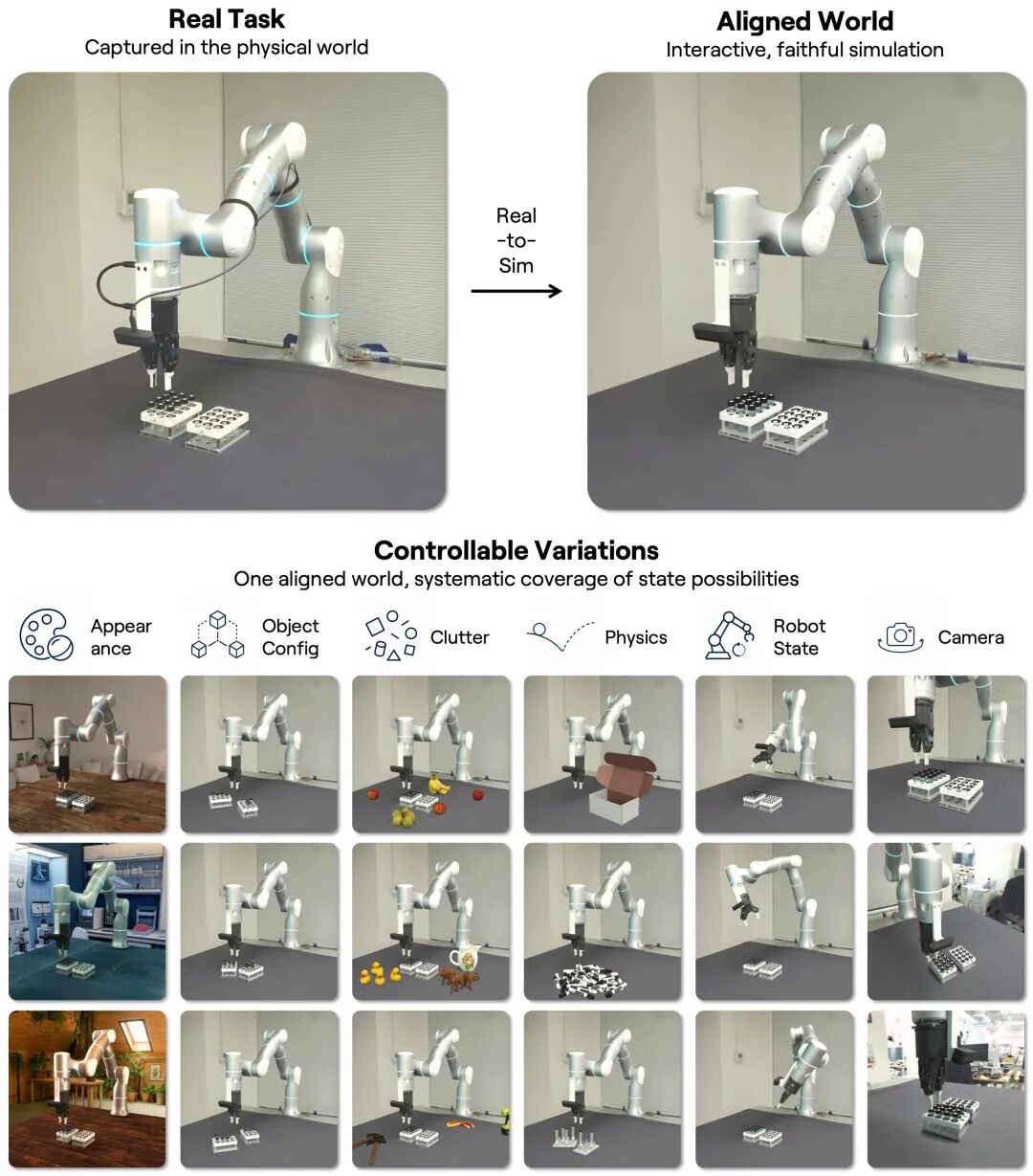
Why are world models so popular? Because they essentially learn "how the world responds to my actions"—if I push like this, how will the object move? The more accurately the model predicts, the fewer detours the robot will take. It serves not "describing images" but mental rehearsals before interaction.
 Source: World Labs
Why is everyone focusing on simulation? Because real-world interaction is too costly—damaging a part or delaying a production line costs money. So, robots first interact and "fall" billions of times in virtual worlds, mastering responses before deployment in the real world. NVIDIA's repeated emphasis on "training in simulation before real-world deployment" stems from this.
And why is data so valuable? Because most text and videos on the internet record "results," while Physical AI desperately lacks "process data from back-and-forth interactions"—what feedback did the world provide after this action?
Whoever accumulates large-scale, high-quality interaction data will likely have robots that can truly learn to work.
My judgment is that to evaluate a Physical AI company, don't just look at how large its parameters are or how flashy its dances are. Instead, assess whether its system can steadily handle every surprise the world throws at it in unfamiliar environments and improve over time.
The endpoint for language models is "speaking correctly"; for Physical AI, it's "responding effectively." The gap between a monologue and engaging with the entire world is precisely the challenge of interaction. Only by overcoming this challenge can robots truly step out of the screen.

All content is sourced from publicly available information and represents personal opinions only.
-
![]()
The Arrival of the 'New King of Boxy Cars': Trumpchi Emko 7 Marks a Crucial Leap Forward for the Brand
-
Observations from the 2026 Yuelu Conference: The prophecy that 'self-driving vehicles will arrive much earlier than most people imagine in the next 20 years' has become a daily reality on the streets
-
![]()
Geely Takes the Lead, Tesla Slows Its Pace, Xiaomi Cools Down! Comprehensive Review of Pure Electric Vehicle Sales Rankings from January to August
-
![]()
Why is interaction, rather than intelligence, the core of Physical AI?
-
![]()
Honda’s New Avancier Unveiled: Anticipated Official Launch in January 2027
-
![]()
Chery Unveils New Car: Launching September 29 with Huawei Qiankun ADS 5
-
![]()
Starting at 147,900 Yuan! Buick Unveils New ZHIJING E7 Model: Launching Renewed Version on September 23rd
-
![]()
Starting from 279,800 Yuan? BYD’s New SUV Officially Unveiled: Major Launch Set for October