Exploring Doubao: What Can the Current In-Cabin Large Model Really Do?
 09/28 2026
 427
427
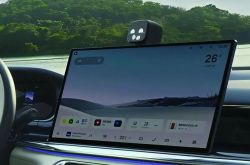
On September 17, 2026, the Doubao In-Cabin Assistant made its official debut, with the Roewe JiaYue 07, the first model to incorporate it, subsequently opening for pre-sale.
Unlike previous attempts that merely added a more powerful voice model to the vehicle's infotainment system, this time, the in-cabin large model is strategically positioned between user needs and vehicle capabilities.
It no longer just comprehends individual sentences but can grasp the user's overarching intent and further organize vehicle capabilities to accomplish the task.
01 What's the Difference Between Executing Instructions and Understanding Objectives?
Traditional in-vehicle voice systems began with simple voice recognition and later evolved to incorporate natural language understanding and multi-round interaction capabilities. However, their core function has always been to recognize user intent and map needs to existing functions or services.
The in-cabin large model revolutionizes this interaction by abstracting it.
For instance, when a user says, "It's a bit hot," this statement doesn't explicitly state to adjust the air conditioning temperature to a specific level. The system must integrate the current air conditioning status, the interior environment, and the conversational context to determine the user's actual need.
Another example is when a user says, "I'm a bit sleepy; find a place to rest." This isn't a single vehicle control instruction but an objective that requires multiple capabilities to collaborate.
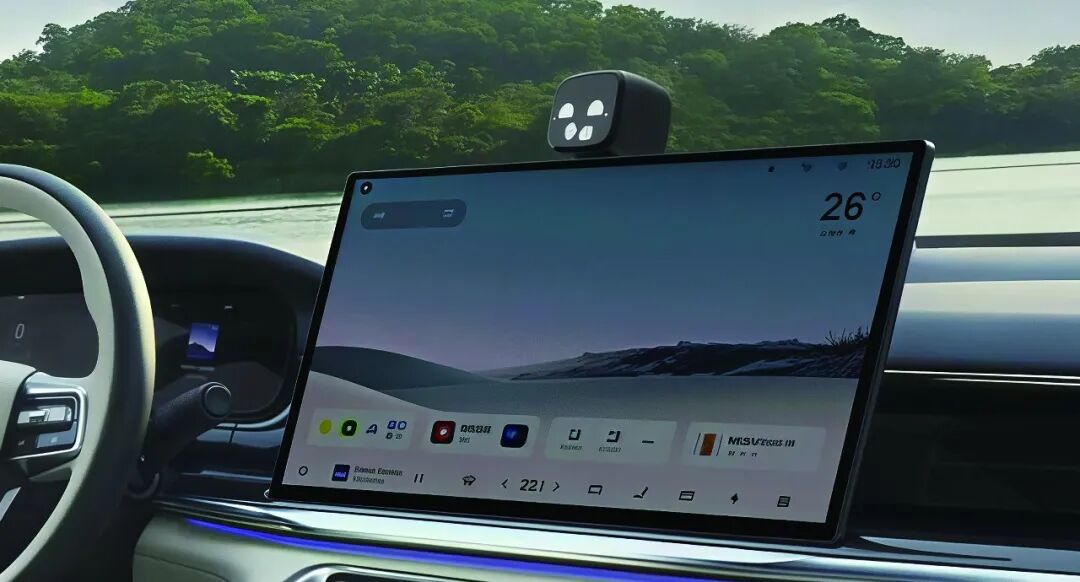
Image Source: Internet
Thus, the in-cabin large model's true challenge isn't just making the car understand more expressions but enabling the system to extract the user's intent from natural language statements.
This distinction is crucial between voice assistants and in-cabin large models: the former focuses on finding corresponding functions, while the latter organizes subsequent actions around objectives.
02 Why Is Understanding the Objective Not Enough?
Knowing the user's intent is only half the battle.
Consider a user saying, "Take the kids out to play on the weekend, not too far, find a place suitable for kids, and preferably somewhere to eat nearby." This statement encompasses multiple conditions such as distance, scene, personnel, and dining.
The system must understand the request, identify candidate locations, filter them based on conditions, and then initiate navigation.
If the user subsequently says, "Parking is inconvenient here; find another place," the system shouldn't simply clear the previous results. Instead, it should retain the original task context and adjust only one condition.
Therefore, the in-cabin large model faces not a one-time Q&A but a continuously evolving task chain.
It must first understand the user's objective, break it down into specific tasks, invoke corresponding capabilities, and obtain execution results; then, based on these results, it decides the next steps.
Herein lies a key shift: execution results will re-enter subsequent decision-making. This is the technological edge that current in-cabin large models have over traditional voice assistants. Traditional voice assistants typically end after completing a single function call; in-cabin large models need to track progress, identify incomplete tasks, and determine the next actions.
According to a practical test report by Late Auto, the Doubao In-Cabin Assistant has showcased relevant capabilities.
For example, when it attempted to call a music software to play background music but failed due to a lack of membership, it subsequently searched for another source; when a rear-seat passenger suggested using seat vibrations to simulate knocking, since the rear seats lacked a massage function, it used sound effects and plot advancement instead.
In another scenario, during a multi-person trivia game, passengers first changed the total number of questions from ten to five and then requested to adjust the ambient lighting midway. The system needed to simultaneously retain the game rules, answering progress, and scores, and continue posing questions after adjusting the lighting.
This underscores that what the in-cabin large model truly needs isn't just a larger language model but also a system that can continuously maintain task status and adjust subsequent actions based on execution results.
03 Why Does SOA Become Crucial in the Era of In-Cabin Large Models?
If the in-cabin large model is solely for chatting and doesn't need to control the vehicle, then the number of onboard functions is irrelevant. But once it must execute tasks for the user, it must be able to actually invoke these functions.
Therefore, for the in-cabin large model, the real question is how to invoke the car's capabilities?
For instance, how does it translate "I'm a bit hot" into an actual air conditioning action? If it can't invoke it, no matter how accurately it understands, it can't get things done. Functions like air conditioning, seats, windows, ambient lighting, navigation, and media can't be directly exposed to the in-cabin large model as a jumble of scattered control logics.
A more rational approach is to encapsulate vehicle capabilities into unified service interfaces, allowing the upper-layer model to invoke them in a standardized manner.
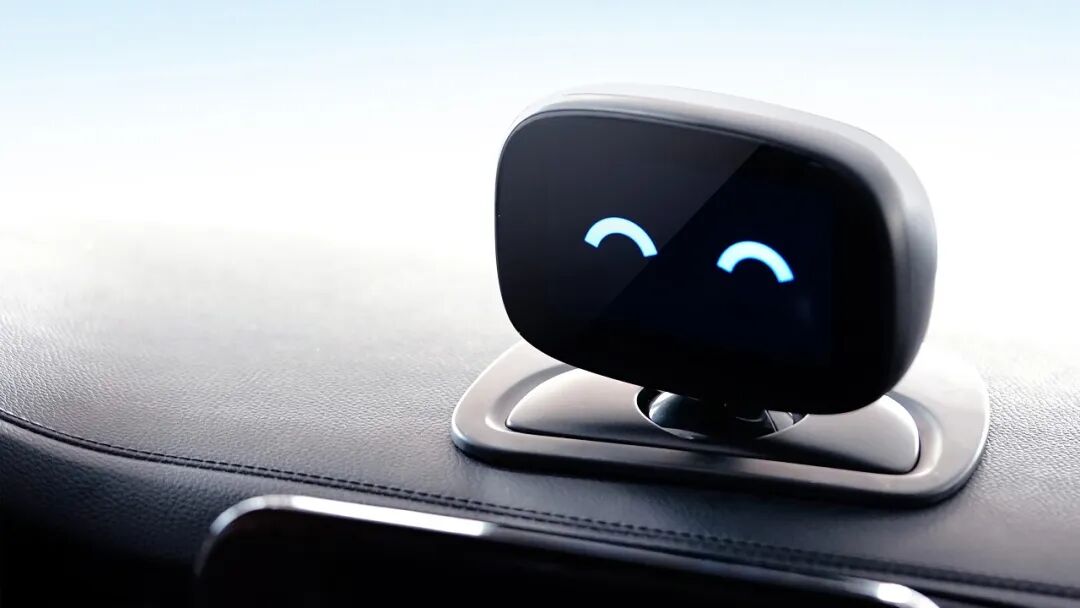
Image Source: Internet
This is where SOA (Service-Oriented Architecture) plays a pivotal role in intelligent cabins.
It can be likened to a toolbox: the in-cabin large model is responsible for understanding user objectives and selecting the necessary tools based on the task; SOA encapsulates the vehicle's existing capabilities into callable service interfaces, with the underlying vehicle system handling the actual execution.
The over 2,000 SOA domain-wide service interfaces accessed by the Doubao In-Cabin Assistant serve as a mass-production case for this technological approach.
What truly warrants attention here isn't the number of interfaces themselves but that more and more vehicle capabilities are beginning to be opened up to the upper-layer intelligent system in the form of standardized services.
This forms a complete chain where the in-cabin large model is responsible for understanding and planning, SOA provides callable vehicle capabilities, and the underlying system handles execution.
Without this layer of connection, even if the model can understand complex needs, it would be challenging to truly translate tasks into vehicle actions.
04 What Are the Boundaries of Vehicle Functions That the In-Cabin Large Model Can Invoke?
As more and more vehicle capabilities are opened up to the in-cabin large model, another critical issue arises: which capabilities can be opened up, and which cannot? This is where cars significantly differ from phones and smart speakers.
Adjusting air conditioning temperature, turning on ambient lighting, and playing music aren't at the same risk level as altering the vehicle's motion state.
Therefore, the in-cabin large model can't simply have permissions to invoke all functions. In public demonstrations, the Doubao In-Cabin Assistant has already demonstrated the ability to classify vehicle capabilities according to different risk levels.

Image Source: Internet
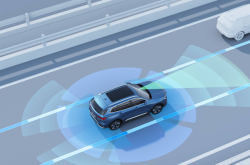
Some low-risk functions can be executed directly, while capabilities involving vehicle status and higher-risk operations are constrained by underlying rules. Core driving controls such as braking and steering aren't directly opened up to the in-cabin large model.
This indicates that, under the current technological framework, the in-cabin large model is solely responsible for understanding and planning but doesn't directly possess control over the entire vehicle. After the in-cabin model proposes tasks and invocation requests, they still need to undergo the vehicle system's permission, status, and safety rule judgments to ultimately decide whether the action can be executed.
Therefore, the in-cabin large model isn't just about integrating a chat model into the car but establishing new software connections between the large model, vehicle services, underlying control, and safety rules.
05 From Functional Entry Points to Task Entry Points
In the past, the human-computer interaction logic of vehicle infotainment systems required users to be aware of the car's functions.
To adjust the air conditioning, you needed to know where the air conditioning controls were; to navigate, you had to enter the navigation system; to play music, you had to enter the music system.
Although voice assistants reduced operational costs, they often still replaced a single function operation with a single voice command.
With the advent of the in-cabin large model, the object of interaction began to shift.
Users don't necessarily need to know the specific functions of the car; they just need to describe their objectives.
The system then invokes capabilities such as navigation, vehicle control, and entertainment based on the objective and continues to handle subsequent tasks based on execution results.
This doesn't imply that traditional voice assistants will vanish immediately or that the in-cabin large model can already replace all vehicle control systems.
What truly changes is that the software interface between humans and cars is gradually transitioning from being organized around functions to being organized around tasks.
This is precisely what makes the Doubao In-Cabin Assistant noteworthy. It enables the in-cabin large model to become a layer of software connecting user needs with vehicle capabilities.
Evaluating the capabilities of an in-cabin large model can't just focus on whether the model can answer questions; it also needs to consider whether it can stably complete tasks and how it handles status, tool invocation, and safety permissions during task execution.
-
![]()
Detailed Explanation of Zhuoyu ZYT World: While the Industry is Still Reviewing Recordings, Zhuoyu has Already Thrown AI into the 'GTA World' for Driving Practice
-
![]()
Beware the High Estimated Price Trap When Trading In Your Old Phone
-
![]()
Why Can Foldable Screens Fold? The Secret Lies in These Two Layers
-
![]()
Dissecting NVIDIA's Latest Autonomous Driving World Model: AlpaDreams
-
![]()
Has End-to-End Technology, Having Evolved to Its Present State, Still Left Edge Scenarios as an Insurmountable Challenge for Autonomous Driving?
-
![]()
Exploring Doubao: What Can the Current In-Cabin Large Model Really Do?
-
![]()
Final Decision: Why Are There So Many New Car Launches Prior to the Mid-Autumn and National Day Holidays?
-
![]()
The Era of Performance Involution Is Over! Domestic Flagship Phones Shift Focus from Benchmarks to Imaging and On-Device AI as Key Differentiators