AMD Acquires Li Feifei's Spatial Intelligence Startup World Labs: Accelerating the Deployment of Physical AI
 09/29 2026
 435
435
AMD buys Li Feifei for $8.2 billion, NVIDIA buys Hugging Face for $12.9 billion—the two chip giants have made "buying models" the main theme for 2026
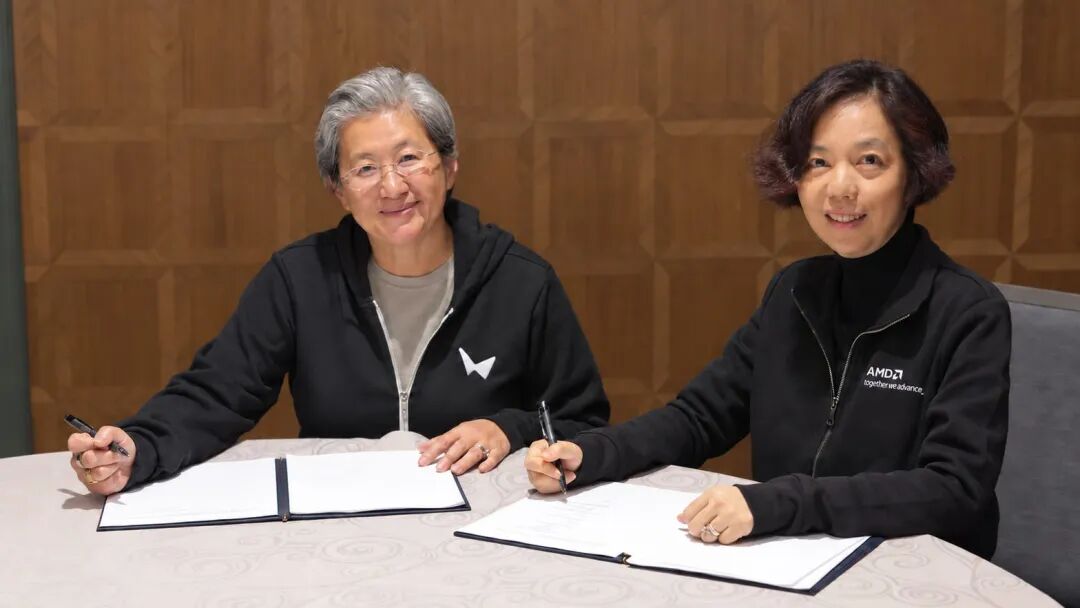
In the early hours of September 29th, Beijing time, AMD officially announced that it had reached a definitive agreement to acquire World Labs, an AI lab founded by Li Feifei. The all-stock transaction is valued at approximately $8.2 billion and is expected to close by the end of 2026, pending regulatory approval. Upon completion, Li Feifei will serve as AMD's Executive Vice President and Chief Scientist, reporting directly to Lisa Su; the other two co-founders, Justin Johnson and Ben Mildenhall, will continue to lead model research. This marks AMD's second-largest acquisition, following its approximately $50 billion purchase of Xilinx in 2022.
What's Being Acquired Is the "Spatial Intelligence" Pathway Itself
Founded in 2024, World Labs currently employs around 70 people, including a robotics team acquired through its purchase of robotics training software company SceniX in July this year. Its focus on "spatial intelligence" aims to enable models to understand not just text and images but also 3D spaces, object relationships, and dynamic changes in the real world. Its product, Marble, can generate interactive 3D environments from text or images, with applications spanning robotics, autonomous driving, gaming, and industrial simulation.
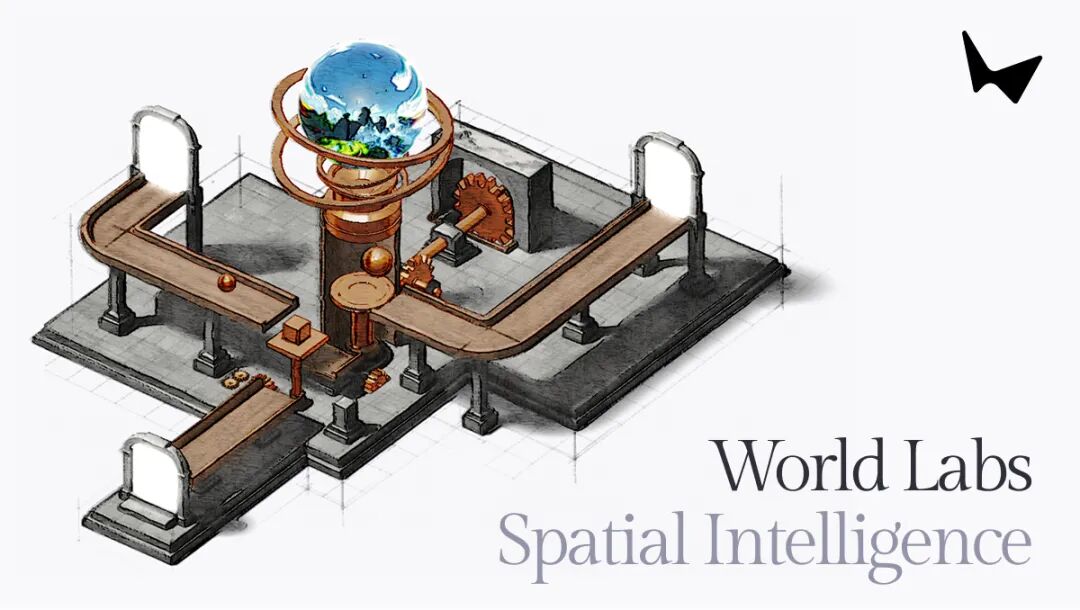
The price is the clearest signal of this deal. World Labs completed a $1 billion funding round in February this year, valuing it at approximately $5 billion. AMD, already an investor, is now acquiring it outright for $8.2 billion, a significant premium. Lisa Su's rationale is characteristically engineer-focused: "The deeper your understanding of the entire end-to-end process, the better systems you can build." AMD plans to keep World Labs operating independently from its chip business until the deal closes, while the lab's research on next-generation models will enable AMD to plan the capabilities of its AI chips years in advance.
For a closer look at its latest developments, see the detailed article: Li Feifei's World Model Atlas: How It Will Impact Physical AI Industries Like Autonomous Driving and Humanoid Robotics
What Shortcoming Is Being Addressed?
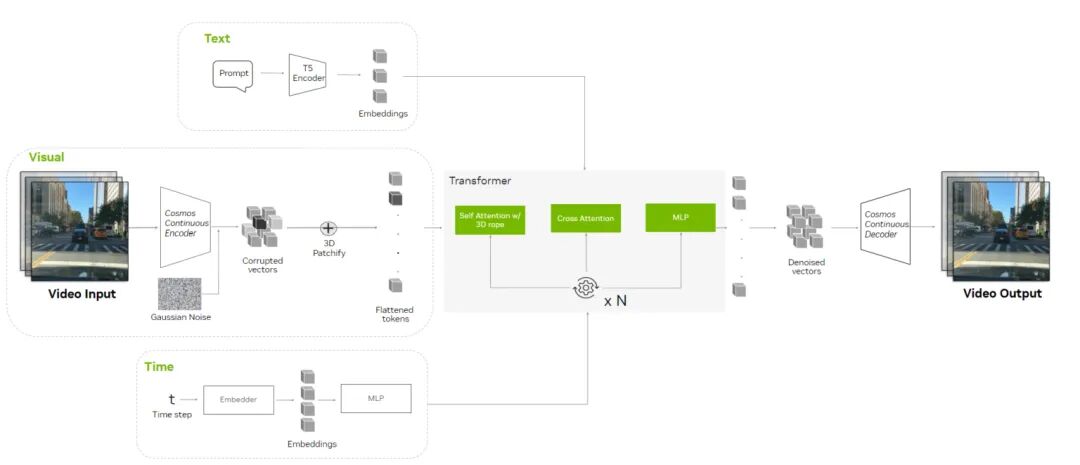
NVIDIA has already established a relatively complete ecosystem matrix through open-weight world models like Cosmos, while AMD's publicly disclosed models have been limited to text and video, lacking a world model product for physical world understanding. This is precisely what the $8.2 billion acquisition aims to acquire.
In contrast, NVIDIA's approach follows a different path. On September 3, Jensen Huang announced the $12.9303 billion acquisition of Hugging Face, with approximately $11.9 billion in cash for existing shareholders to exit and up to $1 billion in equity for retaining employees. The deal is expected to close in the first half of 2027. Prior to this, in December last year, NVIDIA acquired most of the assets of AI inference chip company Groq for approximately $20 billion. The Hugging Face platform boasts over 18 million developers, 3 million models, and 500,000 datasets.
One acquisition targets developer access, the other physical world modeling capabilities. Both companies are acknowledging the same reality: chips alone are no longer sufficient as a moat; the competitive battleground is shifting toward the entire ecosystem of models, software, and robotics.
Why Now, and Why World Models?
World models are seen by the industry as critical infrastructure for deploying generative AI on robotic platforms—from autonomous vehicles to industrial and general-purpose humanoid robots. Given the severe scarcity of effective data for training general-purpose robots, synthetic data from world models will play a pivotal role.
This is particularly relevant to the automotive industry. During an earlier joint demonstration with Lisa Su, Li Feifei stated: "Intelligent agents, whether robots, vehicles, or tools, can learn in a rich, physically aware digital world before deployment in the real world, making them safer." This essentially outlines the solution to one of the most vexing problems in end-to-end autonomous driving: long-tail scenarios cannot be exhaustively covered by real-world data collection, and the physical fidelity of simulated environments determines the upper limit of data usability.
Mapping the Acquisition Trend
Placing this deal within the context of the past year's acquisitions makes the logic clearer: OpenAI acquired Jony Ive's io for approximately $6.4 billion last year; Meta invested $14 billion in a minority stake in Scale AI in 2025 and brought in Alexander Wang; NVIDIA has invested a combined $33 billion in Groq and Hugging Face. "Acquiring a company" is effectively "acquiring a team + decision-making power over a technological pathway," with valuation anchors shifting from revenue multiples to talent and pathway scarcity.
For AMD, the $8.2 billion acquisition brings more than just Marble and 70 people—it embeds model development directly into the chip definition process. If successful, AMD will no longer be merely an AI chip supplier but will officially enter the main arena of robotics, 3D world models, and physical AI.
The risks are also apparent: World Labs has yet to commercialize successfully, and spatial intelligence models have been evaluated by developers as "impressive but difficult to deploy." The deal still requires regulatory approval and satisfaction of customary closing conditions. The $8.2 billion investment is a bet on a ticket that will pay off in three to five years, depending on when the demand curve for physical AI truly surges.
-
![]()
Baolong Technology: Air Suspension Supports All Growth, But 2.6 Billion in Short-Term Debt Looms—Can Quality Be Sustained?", "Baolong Technology, Revenue, Profit, Air Suspension, Short-Term Borrowings
-
![]()
Why Does the Beijing-Tianjin-Hebei Region, Boasting a Trillion-Yuan Automotive Industry, Aspire to Become a World-Class Automotive Hub?
-
![]()
China’s Wealthiest Entrepreneur Zhang Yiming Leads in Computing Power, Outpacing Alibaba, Tencent, Baidu, and Huawei
-
![]()
Two Major Auto Brands Officially Merge!
-
![]()
AMD Acquires Li Feifei's Spatial Intelligence Startup World Labs: Accelerating the Deployment of Physical AI
-
![]()
Mistral, the second largest AI company in Europe, completes €3 billion Series D funding round, with valuation rising to €21.3 billion
-
![]()
Huawei’s Tri-Fold Phone Is a Sensation, But Another Buzz Is Even More Electrifying
-
![]()
National Day & Double 11 Refrigeration and Laundry Market Outlook: Navigating Growth Amid Structural Shifts