Office Agent Showdown: Kingsoft, SenseTime, iFLYTEK, Youdao - Who Makes the Cut, Who's Just Along for the Ride?
 09/29 2026
 407
407

This summer, an interesting shift has occurred in the domestic office Agent market: while products continue to proliferate, major players have begun streamlining their internal product lines.
In July, Tencent reassigned QClaw-related businesses and teams to the Cloud Product Division VI, where WorkBuddy resides. On August 3, Alibaba consolidated QoderWork, MuleRun, and Wukong—previously exploring desktop execution, cloud tasks, and enterprise collaboration, respectively—into Qianwen Office. ByteDance split the Feishu team at the end of July, merging its product side with Doubao, which officially launched Doubao Work on August 25. In early August, Baidu integrated the developers and resources of its internal office agent, dodo, into Baidu Dazi.
While their approaches differ, these companies are converging toward a similar direction: models, tools, collaboration software, and Agent teams previously scattered across groups are now concentrating around a few primary entry points.
Specifically, WorkBuddy, Qianwen Office, Doubao Work, and Baidu Dazi are emerging as the four clearest group-level primary entry points.
All four are backed by large models, cloud services, enterprise clients, and existing internet products. Meanwhile, WPS, 360, NetEase Youdao, iFLYTEK, and SenseTime remain in the race, each boasting substantial assets.
This makes the situation more complex. In the past, when internet companies entered a new market, user base, traffic, and installations often spoke volumes. Office Agents still need these resources, but the journey from 'opening a software' to 'delegating work' is a long one.
At this stage, the metric for comparison must evolve: how much of a company's existing resources have been translated into real tasks within the Agent? By this standard, who is closest to securing the fifth seat in office Agents?

WPS is perhaps the easiest to understand among these companies.
As of the end of June this year, WPS Office had 676 million monthly active devices globally, including 336 million on PCs. Domestically, its cumulative annual paid personal users reached 48.25 million. More importantly, these users are already at work—opening a browser might just be to search for information, and launching security software often lacks a clear task. But when someone opens WPS, it usually means contracts need revising, data needs crunching, or a presentation for the next day isn't finished yet.
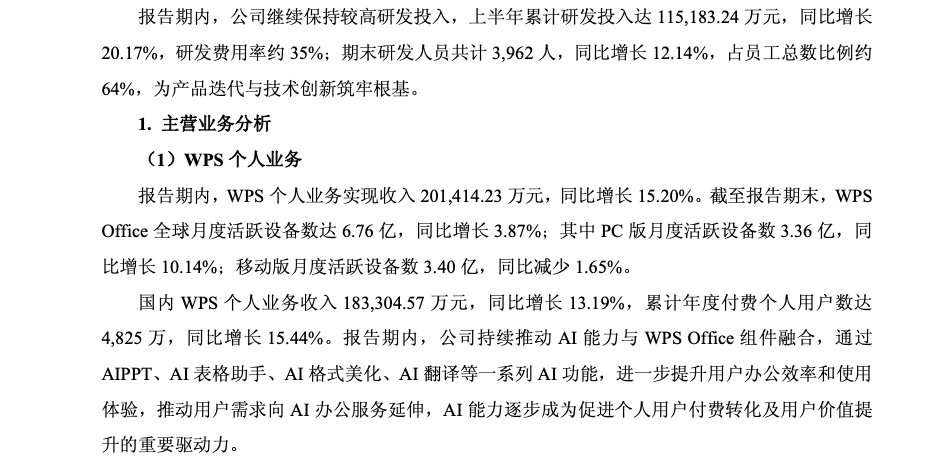
This proximity to work is WPS's most significant advantage in the Agent competition.
On July 15, Kingsoft Office officially released Lingxi Professional Edition and WPS Comate. The former, aimed at individuals, can directly manipulate text, spreadsheets, and presentation files. The latter integrates with enterprise knowledge, data, and business systems, providing a unified AI entry point for organizations. In its half-year report, Kingsoft Office shifted its description of Lingxi from past AI capabilities to context understanding, task execution, and outcome delivery.
However, Office software and office Agents are two different businesses.
For over three decades, office software has continuously enriched its features. Mastery of complex functions, pivot tables, macros, and presentation animations has been part of office proficiency. Agents are reducing users' reliance on this operational knowledge. Managers may no longer need to know which functions to call in a spreadsheet; they can simply delegate business data to the Agent for cleaning, analysis, and generation of editable reports.
This presents both an opportunity and new competition for WPS. While WPS has long dominated the delivery phase of many tasks, the starting point of these tasks may no longer remain within Office. If users first submit requests in WorkBuddy, Qianwen Office, or Doubao Work before calling on document tools for final editing, the resulting file may still be a WPS document, but the task understanding, data retrieval, and execution will have occurred in another product.
This is the reality behind Kingsoft's simultaneous advancement of Lingxi and Comate. Document capabilities remain important, but merely preserving file formats is no longer sufficient. WPS needs to further convert its accumulated document relationships, user habits, and enterprise clients into sustained tasks executed by the Agent.
In contrast, 360 faces a different kind of transition.
When releasing Nami Work in late July, 360 emphasized multi-agent capabilities, local and cloud execution, and offered each initial user a trial quota of 100 million Tokens. In mid-August, the 360 community shifted its R&D and operational focus from the former 'Security Lobster' to Nami Work. The company's 2026 half-year report also included Nami Work in its internet product matrix.
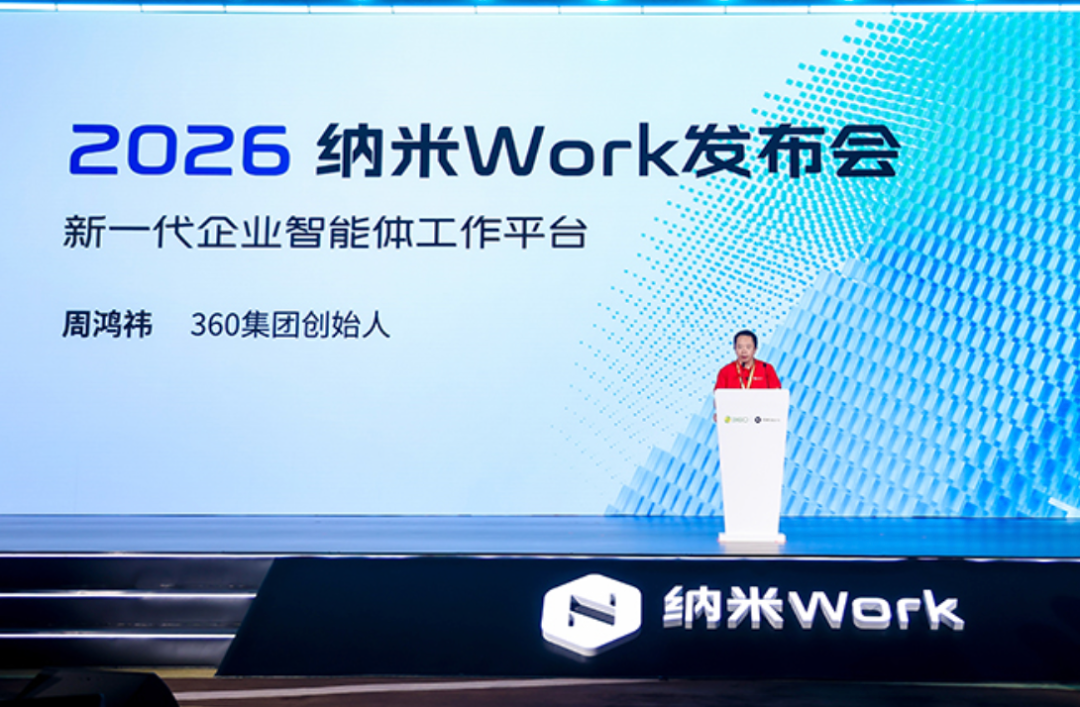
360's PC foundation still holds value, but this value requires a longer conversion chain.
Long-term users of 360 Browser and Security Guardian do not necessarily equate to users willing to let 360 read local files, process contracts, manipulate web pages, or execute business tasks. Shortly after Nami Work's launch, 360 adjusted its membership system, previously bundling cloud hosts but now splitting local membership and cloud computing into two independent services as of September 2.
This adjustment isn't a failure per se but indicates that the product is still calibrating its form based on real user behavior. Compared to case studies showcased at launches, data on sustained activity, payments, and repetitive tasks holds more reference value. While 360's half-year report introduced Nami Work's capabilities, it did not disclose its MAU, paid users, or revenue scale separately.
NetEase LobsterAI and SenseTime Raccoon offer another kind of example. Without a mature Office entry point like WPS, they have directly acquired a batch of Agent users. NetEase Youdao disclosed in September that LobsterAI has over 1 million users. SenseTime announced in August that Raccoon has served over 20 million cumulative users, with over 3 million weekly actives, and has entered over 8,000 enterprises.
These numbers are substantial, but new challenges arise: comparing these figures is increasingly difficult.
WPS counts Office devices and paid users; iFLYTEK's 11.53 million refers to AI open platform developers; SenseTime provides cumulative users and weekly actives; Youdao has begun disclosing Agent tasks and Token consumption; while 360's standalone product data remains relatively limited. Ranking any of these as the 'fifth strongest' based on a single metric would conflate different product stages.
This illustrates that while existing users, traffic, and developer ecosystems remain advantages, they primarily determine acquisition costs and starting positions. Office Agents ultimately need to convert these inventory (stock) resources into real tasks.
Currently, none of these companies has released a complete set of public data on their conversion rates in this regard.

If we only look at feature lists, office Agents are rapidly becoming similar.
Creating PPTs, processing spreadsheets, retrieving information, running code, manipulating browsers, calling Skills, and scheduled execution—most mainstream products are adding these capabilities. As model and tool invocation advances, the time competitors have to catch up to a feature first introduced by one company is shrinking.
This year's wave of organizational consolidations among major players isn't just about reducing internal redundancy. The truly difficult-to-replicate aspects are now extending into the work environment beyond single executions.
Doubao Work is a current example. After its official launch on August 25, ByteDance deeply integrated it with Feishu. Users logging in with Feishu accounts can, within authorized scopes, call chat records, documents, meeting minutes, schedules, and inherit existing permission systems. New content generated by the Agent can then be precipitate (precipitated) back into Feishu. After the Feishu product team merged into Doubao in late July, this integration shifted from product collaboration to organizational consolidation.
Such information is often categorized under 'context,' but in office scenarios, it is highly specific.
When an employee asks the Agent to analyze a client, the task requires client data, previous communication records, and the company's pricing rules. When progressing days later, they need to know where they left off, who has access, and who the final materials should be submitted to. Generating a single analysis isn't difficult; continuously participating in the same work requires the Agent to grasp more historical information while respecting internal permissions and data boundaries.
Qianwen Office's consecutive updates in September also reflect this direction. The September 7 version began having new tasks inherit the working directory and context of recently opened projects by default. On September 21, it further supported associating a single project with multiple working directories while adding features like a security center, critical operation records, and sensitive information identification. At this stage, project continuity, file organization, and permission confirmation have become as integral to product design as the model itself.
Baidu's approach is more direct. The dodo, now integrated into Baidu Dazi, was originally an internal office Agent capable of organizing meetings, querying emails, accessing knowledge bases and R&D platforms, and handling code submissions and requirement management. Its value isn't merely adding an R&D team; the organizational scenarios and tool connection experiences from Baidu's long-term internal use have also entered the Dazi ecosystem.
Companies outside the main competition are also bolstering this layer of capability.
WPS has a natural file foundation. Kingsoft mentioned in its half-year report that Lingxi can manage work contexts by combining historical documents and personal preferences, while WPS Comate further integrates enterprise knowledge, data, business systems, model resources, and security governance. For WPS, Office files aren't just the final output format; they may also become the most direct material for the Agent to understand a task.
LobsterAI takes a different approach. Without an Office suite or large-scale enterprise collaboration software, its strength lies in connecting local files, terminals, browsers, and instant messaging tools. After releasing version 2.0 in September, its new Sites feature allows direct sharing of task outcomes, while Teams begins handling team-wide Agent usage and replaces traditional seat fees with usage-based pricing. Expanding from personal desktops to teams addresses its relatively weak organizational relationships in the past.
iFLYTEK is also making similar improvements. Its AI open platform had gathered 11.53 million developers by the first half of the year, including 3.219 million large model developers, with deep accumulations in voice, OCR, translation, model APIs, and other capabilities. When upgrading Loomy on September 10, it emphasized adding multiple working directories to let users organize local files and contexts by project and client.

For iFLYTEK, the persistent question has been whether these capabilities can be organized into an office product that users engage with daily.
The outlier here is SenseTime. In August, Raccoon unified its office and code products into Raccoon Work and began releasing industry-specific versions for education, finance, and government data. Compared to general-purpose office tools, finance and government sectors rely more on specialized knowledge, internal data, and fixed processes. SenseTime clearly aims to push its general-purpose Agent deeper into industry workflows. While it has disclosed that over 8,000 enterprises use Raccoon for office tasks, how much sustained business the industry versions will generate remains to be validated by subsequent data.
Context is becoming a dividing line for office Agents, but more data isn't always better.
Once chat records, emails, files, financial data, and business systems are entrusted to the Agent, permissions, auditing, data security, and misoperation (misoperations) must all be addressed simultaneously. Companies with collaboration software can more easily access organizational data but must also inherit existing permission systems. Products without a collaboration foundation can connect to users' existing work environments through local execution, connectors, knowledge bases, team spaces, and private deployments.
Both paths are viable; the ultimate effectiveness depends on whether this information can be accurately invoked in the next task without crossing pre-existing enterprise boundaries.
The office Agent's need for context boils down to something simple: when doing the same task a second time, it shouldn't start from scratch.

Another reason scale data is becoming harder to compare is that office Agents are moving from 'how many have tried it' to 'how many are really using it.'
QuestMobile statistics show that the AI efficiency office sector had 102 million monthly active users in July 2026, up 8.2% year-on-year. Total usage sessions in the sector grew 112.4% year-on-year during the same period, significantly outpacing user growth. In its report, QuestMobile equates scale with market coverage and entry point positioning, while viewing usage frequency as indicative of workflow integration and task dependency. This distinction better captures the current competitive state of Agents than mere MAU comparisons.
Among these, a set of data disclosed by LobsterAI is particularly noteworthy. Its September user behavior report revealed that the top 20% of users consumed 87.4% of computing resources, with the top 5% accounting for 53.5%. Paid users completed 5.2 times more tasks than free users and were active about 3 times as many days per month. From a task structure perspective, general programming tasks accounted for 38.5%, remaining the largest scenario.
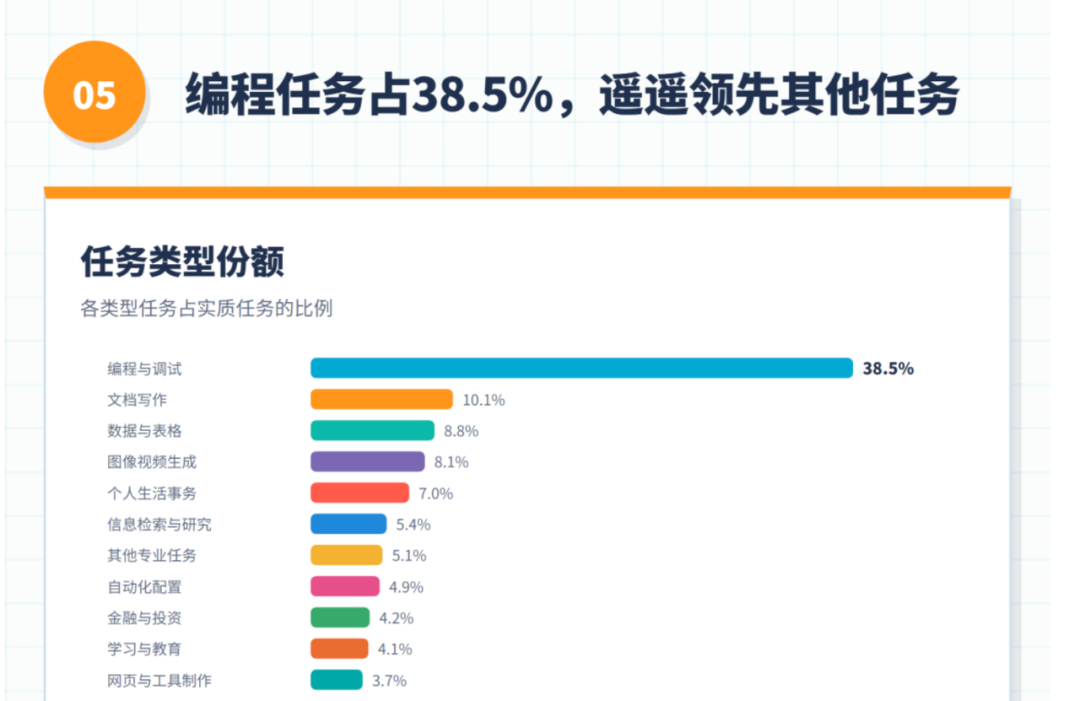
On one hand, a group of users have already adopted Agent as a high-frequency work tool and are willing to continuously invest in computing power and costs. On the other hand, the concentration of computing power consumption, with programming accounting for nearly 40%, also indicates that a million users do not equate to a million ordinary white-collar workers having formed stable office habits. LobsterAI has found a group of highly engaged users; the next step is to verify whether this level of engagement can spread to more common work scenarios.
SenseTime faces a similar issue, albeit with a different data structure. With 20 million cumulative users, 3 million weekly active users, and over 8,000 enterprises, Raccoon has demonstrated significant reach. The next stage is more crucial: publicly releasing more data on task frequency, sustained enterprise usage, and commercial conversion. Otherwise, cumulative users may continue to grow, but it will be difficult to compare the depth of usage with other Agents on an equal footing.
WPS, on the other hand, is positioned at the opposite end. With 48.25 million cumulative annual paid individual users and a mature enterprise procurement system already in place, it merely needs to prove how much of this demand is shifting from traditional Office subscriptions to Agent services.
Kingsoft has already prepared for this shift in its pricing model. On the individual side, it is exploring a "subscription + AI usage" model alongside existing subscriptions. For enterprises, WPS 365 is experimenting with a "seat + AI usage" approach. This means that Kingsoft itself does not view Agent as simply a free feature within Office membership but hopes to generate new revenue based on complex tasks and AI resource consumption.
Youdao has adopted a more aggressive approach, with LobsterAI Teams eliminating seat fees and charging directly based on actual usage. Behind these two models lie different customer bases: WPS already has mature software procurement relationships and can overlay AI onto existing subscriptions, while LobsterAI is still vying for team users, and reducing fixed seat costs makes it easier for a few heavy users to first bring Agent into their organizations.
The same issue is reflected in 360's decision to separate membership and cloud computer services in September. Agents rely more heavily on computing power than traditional SaaS, and tasks vary significantly in intensity, making it difficult for enterprises to continue using the old logic of "purchasing accounts completes procurement." Whether users need local execution or cloud hosting and how much they are willing to pay for Tokens must be redetermined during usage.
These pricing changes also remind the industry that competition for office Agents cannot remain stuck at functional demonstrations.
Nearly all mainstream products this year can already create PPTs, perform data analysis, conduct in-depth research, and operate browsers. What will truly differentiate them in the future is likely what they leave behind after completing a task.
Enterprise procurement will raise this standard even further. While individuals may tolerate occasionally regenerating a PPT, corporate business processes find it difficult to tolerate Agents randomly overstepping authority, referencing incorrect data, or producing results that cannot be audited.
Thus, it can be seen that Baidu, WPS, ByteDance, Alibaba, and other enterprise Agents have recently been strengthening permissions, auditing, knowledge governance, and security capabilities. Qianwen Office even added a dedicated security center and key operation records in September, while Doubao Work continue to use s the Feishu permission system to isolate personal and enterprise data.
From this perspective, becoming the "fifth strongest" office Agent requires at least several layers of practical validation: whether existing users can transition to Agent tasks; whether reusable context remains after task completion; whether execution results can directly feed into subsequent work; and whether individual usage ultimately translates into enterprise procurement and sustained payment.
These standards are not new, but they are far more challenging than simply comparing registration numbers. The value of an Agent begins with completing a single task, but true product stickiness depends on whether the same type of work continues to return—this is precisely the aspect most lacking in publicly available data.

The list of candidates for office Agents will continue to grow. China Telecom has already launched TeleAgent, and more vertical software companies are integrating Agents into their business systems. Today, many products can create PPTs, operate browsers, and invoke Skills; in another six months, these capabilities will likely become even more widespread.
WPS, 360, Youdao, iFlytek, and SenseTime still have their opportunities, but what each needs to prove has changed.
WPS is closest to documents and enterprise office work; the next step is to see whether Lingxi and Comate can extend existing Office relationships to Agents. 360 has PC entry points, but Nami Work still needs to prove through sustained engagement and payment that its existing traffic can translate into new office demands. Youdao has already found a group of highly engaged Agent users but needs to expand this depth beyond heavy scenarios like programming. SenseTime has built a substantial user base and is beginning to promote Raccoon Work in industries like finance and government data. iFlytek has accumulated significant AI capabilities and developers; Loomy needs to consolidate these resources into stable product usage...
This is also where this round of competition for office Agents differs from past internet portal battles. Downloads, registrations, and even monthly active users are just the beginning. Once users entrust a particular Agent with their files, historical projects, enterprise knowledge, and business systems, true migration costs will emerge.
Thus, the coming competition may be much slower and more difficult than the first half of this year. Products will no longer suddenly pull ahead simply by adding one more Skill or supporting an additional PPT template.
What will be more valuable as reference points are another set of numbers: how many tasks an Agent actually completes each month, how many days users continue to engage, how long the same project can be sustained, how much enterprise knowledge and how many business systems are integrated, and ultimately how much revenue these usages contribute.
Only then will the "fifth strongest" position transform from a convenient talking point into a verifiable ranking based on operational data.
*The featured image and illustrations in the text are sourced from the internet.
-
![]()
Office Agent Showdown: Kingsoft, SenseTime, iFLYTEK, Youdao - Who Makes the Cut, Who's Just Along for the Ride?
-
![]()
Starting at 118,800 yuan with standard LiDAR, the new Lynk & Co 20 is all business this time around.
-
COSTAR Auto Optoelectronic Display Branch Passes Supplier Admittance Review by a Leading Headlamp Enterprise!
-
![]()
Domestic Memory Behemoth Unveils Plan to Invest 34.9 Billion Yuan in Production Scale-Up
-
![]()
Why Is Luxshare Precision Covering the Costs for Chenling Optics, Despite Harson’s Aborted Acquisition?
-
![]()
Dialogue with Phoenix Optics: Riding the 'Optics + AI' Wave with Six Decades of Expertise
-
![]()
Competing on Assets, Not Just Price: 10 Key Insights from NIO and Geely's Battery Swap Integration
-
![]()
Fliggy is Becoming More and More Like a Plugin