Google: The Return of the 'Money-Printing Machine' Ghost Story – Can It Keep Going by Selling Shovels and Liquidating Assets?
 10/29 2026
 466
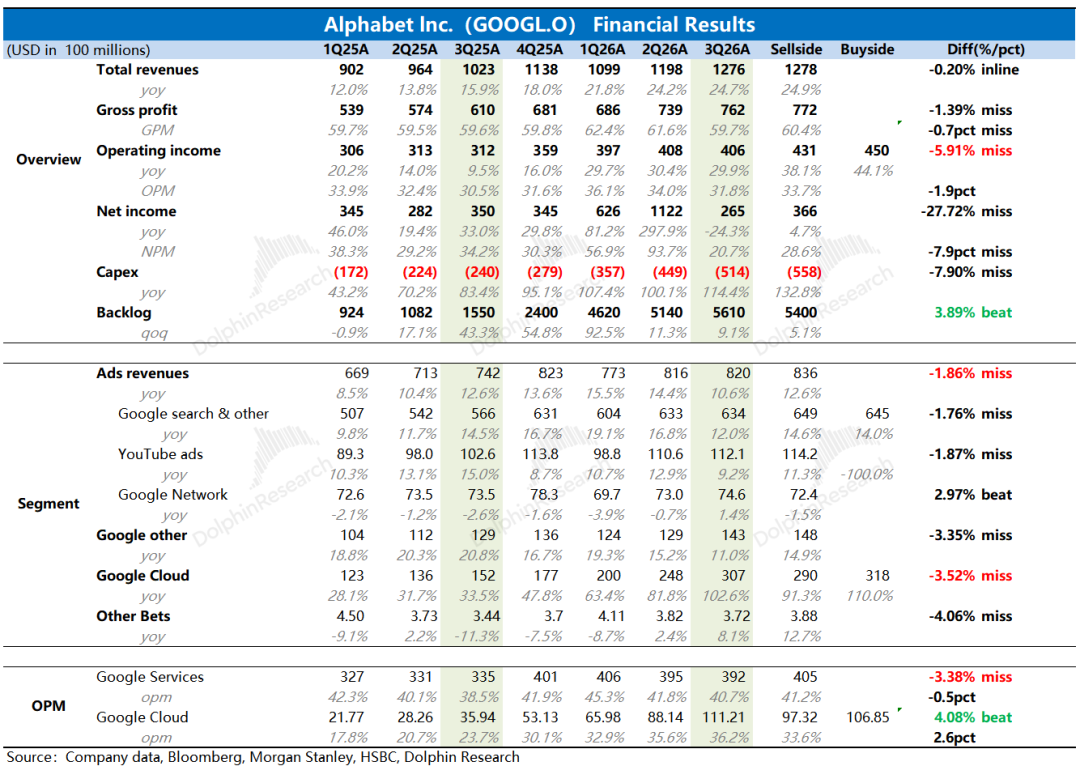
Google released its Q3 2026 earnings report early in the morning on October 29 (Beijing Time), after the close of the U.S. stock market. Core metrics for search, cloud services, and profits all fell short of expectations, adding further pressure to Google, which was already grappling with a relatively unfavorable market narrative.
A closer examination reveals:
1. Search Growth Slows: The AI Erosion Narrative Takes Shape
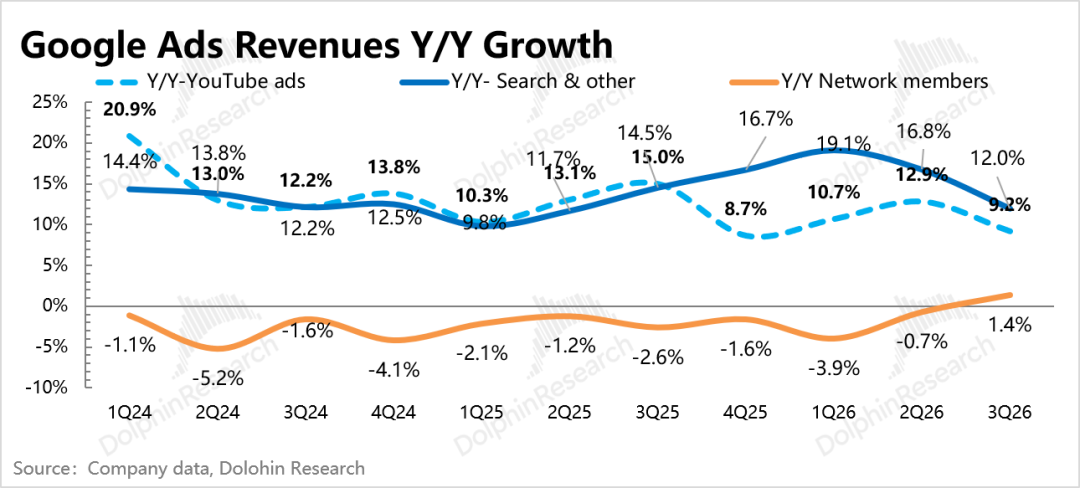
In Q3, search ad growth slowed to just 12%, a significant decline compared to previous quarters. This slowdown is particularly concerning for Google, as heavy investments in AI are expected to weaken profits and cash flow. The deceleration of Google's core search business lends credence to the narrative that AI advancements by competitors are eroding its market position.
However, when compared to previous quarters where AI drove gains in search market share, Dolphin Research believes the underperformance in Q3 may also be linked to the Gemini model falling behind, which has impacted the product experience and led to user attrition. The Gemini model's lag is partly due to the internal and external allocation of computing resources. In the first half of the year, Google Cloud Platform (GCP) prioritized external clients for computing power, leading to frequent complaints from DeepMind employees (responsible for cutting-edge model training) about insufficient internal computing resources.
Meanwhile, as the boost from the World Cup faded, YouTube advertising also experienced a noticeable slowdown in growth, under pressure from a high comparison base.
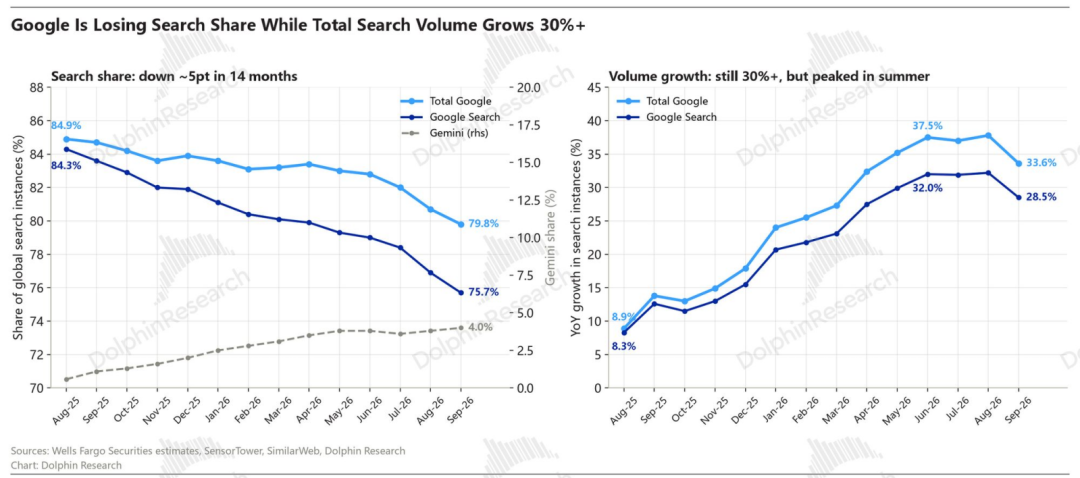
Prior to the earnings report, third-party data indicated a slowdown in Google search volume and market share. Additionally, the DMA bill led to a decline in Google's travel search volume in the EU. The stock's consecutive declines already reflected investor concerns and adjustments in expectations, but the actual performance was even worse.
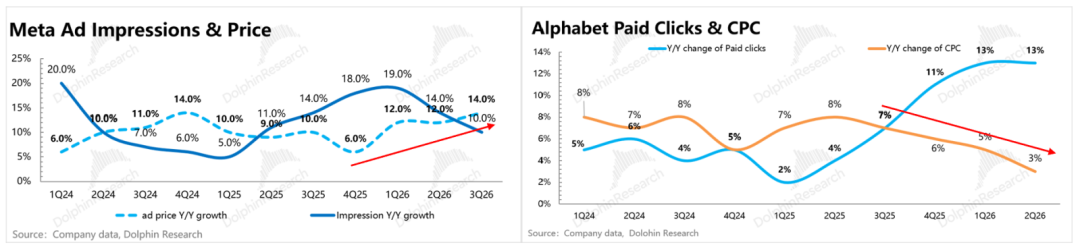
Compared to Meta's sustained advertising revenue growth, driven by rising ad prices, Google Search's competitive edge is diminishing. After entering 2026, the growth rate of Google Search's Cost Per Click (CPC) prices slowed rapidly, suggesting that the AI era may further amplify the industry trend of advertising budgets shifting from search to social platforms.
Especially with Meta's Muse penetrating core scenarios where Google Search excels, such as travel and finance, Meta now has an opportunity to venture into offline service areas where it previously lacked an advantage.
2. Cloud and TPU Growth Remains Robust, but High Expectations Were Already Factored In
The cloud business (including TPU sales, primarily v7 deliveries in Q3) grew by 103% year-over-year in Q3, accelerating quarter-over-quarter. However, institutional expectations were even higher. The Bloomberg consensus expectation (+91%) did not fully reflect the heightened expectations after the first confirmation of TPU hardware sales (sell-side +105%; buy-side +110%).
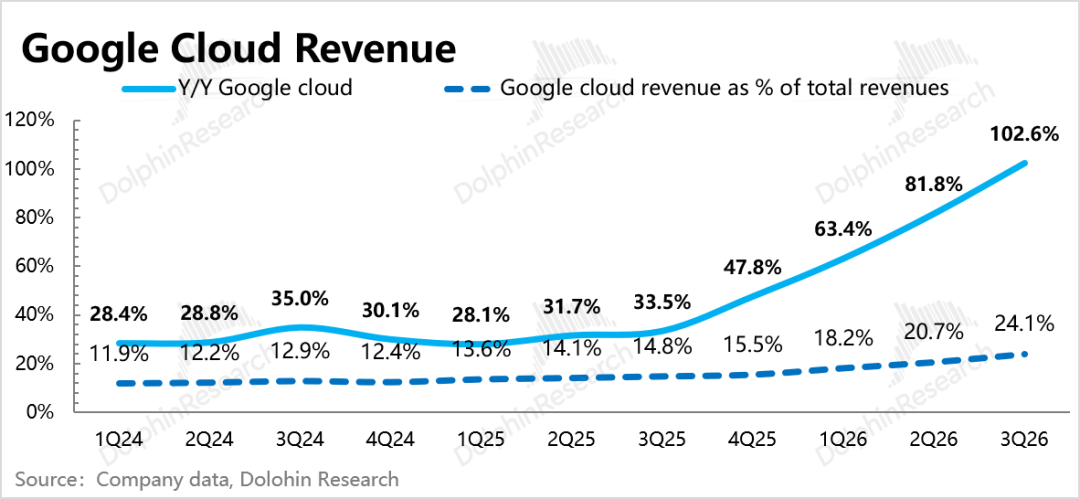
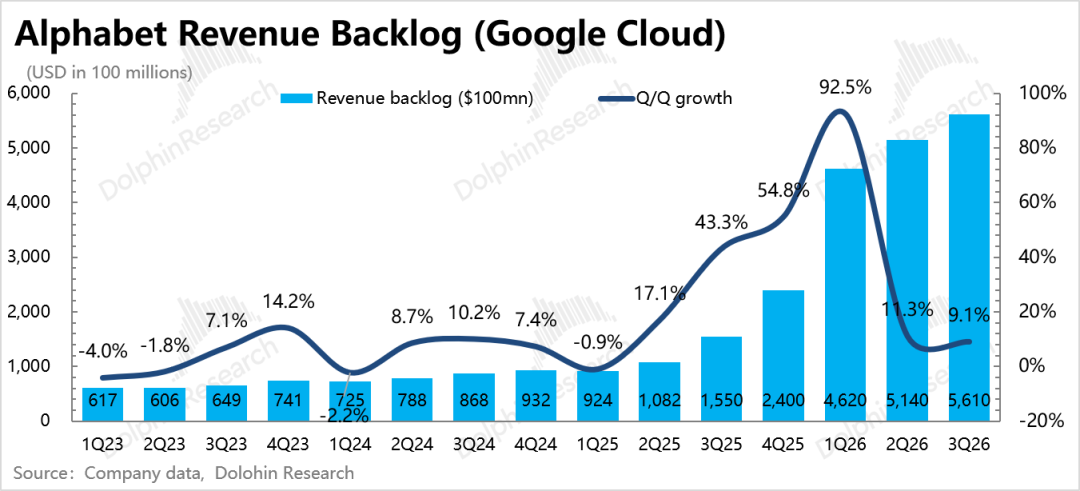
The backlog for Q3 reached $56.1 billion, and when combined with current-period confirmations, the implied new contract value was approximately $7.77 billion, roughly in line with Q2 (slightly higher by $1 billion), indicating continued strong demand.
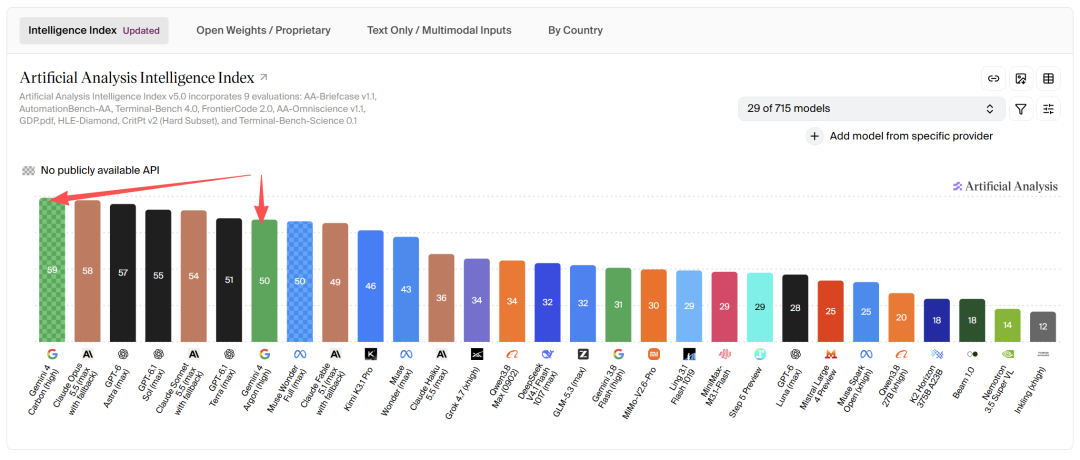
Dolphin Research attributes the cloud revenue miss to two factors. First, consecutive quarters of delayed cutting-edge model iterations likely impacted API revenue. Gemini 4 Argon, released in late September and opened to the public in mid-October, showed significant improvements over its predecessor.
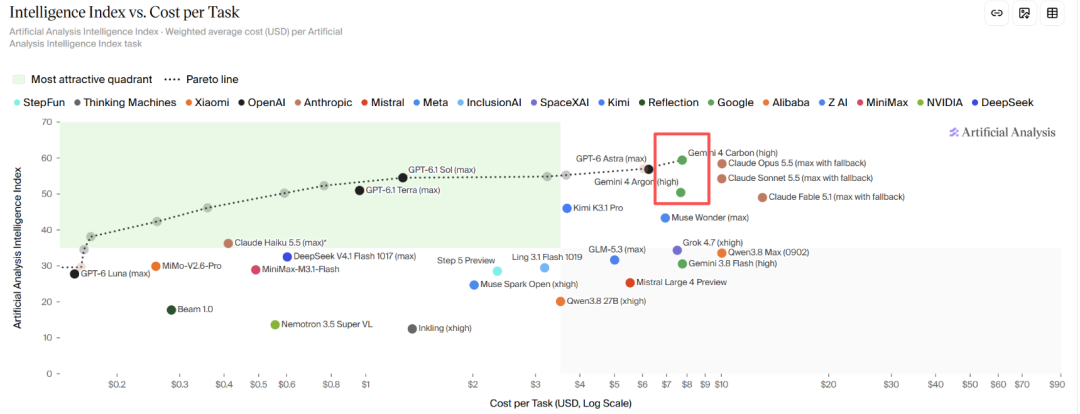
However, compared to state-of-the-art (SOTA) peers, it still lags in coding capabilities and cost-effectiveness. For details, refer to Dolphin Research's previous analysis on the Changqiao App.
Following the earnings release, Gemini 4 Carbon was immediately launched, with overall performance quickly reaching SOTA levels. While its single-task cost remains suboptimal, it is lower than Opus 5.5. User testing performance will require further observation.
Second, based on research findings, Dolphin Research believes the expectation gap may also relate to TPU shipment timing (e.g., the mass delivery of v8i was clearly delayed by a quarter until year-end). Detailed cloud business breakdowns were not disclosed in the earnings report. Regarding how much TPU contributed to growth (qualitatively described in the report as significant) and the impact of v8 delays, further insights may emerge during the earnings call.
3. Profit Erosion Dragged Down by High AI Investments
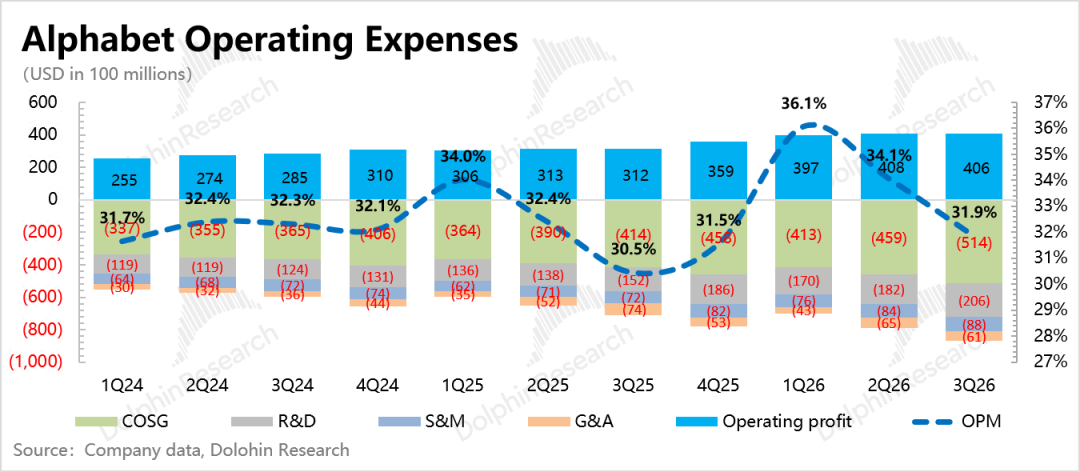
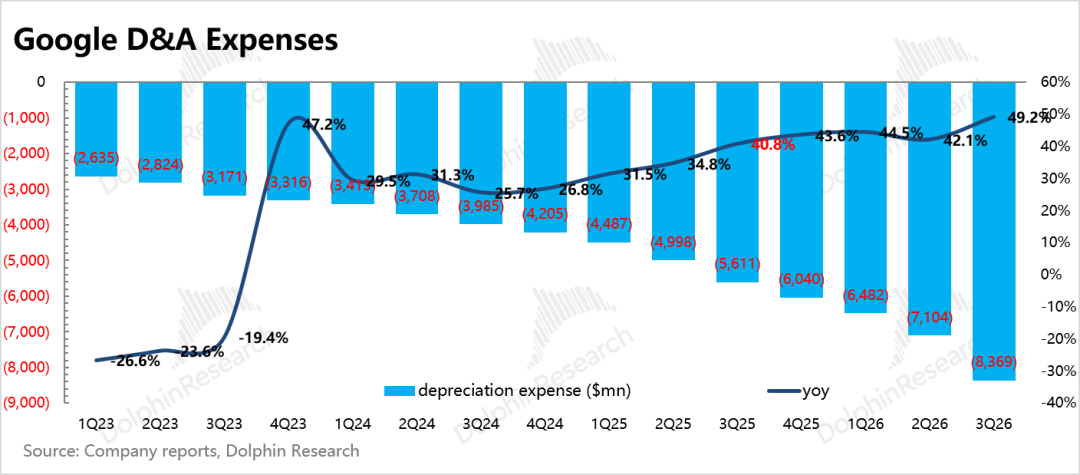
The overall operating profit margin weakened by 2 percentage points quarter-over-quarter in Q3, driven by high depreciation and R&D expenses, representing investments in computing infrastructure and large model training.
In addition to the lower profit margins of TPU hardware sales compared to the original group, the company stated that due to insufficient computing supply, it would temporarily expand the use of third-party computing power. For example, computing power leased from SpaceX on short notice often comes at a premium, further pressuring profit margins.
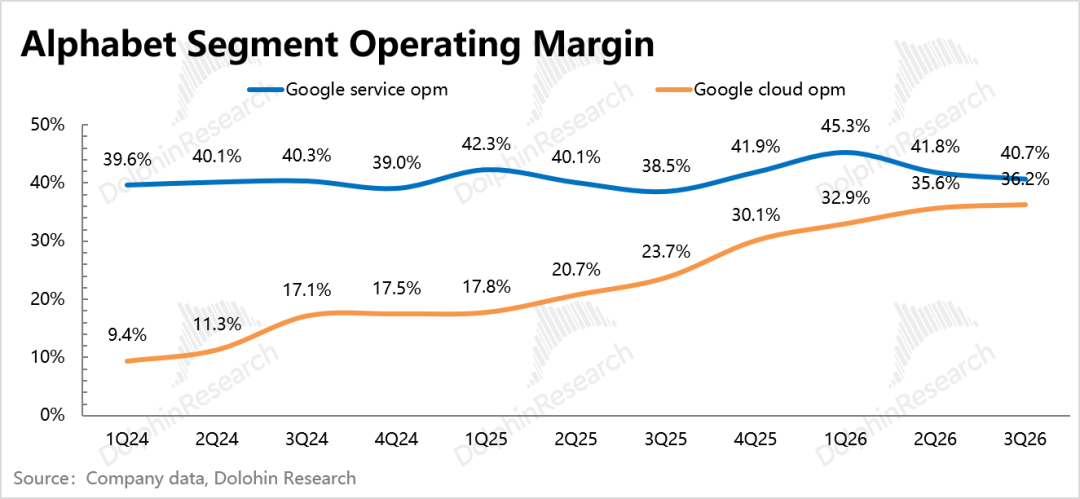
By segment, Google Services' (advertising) profit margin declined by 1 percentage point quarter-over-quarter, while cloud profit margins improved (note: this excludes model training expenses, as Google allocates some of these costs to the corporate department's R&D expenses). This was one of the few areas that exceeded expectations.
4. High CapEx Drives Widening Cash Flow Gap
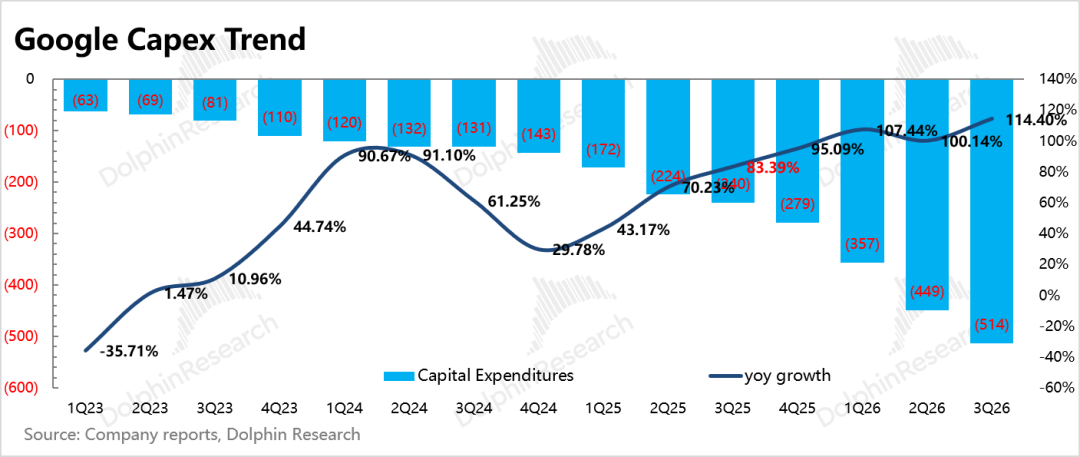
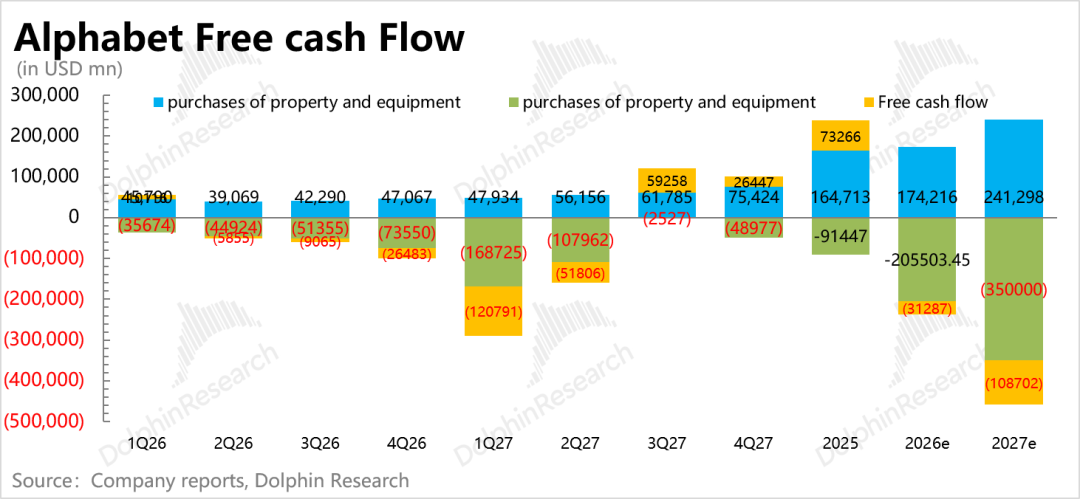
Capital expenditures reached $51.4 billion in Q3, doubling year-over-year and accelerating quarter-over-quarter, accounting for 40% of current revenue. This directly caused the negative free cash flow to expand further to $9.1 billion in the quarter.
Currently, market expectations for CapEx are $220 billion for 2026 and $350 billion for 2027 (company guidance: CapEx for 2026 remains unchanged at $195-205 billion, implying $63-73 billion in Q4, continuing to accelerate quarter-over-quarter, with significant growth expected in 2027). Based on next year's projections, full-year cash flow will likely remain negative.
In Q3, Google continued executing its $85 billion financing plan, issuing $12.5 billion in equity during the quarter, with $27.6 billion remaining in authorized equity financing. Additionally, $28.7 billion in unsecured notes were issued in Q3. Theoretically, current cash on hand + short-term investments + remaining financing capacity can largely cover funding gaps over the next two years.
5. Key Metrics vs. Expectations
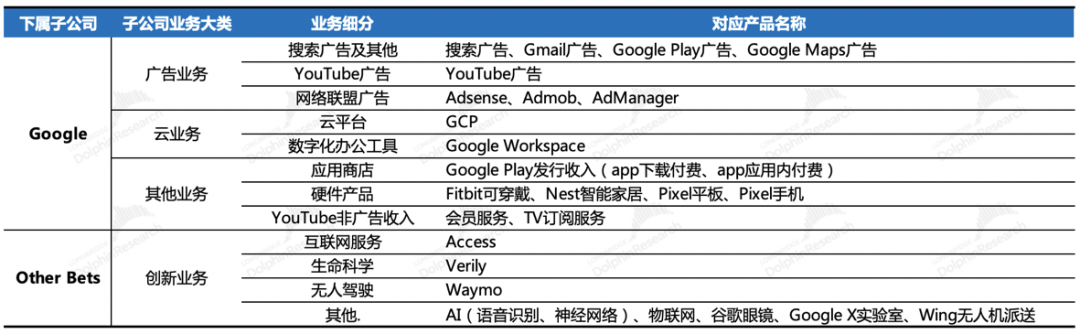
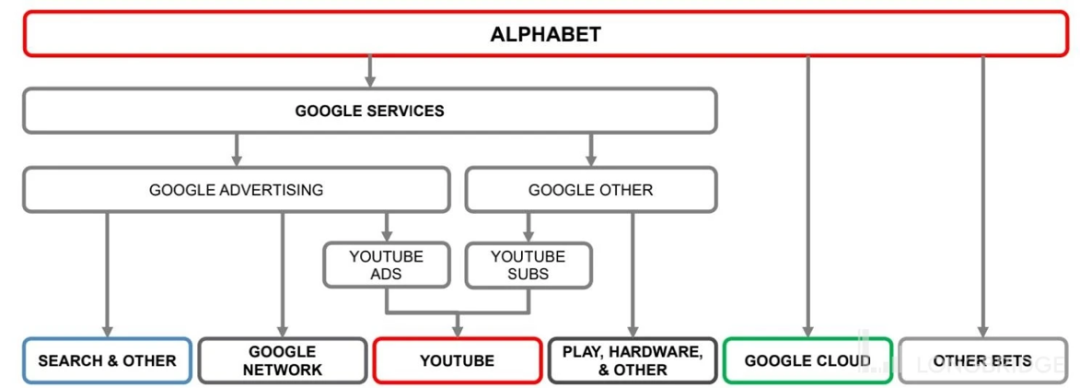
Google's parent company, Alphabet, has a diverse business portfolio, and its earnings report structure has undergone multiple changes. For those unfamiliar with Alphabet, here is an overview of its business structure.
A Simplified Explanation of Google's Long-Term Fundamentals:
a. Advertising remains the largest revenue contributor and primary profit driver. Search advertising faces a medium- to long-term threat from feed-based ads, with high-growth streaming platform YouTube serving as a replacement.
b. The cloud business, including TPU hardware sales, has become the company's primary growth driver and narrative, as well as the most direct beneficiary of AI.
Dolphin Research's View
Over the past two quarters, Google has undergone continuous adjustments, with short positions rising rapidly among Big Tech companies. The core issue lies in the deepening impact of AI erosion on search. The AI full-stack narrative, which gained traction late last year, has come under scrutiny due to key talent departures and noticeable lags in cutting-edge model iterations.
From a technical standpoint, catching up is not impossible, especially in applications focused on agents and ecosystems. Google, with its advantages in scenario data, distribution channels, and multimodal models, can still carve out a competitive edge.
However, the key issue raised by this earnings report is that AI is transforming Google more into a 'shovel seller' while slowing down its 'money printing machine' – search. The advertising core business, accounting for over 60% of revenue, has already shown AI erosion effects. Given its large scale, will performance during the transition period deteriorate further than expected?
Meanwhile, next year's CapEx is projected to grow significantly. Institutions expect 6-7 GW of new computing deployments, with an average unit cost of $43 billion per GW, plus $5-60 billion in maintenance for existing data centers, totaling around $350 billion.
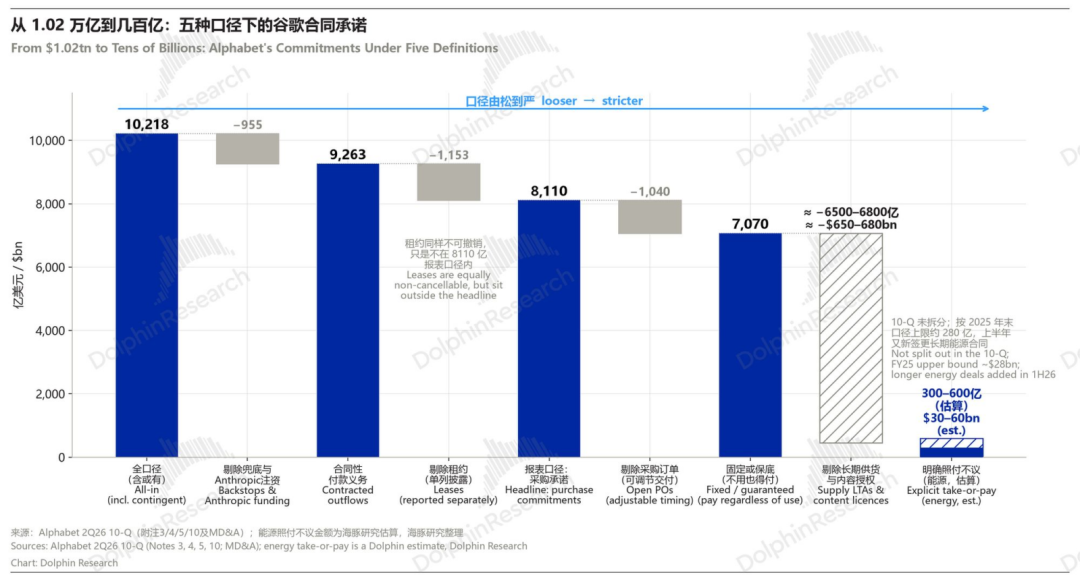
This implies a potential $100 billion negative free cash flow next year. Excluding long-term debt, short-term liquidity should suffice. However, if investments surge, search performance worsens, and considering the medium- to long-term perspective beyond 2028, Google still has nearly $1 trillion in contract obligations, including over $700 billion in 'semi-rigid' payments within five years (Q2 data, Q3 figures pending 10-Q update). These are fixed payments that must be made as long as contracts are executed, unless default compensation is triggered.
Offsetting these commitments are client backlogs and Anthropic's approximately $114.5 billion computing commitment to Google. If TPU production and collections proceed as scheduled next year, cash flow could reach an inflection point around 2028.
The risk lies in misalignment – procurement commitments are rigid, while a significant portion of backlogs comes from AI companies like Anthropic, which are still burning cash. Anthropic's financing capabilities could ultimately become Google's cash flow risk.
Currently, Google is deepening its partnership with Anthropic to counter ChatGPT. The collaboration primarily involves integrating Anthropic deeply into the Google Workspace ecosystem, achieving high levels of integration, such as adding an Anthropic button directly in Google Docs for a seamless experience.
Additionally, future consumer subscription offerings may explore bundled packages, such as combining access to both companies' models, forcing users to choose between OpenAI and Anthropic + Gemini.
However, Anthropic's cooperation is not exclusive to Google. It has also integrated with Office and developed Microsoft 365 connectors, enabling cross-software collaboration within the Microsoft ecosystem.
Without advertising support, relying solely on cloud and TPU would make it even harder for Google to meet its obligations. Therefore, beyond expecting Google to maintain cutting-edge model iterations, we hope to see more AI agent products leveraging its existing ecosystem advantages to create new traffic entry points, rather than relying solely on traditional search.
In terms of valuation, Dolphin Research's judgment last quarter was: 'Currently, Google is making aggressive investments, which will accelerate the deterioration of its fundamentals (profits and cash flow) in the short term. As valuations and lofty expectations are further adjusted and digested downward... we may gradually see the divergent opportunities we have been waiting for.' After the market closed today, there was a significant adjustment in the stock price, reaching the range we had been paying attention to.
However, the negative news released in the Q3 earnings report exceeded our expectations. If advertising continues to deteriorate, there is a risk that profits may need to be further revised downward. Emotionally, the release of Gemini Carbon may provide some relief, but it certainly cannot completely eliminate concerns.
Therefore, Dolphin Research believes that although the company still has fundamental support from a long-term perspective, there is a lack of strong drivers for a rebound in the short term. Under an emotional overreaction, the stock may continue to decline and then experience a short covering rally after bearish positions become crowded, leading to some technical rebounds. Regarding the next potential catalysts at the business level, Dolphin Research believes that the introduction of personal AI Agents to solidify the original traffic entry points, as well as securing more TPU orders and achieving large-scale deliveries, will extend the performance release period of the cloud business.
- END -
// Reposting with Permission
This article is an original piece by Dolphin Research. Reposting requires authorization.
// Disclaimer and General Disclosure Notice
This report is crafted exclusively to offer comprehensive data for general purposes, intended for the broad readership and data-referencing needs of users associated with Dolphin Research and its affiliated bodies. It does not consider the unique investment goals, preferences for investment products, risk tolerance levels, financial circumstances, or specific requirements of any individual recipient. Before making any investment decisions based on the insights provided in this report, investors are strongly advised to seek counsel from independent professional advisors. Anyone who opts to make investment decisions utilizing or referencing the content or information presented herein does so at their own peril. Dolphin Research disclaims any liability for direct or indirect responsibilities or losses that may stem from the utilization of the data featured in this report. The information and data herein are sourced from publicly accessible channels and are provided solely for reference. While Dolphin Research endeavors to ensure the reliability, accuracy, and completeness of the relevant information and data, it offers no guarantees in this regard.
Under no circumstances, and within no jurisdiction, should the information cited or the opinions expressed in this report be deemed or interpreted as an offer to sell securities, an invitation to purchase or sell securities, or as advice, solicitations, or recommendations concerning relevant securities or associated financial instruments. The information, tools, and materials contained within this report are not intended for, nor designed to be, distributed in any jurisdiction where such distribution, publication, provision, or use would violate applicable laws or regulations, or would subject Dolphin Research and/or its subsidiaries or affiliated companies to any registration or licensing requirements within that jurisdiction, or to citizens or residents thereof.
This report solely mirrors the personal perspectives, insights, and analytical methodologies of the respective creators and does not represent the official stance of Dolphin Research and/or its affiliated entities.
This report is produced by Dolphin Research, with exclusive copyright ownership vested in Dolphin Research. Without the prior written consent of Dolphin Research, no institution or individual is permitted to (i) create, copy, reproduce, duplicate, forward, or generate any form of copies or reproductions in any manner, and/or (ii) directly or indirectly redistribute or transfer them to other unauthorized individuals. Dolphin Research reserves all rights related thereto.
-
![]()
Li Auto Shifts Focus: Can Chips, Batteries, and L4 Tech Drive the Next Phase of Competition?
-
Suzhou: Not Just Aiming for Daily Access to Driverless Cars, but Transforming the Entire City into a 'Testing Ground' for Embodied AI
-
![]()
Who Benefits More from the Split of FAW-Audi and SAIC-Audi?
-
40-Year Reversal in Technology Flow: Why Did Volkswagen Transform China from a Factory into a Global Development Hub?
-
![]()
Google: The Return of the 'Money-Printing Machine' Ghost Story – Can It Keep Going by Selling Shovels and Liquidating Assets?
-
![]()
Twitter Founder Returns to the Spotlight with a Blockbuster Offline Chat 'Tool'
-
Li, Xiao, and Wei: Struggling in the Valuation Trough - Same Decline, Different Destinies, Three Companies at Distinct Stages
-
Steadily Ranking First Globally: 4 Key Insights from Fuyao Glass for Chinese Enterprises", "Fuyao Glass, automotive glass, global leadership, market share, vertical integration", "Fuyao Glass maintain