How Your Habitual Reliance on AI Is Quietly Destroying Your Thinking Ability
 11/16 2026
 436
Relying on AI has become second nature—and thinking has become a burden.
Finding an answer is now almost too easy. Whether you're solving problems, looking up information, or brainstorming solutions, just ask AI and the result appears right before your eyes.
But have you ever stopped to consider: when the day comes that AI is no longer by your side and you have to grind through every problem on your own, bit by bit—will this "convenience" actually make it harder for us to persevere?
A recent study involving Brian Christian, a researcher at the University of California, Berkeley, specifically explored this question.
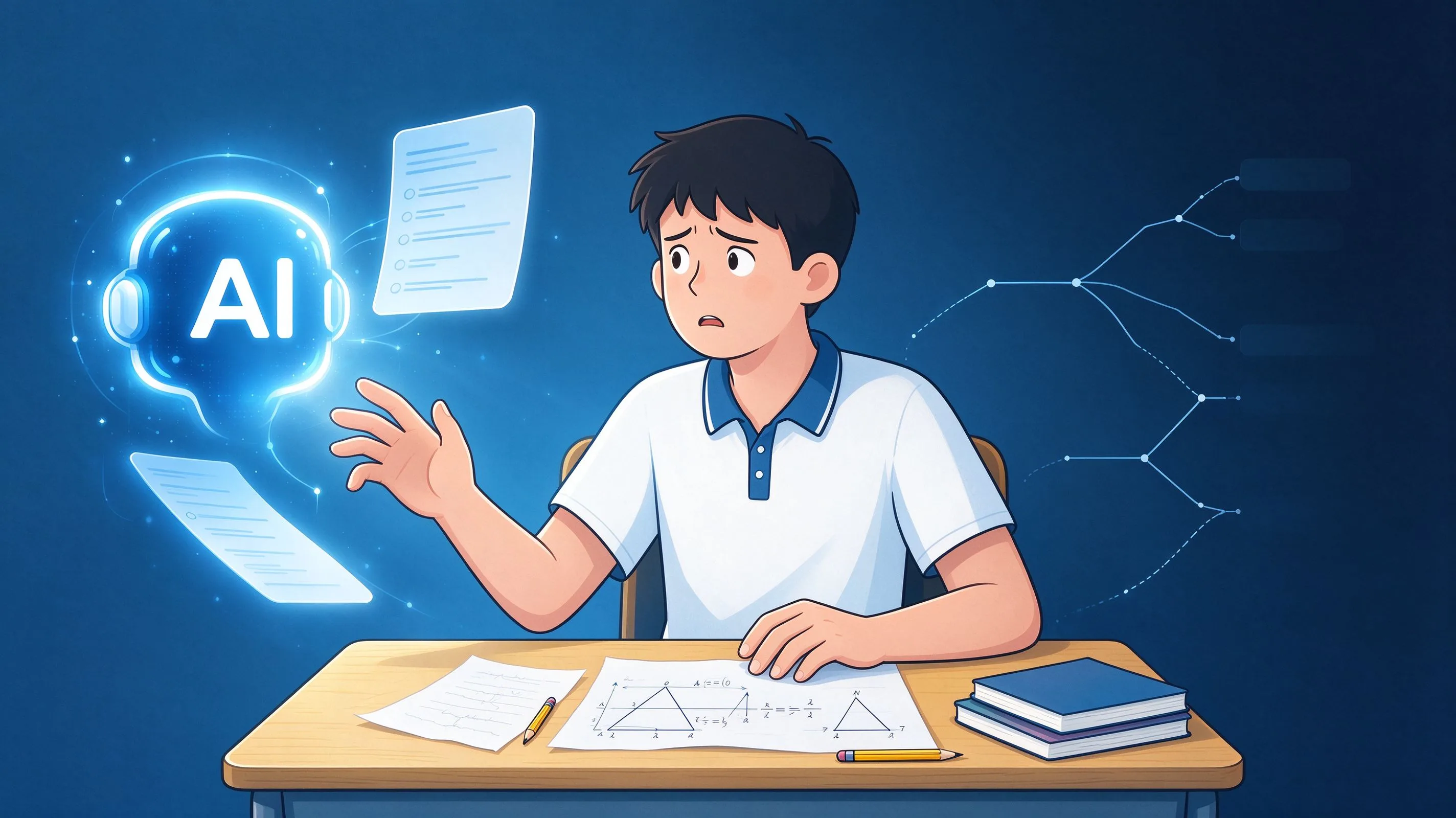
They recruited 1,222 online participants and conducted three rigorous randomized controlled trials. The final conclusion is well worth pondering: once AI has been used to help solve problems—even for a very short time—after the tool is taken away, not only does people's accuracy in solving problems decline, but their patience for persisting with difficult problems also noticeably worsens.
(Image source: Generated by Doubao AI)
At its core, this study simulates a very common scenario in our lives: when we are used to AI being available at any time and able to cover for us at any moment, what exactly happens to our state when we suddenly have to face problems alone with no one to help?
After Losing ChatGPT, Performance Really Does Decline
The first experiment recruited 354 participants, whose task was to complete 15 basic arithmetic problems. Participants were divided into two groups: one group worked out the calculations by hand the entire time without any external help; the other group could freely use ChatGPT and could even let AI provide the final answer directly without deriving it themselves.
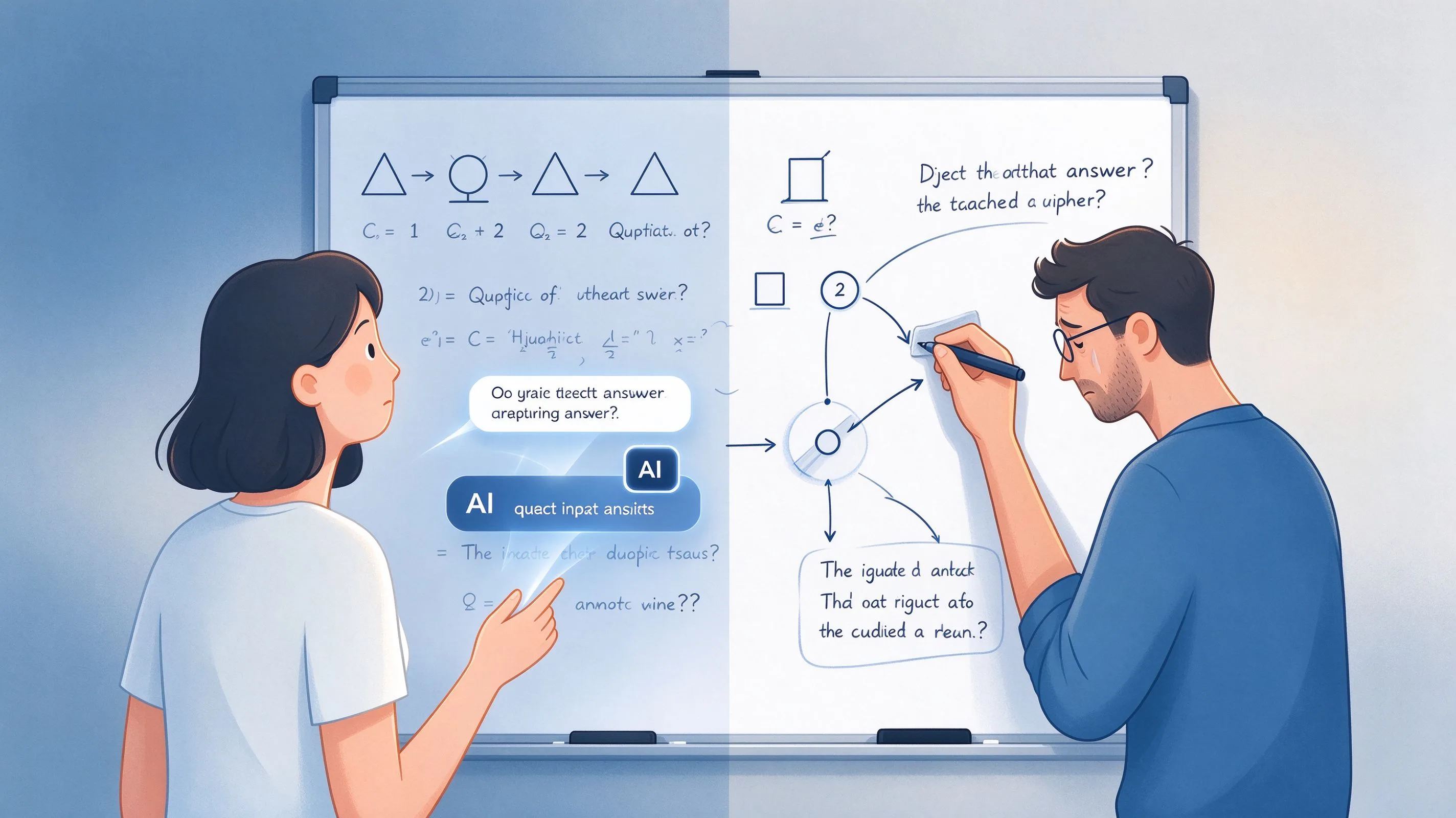
At the beginning of the experiment, the group with AI assistance showed a particularly obvious advantage, with higher accuracy and faster problem-solving speed. But when they reached the 12th problem, the researchers suddenly revoked access to AI, and everyone had to complete the remaining problems on their own.
The contrast in results was striking: participants who had been relying on ChatGPT saw their accuracy plummet, and when facing problems they did not know how to solve, they were more inclined to simply give up and skip them—clearly lacking the patience and perseverance to grind through.
(Image source: Generated by Doubao AI)
The second experiment was larger in scale, recruiting a total of 667 participants, and the final results were almost entirely consistent with the first experiment. The third experiment changed the question type: 201 participants had to complete reading comprehension questions similar to those on the US SAT exam, and the conclusion remained unchanged: once AI support was removed, everyone's persistence and accuracy in answering showed a noticeable decline.
This result raises a rather uncomfortable real-world question: does AI helping us complete the task at hand faster and more efficiently really mean we have the ability to independently handle the next challenge?
Skipping the "Productive Struggle" Is Actually a Loss
The study specifically mentions a concept called "valuable struggle"—that is, the process of grinding away at difficult problems and deriving through trial and error step by step.
Many people think getting stuck and being unable to figure something out is a waste of time, and of course they take shortcuts when possible. But it is precisely this "laborious" process that helps us truly develop skills, build self-confidence, and gradually cultivate our own judgment.
The emergence of AI has indeed made many difficult things easier: problem analysis, complete answers, and suggested approaches can be delivered to you in a matter of seconds. But if, when using AI, we always only want to take the final answer directly, then the time we spend on thinking, deriving, and trial and error is naturally greatly compressed.
Of course, there is no need to treat AI as a monster—it is not that touching AI once will degrade your thinking ability.
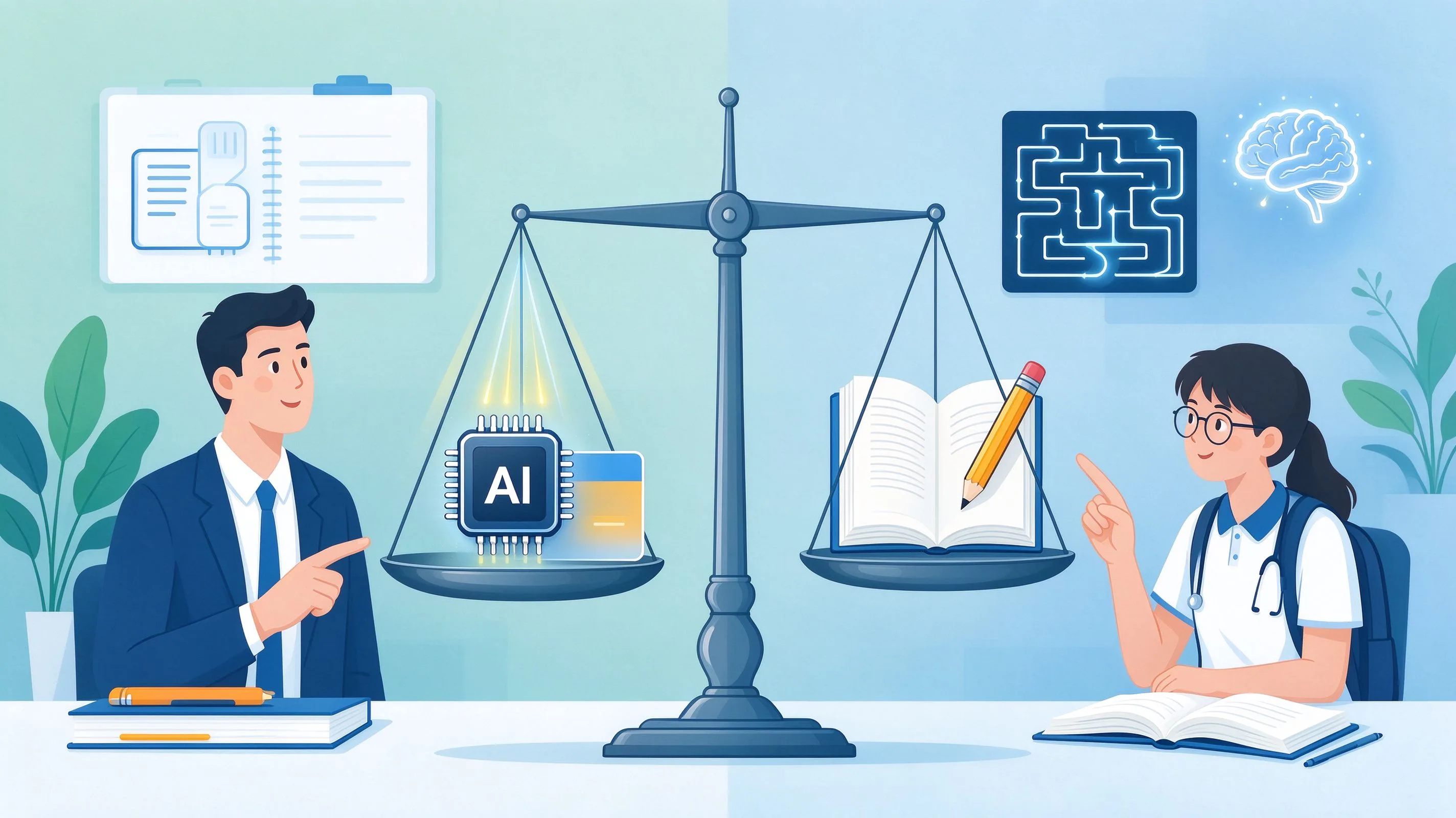
What is truly worth worrying about is this: if we develop the habit of relying on AI for everything, then when we encounter problems that must be solved with patience and independently on our own, our coping patterns may have already quietly changed—rather than settling down and pondering slowly, our first reaction becomes "don't want to do it, skip it, find a shortcut."
(Image source: Generated by Doubao AI)
How to Use AI Without Losing Your Own Thinking Ability
For those still learning, don't let AI give you complete answers right from the start.
Use it to explain concepts you don't understand, offer small hints for solving problems, and help you check whether your thinking is on the right track—this kind of use is far more helpful. The key is to treat AI as a tool to assist learning, not a "cheating shortcut" that skips the learning process.
Working professionals actually face the same choice.
Looking up information and handling repetitive daily work—using AI to speed things up and save time is completely fine; but when facing complex core problems, the ability to think independently and break down and solve problems on your own remains a hard skill that no one can take away from you.
Finally, to be fair: this study does not prove that "using AI once for a short time will cause permanent cognitive damage." It is more of a reminder to all of us: when the auxiliary tool suddenly disappears, how much will our real performance be discounted?
AI can help us get answers faster, and that is undoubtedly a good thing. But what truly deserves us pausing to think about is: after getting used to the smooth roads paved by AI, can we still find our own way and climb the slopes ourselves?
This article was compiled by Leitech from yourstory
Original link: Just Ten Minutes of AI Grinds Away Not Only Patience, but Also Your Core Thinking Ability
Source: Leitech
Images in this article are from: 123RF licensed image library Source: Leitech
-
750 km of range and 5C ultra-fast charging—will the 2027 Alpha S5 launch below its presale price?
-
![]()
How Your Habitual Reliance on AI Is Quietly Destroying Your Thinking Ability
-
![]()
Why Are Silicon Valley Giants and Major Chinese Tech Companies All Rushing to Build Your "Cyber Avatar"?
-
November Retail Sales Fell 21% Year-on-Year at the Start of the Month—Why Isn't the Year-End Auto Market Boom Booming?
-
From NISMO's China Debut to Overseas Exports: Can Nissan Turn China from a Market into a Lifeline?
-
Computers Have Begun to Backslide—But Fortunately, Phones Haven't Yet!
-
![]()
Changan Sells Avatr Stake Again, Valued at Nearly 3.2 Billion Yuan!
-
In the Final Two Months of 2026, Will You Buy a New Energy Vehicle or a Fuel Vehicle?