Xiaomi HyperOS 4 Embraces Apple Ecosystem: When 'Closed' Yields to 'Open'
 10/13 2026
 486
486
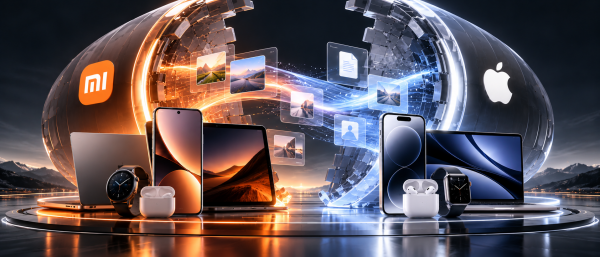

Whether Xiaomi's cross-ecosystem strategy can genuinely secure long-term user loyalty remains to be seen, pending market and time validation.

On October 7th, Xiaomi HyperOS officially announced on Weibo that its HyperOS 4 system now fully supports the Apple ecosystem. This integration enables seamless cross-ecosystem sharing, including direct photo, file, contact, and browser content transfers; bidirectional cloud album access between iPhones and Xiaomi phones; synchronized message notifications; and cross-platform support for Xiaomi's Miaoxiang Desktop on Macs, iPads, and iPhones. The official version of HyperOS 4 debuted with the Xiaomi 18 Pro series on September 23rd and began rolling out to users on October 15th.
This move isn't about Apple actively lowering its barriers but rather Xiaomi taking the initiative to adapt to Apple's closed ecosystem. However, Xiaomi isn't the first to tread this path of 'ecosystem integration'.
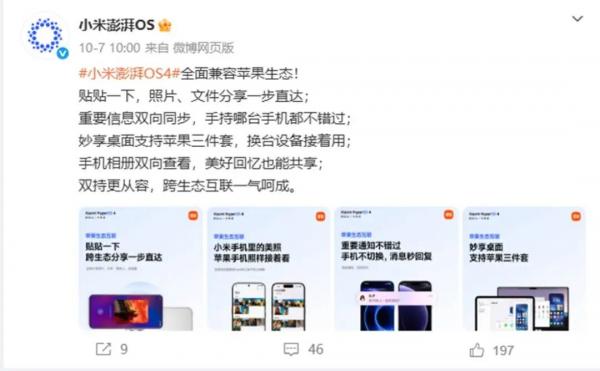
Image Source: Xiaomi HyperOS Official Weibo
01 Cross-Ecosystem Interconnectivity: A Collective Effort
File sharing stands out as one of the most intuitive integrations. The new 'Tietie Interconnect' feature facilitates rapid, direct transfers between Android and iOS devices, allowing users to send photos, files, contacts, and web links with a single tap, eliminating the need for third-party apps or intermediaries.
Bidirectional cloud album access follows closely, enabling Xiaomi phones and iPhones to seamlessly view each other's photo libraries. Any images captured or saved on one device are instantly synchronized across both systems.
Synchronized message notifications address a common pain point, allowing users to view and respond to all notifications directly from their active device, eliminating the need for frequent switching.
Finally, MiaoXiang Desktop integrates Macs, iPads, and iPhones into Xiaomi's cross-device ecosystem, enabling users to seamlessly continue their Xiaomi phone's desktop environment on these Apple devices, maintaining consistency in operating interface, app status, and task progress across platforms.
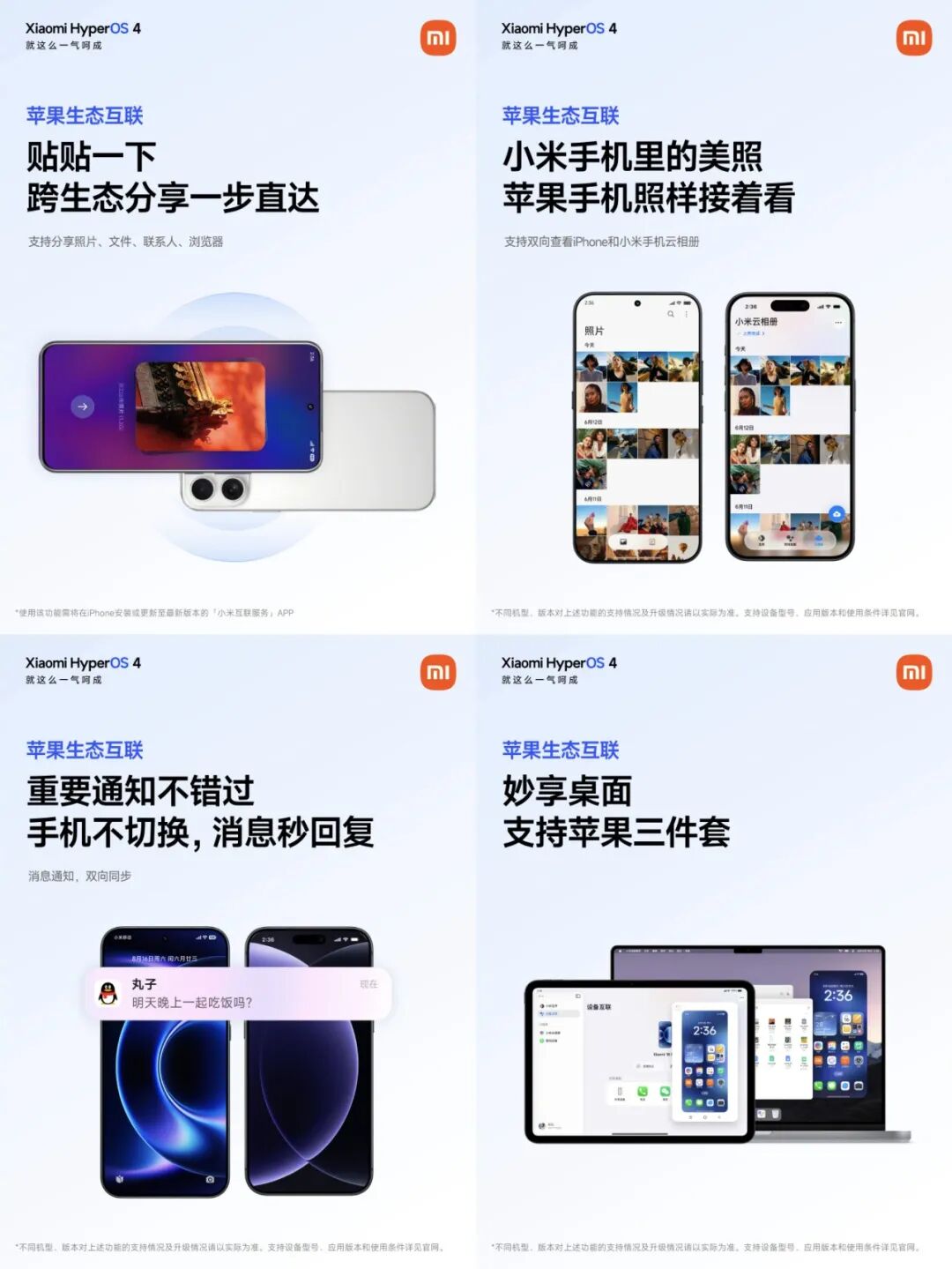 Image Source: Xiaomi HyperOS Official Weibo
One clarification is necessary: when the official announcement mentions 'MiaoXiang Desktop supports Apple's trio of devices,' it refers to Macs, iPhones, and iPads as hardware categories, not Apple's native productivity suite (Pages, Numbers, and Keynote).
iMessage remains inaccessible, and Apple Watch collaboration is limited to notification forwarding and health data synchronization, falling short of deep ecosystem integration. The possibilities promoted in external communications do not fully align with the actual user experience.
Xiaomi's journey towards Apple device interconnectivity isn't new. Some compatibility features were already introduced during the HyperOS 3 era, such as bidirectional synchronization of WeChat, QQ, and SMS notifications. HyperOS 4 consolidates these previously scattered application-layer functions into a unified system-level experience.
File sharing relies on Google's Quick Share cross-platform solution, which imposes practical limitations. Apple devices must have AirDrop set to 'Everyone (10 minutes)' to receive files normally.
In other words, this isn't a plug-and-play experience. Users must proactively adjust their Apple device's privacy settings to establish the initial connection. However, Xiaomi isn't alone in this endeavor. Across the Android ecosystem, OPPO, vivo, and Honor have also ventured into cross-ecosystem collaboration.
OPPO was relatively early in its cross-Apple ecosystem adaptation efforts. In October 2024, it released the 'O+ Interconnect' app on the Apple App Store. Initially labeled as a 'cross-system, data-free transfer tool,' subsequent updates enabled file, video, and image sharing with iPhones.
vivo has taken collaboration further. OriginOS 7 not only supports file sharing with Apple devices but also allows Apple Watches to receive notifications and health data from vivo phones, while AirPods users can view battery information on vivo devices.
Honor focuses on NFC tap-to-share functionality. In September 2026, it officially implemented its 'Tap-to-Share' technical standard, enabling interoperability between Honor phones and iPhones, Macs, iPads, and other devices, extending functionality to third-party apps like Bilibili, Xiaohongshu, and Taobao.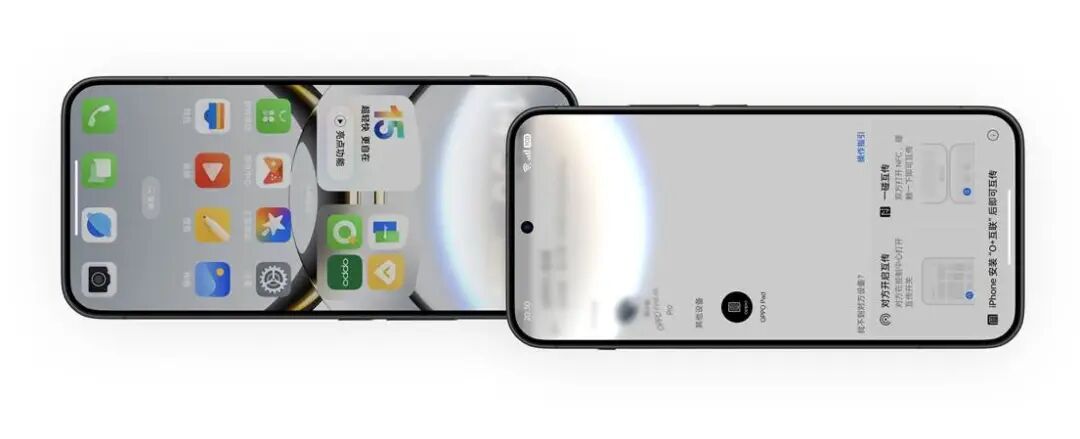 Image Source: OPPO Official | Demonstration of 'Tap-to-Share' between OPPO Find X8 Pro and iPhone
Most manufacturers focus on isolated capabilities like message notifications and basic file sharing. Full utilization requires downloading corresponding interconnect apps on Apple devices and connecting to the same local network for login verification.
Xiaomi's differentiation lies in its comprehensive approach, bundling file sharing, notifications, cloud albums, and MiaoXiang Desktop remote control into a system-level solution. Users experience interconnectivity at every cross-device touchpoint, eliminating the need to switch between different apps. However, fundamentally, whether Xiaomi or other Chinese manufacturers, all are unilaterally adapting to Apple's proprietary ecosystem.
Apple has not proactively opened any interfaces, nor has it achieved genuine two-way openness through mutual agreements.
02 Strategic Considerations Behind Apple Adaptation
This unilateral adaptation reflects Android manufacturers' strategic considerations amid current smartphone market dynamics.
According to Counterpoint Research, global smartphone shipments are expected to decline by 14.3% year-on-year in 2026. Innovation in displays, imaging, and chip manufacturing processes is slowing, and consumers are no longer solely motivated by hardware upgrades.
As hardware differentiation diminishes, cross-device collaboration is emerging as a key differentiator for high-end flagship devices.
Liu Zuohu, OPPO's Chief Product Officer, stated bluntly in a public interview: 'Our goal is to convert Apple users by offering them another choice. Apple has a massive installed base, presenting a significant opportunity for any Android brand.'
OPPO's 'O+ Interconnect,' vivo's Apple Watch notification and health data synchronization, and Honor's 'Tap-to-Share' all reflect a common direction: moving closer to Apple's ecosystem to attract dual-device users.
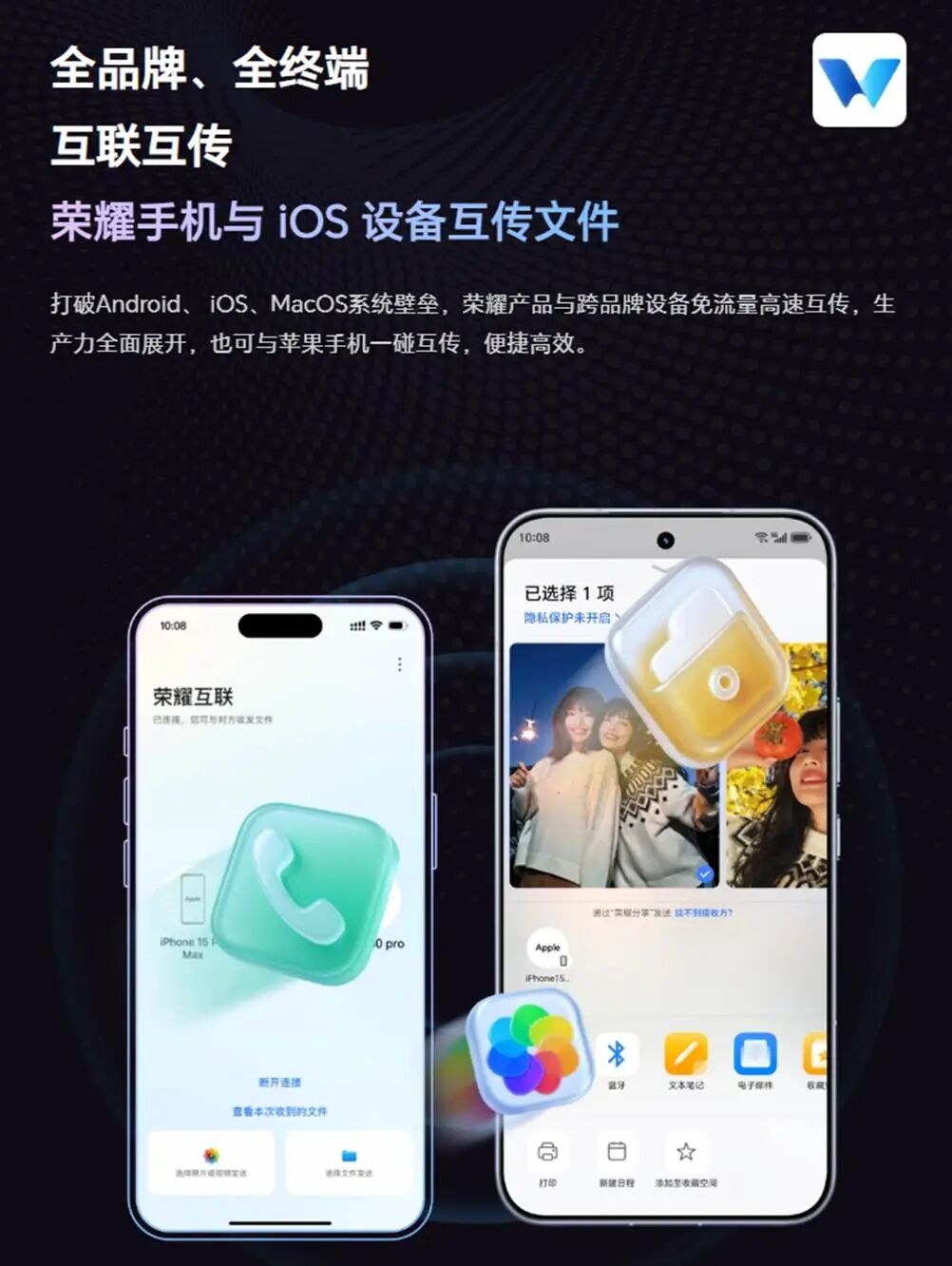
Image Source: HONOR
Xiaomi wasn't the first mover, but its objective is clearer than its peers: not just adapting individual functions but building cross-ecosystem capabilities into a system-level foundation.
This goal is closely tied to Xiaomi's current user structure. According to Xiaomi's official data, nearly 60% of first-batch SU7 car owners were iPhone users. Among YU7 car owners, Apple users accounted for 52.4%, 4.4 percentage points higher than SU7. For the newly launched Xiaomi Pengcheng, Apple users represent nearly 60% of car owners, with most having no prior experience with Xiaomi ecosystem products.
This indicates that many high-spending users are willing to purchase Xiaomi cars while keeping iPhones as their primary phones. By proactively adapting to Apple's ecosystem, Xiaomi objectively reduces barriers for these users to add Xiaomi products to their lineup.
Instead of directly competing for Apple's smartphone market share or demanding users switch from iPhones, Xiaomi aims to lower psychological barriers for this demographic to purchase Xiaomi cars, tablets, or secondary phones. The strategy encourages a progression: start with a Xiaomi car, then add a Xiaomi tablet, and eventually consider switching phones—without requiring them to abandon their entire Apple experience at any stage.
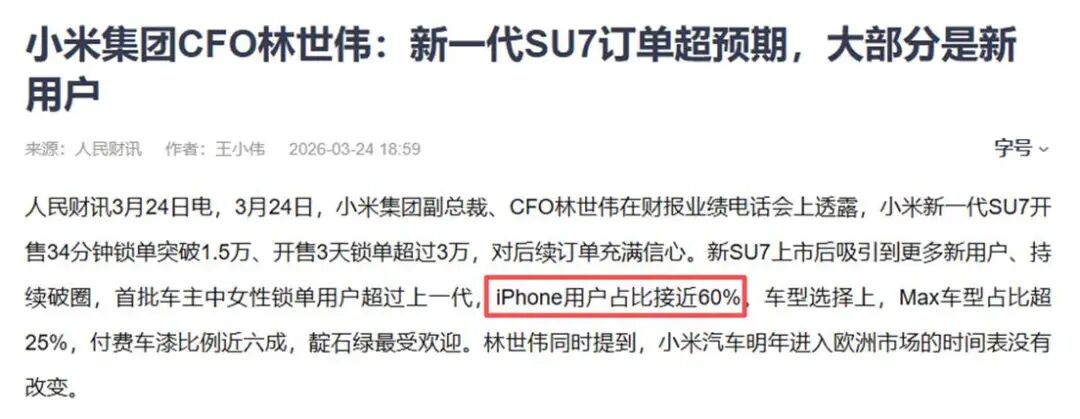
Image Source: People's Financial News
This strategy's effects are already evident in the smartphone segment. Lu Weibing, Xiaomi Group President, revealed during a September 2025 livestream that Apple users accounted for 14% of Xiaomi 14 owners, increasing to 16% for Xiaomi 15. He also stated that HyperOS invested heavily in iOS ecosystem compatibility 'to attract more Apple users.' While the absolute numbers remain modest, a 2-percentage-point increase within a year suggests cross-ecosystem compatibility is gradually influencing Apple users' choices.
Smartphone conversion is just the starting point. The deeper intention is to cultivate user habits. Research by JD.com's Consumer and Industry Development Institute shows that 21.1% of dual-device users hope to experience both iOS and Android ecosystems through 'ecosystem breakthroughs.' As collaboration between Xiaomi phones and iPhones becomes smoother, and file sharing between Xiaomi tablets and Macs more seamless, these users' device usage center of gravity may gradually shift. When it comes time to replace their primary phone, Xiaomi has a chance to make the shortlist.
From a longer-term perspective, external compatibility remains a tactical choice. Xiaomi's self-developed Xuanjie series chips and HyperCore kernel represent its foundational capabilities to evolve from an ecosystem integrator to a rule setter. The release of the Xuanjie O3 self-developed chip enables earlier coordination of chips, systems, and models in key products while providing a base for sharing AI capabilities across cars and robots. Self-developed chips function as 'control insurance'—difficult to monetize short-term but essential for Xiaomi's transition from 'integrator' to 'definer' long-term.
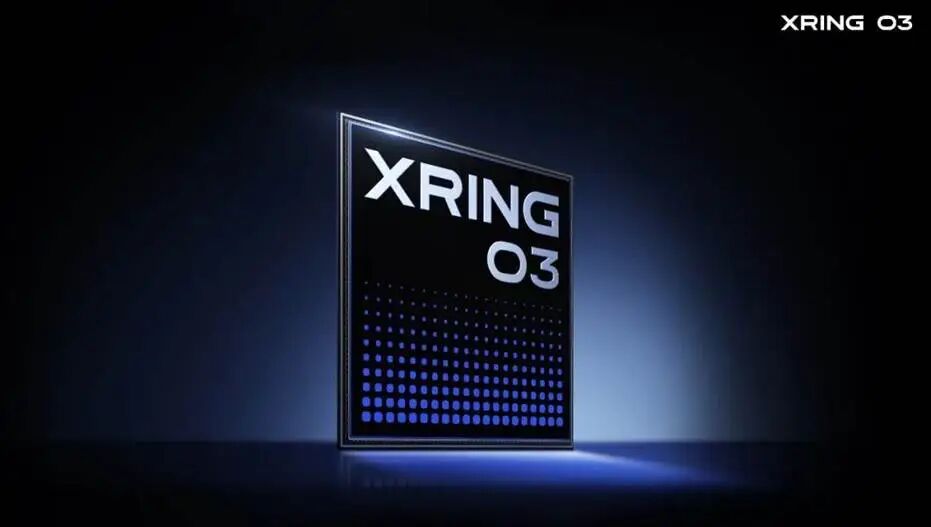
Image Source: Xiaomi Corporation
However, this external compatibility strategy faces an inherent premise: while Xiaomi can pursue user growth at the hardware level, it struggles to disrupt Apple's service-based commercial foundation. Technical interoperability is achievable, but their commercial objectives inherently conflict.
03 A Limited Compatibility Experiment
In recent years, cross-device collaboration has become a critical competitive dimension for high-end flagship devices. Many Android manufacturers are attempting to establish interoperability with Apple devices, but Apple's ecosystem is built on proprietary protocols and a highly sticky service system, creating significant objective barriers for external participants.
When OPPO interconnects with iPhones, WeChat chat histories, encrypted Notes content, and other data subject to Apple's privacy sandbox cannot be directly migrated and require third-party tools. Vivo's Vice President has publicly stated that interconnection depends on Apple opening interfaces, adding that 'if Apple adjusts its interface policies in the future, some functions may be restricted or become unusable.' Honor's interoperability with Apple devices is limited to file sharing, while remote assistance functions only work within Honor's ecosystem. User testing reveals that around 30% of large photo transfers fail.
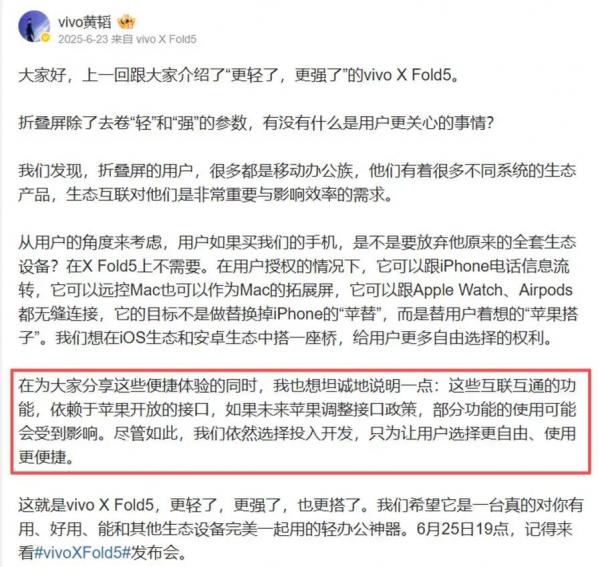
Image Source: Huang Tao, vivo Product Vice President's Weibo
Xiaomi cannot circumvent these barriers either. To fully enable cross-ecosystem functions, users must log in to Apple ID on their devices and enable two-factor authentication. Subject to Apple's ecosystem rules, iCloud-related data will not be stored locally on Xiaomi devices, the iMessage channel remains inaccessible, and Apple Watch collaboration is limited to notification forwarding.
The entire file-sharing system relies on Google's Quick Share, meaning Android manufacturers are still essentially interfacing with Apple's proprietary protocols. Even if Xiaomi builds cross-device interconnection channels, Apple retains control over the rules, openness timelines, and channel shutdown permissions. The industry has seen precedents—when Beeper attempted to port iMessage to Android devices, Apple's subsequent system updates blocked the effort, demonstrating the inherent uncertainty of unilateral adaptation.
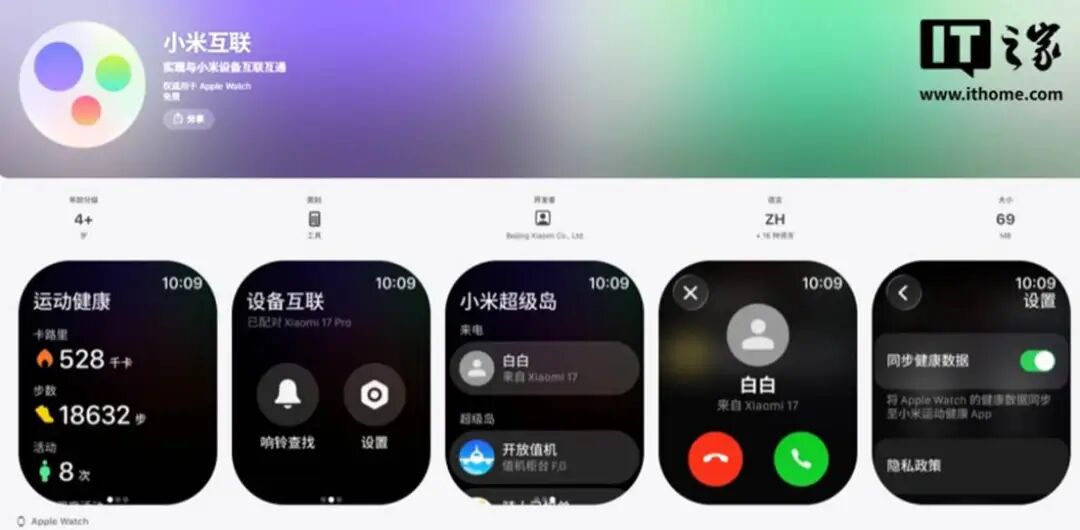
Image Source: IT Home | Xiaomi Interconnect app interface on Apple Watch
Apple persists in maintaining these barriers because its services business represents its core profit engine. In Q1 2026, Apple's services revenue reached $30 billion, accounting for 20.9% of total revenue with a staggering 76.5% gross margin, compared to just 40.7% for product margins.
The capabilities mentioned earlier, such as iCloud, iMessage, and the App Store, are integral components of this high-margin service system. Revenue from App Store commissions, subscription sharing, and cloud services are all built upon a closed ecosystem. Once deep interoperability is allowed, there is a risk that users and revenue associated with these services could be diverted. This is the core reason why Apple is reluctant to proactively open its interfaces and refuses bidirectional ecological interoperability.
Xiaomi is well aware of these limitations, and its decision to opt for compatibility is, in itself, a carefully considered outcome. As previously analyzed, this represents a strategic move on Xiaomi's part. Rather than attempting to infiltrate Apple's ecosystem to vie for control over its rules, Xiaomi has chosen to establish its own foothold outside Apple's ecosystem, catering to users who utilize both ecosystems. Furthermore, Xiaomi's compatibility strategy is underpinned by a more profound consideration: the long-term goal of gaining time to secure a broader space.
When a significant number of users who rely on both ecosystems frequently use Xiaomi hardware, it may subtly shift the device usage patterns of some users, gradually diminishing the iPhone's irreplaceability. This long-term impact is not a goal that Xiaomi has publicly proclaimed; rather, it is an indirect consequence that may emerge at the user behavior level following the implementation of this strategy.
However, the success of this strategy hinges on two critical variables: first, whether Xiaomi's own software and hardware ecosystem can continually enhance the cross-ecosystem experience to retain users; second, whether subsequent system updates from Apple will restrict interoperability permissions.
04 Conclusion
Dismantling the barriers between ecosystems is a challenging feat that cannot be accomplished by a single entity alone. The ultimate fate of these barriers rests not only on Xiaomi's perseverance but also on Apple's business acumen: whether to persist in reinforcing the barriers or to create an opening under the pressures of regulation and market competition. As for whether Xiaomi's cross-ecosystem strategy can genuinely translate into sustained user retention, that remains to be seen, as it will be put to the test by the market and time.
(The images and public data materials utilized in this article are sourced from the internet and public industry platforms. Should there be any instances of infringement, please notify us promptly for timely modifications.)
-
![]()
Xiaomi HyperOS 4 Embraces Apple Ecosystem: When 'Closed' Yields to 'Open'
-
Kimi Valued at $50 Billion, Yang Zhilin's Past Disputes Reach IPO Threshold
-
Founder from Generation Z Leads 14-Member Team to Challenge Meta
-
![]()
Over 1 Billion Yuan in Series C+ Funding Secured! Kunyu Optoelectronics’ 12-Inch Optical Production Line Slated for Operation by 2027
-
![]()
Can AI Be Integrated into Smartphones, or Will It Completely Transform Them?
-
FDE Suddenly Becomes a Topic ‘No One Wants to Discuss’
-
![]()
Android Takes the Lead, Honor Makes a Comeback
-
![]()
Android Takes the Lead, Honor Makes a Comeback