Global Smartphone Market Cools, iPhone Rakes In 1.7 Trillion Yuan, Propping Up Apple's 33 Trillion Yuan Market Cap Throne
 11/03 2026
 392
Text/Yang Jianyong
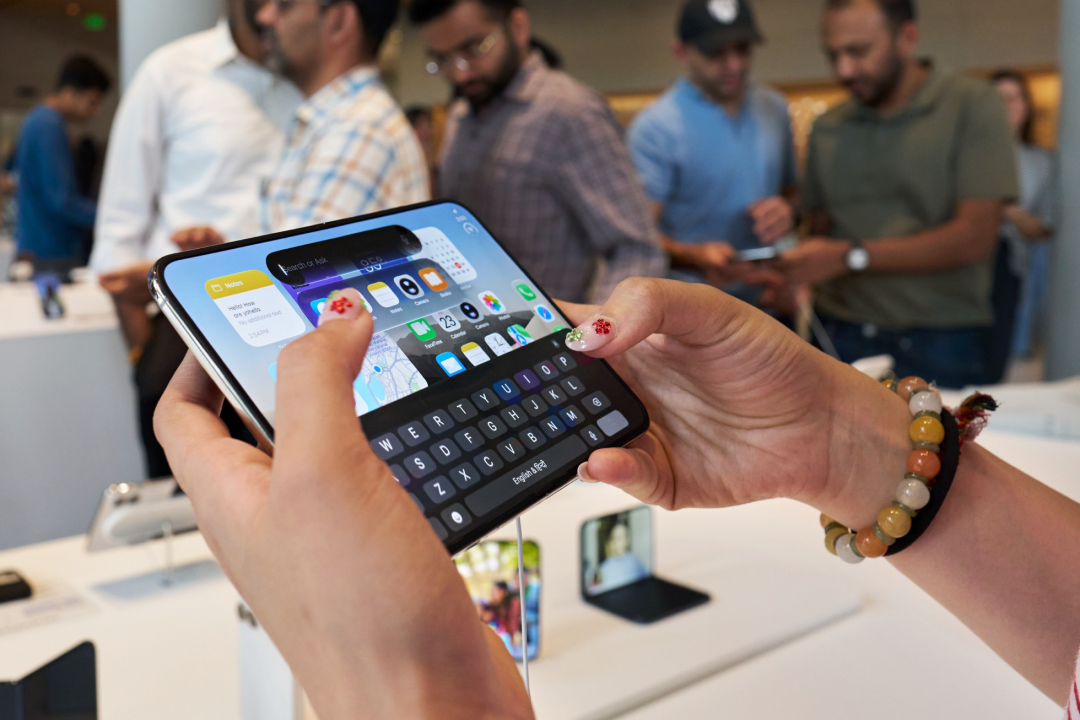
Since John Ternus took over the CEO baton from Cook, he launched the revolutionary foldable iPhone Duo while delivering his first annual report since taking office—with iPhone, overall revenue, and profit all hitting record highs.
Greater China Performs Brilliantly, iPhone Revenue Hits Record High
In the fourth quarter of fiscal 2026 ending September 26, Apple's revenue was 114.5 billion USD, up 12% year-over-year; net profit was 30.711 billion USD, up 11.8% year-over-year. Full-year total revenue was 478.834 billion USD, up 15% year-over-year; full-year net profit was 132.175 billion USD, up 18% year-over-year.
It is worth noting that Apple's total installed base across all device categories exceeded 2.5 billion units—meaning one in every three people owns an Apple device. This massive user base, with long-term use of iCloud, Apple Music, Apple TV, the App Store, and other subscription and digital services, has also pushed Apple's services revenue to a record high of 123.3 billion USD in fiscal 2026, up 13% year-over-year, with its revenue share rising to 25.75%.
The much-watched Greater China region also showed strong revenue momentum. In the fourth fiscal quarter, Apple's revenue from Greater China was 17.54 billion USD, up 21% year-over-year—higher than the overall growth rate, demonstrating that iPhone remains highly competitive in the domestic market. Greater China's total revenue for the full fiscal year was 82.378 billion USD, up 28% year-over-year.
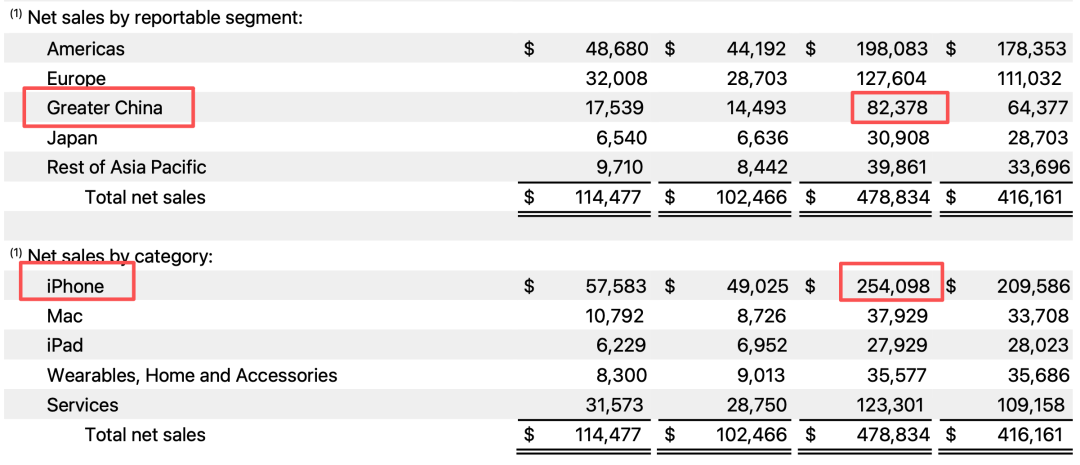
However, iPhone remains Apple's core growth engine, accounting for more than 50% of revenue. In the quarter, iPhone revenue reached 57.58 billion USD, up 17.5% year-over-year; for the entire fiscal 2026, iPhone revenue was as high as 254.098 billion USD (about 1.7 trillion RMB), up about 21.2% year-over-year, setting a new record high.
With iPhone's global money-making ability, Apple has been raking in profits—not only being one of the world's most profitable tech companies, but its market cap has also soared. Currently, Apple's market cap is 4.94 trillion USD (about 33 trillion RMB), higher than Nvidia's 4.87 trillion USD, making it the world's most valuable company.
Global Smartphone Shipments Fall Sharply, iPhone Share Rises Against the Trend
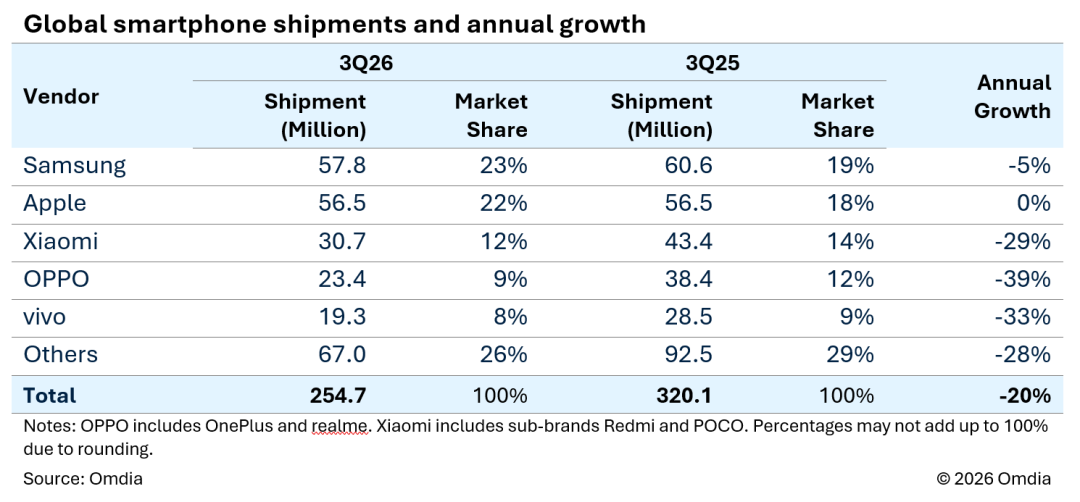
It is worth noting that although the global smartphone market is hit by chips and memory, smartphone prices face upward pressure, which drags down consumer demand and causes shipments to fall sharply. Omdia data shows that global smartphone shipments in the third quarter of 2026 were 254.7 million units, down 20% year-over-year—the lowest third-quarter shipments since 2013.
However, iPhone still demonstrates strong competitiveness and is the world's most popular high-end smartphone, allowing Apple's market share to continue rising. In the quarter, its market share was 22%, compared with 18% in the same period last year—an increase of 4 percentage points, once again confirming iPhone's leadership in the high-end smartphone market.
It should be pointed out that in the Jobs era, Apple was regarded as the bellwether of consumer electronics, leading the development of the global smartphone industry. Today's Apple is still a hardware empire centered on the old trio of iPhone, Mac, and iPad, and is thus labeled as lacking disruptive innovation.
Yet iPhone continues to expand with astonishing commercial resilience, firmly occupying the global high-end smartphone market. It has achieved soaring revenue, profit, and market cap, earning the largest profits in the phone industry while its market cap soared from 1 trillion to 5 trillion USD.
AI Falling Behind, Gross Margin Under Pressure
Due to rising costs of semiconductor components such as memory chips, purchasing power will be further weakened, and the global smartphone market is expected to decline further. Apple expects growth of 7%–10% next quarter. At the same time, shortages and price increases of memory chips and other supplies will also hit phone makers' profit margins.
Apple expects gross margin of 45.5% to 46% in the next fiscal quarter, showing a declining trend compared with 47.9% in the fourth quarter of fiscal 2026, and below market expectations. Meanwhile, the first foldable iPhone Duo is currently in a state of limited production capacity, and Apple is working hard to deliver the product to more consumers, but cannot yet predict when supply and demand will recover.
Ternus took over this 5 trillion USD company, and his first earnings report card is impressive enough. iPhone sold strongly against the trend, and Greater China grew rapidly, allowing Apple to return to the top of global market cap. But beneath the shine, multiple tests are coming one after another: unprecedented increases in prices of semiconductors such as memory chips, and the continued weakening of the global smartphone market—not only slowing Apple's revenue growth but also dragging down gross margin performance.
Most critically, the tech industry is accelerating its shift to AI, while Apple is relatively behind in artificial intelligence, and the overall lag in its AI strategy is eroding its technological voice. After all, since Apple introduced Siri to iPhone in 2011, it pioneered a new model of human-computer interaction, shocking the world. Although it released Apple Intelligence, it is still far inferior to large models such as ChatGPT, showing that it has become a pursuer in the generative AI era competition.
-
![]()
What Exactly Are World Models For? How Autonomous Driving Learns in the Virtual World
-
![]()
Volcano Engine and Alibaba Cloud Both Claim the MaaS Crown — Myth and Reality
-
![]()
Palantir: Guidance Turns More Aggressive, but New Orders Become a Target for Nitpicking
-
![]()
Apple: The Storage Cost Backlash Has Finally Arrived—Is AI's "Safe Haven" About to Spring a Leak?
-
![]()
Facing Fierce Rivals: Tesla's European Sales Surge 271% in October, Yet It Trails Chinese Automakers in Many Countries
-
![]()
Build Factories Now! Thailand Cracks Down on Fully Imported EVs: Tax Rate to Rise from 10% to 35%
-
![]()
AI Programming Pitfalls: Don't Let Fallback Code Fake Success
-
Insight | From Racks to Validation Grounds: IDC Asset Securitization Reaches a New Juncture