Million Satellites Approved: SpaceX to Move Data Centers into Space
 11/26 2026
 334
The FCC has conditionally approved SpaceX's orbital data center plan, allowing deployment of up to 1 million satellites; Amazon, Viasat, and astronomical societies oppose the move. Regulatory clearance does not mean immediate construction—thermal management, launch costs, and financing remain significant challenges.
On November 25, the U.S. Federal Communications Commission gave SpaceX a key green light: conditional approval to deploy and operate up to 1 million satellites for its orbital data center business. TechCrunch reported that this marks a regulatory victory for Musk's plan to move AI data centers into space. The Verge confirmed the decision the same day. Sending computing infrastructure into orbit had previously remained largely in speeches and concept images; now it has obtained a formal regulatory entry point.
However, the approval itself has clear boundaries. The FCC received objections from Amazon, Viasat, and the American Astronomical Society, citing orbital debris and congestion, radio frequency interference, and environmental impacts. Amazon said in its filing that the material lacks basic details and resembles a grand vision more than a real plan, while warning that it could cause real harm. The FCC dismissed some concerns, including threats to scientific research, on the grounds that these fall outside its regulatory authority.
A time-limited license is not a completion timetable
First, let's clarify what this approval actually grants. It authorizes SpaceX to use radio frequencies to maintain contact with the ground and control these orbital data centers in case the primary communication system fails; these satellites, named Starmind, are planned for deployment at altitudes of 500 to 1,002 kilometers, mainly using lasers to communicate with other satellites, including SpaceX's own Starlink. The FCC also set a timetable: the first operational satellite must be in orbit within seven years, and the entire constellation must be deployed within fourteen years.
These figures show that there is still a considerable way to go before real data centers can go into space. TechCrunch explicitly wrote that preliminary approval does not mean orbital data centers are imminent. The challenges SpaceX must solve include how to substantially reduce satellite manufacturing and launch costs, how to dissipate heat from processors in space, and how to finance chips destined for orbit. Thermal management is especially tricky: in a vacuum environment, heat can only be radiated away—a completely different engineering problem from ground data centers that rely on air or liquid cooling.
The regulatory door has opened, but several thresholds remain
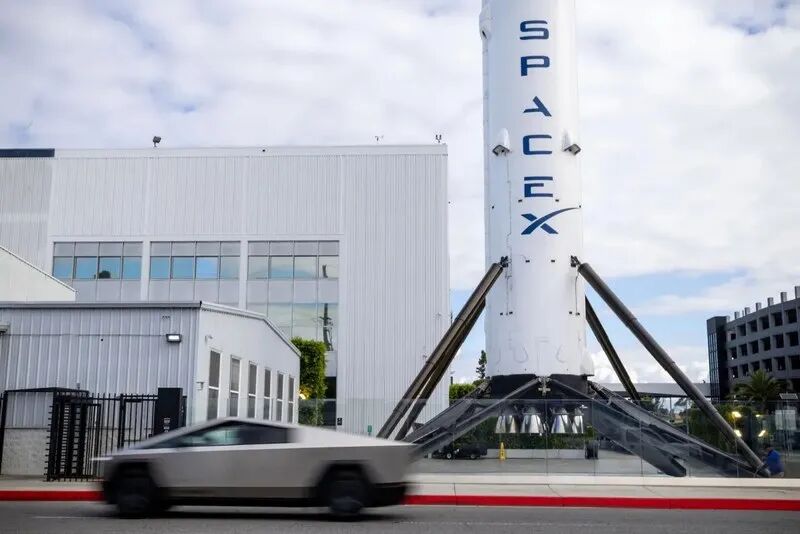
Image source: TechCrunch
Several regulatory obstacles also remain unresolved. For example, the FCC has not yet approved SpaceX's plan for dealing with satellite debris in orbits above 600 kilometers. Current rules require satellites ending their missions below 2,000 kilometers to re-enter the atmosphere within five years after completion; SpaceX applied for an exemption and hopes to move some retired satellites to other orbits around Earth or the Sun. These details determine whether space data centers can stand up in terms of sustainability, and they are precisely where opponents' doubts are most concentrated.
FCC Chairman Brendan Carr described the decision as opening a bold new frontier for the computing infrastructure needed to support America's leadership and growth. Musk thanked the agency on X, saying this will be an important asset for the United States and the world. Both statements carry a clear sense of industrial competition, but note that such statements are positions, not technical conclusions. The approval document itself does not prove that orbital data centers are superior to ground-based solutions in cost or reliability.
The race for space computing is about launch and thermal management
My judgment is that the value of this matter lies not in the words "data center," but in the fact that it pushes computing competition under a new set of constraints. The bottleneck for ground data centers is electricity and grid connection permits; the bottleneck for space data centers will become launch costs, orbital thermal management, and debris management. Only those who can build engineering capabilities in these areas can turn the concept into a business.
For Chinese readers, the comparable reference is domestic layout in reusable rockets, satellite internet, and space computing. This report does not provide any verifiable figures on related Chinese projects, so they are not listed here. The facts that can be confirmed are: the FCC has given conditional approval, set deadlines of seven years to begin and fourteen years to complete, dismissed some objections, and left the orbital debris plan for subsequent approval.
Read it as a regulatory bet, not a technological victory
The framing needs to be clear. This is regulatory clearance, not technical validation, and certainly not a commercial order. The report does not provide the unit computing cost of orbital data centers, specific indicators of thermal management solutions, or third-party assessments of feasibility. The opponents' core doubts—namely the lack of details and the possibility of real harm—are also on record. It is not accurate to read this as meaning that space data centers have already been proven.
Three verifiable milestones can be used for tracking: whether the first Starmind satellite can enter orbit within the seven-year deadline, whether the debris handling plan for orbits above 600 kilometers can be approved, and whether any customer is willing to sign a real contract for orbital computing. Before these three things happen, treating it as a long-term bet opened by regulatory clearance is closer to the facts presented in the report than treating it as a completed technological breakthrough.
Today's Quote
"Regulatory approval addresses whether it can be done; thermal management and cost determine whether it can be afforded. The first test for space data centers is not in the sky, but in the ledger."
Follow [Degao Xing Zhixinglang] for three hardcore technology interpretations every day, and understand the industry and national fortunes behind technology.
-
![]()
Million Satellites Approved: SpaceX to Move Data Centers into Space
-
![]()
Q1 Orders Top Ten Million! How Did Metalens Secure Over 100 Million Yuan in Financing?
-
![]()
Zhongrun Optics: New Facility Enters Capacity Ramp-Up Phase in First Half of 2026
-
![]()
AI Helps Citizens Mass-Produce FOIA Requests as Startups Mine Public Data, Straining Transparency Systems
-
Used Car Sales Stall as Small Dealers Begin to Band Together
-
![]()
Why Have Japanese Coffins and Robot Clothing Become Caoxian's Business?
-
Three Ministries Issue Landmark Document: The "Policy Floor" for Optical Communications Has Arrived
-
5. FSD V15 Major Upgrade: Deconstructing the Engineering Core UVE Behind Reality View