Export Tax Rebates Plummet, RMB Exchange Rate Soars: New Energy Vehicle Exports Face Turbulence
 10/14 2026
 360
360
As vehicles queue up at customs ports, 'rushing for clearance', Chinese automakers have come to a stark realization: the era of effortless profits, buoyed by policy dividends and favorable exchange rates, is drawing to a close.
While the past two years have seen relatively robust vehicle exports compared to domestic sales, the upcoming period promises to be one of austerity once again.
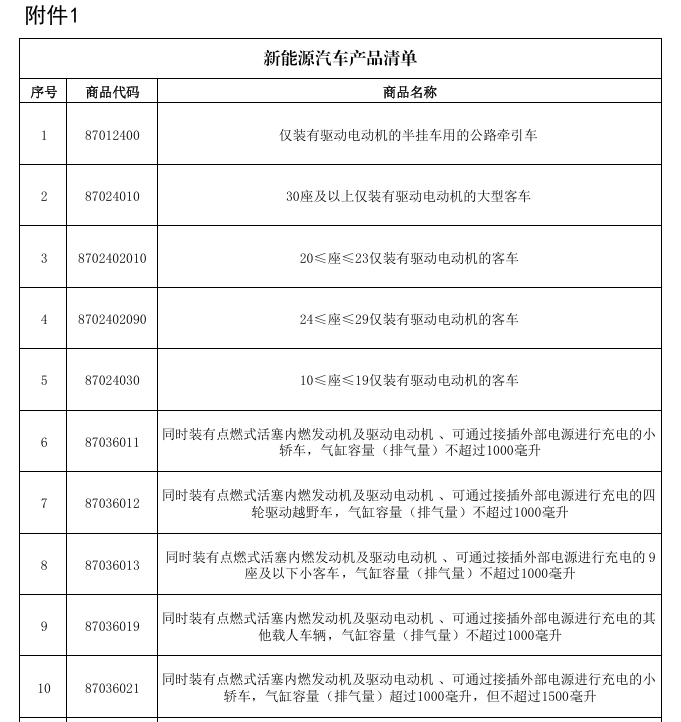
The pressure mounts from two fronts: Firstly, tax rebates. Announcement No. 29 of 2026 by the Ministry of Finance and the State Taxation Administration has slashed export tax rebate rates for 67 categories of new energy products, effective April 1, 2027 (based on the customs declaration export date). Note the two key restrictions: this applies solely to new energy vehicles, with fuel vehicles still enjoying a 13% rate; additionally, a six-month grace period is in place.
Based on an average export price of RMB 135,000 for new energy passenger vehicles, the rebate reduction per vehicle amounts to approximately RMB 5,400. Should 6 million new energy vehicles be exported in 2027, the annual financial impact would hover around RMB 30-40 billion. Currently, commercial vehicle exports remain predominantly fuel-based, experiencing relatively minor repercussions.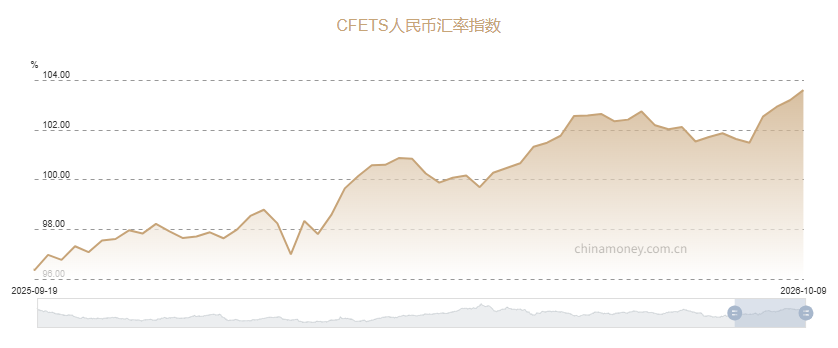
Secondly, the exchange rate. Since 2026, the RMB's central parity rate against the USD has appreciated by approximately 4%, with the RMB exchange rate index rising in tandem. If the annual automotive export value stands at around RMB 1.3 trillion, the revenue in RMB terms would decrease by over RMB 50 billion.
Combining these factors, the direct impact, based solely on numerical data, would range between RMB 70-110 billion.
New Energy Vehicle Exports Continue Their Upward Trajectory
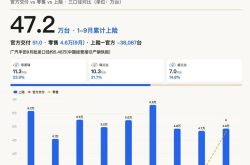
"According to the China Association of Automobile Manufacturers (CAAM), exports reached 7.098 million units in 2025, marking a 21.1% year-on-year increase. Meanwhile, the China Passenger Car Association (CPCA) reports 8.32 million units, with the discrepancy arising from varying statistical scopes, including knocked-down (KD) kits and used vehicles. Regardless of the metric used, the total volume is on an upward trajectory," an industry expert informed Dianchehui. Based on his data, vehicle exports from January to September 2026 reached a record high of 8.205 million units, up 65.8% year-on-year. Of these, 4.006 million were new energy vehicles, representing a 127.9% year-on-year surge and accounting for 48.82% of the total, exceeding 50% for four consecutive months. In September alone, 1.053 million units were exported, surpassing 1 million for four consecutive months since June. The full-year forecast is expected to reach 11.5-12 million units, accounting for one-third of China's total vehicle production and sales in 2026.
The challenge lies not in selling vehicles but in preserving profit margins post-sale. The stark contrast is that overseas markets currently represent almost the sole profit haven for Chinese automakers. Orient Securities estimates that BYD's overseas gross margin in the automotive business stood at 28.4% in the first half of the year, compared to just 17% domestically, a difference of 11.4 percentage points. Its semi-annual report also reveals an overseas gross margin of 21.71%, significantly higher than the domestic 15.67%, with overseas operations contributing over 60% of gross profit on 52.57% of revenue.
In contrast, in the first half of 2026, the profit margin of revenue from the domestic automotive manufacturing industry was 3.8%, with the vehicle manufacturing segment at a mere 1.5%, a new decade low. In essence, when the domestic market is squeezed to a 1.5% profit margin, automakers rely on overseas markets for survival. Now, this profit haven has been hit twice, which is more alarming than simply earning less.
Where Does a 4-Point Rebate Reduction Strike?
A 4% reduction in tax rebates affects all new energy vehicle export companies uniformly, but the impact varies across different companies and products.
For a high-end model with an FOB price of RMB 190,000, a rebate reduction of RMB 7,600 can be easily absorbed by a 28% gross margin. However, for an affordable compact car with an FOB price of RMB 90,000, a reduction of RMB 3,600 may tip the balance between profitability and unprofitability. This is what the industry refers to as structural differentiation: the impact is not on exported vehicles as a whole but on low-priced, high-volume, undifferentiated exports lacking overseas production capacity.
More critically, the path to raising prices is blocked at both ends.
Externally, Southeast Asia, the Middle East, and Latin America are emerging markets highly sensitive to price fluctuations, while Europe faces countervailing duties and price commitments. Currencies like the KRW continue to weaken against the USD, further eroding China's already narrow price advantage.
Internally, the "Guidelines on Overseas Competition Behavior and Compliance Construction in the Automotive Industry," effective September 1, 2026, mandate companies to establish cost-based, international market supply-and-demand-oriented pricing strategies to avoid frequent and significant fluctuations in suggested retail prices. Relying on price cuts to capture market share is already constrained by regulations, while raising prices to offset costs is limited by market acceptance, leaving automakers in a bind. The only viable options are to either enhance product value or relocate factories overseas.
The Impact of RMB Appreciation is Already Being Felt
The exchange rate issue strikes sooner and more forcefully than tax rebates.
The first layer is the occurrence of exchange losses. In the first half of 2026, over ten listed automakers reported a combined net exchange loss exceeding RMB 10 billion, compared to a net gain exceeding RMB 17 billion in the same period last year, a stark contrast.
Chery's exchange gain of RMB 3.398 billion turned into a loss of RMB 2.092 billion, a difference of nearly RMB 5.5 billion. BYD's net financial expense was approximately RMB 5.1 billion, while Geely's gain of RMB 2.64 billion turned into a loss of RMB 550 million.
Parts companies fare even worse: CATL reported an exchange loss of RMB 2.81 billion, Fuyao Glass RMB 803 million, and Linglong Tire approximately RMB 342 million, exceeding their forecasted net profits. With parts companies already operating on thinner net margins than vehicle manufacturers, this cut leaves some companies effectively working for half a year without profit.
The second layer is terminal price competitiveness. If automakers do not lower prices, the local currency selling price of vehicles upon arrival in consumer regions will be passively raised. While this might be sustainable in Europe through brand strength, in markets like Chile, Saudi Arabia, Thailand, and Mexico, even a slight price difference can drive dealers to turn to Korean and Japanese competitors.
The third layer is the locking in of pricing strategies. The aforementioned compliance guidelines, combined with the EU's countervailing duty investigation framework, mean that Chinese automakers' pricing behaviors are now under dual scrutiny. The past approach of domestic price wars followed by subsidized overseas expansion has reached its limits, both institutionally and financially.
Vehicle Manufacturers' Response: Building Factories Overseas
CPCA's first-half 2026 exports: Chery 943,800 units, BYD 792,300 units, SAIC Group 735,000 units, Geely 474,200 units (fastest growth, +158% year-on-year), Great Wall 291,400 units. The disparity in volumes itself provides the answer: BYD exported 150,000 fewer units than Chery but reported overseas automotive business revenue of RMB 129.497 billion, higher than Chery's RMB 98.968 billion, with BYD's average vehicle price around RMB 163,000, higher than Chery's RMB 125,000.
High-end and localized strategies are the two bulwarks defending against the impacts of tax rebates and exchange rates. Building factories has become a necessity as four constraints tighten simultaneously.
Firstly, tariffs and local content rules. The EU imposed additional countervailing duties of 7.8%-35.3% on Chinese pure electric vehicles (17% for BYD, 18.8% for Geely, 35.3% for SAIC) on top of the 10% base tariff, with a maximum combined tariff of 45.3%. This shifted to a price undertaking mechanism in January 2026. In June, the EU proposed extending duties to plug-in hybrids. Local production is the only way to circumvent tariffs and local content requirements while avoiding accusations that "export tax rebates amount to indirect subsidies."
Secondly, natural hedging of exchange rate risks. Local production, sales, and financing, with revenue and costs in the same currency, fundamentally reduce USD exposure.
Thirdly, an excellent capacity window. Ford, Volkswagen, Stellantis, and Nissan are scaling back inefficient fuel vehicle capacity, allowing Chinese automakers to acquire mature production lines at low prices. BYD took over Ford's Camacari plant in Brazil (Phase 1: 150,000 units), Great Wall acquired GM's Rayong plant and the former Mercedes-Benz plant in Brazil, and Geely acquired Ford's Valencia production line. Brownfield renovations typically take about a year to commence production, compared to three to five years for greenfield projects.
Fourthly, the inevitable shift from product exports to industrial exports. BYD's Szeged plant in Hungary began production in April 2026 (Phase 1: 150,000 units), with vehicle assembly starting in Q4. Its Camacari plant in Brazil rolled off its first vehicle in July 2025. Multiple automakers are advancing localization projects in Europe, Southeast Asia, and South America.
The core logic for parts companies is straightforward: follow vehicle manufacturers and relocate value-realization processes overseas. Take Tuopu Group as an example: its Mexico Phase 1 is in production, Phase 2 is planned, Thailand Phase 1 has partially commenced production, and Poland Phase 2 has initiated planning and design. Assembling parts in overseas factories eliminates the impact of China's rebate reductions and bypasses destination country tariffs. More critically, battery companies have already extended their reach overseas, with production capacity in Germany, Hungary, Spain, the US, Indonesia, and other locations, covering mainstream new energy vehicle production needs in Europe and the Americas.
In the short term, this adjustment will inevitably affect domestic new energy vehicle output but will not alter the long-term trend, as product growth is rooted in industrial chain competitiveness rather than rebate dividends. However, it will redistribute who thrives. The three most vulnerable types of companies are clear: those highly dependent on exports but lacking overseas production capacity, those relying on low-priced, high-volume sales without differentiation, and those with thin net margins and no pricing power.
The true watershed lies in localization speed. April 1, 2027, may appear to be the implementation date for the rebate policy, but it is, in essence, the starting gun for Chinese automakers to shift from selling vehicles to manufacturing them locally.
-
![]()
[Attendee Guide] The WAIE (10th) 2026 AI Industry Conference & AI Agent Industry Application Conference Kicks Off on October 23! (Including Conference Schedule + Transportation Guide)
-
![]()
Achieving 100% Year-on-Year Growth! Domestic Ultra-Precision Optical Equipment Emerges as a 'Dark Horse' with Thousand-Unit Shipments
-
Q3 Report | Inspur Information’s Net Profit Soars 176%, Fueled by Robust Server Demand
-
Chinese Automakers Shine Bright at the Paris Auto Show
-
![]()
Changan Technology Strikes Out on Its Own, Leaving Parent Company Behind
-
![]()
US/China: The All-Out War for AI Gateways
-
![]()
Leqi’s Second-Gen AI Glasses: The Path to Blending In—Four Optical Hurdles to Tackle!
-
![]()
GAC Toyota’s September Vehicle Registrations Reach 49,000 Units, with Camry Registering 6,898 Fewer Units Than Wholesale Volume