Car Companies Compete for Influence with Self-Developed Batteries
 10/16 2026
 489
489
The Landscape is Set to Transform
The automotive industry is experiencing a significant surge in announcements about self-developed batteries.
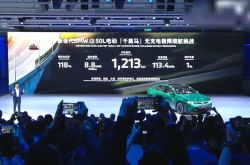
On September 4, Xiaomi introduced the Dragon Scale Battery and forged strategic partnerships with CALB and Sunwoda, aiming to incorporate these batteries into its Pengcheng series models. On September 7, Li Auto announced plans to gradually implement its self-developed batteries across its entire vehicle lineup. On September 16, Leapmotor's Tech Day unveiled that it has achieved complete self-development of battery cells. On September 17, at the XPENG G9L launch event, He Xiaopeng stated bluntly that from this year onward, all batteries will be produced in-house.
Coupled with the early establishment of self-developed battery systems by companies like BYD, Geely, GAC, and Changan, along with BMW's upcoming local production of sixth-generation batteries in China, the signs of transformation in the power battery sector are becoming increasingly evident.
This wave of enthusiasm has been oversimplified as 'automakers building their own factories and ditching battery suppliers.' However, the degree of 'self-development' varies significantly among automakers, creating a distinct technological hierarchy. Essentially, automakers are vying not for manufacturing capacity but for influence in battery foundational solutions, material standards, system integration, and vehicle integration.
In essence, this marks the beginning of a supply chain restructuring. In the latter half of the new energy era, competition is no longer about who can purchase superior battery cells but about who can define better batteries.
Why Pursue Self-Development?
As the 'heart' component of new energy vehicles, power batteries not only constitute 30%-40% of the total vehicle cost but also serve as the core factor defining vehicle technological differentiation.
'Batteries are a vital link in the electric energy strategy. Without developing batteries, there can be no true electric energy strategy,' said Ma Donghui, co-founder, president, and chief engineer of Li Auto. He noted that while self-development costs may not necessarily be lower than outsourcing, regaining battery dominance aligns with Li Auto's long-term strategy and will shape the company's future direction.
For Li Auto, self-development means not just mastering a core technology but also achieving 'triple integration' from production to service, from batteries to vehicle systems, and from after-sales to user experience. A clear indicator is Li Auto's public commitment to all users: 'Battery health will not fall below 75% within 8 years or 160,000 kilometers.'
This is also a key reason why many automakers opt for self-development. For instance, in Xiaomi Auto's standards for the Dragon Scale Battery, in addition to implementing stringent quality control management, it provides lifetime protection against 'spontaneous combustion of power batteries' for the first non-commercial vehicle owner, directly embedding brand credibility into the battery's quality commitment.
BMW's management of its sixth-generation batteries is equally rigorous. It has established an independent and exclusive quality control chain for these batteries. All battery packs must pass BMW's globally unified functional and safety verification before leaving the factory, with data synchronized to a digital twin platform for full lifecycle quality traceability.
Recently, BMW's powertrain factory at its Shenyang production base officially commenced trial production of an energy intelligent control system, marking the localization of all core aspects of BMW's sixth-generation power batteries in China, covering the entire chain from R&D, cell manufacturing, battery pack assembly, to energy intelligent control system production.
The critical nature of this system has been numerically verified with Geely's Shendun Golden Brick Battery. Ren Xiangfei, chief engineering and technology scientist at Geely Automobile Group, stated in an interview with China Newsweek that by 2025, Geely's self-developed and self-produced battery pack shipments are expected to reach 1.03 million units; in the first eight months of this year, shipments reached 1.1 million units, with zero battery safety incidents. This is rare in the industry because it involves not just battery technology itself but also the entire supply chain control and quality management system, which is Geely's strength.
From intelligent driving to intelligent cockpits, and then to electric drive and battery systems, automakers' boundaries of self-development are continuously extending upstream in the supply chain. The deeper significance of competing in supply chain control is to grasp the core initiative in product definition, system verification, and quality control, freeing themselves from the constraints of standardized components.
Differing Approaches
However, under this wave of self-development, 'self-development' among automakers is not a uniform concept. The degree of self-development determines different companies' influence in the industrial chain.
When He Xiaopeng said, 'We'll handle the batteries ourselves,' he referred to the self-development and self-production of battery packs (PACK), covering core aspects such as the BMS battery management system, thermal management, structural design, and overall pack assembly, while battery cells will still be sourced from external suppliers.
Xiaomi Auto's self-development philosophy for the Dragon Scale Battery is as follows: Xiaomi is responsible for defining the battery product, leading the design and development of the battery pack, participating in the development of cell materials, formulations, and processes, and implementing full-process quality control. CALB and Sunwoda will custom-develop the electrochemical system and materials based on Xiaomi's definitions and manufacture professional battery cells.
Li Auto has also chosen to self-develop and self-produce battery packs while self-developing and contract-manufacturing battery cells. Ma Donghui stated, 'The battery pack is highly coupled with the vehicle's chassis system, drive system, and vehicle architecture design. Data integration relies on the battery pack to carry and connect. For battery cells, we adopt a self-developed chemical system and structural design, which are then manufactured by battery companies, leveraging the strengths of both sides.'
Leapmotor has achieved 100% self-development of battery cells. Recently, Leapmotor's self-developed battery cell production line has commenced operations, using lithium iron phosphate and winding processes, with an initial capacity capable of meeting the needs of 500,000 to 600,000 vehicles. Over the years, Leapmotor has been independently developing BMS, battery packs, and CTC chassis integration technology, with the core battery cells supplied by external suppliers such as CATL and CALB. Now, for the first time, this boundary has been broken through upstream into the battery cell manufacturing process.
As Ma Donghui said, 'Self-development and self-production are not simply binary opposites.' Ren Xiangfei also stated that Geely's social collaboration will not stop, nor will its self-development and self-production. Previously, automakers such as SAIC, GAC, FAW, Dongfeng, and Changan have all chosen to establish joint ventures with CATL, pursuing another path of supply chain collaboration.
Furthermore, as competition in the entire vehicle market intensifies, energy replenishment infrastructure is no longer a exclusive advantage for a single brand. On September 28, Geely Holding and NIO announced a comprehensive strategic cooperation in the charging and battery swap sector. The two sides, united by capital, jointly invested in each other's charging and battery swap business entities, sharing charging and battery swap technologies and standards, and jointly building a nationwide integrated charging and battery swap service network, attempting to create a new model of open collaboration and mutual benefit in the automotive industry.
Different models correspond to different levels of control that automakers want to have over battery technology, as well as vastly different levels of capital investment, risks, and long-term benefits. Self-developing batteries for automakers has never been a simple single-choice question of 'either full self-development or pure procurement.'
Most importantly, 'These innovative technologies and AI application capabilities require systematic work that must be done thoroughly while truly solving the problems encountered before they can be introduced to the market. We cannot let the market become a testing ground,' said Gan Jiayue, CEO of Geely Automobile Group. 'Everyone keeps emphasizing that there are no 'instant cars.' We say there should be no 'instant technologies' either. We must truly solve problems from the underlying logic.'
This article is original to China Auto News. Feel free to share it with your peers. Media outlets wishing to reprint it should credit the author and source at the beginning of the article. Any media or self-media creating video or audio scripts based on the content of this article is prohibited, and violators will bear legal responsibility.
-
![]()
Thousand-Kilometer Range BMW i3, Ioniq V Priced Under RMB 100,000: Chinese Automakers Must Guard Against Joint Venture Encroachment in Global Expansion
-
![]()
Competition Among Cities Enters the Second Half: The Outcome Lies Beneath the Surface
-
iPhone 18 Pro Series Sees Price Reductions—Apple Can't Afford to Stay Idle During Double 11
-
![]()
A Whopping 550 Million Yuan Investment! Fanchuangwei’s High-Transparency Optical AR Lens Project Takes Root in Taizhou
-
![]()
Domestic Triumph in Glass Substrate Lithography! Optical Firm Lands Major Orders
-
![]()
AI-Powered Alternatives Offer Free Substitutes, Posing Threat to Adobe's 'All-in-One' Suite
-
![]()
McKinsey Report: AI Inference to Account for 60% of Computing Power by 2030
-
Meitu, Shifting to Token-Based Charging, Remains an Internet Company