Weekly Stock Review | Big Waves Mean Expensive Fish—But You Have to Survive to Catch Them
 11/09 2026
 358
Reviewing the weekly auto stocks and observing the diverse auto market.
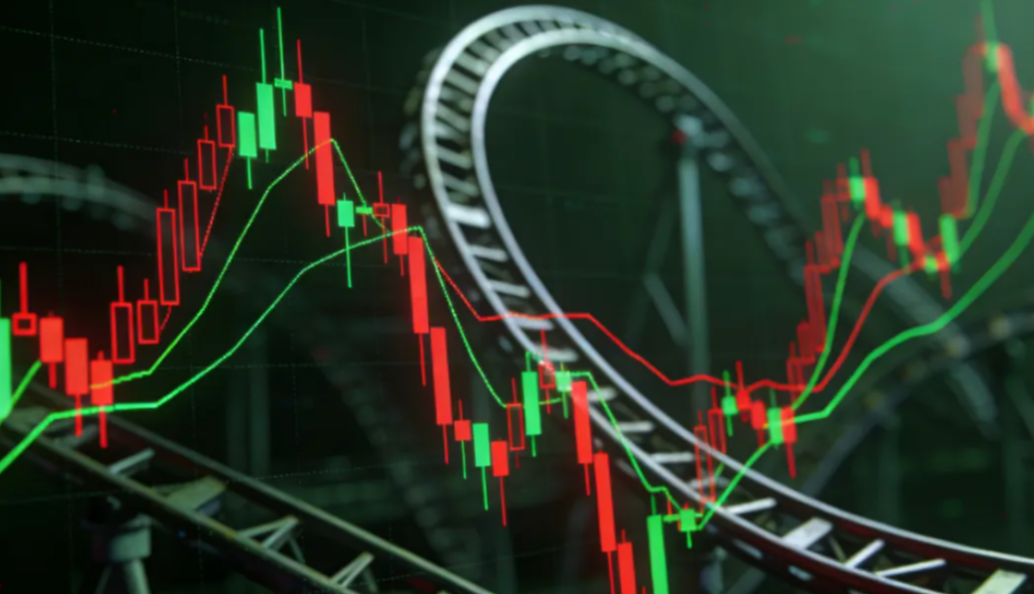
This week, the A-share market was like riding a roller coaster.
After bottoming out early in the week and rebounding, it pulled back again on Friday due to external factors. At Friday's close, the Shanghai Composite Index fell 1.10% to 3,649 points; the Shenzhen Component Index fell 2.57% to 11,175 points; the ChiNext Index fell 3.96% to 2,465 points. Combined turnover across the Shanghai, Shenzhen, and Beijing markets was 1.67 trillion yuan, a sharp contraction of 463.5 billion yuan from the previous day.
On Monday of this week, the People's Bank of China, the National Financial Regulatory Administration, and the China Securities Regulatory Commission held a joint symposium and released a package of institutional arrangements, including a normalized framework for swap facilities with "one-year terms, extendable," re-lending transitioning from a phased tool to a long-term institution, and market-support buybacks evolving from an "optional item" toward a funding-constrained performance requirement.
On Tuesday of this week, the central bank duly launched 100 billion yuan in Securities, Funds, and Insurance Companies Swap Facilities (SFISF), with participating institutions expanded to 31 and application amounts exceeding 100 billion yuan. Unlike previous call-style market rescues, this round's differentiation lies in its institutional design, aiming to embed the market-stabilization mechanism into capital market infrastructure.
On the other hand, major companies have successively wrapped up their third-quarter reports, entering a financial reporting vacuum period, with industrial capital confirming the bottom zone through real-money buybacks and stake increases.
Together, these factors constituted the biggest positive catalyst of the week.
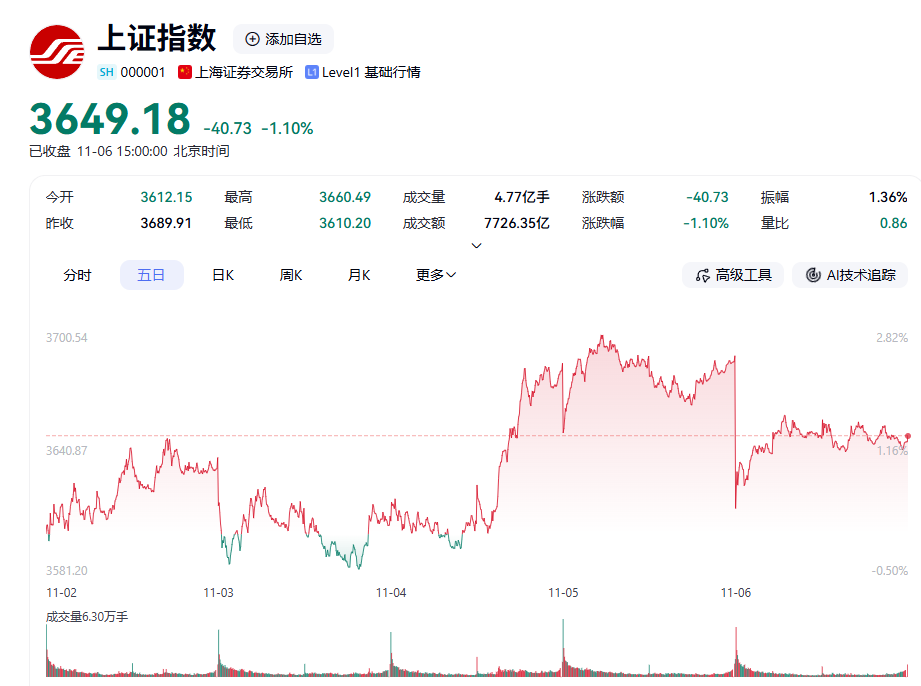
On Wednesday of this week, all three major A-share indices surged collectively: the Shanghai Composite Index rose 2.16%, the ChiNext Index rose 6.40%, and the STAR 50 soared 9.92%! Such a massive single-day gain is extremely rare, and news of the "A-share great counteroffensive" flooded the internet, with related topics trending high on social media.
Just as retail investors were rushing to enter the market, bad news came from across the Pacific.
On Thursday night, U.S. stocks suffered an epic crash. All three major indices posted their largest single-day declines in 19 months, with the Nasdaq 100 plunging -6.36%.
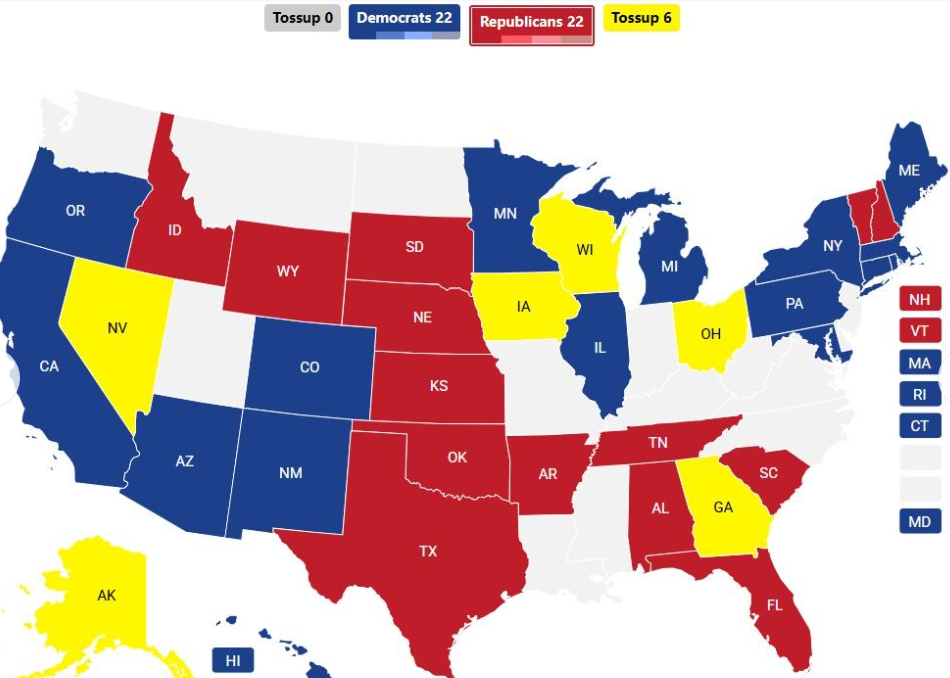
In the U.S. midterm elections, Trump suffered a devastating defeat. Democrats took control of Congress, and the market worried that AI data center construction would face tighter regulation. The previous global AI rally had relied on tech giants continuously spending money to build server farms—once this expectation was shaken, chip stocks crashed first.
This fire quickly spread to Asia on Friday: South Korea's stock market fell over 8% intraday, triggering a circuit breaker, with Samsung dropping over 10%; Japan also fell into a technical bear market. A-shares couldn't hold up on Friday either, with the ChiNext Index falling 3.96% and the STAR 50 dropping 2.60%. Notably, compared to overseas markets, this decline was already relatively mild.
In fact, looking at the entire week's trading, A-shares still ended higher.
The Shanghai Composite Index rose 1.39% cumulatively this week, the ChiNext Index gained 2.14%, and the STAR 50 rose 7.96%. Compared to South Korea's drop of over 6% for the week, this report card is already quite impressive. Turnover for the five trading days this week was 1,783.7 billion, 1,703.4 billion, 2,037.7 billion, 2,118 billion, and 1,657.8 billion yuan respectively, totaling approximately 9.30 trillion yuan for the week, averaging 1.86 trillion yuan per day.
In numerical terms, Monday represented probing, Tuesday was panic selling clearing out, Wednesday saw capital entering, Thursday saw divergences widen, and Friday saw retreat and wait-and-see.
Such roller-coaster market conditions are like a sickle swinging up and down, repeatedly harvesting retail investors.
Notably, the auto sector, which had already lost over ten percentage points of market value in consecutive declines during October, lifted its head slightly this week, rising 6.7% cumulatively.
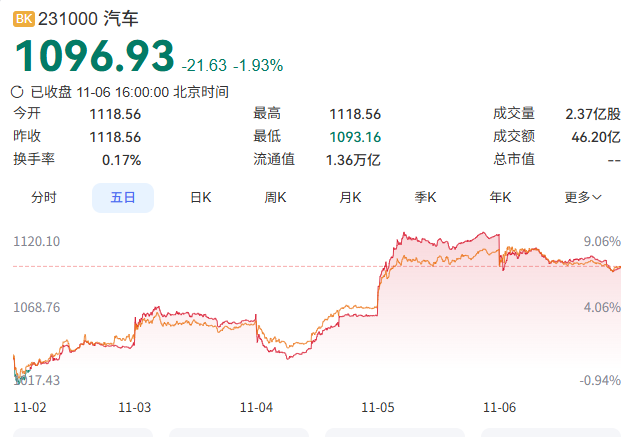
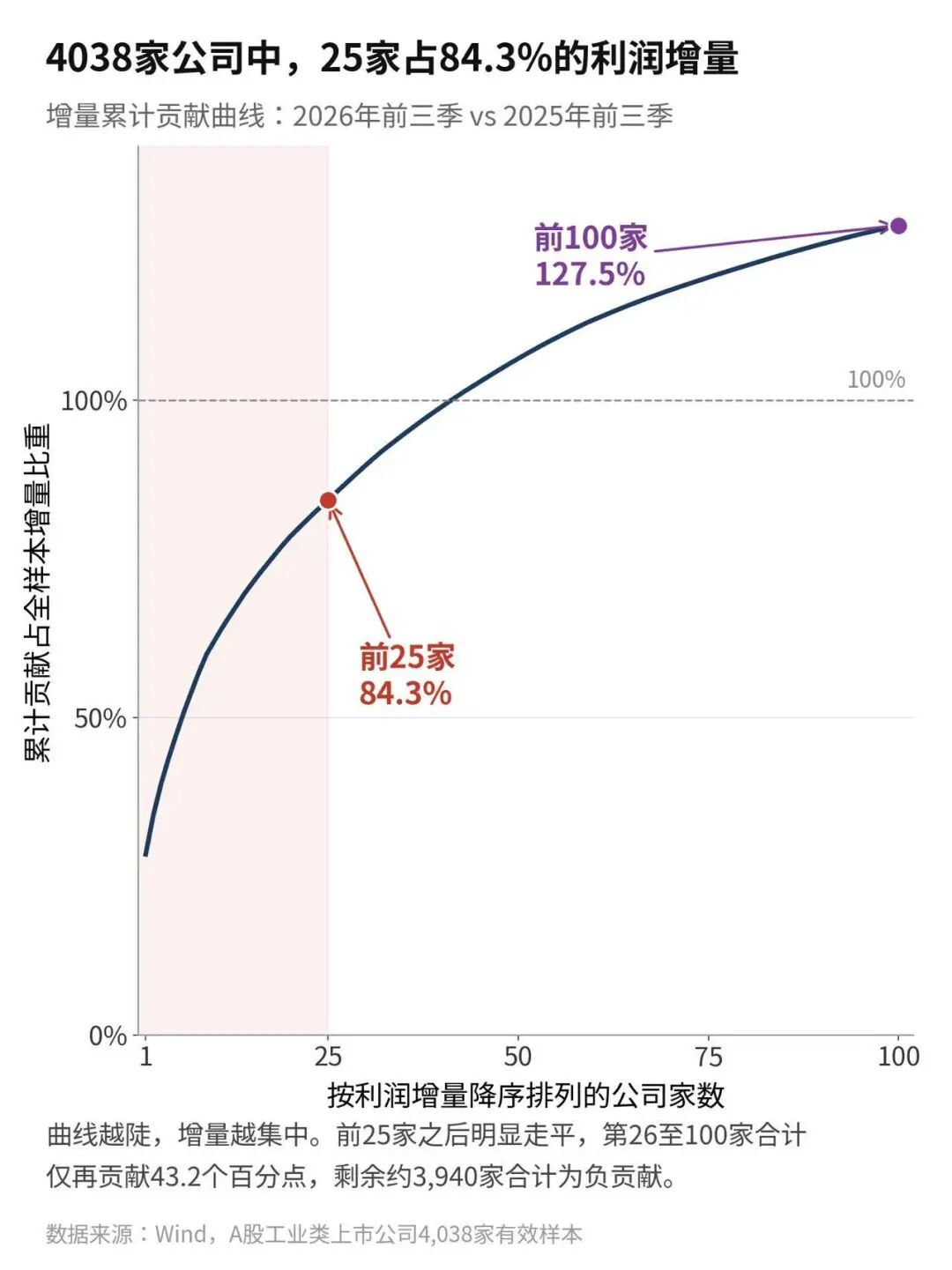
Amid a series of lackluster sales and earnings reports, the auto sector still defied logic. Data shows that in the first three quarters of 2026, the 205 companies in the A-share auto industry chain saw revenue increase 10.80% to 1,245.4 billion yuan, while net profit fell 9.78% to 50.2 billion yuan, a decrease of 24.92 billion yuan, dragging down overall industrial profit growth to some extent.
One can only say that the auto sector's earlier decline was too brutal.
Taking leader BYD as an example, last month BYD's stock price had already reached its lowest point in nearly three years. It currently closed at 85.23 yuan per share, down 1.2% cumulatively this week.
Compared to vehicle manufacturing, the battery industry has fared relatively well in capturing dividends.
In the first three quarters of this year, the 61 companies in the battery industry achieved total operating revenue of 1.10 trillion yuan, up 55.77% year-on-year, and net profit of 100.111 billion yuan, up 51.51% year-on-year; profitable companies accounted for 85.25%, with a gross margin of 18.95%. CATL achieved total operating revenue of 442.137 billion yuan in the first three quarters, up 56.19% year-on-year, and net profit of 64.530 billion yuan, up 31.60% year-on-year, with power battery and energy storage battery shipments continuing to grow.
On Friday of this week, CATL closed at 254.22 yuan per share, up 8.53% cumulatively during the week. It should be emphasized that although Hong Kong-listed technology manufacturing names corrected more than their A-share counterparts, CATL is one of the few cases where A-shares trade at a discount to H-shares; as of the November 6 close, A-shares were at a 21.94% discount to H-shares.
One can only say that international capital remains bullish on CATL.
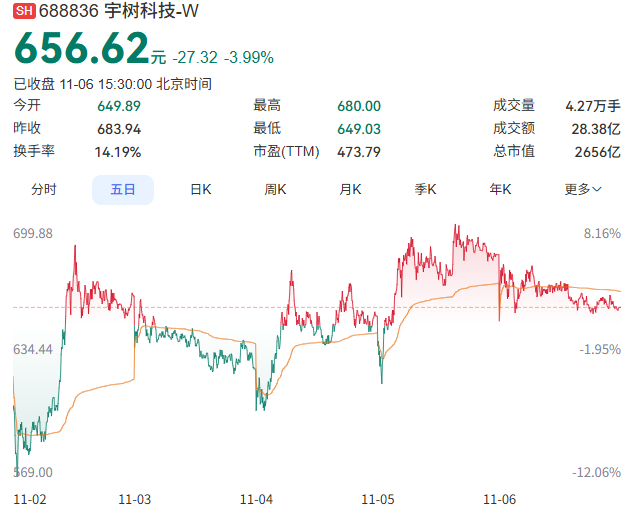
In the embodied intelligence sector, affected by the U.S. AI bubble, the domestic rally had barely started before it stopped. Leader Unitree Technology's stock price has fallen over 20% this year, closing at 656.62 yuan per share on Friday.
Storage leader ChangXin Technology also followed a similar trajectory. In the third quarter of this year, ChangXin Technology achieved operating revenue of approximately 118.714 billion yuan, up 613.18% year-on-year; it achieved net profit attributable to parent of approximately 54.435 billion yuan, turning from loss to profit year-on-year, up approximately 3.01% quarter-on-quarter.
ChangXin Technology also became the only company in the semiconductor sector in the first three quarters to achieve a net increase of over ten billion yuan, reaching 55.237 billion yuan, accounting for 59.33% of the semiconductor industry's total net increase.
On Wednesday of this week, ChangXin Technology announced a proposal to increase its buyback amount from "no less than 1 billion yuan and no more than 2 billion yuan" to "no less than 2.5 billion yuan and no more than 5 billion yuan." This also set a record for the largest single buyback amount in the history of the STAR Market.
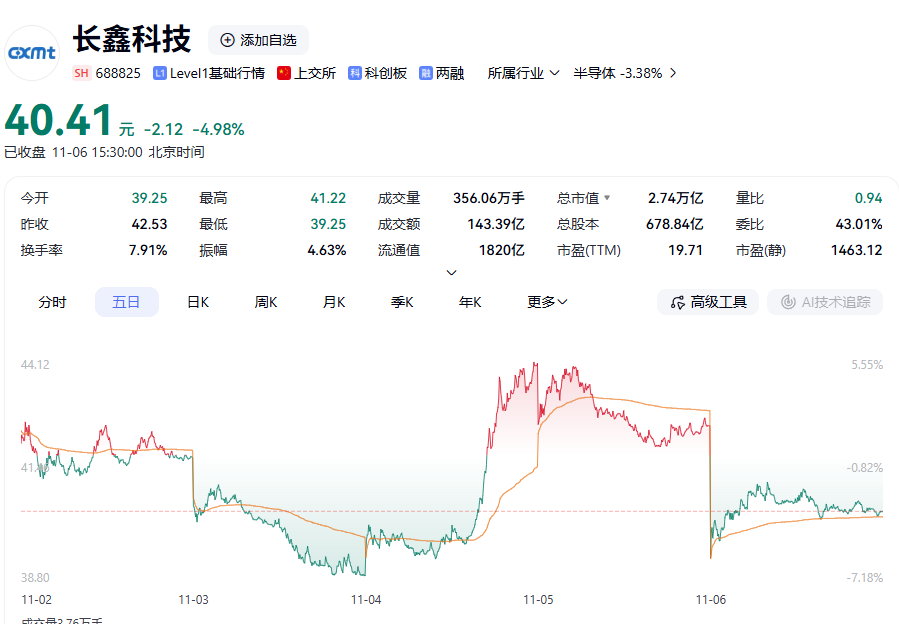
Just one day before the buyback announcement, on Tuesday, ChangXin Technology's stock closed at 38.80 yuan per share, down 7.0%, hitting its lowest close since listing on July 27, with a total market capitalization of approximately 2.63 trillion yuan at close, having shrunk by over 1 trillion yuan from its post-listing peak.
In ChangXin Technology's eyes, this is probably what they consider the bottom.
But for technology companies, everyone knows there is no ceiling on the upside, but don't forget that the downside may also show no bottom.
Note: Some images are sourced from the internet; if there is any infringement, please contact us for removal.
-END-
-
So Embarrassing: Apple Alone Takes 50% of Global Phone Revenue—All Domestic Brands Combined Only 30%!
-
![]()
160 Million Views Earn Just 390,000 Yuan: Who Really Profits from AI Short Dramas?
-
Is Cost-Effectiveness Dead? Average Phone Prices Have Risen by 620 Yuan in a Year—Even Xiaomi Is Up 410 Yuan
-
One Headline, Big Headache: "Buy One Get One Free Across the Entire Lineup" Backfires—SAIC Audi Under Investigation
-
From "Competing on Parameters" to "Getting Things Done": AI Is No Longer Just "Pleasing Itself"
-
With a 5-Fold Hourly Wage Gap, Strike-Driven Pay Raises Are Speeding German Cars Toward Their Own Funeral
-
Global Annual Sales of Just 15,000 Units—Can Moving Production to India Cure Honda's EV Woes?
-
Maserati: 7,900 Vehicles Sold Annually With a Net Loss of €840 Million—Will a Chinese Automaker Acquire It?