Zeekr Quietly Launches a New Car
 11/12 2026
 452
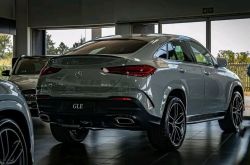
On November 5, the 2027 Zeekr 7X quietly opened for pre-sale, priced from 229,800 yuan—exactly the same starting price as last October's version, not a single character changed.
But the configuration list has changed, and in a way that's a bit unreasonable.
900V across the entire lineup. The previous generation's 75 kWh version was still on an 800V platform, with 900V reserved only for the 103 kWh variant. This time, even the cheapest version has been upgraded, with the motor, electronic control, and thermal management all switched to 900V. Of course, "900V across the lineup" refers to the electric drive; the battery packs still come in three tiers: the 75 kWh and 85 kWh use 5.5C Shenxing Gold Brick cells, charging from 10% to 80% in 10.5 minutes; only the 103 kWh Qilin is 6C, taking 10 minutes.
In addition, the entire lineup gets CCD electromagnetic damping, previously available only on higher trims; both the front driver and passenger seats now feature zero-gravity seats with a maximum recline angle of 146 degrees, whereas the old model only had it on the passenger side. What really matters are the places people don't usually look at: LiDAR, NVIDIA Thor-U chip, 700TOPS of computing power, and 31 perception hardware components are all standard; features like urban NZP no longer require separate option activation. During the pre-sale period, there's also a 2,000 yuan deposit toward 7,000 yuan.
Things that used to require reaching up a tier to touch have now been moved directly to the entry-level version.
In the 250,000-yuan-class pure electric SUV segment, "more for the same price" is no longer news. Zeekr's approach this time is a bit different: others push prices down, while it moves expensive components up. The former hurts gross margin; the latter tests the supply chain. The 900V electric drive alone is something a single brand actually can't afford—the cost of a high-voltage system must be amortized through scale, and Zeekr has the entire Geely system's procurement and production capacity behind it. The 200,000th 7X rolled off the line on September 8, and that volume is enough to amortize a 900V system.
The three battery tiers have also been rearranged. The previous generation had two levels, 75 kWh and 103 kWh, with a 180-kilometer gap between them; this generation inserts an 85 kWh mid-tier at 680 kilometers, and those who want 802 kilometers can option the 103 kWh on Max+. This move looks inconspicuous but is really the work of a product manager. People buying at this price point don't want the longest range—they want "don't make me calculate electricity on the highway," and 680 kilometers with a discount is just enough.
The smart driving part deserves a mention. The 2027 7X debuts Qianli Haohan G-ASD 4.1, and this system wasn't built by Zeekr itself. Starting in 2025, Zeekr's roughly 1,300-person smart driving team was transferred wholesale to Qianli Smart Driving, joined by about 1,000 people from Geely Research Institute and 500 from Maichi Zhixing, forming a nearly 3,000-person middle platform that completed integration by the end of that year, headed by Wang Jun, the first president of Huawei's Vehicle BU. Zeekr gave up the "sovereignty" of smart driving in exchange for standard LiDAR and 700TOPS even on the entry-level version.
For buyers, this math works out in their favor. It used to be "if you want high-level smart driving, you have to shell out tens of thousands more for a higher trim"; now it's "no matter which version you buy, the hardware is the same." For Zeekr, there's less self-developed storytelling, but stronger standard capabilities. Which is more valuable—the market will answer with sales.
On the sales side, Zeekr delivered 32,483 vehicles in October, up 52% year-on-year; cumulative deliveries from January to October reached 320,900, up 94% year-on-year, completing the 300,000 annual target ahead of schedule. The 7X has exceeded 10,000 monthly sales for four consecutive months. The brand's average transaction price is close to 370,000 yuan; in the first three quarters of this year, the 9X ranked first in sales in the above-500,000-yuan market, with a European price equivalent to over 1 million yuan, dubbed by foreign media as "the most expensive Chinese car."
A 230,000-yuan car and a car selling for 1 million in Europe under the same brand—that fact itself explains the 7X's positioning: it's not primarily responsible for making money, but for holding position. The 200,000 to 250,000 range is the most crowded segment in China's auto market; what the 7X needs to do is not push the price to the lowest, but make people standing at this price point feel there's no need to spend more.
Looking one level up, the premise of this playbook is group-level cost amortization. The smart driving team merged into the middle platform, 900V amortized across 200,000 vehicles—the money saved didn't become profit, it became configuration. This is the most intuitive realization of "One Geely" integration—organizational merger ultimately landing on the configuration sheet.
As for whether "making high-end standard" can sustain gross margin, the just-released Q3 report gives half an answer. Cumulative gross margin for the first three quarters was 18.0%, up 1.5 percentage points year-on-year; Q3 alone was also 18.0%, down 0.4 points from Q2's 18.4%, mainly affected by the 9X delivery pace and cost-reduction timing. This line hasn't deteriorated, but it isn't roomy either—with configurations going up and prices static, every bit of gross margin has to be squeezed out of scale.
-
![]()
Jiuzhang Cloud's IPO: Can Computing Power Metrics Determine Pricing Power?
-
Cerebras' Stock Plunged 77% Within Six Months of Going Public—What Happened to Nvidia's "Challenger"?
-
![]()
01.AI Sets Up Headquarters in Hangzhou
-
![]()
The Three German Auto Giants Have All Stalled—What Exactly Happened to Them?
-
![]()
Great Wall Motor October Sales: Why Great Wall Has a Stronger Presence in the 200,000–300,000 Yuan Range Without Relying on 100,000-Yuan-Class Models
-
![]()
How Much of Li Auto's October Sales Beyond the L Series Can Its All-Electric Vehicles Capture?
-
Optical Module Order Cut Rumors Resurface
-
![]()
Domestic Competition Hits Rock Bottom—Can Going Global Save New Energy Vehicle Makers?