Exports Surge 1.3-Fold, but Hidden Concerns Loom
 11/12 2026
 365
"The rise in the export share of new energy vehicles is irreversible."
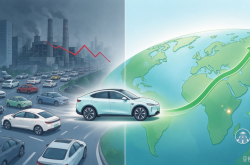
China's new energy vehicles (NEVs) are experiencing explosive growth in overseas markets.
Data from the China Association of Automobile Manufacturers shows that from January to September this year, China exported 4.006 million NEVs, a year-on-year surge of 1.3-fold. Since June, NEVs have accounted for more than 50% of total vehicle exports for four consecutive months, with their share of total exports continuing to exceed half.
New energy models, once merely a supplement to growth, have now replaced fuel vehicles as the main engine driving China's automobile industry's global expansion. "From a global share perspective, the growth rate of new energy will definitely outpace that of fuel vehicles, and the increase in the export share of NEVs is irreversible," Zhou Lingkun, president of Linglong Tire, predicted in an interview with China Newsweek. He expects China's NEV exports to exceed 5 million vehicles in 2026.
Structural adjustment
For a long time, fuel vehicles have been the foundation for Chinese automakers exploring overseas markets, but this structure is now continuously reversing.
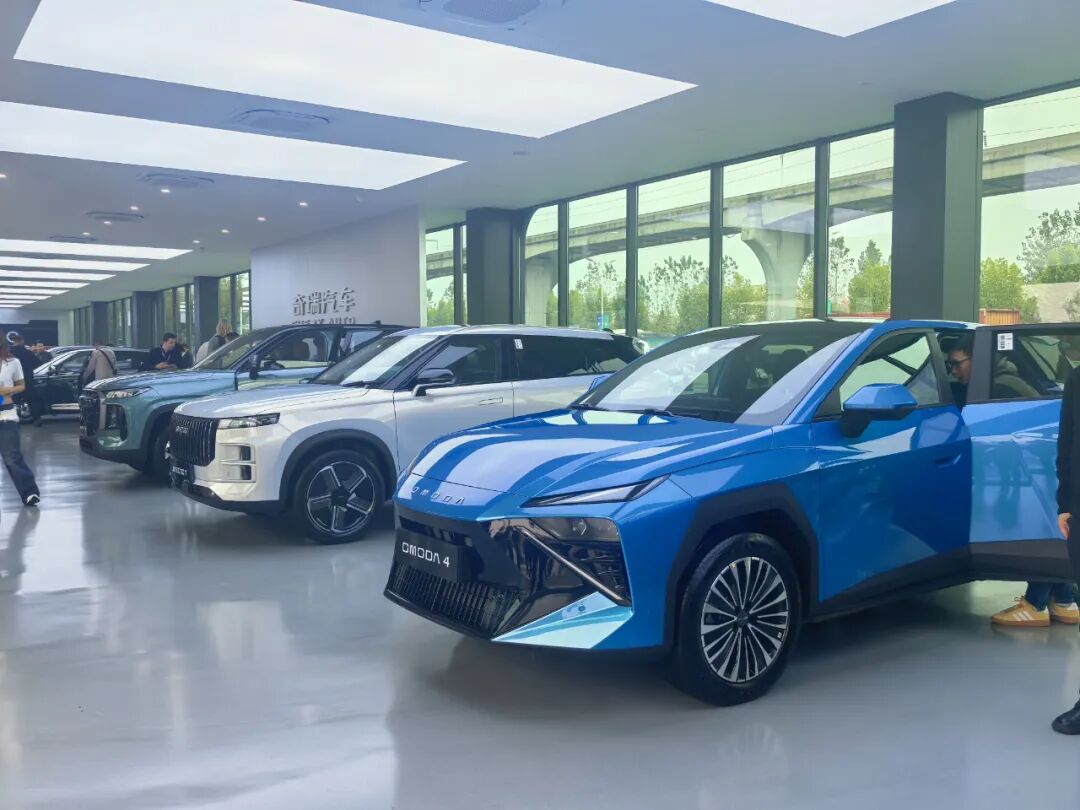
Chery's overseas model OMODA 4 (Photo/Liu Shanshan)
Chery, which has ranked first in domestic automobile exports for many consecutive years, exported 1.551 million vehicles in the first three quarters, of which 529,000 were NEVs, a year-on-year increase of 136%, making new energy the core increment driving growth.
Geely's transformation pace is even faster. In the first three quarters, it exported 484,000 NEVs, a year-on-year surge of 531%. In September alone, it exported more than 73,000 vehicles, a year-on-year increase of 403%. In Sweden, Malaysia, Mexico, and many other countries, Geely's NEV export scale ranks first among China's independent brands.
The wave of vehicle manufacturers breaking out overseas has also driven the domestic auto parts industry chain to go global simultaneously. In Zhou Lingkun's view, NEV exports have opened up new space for upstream supporting enterprises. In 2025, Linglong Tire's share in the global NEV supporting market has exceeded 12%. Unlike fuel vehicles, new energy models are heavier and have stronger instantaneous power output, and overseas consumers have prominent demands for driving quietness. Enterprises have accordingly adjusted their R&D direction and developed special new energy tires that balance silence and grip performance.
It can be said that this round of export explosion is not a short-term dividend generated by a single price advantage, but the result of the resonance of a complete industrial system, differentiated product experience, and the global electrification wave.
Relying on a complete domestic battery industry chain, relatively low industrial electricity prices, and vertical integration capabilities of complete vehicles, the manufacturing cost of similar domestic models is 20%-35% lower than that of European competitors.
It is not just cost-effectiveness; intelligence also constitutes a competitive barrier. With fierce competition in the domestic market, smart cockpits, assisted driving solutions, and smooth and stable human-vehicle interaction form a sharp contrast with electric products launched by traditional overseas automakers.
The external environment has also opened a window of opportunity for Chinese automakers. The EU's increasingly stringent carbon emission controls, fuel vehicle sales bans gradually implemented in many countries, and periodic fluctuations in international oil prices continue to guide overseas consumer demand toward electrification. Market penetration in Southeast Asia, Europe, Latin America, the Middle East, and other regional markets continues to rise, and Chinese NEVs have gradually transformed from a niche alternative in the market into the mainstream choice for individual consumers and operating fleets.
Many challenges
However, there are also hidden concerns behind the booming market.
Trade frictions are the most conspicuous sword hanging over automakers going global. Recently, imports of hybrid vehicles have risen sharply, and the European Commission accordingly considers it necessary to launch safeguard measures and has initiated a safeguard investigation on October 30, 2026. Relevant case filing information was published in the Official Journal of the EU the same day.
At the same time, the export tax rebate rate for NEVs will be reduced from 13% to 9% starting in April 2027, with the policy judged based on the date of the customs declaration form. This means the industry has only about five and a half months of buffer window, which will force enterprises to break away from profit dependence on export tax rebates and explore a sustainable path for global development.
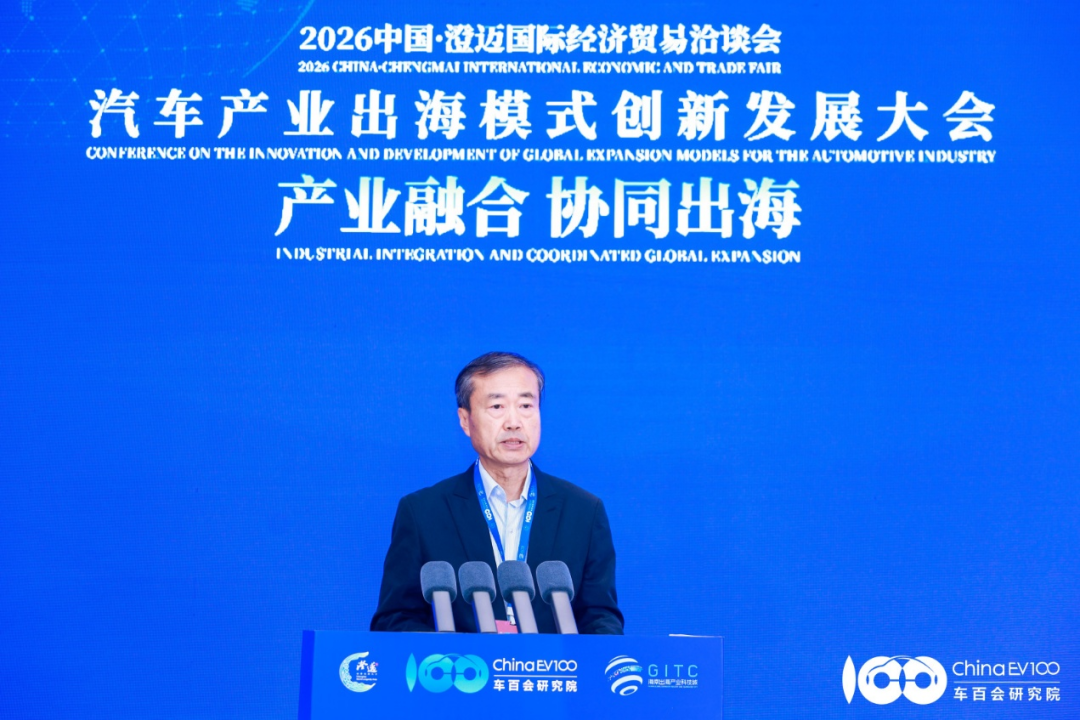
Zhang Yanhua, president of the China Automotive Maintenance Industry Association (Image source: EV100 Research Institute)
"While automobile sales are growing rapidly, a structural contradiction is also gradually being exposed: the accumulation speed of after-sales capabilities lags behind the speed of sales expansion." At the Automotive Industry Going Global Model Innovation and Development Conference jointly held by the EV100 Research Institute and Hainan Qinglan Zhilian Technology Co., Ltd., Zhang Yanhua, president of the China Automotive Maintenance Industry Association, said: "After automobiles go abroad in large numbers, they have not yet been simultaneously transformed into improvements in local systematic after-sales service capabilities. Service network construction is still in its infancy, resulting in maintenance response and maintenance parts support after vehicle delivery not matching sales growth. This contradiction has been concealed in the short term by the relatively stable initial quality of Chinese vehicles, but as the vehicle parc rapidly accumulates, after-sales pressure will emerge intensively in the next two to three years."
The shortcoming of unbalanced industrial chain layout also cannot be ignored. Sun Xiaohong, former secretary-general of the Automobile Branch of the China Chamber of Commerce for Import and Export of Machinery and Electronic Products, introduced: "At present, among the main countries where Chinese automobiles are deployed globally, the three countries with the most complete layout in terms of complete vehicles, batteries, materials, and parts are Thailand, Hungary, and Brazil. Other markets have slightly incomplete layouts; some lack complete vehicles, some lack batteries, and some lack parts."
At the same time, the "low-price label" that has long been attached to Chinese automobiles is still a shackle on brand upgrading. Many overseas consumers' inherent impression of Chinese cars remains affordable and durable. To break out of price "involution," automakers need to rely on consistently stable product quality, stringent safety tests, and reliability reputation formed through long-term use to slowly build brand recognition for intelligence and high quality.
Establishing a foothold overseas
To truly establish a foothold overseas, the core is to complete the leap from "vehicle exports" to "industrial exports," which is also the direction currently being explored by leading automakers.
At present, many leading automakers have already deployed complete vehicle and battery plants in Hungary, Spain, Thailand, Brazil, and other places, moving from "vehicle exports" to "industrial exports." Chery Automobile plans to enter the Canadian market next year and is also considering producing cars locally. If the plant plan is implemented, Chery will establish a production base on the northern border of the United States. Beyond that, according to the plan, Chery will build fast-charging stations and energy storage stations in the UK, Spain, Thailand, and other countries starting in 2027, and will take the lead in launching robotaxis in the UAE in 2027. This means Chery is replicating a complete ecosystem including charging networks and intelligent mobility overseas.
Sun Xiaohong believes that the service system will be the key factor determining whether Chinese brands can "stand firm" overseas. "At present, we have about 30 overseas spare parts warehouses, compared with 600 for international brands, a 20-fold difference." Sun Xiaohong said bluntly, "From the perspective of service channels and service outlet density, it is about 1/8 or 1/10 of major competitors, a very large gap. We hope to use five years to close this gap and catch up with the overseas layout of automobile powerhouses."
According to Zhang Yanhua, at present, some enterprises have begun to explore regional spare parts support models. For example, XPeng has deployed regional spare parts warehouses in the Middle East and Australia, Changan Automobile has established a multi-level spare parts distribution system, and Yutong Bus has expanded service coverage through a combination of overseas parts warehouses and authorized parts dealers.
"These practices are worthy of recognition, but from the overall industry perspective, overseas spare parts supply is still mainly based on independent brand construction." Zhang Yanhua also said, "Each enterprise separately invests in warehousing, logistics, and management systems, which easily leads to duplicated construction; for brands whose overseas sales have not yet reached a certain scale, the cost pressure of independently building a complete spare parts system is particularly obvious."
For complete vehicle and parts enterprises, the underlying logic of globalization is consistent: they cannot merely be exporters of products, but must become co-builders of local markets. Zhou Lingkun believes that tire enterprises also need to build flexible global production networks to cope with tariff barriers that arise one after another; at the same time, they should proactively adapt to a series of new regulations such as the EU Labeling Act and the Zero Deforestation Act, and move compliance forward into R&D, production, and all links of the supply chain. Only by benchmarking international players on compliance standards can they obtain a ticket for long-term competition.
China's NEVs have already obtained a ticket to the global arena, relying on industrial chain advantages and intelligent features to seize the window period of global electrification. But short-term sales explosion does not equal a firm foothold. The ultimate competition of globalization has never been a short-term sales race. Only those who can complete deep local industrialization, build a solid foundation for global compliance, and establish a recognizable high-end brand ecosystem can navigate trade frictions, cyclical fluctuations, and fierce competition and truly possess lasting discourse power in the global automotive landscape.
-
![]()
Jiuzhang Cloud's IPO: Can Computing Power Metrics Determine Pricing Power?
-
Cerebras' Stock Plunged 77% Within Six Months of Going Public—What Happened to Nvidia's "Challenger"?
-
![]()
01.AI Sets Up Headquarters in Hangzhou
-
![]()
The Three German Auto Giants Have All Stalled—What Exactly Happened to Them?
-
![]()
Great Wall Motor October Sales: Why Great Wall Has a Stronger Presence in the 200,000–300,000 Yuan Range Without Relying on 100,000-Yuan-Class Models
-
![]()
How Much of Li Auto's October Sales Beyond the L Series Can Its All-Electric Vehicles Capture?
-
Optical Module Order Cut Rumors Resurface
-
![]()
Domestic Competition Hits Rock Bottom—Can Going Global Save New Energy Vehicle Makers?